
By Efthim Dodona
Part Two
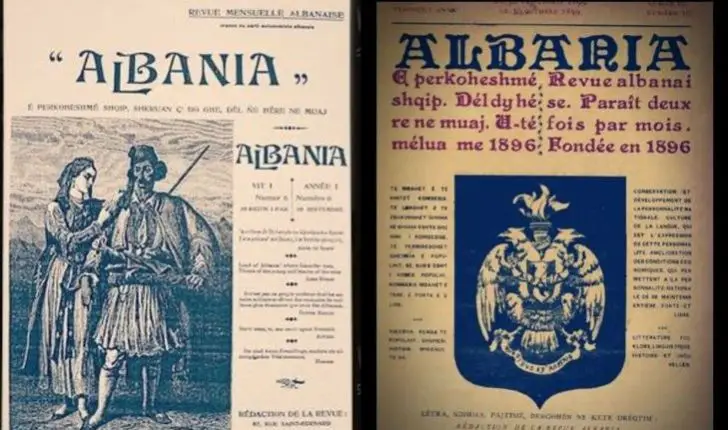
Memorie.al / Faik Konica’s major work, “Albania,” constitutes the greatest cultural monument of the time it was written (1897–1909), encompassing various fields: folklore, poetry, short stories, literary criticism, various essays on poets and writers, linguists, composers, history, press reviews, and current calendar events. This magazine discusses exhibitions by foreign painters featuring views of Albania, such as the one opened in Munich in 1900, or the painting “The Women of Suli” by the painter Ary Scheffer, located in the Louvre Museum in Paris. These painters have been extensively covered by Professor Ferit Hudhri in his various works.
Continued from the previous issue
(EXCERPT FROM A LETTER DATED PARIS, JUNE 5, 1902)
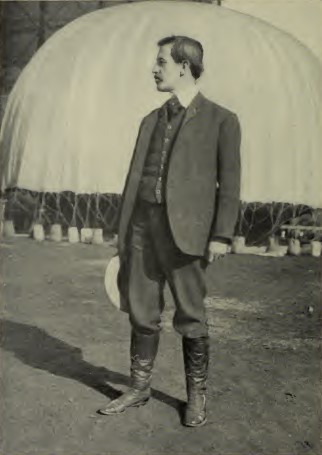
A few months later, he wrote to me again regarding this matter: “The other day, I buried two of my friends from the Aero-Club. I was there when they set out to conquer space, and I never imagined those two hours later, I would see two terribly disfigured corpses once again.
But this does not dampen my passion for ballooning; on the contrary, it intensifies it. One feels a certain satisfaction when testing death, and I believe that in my final moment – if I remain conscious – I will be more curious than cowardly” (Paris, October 21, 1902). On March 16, 1906, in his last letter sent from New York, he spoke to me again, as if sensing it, about his complete indifference toward death.
To appreciate the full sincerity of this indifference, these excerpts from his letters must be juxtaposed with the testimonies of doctors who stated they had never seen a lifeless face reflecting such undisturbed joy, without a trace of terror, however faint.
On the day of the funeral, New York newspapers reported a touching fact: Among the friends gathered to give Paul Nocquet their final testimony of love, many were seen weeping. And better than empty speeches, these tears expressed what they felt before that grave…!
In the English-language article titled: “The last ceremony in memory of the late Paul Nocquet,” which took place in New York, it is noted that his body was placed in a vault where it will remain until his family in Belgium decides whether they wish for his burial to be held in his homeland.
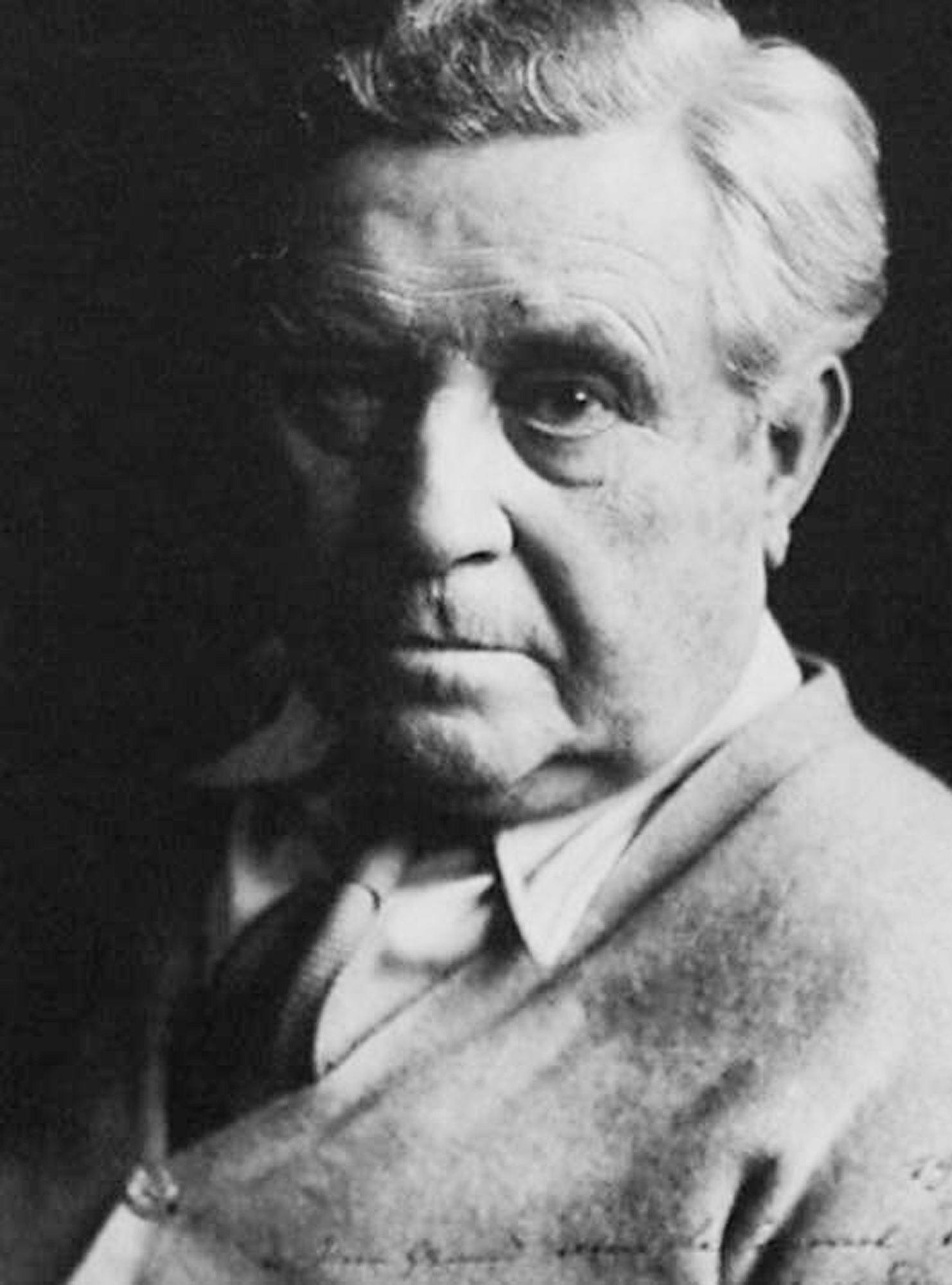
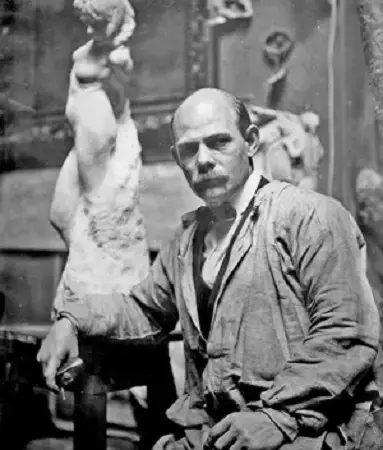
The final farewell of love and respect for the aeronaut-painter was performed by his friends in an impressive ceremony yesterday morning, in the studio of his closest friend, Gutzon Borglum.
The coffin was heavy with the weight of flowers: roses, lilies, white tulips, lilacs, and violets; an equal number of flowers were placed before an unfinished oil painting of his, at the center of which was depicted “Apollo,” galloping three horses over the sea waves. “Sunset,” as Mr. Borglum would call it – a symbol that perfectly suited the end of Paul Nocquet.
KONICA, THE FLAG, AND THE PAINTER FRIEND FROM BOSTON
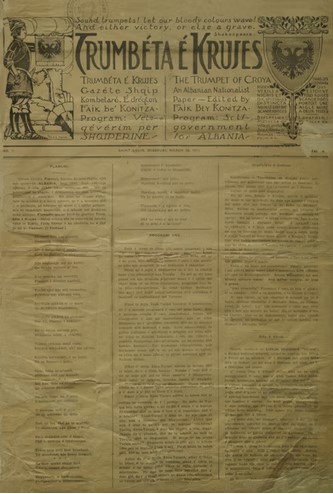
The first issue of the newspaper “Trumbeta e Krujës” (The Trumpet of Kruja) was published on March 20, 1911, in Saint Louis, Missouri, USA, with Faik Konica as editor-in-chief. A total of three issues were published. In the first issue of this newspaper, Faik Konica provides the lead article titled The Flag.
The newspaper “Trumbeta e Krujës” was released at a time when the flag had not yet been raised in Vlora and Albania remained occupied, but the sense of freedom and independence among the Rilindasit (National Renaissance figures) was a problem demanding a solution. Precisely in the first issue of this newspaper, the poem “The Flag,” which he had written 12 years prior, was reprinted.
“Under the title The Flag, I published twelve years ago – in ‘ALBANIA’, year 1899, page 146 – a poem which seems as if it were written yesterday. With some minor changes, I declaimed it at several national meetings in America. Since many compatriots begged me to publish it again, so they might learn and spread it, believing it could aid national progress, I fulfill their wish today by printing ‘The Flag’ right at the head of the newspaper Trumbeta e Krujës. – I add only one observation that I also published in Dielli: the word flamur (flag) has the accent on the a and not the u: flaamur and not flamuur.”
Konica reprinted this same poem in the newspaper “Dielli” on November 25, 1938, placing beneath it a painting he titled: “Scanderbeg, the fame-giver of the flag and the chief defender of Albania.” Meanwhile, on the right side of the newspaper, he provides the article “The Masthead of the Newspaper,” where he writes: “The masthead of Trumbeta e Krujës was masterfully outlined by a Boston artist, Mr. Morse, according to the plan and documents I gave him.
Observe it well and understand it: On one side, the Castle of Kruja, half-ruined. Atop a tower-wall, a soldier has emerged, clad in steel and iron, as in the time of Scanderbeg. See how majestic he is with the helmet of Castriot over his brow, with the medieval sword hanging! With what bravery he holds the trumpet, from which Scanderbeg’s flag hangs. Did he rise from the dead, or had he fallen into some centuries-long sleep in a forgotten corner of a tower, or is he the ghost of some warrior fallen on the walls of Kruja?
Sadness and wonder join on his face, perhaps because he sees his beloved Kruja, his adored Albania, fallen so low…! Blow the trumpet, O legendary knight, and blow it loud: Blow it so it thunders for the nation that has fallen into an overly heavy sleep. I wonder what he tells us with the trumpet. Perhaps it’s thundering bursts to the four corners of space, this heroic verse by Shakespeare: Sound trumpets! Let our bloody colours wave! And either victory, or else a grave.
‘Sound trumpets! Let our blood-red flags wave! And either we conquer, or we enter the grave.’ On the other side, like a distant but not vain hope, we see Scanderbeg’s flag – but a flag of celebration, not war! No! A rose surrounds it and forms a crown at its forehead. To the left and right are the two four-hundred-year-old documents that prove that indeed, this was Scanderbeg’s flag.”
But what acquaintance did Konica have with this painter? Konica writes: “The masthead of the newspaper was masterfully outlined by a Boston artist, Mr. Morse, according to the plan and documents I gave him…” In this sentence, the word përvijëzuar (outlined/rendered) is striking – a word that now seems lost – and especially when he says: “according to the plan and documents I gave him.” Thus, the painting presented was executed under the direct influence of Faik Konica, who could also be called its co-author.
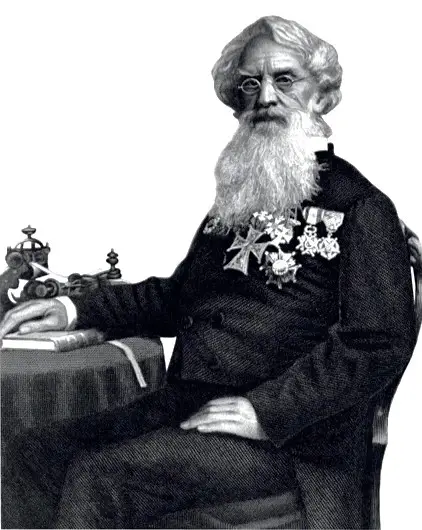
In the painting, the author’s name is given as C.H.B MORSE. Searching for this surname, the name of the telegraph inventor Morse immediately appears, named after its discoverer, Samuel Morse (1791-1872), who was a very well-known painter, and in whose family tree there are many painters.
The painter of the “Masthead” must have been alive in 1912, because he consulted with Faik Konica about it and – as Konica says – it was masterfully outlined by a Boston artist, meaning he was a known painter. However, no data is available and we can say nothing about who this painter was exactly. It remains for another time to discover it, where we might also learn other details of their friendship.
ALFRED BASTIEN AND THE PAINTINGS FOR KONICA
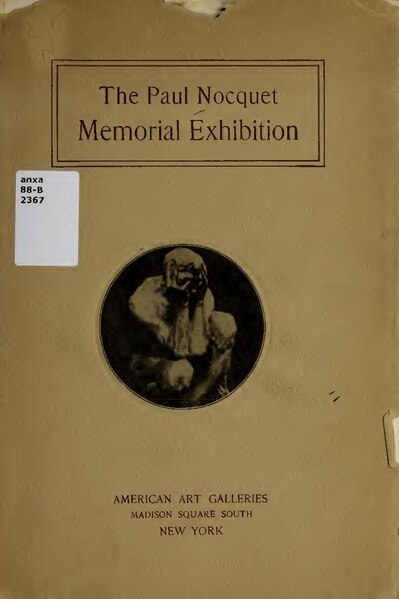
He was not a painter himself. However, Faik Konica understood painting well, just as he did music and other arts. The first cover of the magazine, Volume B, 1898, was painted by the painter Paul Nocquet, who tragically died at the age of 29 in a balloon crash on April 4, 1906, on the outskirts of New York.
After the loss of this special friend, about whom Konica wrote at length in the pages of his magazine “Albania,” another artist would illustrate his journal. Starting from Volume D (October 1899), the double-headed eagle is placed on its cover. Regarding this sketch, Konica would write: “In a while, we will decorate the cover with another figure, which is to be gifted to us by another friend, Alfred Bastien.
Mr. Bastien is also one of the most well-known Belgian painters. Two years ago, at the Brussels General Fair, Alfred Bastien received a prize of ten thousand francs for a large figure, Humilitas Christiana (Christian Humility), which depicted a medieval bishop kneeling before the altar.”
In the French language section of Volume C, Konica gives this announcement: “Soon, we will publish Albania with a new frontispiece. We owe this to the unreserved kindness of Alfred Bastien, the talented young painter well-known in Brussels; furthermore, Mr. Alfred Bastien – who is currently in Burgundy to decorate with frescoes the castle of Lantenay which belonged to Charles the Bold – has written to us that he will soon send the drawing.”
But what does this painting represent? The explanation is given by Faik Konica himself. “A compatriot asks us what ‘unguibus et rostris’ means, which is written on the masthead of the periodical Albania. This Latin phrase translates into Albanian as ‘with beak and talons,’ meaning the double-headed Eagle guards its rights with beak and talons.
The word ‘Unitas’ above it means ‘unity, union,’ that all Albanians of every religion and every region should unite as one.” In Volume D of 1899, there is a vase with flowers, with the year 1896 placed above. Besides the double-headed eagle, there are other drawings which, although they do not bear the author’s name, we believe belong to the same hand, that of Alfred Bastien, who did not place his name in all instances.
These simple drawings reproduced here (Volume E, 1900), such as the eagle with two open wings looking upward and afar, on whose chest is the Albanian flag crossed by a ribbon with the name ‘ALBANIA’. In its feet, it holds the arrows of war and the olive branch, the symbol of peace, reminiscent of the eagle on the American flag.
The other drawing represents two eagles joined by a face that may symbolize Albania, from whose mouth emerge two strings of flowers held by the eagles’ beaks. A flower bud with two hyacinth branches, located between the aforementioned drawings, I believe was created by the same painter’s hand.
All these drawings were created by the painter under the direct influence of Faik Konica, which is evidenced by the numerous Albanian symbols. In various albums and articles, the double-headed eagle has been reproduced with the note that it was treated “according to the suggestions of Faik Konica,” but the author of this drawing, who is Alfred Bastien, is not mentioned.
Alfred Bastien (1873-1955), a well-known Belgian painter, after studying at the Academies of Ghent and Brussels, settled in Paris and was influenced by the renowned painters Courbet and Delacroix, as well as the Impressionist movement. His paintings from the front lines of the First World War (1914) are very famous, especially those of the Yser. He is recognized as one of the greatest landscape painters of World War I. / Memorie.al