
By Dashnor Kaloçi
Part twenty-one
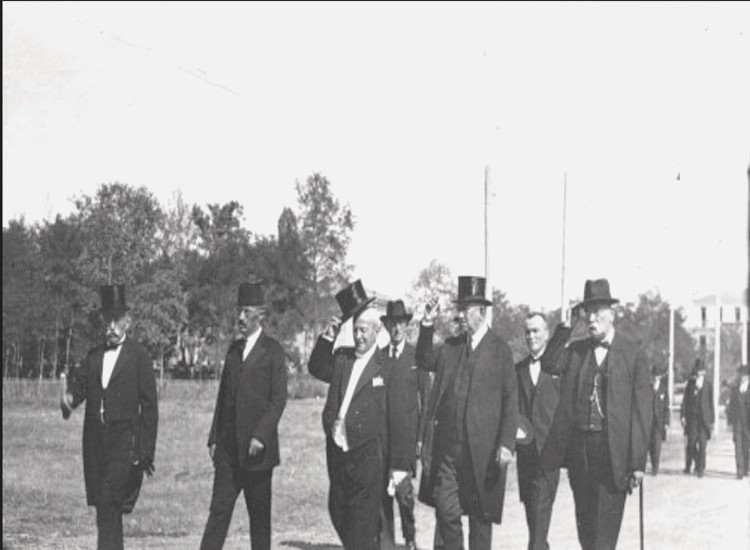
Memorie.al / The history of parliamentary elections in our country, or more accurately, the attempts at elections, have its origins in the era of Ottoman rule when Albania was part of the Turkish Empire. One of the first Albanian deputies elected to the first Turkish Parliament, which opened its proceedings in December 1877, was Abdyl Frashëri. However, that parliament did not last long, as it was dissolved by the Sultan himself due to the outbreak of the Russo-Turkish War. Following the dissolution of Turkey’s first parliament, there were several other attempts at elections, but they all failed for various reasons. The first regular elections in Albania were held only in 1908, when the Young Turks came to power in Turkey. Those elections were not direct but were held through representation, otherwise known as the two-tier voting system (secondary electors).
The first Turkish Parliament opened on December 10, 1908, and out of 266 deputies, 27 were Albanians elected from the four vilayets of Albania. At that time, members of the “Committee of Union and Progress” in Turkey, which included many Albanians, split and grouped into three political factions. The first group was “Union and Progress” (the Turkish-Macedonian party) with 164 deputies, consisting of 130 Turks, 5 Arabs, 1 Greek, and 15 Albanians, led by Hasan Prishtina, a deputy from Kosovo.
The second group, called “Liberal Union” (the Greek-Albanian party), consisted of 45 deputies and included 12 Albanians led by Ismail Qemali. Among the other Albanian deputies in the Turkish Parliament at the time were Esad Pashë Toptani, Nexhip Draga, Rexhep Pashë Mati, etc. After 1908, there were several other elections where Albanians continued to vote for their representatives in the Turkish Parliament, a process that lasted until November 1912, when Independence was proclaimed and Ismail Qemali was elected head of the Government.
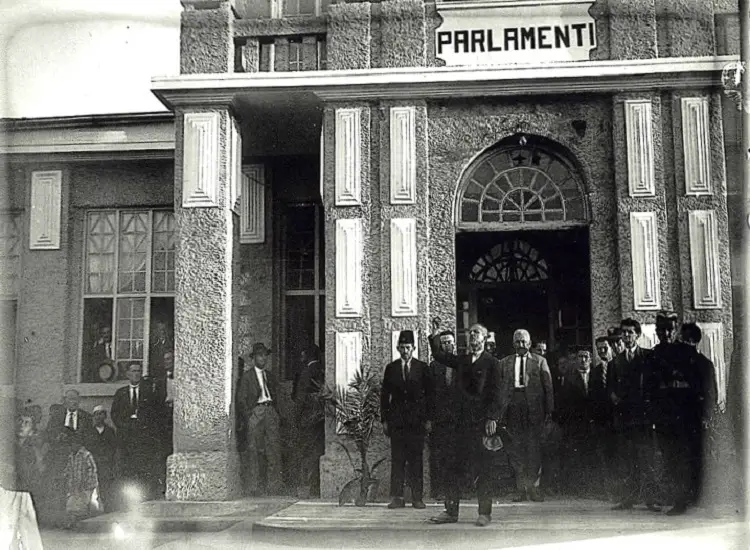
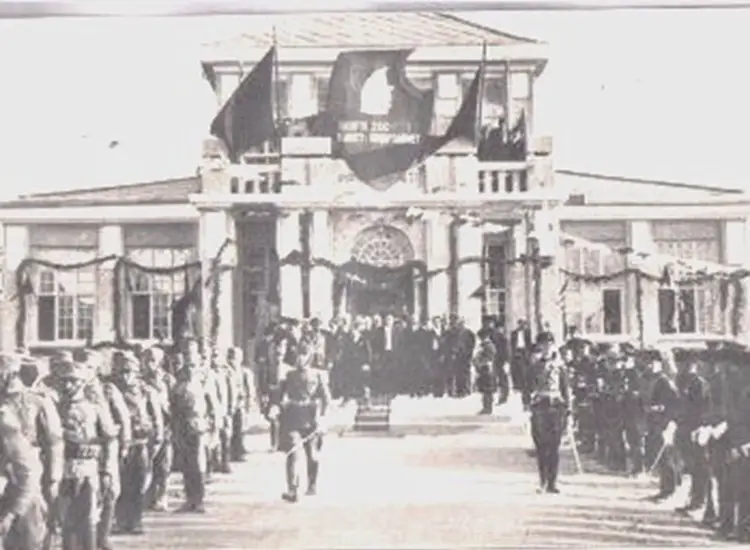
Meanwhile, the first parliamentary elections in Albania took place in the spring of 1921, as they had not been held until then due to World War I, in which Albania was also involved. The first Albanian Parliament opened on April 21 of that year; the first building of the Albanian Parliament was located where the Academy of Sciences stands today. In that parliament, 76 deputies participated, elected following a relatively regular process from the nine prefectures of the country: Berat, Durrës, Elbasan, Gjirokastra, Korça, Kosovo, Shkodra, Vlora, and the Albanian colony in the USA.
As in the past, those elections were conducted through a system of representation, or secondary electors, where based on territorial division, representatives of each province had the right to elect their deputy. The aforementioned, along with a brief history of parliamentary elections in Albania from that period until 1991, has been published by Memorie.al in previous issues. Here, we are publishing the complete Basic Statute of the Albanian Republic (the Constitution) of 1925, where a special place is held by the parliamentary election legislation of that time, as well as the Parliament’s regulations regarding the rights and duties of deputies, published by the “NIKAJ” Printing House in 1925.
Continued from the previous issue…
PENAL CODE 1928
SECOND BOOK
TITLE VII: Crimes Against Public Integrity
CHAPTER III: Abduction
Continued in the next issue…
CHAPTER V: Abandonment of Minors or Persons Incapable of Caring for Themselves or Those in Danger
ARTICLE 430. – Whoever abandons a minor under the age of twelve, or a person who, due to mental or physical illness, is incapable of caring for them and for whom that person has the duty of guarding or the obligation of care, shall be punished with heavy imprisonment from three to thirty months.
If this act causes the abandoned person severe bodily or health harm or a mental disturbance, the offender shall be punished with heavy imprisonment from thirty months to five years; and from five to twelve years if death is caused.
ARTICLE 431. – The punishments specified in the preceding article shall be increased by one-third:
- If the abandonment occurs in a deserted (solitarie) place;
- If the crime is committed by a mother or father against a legitimate child or a legally recognized/declared natural child, or by an adopter against an adopted child, or vice versa.
ARTICLE 432. – When the offender commits the crime provided in the preceding articles against an infant not yet registered in the civil status records and within five days of birth, to save their own honor or that of a wife, mother, descendant, adopted daughter, or sister, the punishment shall be reduced by one-sixth to one-third, and heavy imprisonment shall be changed to simple imprisonment.
CHAPTER VI: Abuse of Corrective Means or Discipline and Ill-Treatment in the Family or Toward Minors
ARTICLE 433. – Whoever, by abusing corrective means or discipline, causes harm or danger to the health of a person placed under their authority, or entrusted to them for education, teaching, care, observation, or guarding, or for the practice of a profession or trade, shall be punished with imprisonment for up to thirteen months.
ARTICLE 434. – Whoever, outside the cases mentioned in the preceding article, employs ill-treatment (mauvais traitements) against a family member or a minor under the age of twelve shall be punished with heavy imprisonment for up to thirty months.
If such ill-treatment is committed against a descendant or ascendant, a father-in-law or mother-in-law, or their parents, or a son-in-law or daughter-in-law, the punishment shall be heavy imprisonment from one to five years.
If the ill-treatment is committed against a spouse, prosecution occurs only upon the request of the injured party; if the spouse is under twenty years old, prosecution may also be initiated upon the request of those who would have paternal or guardian power over them if they were unmarried.
ARTICLE 435. – In the cases provided in the preceding articles, the court may rule that the conviction results in: for a parent, the loss of all rights of paternal power over the person and property of the descendant against whom the crime was committed; and for a guardian, removal from guardianship and any other guardian office.
ARTICLE 436 (Defamation). – Whoever, by communicating in any manner with two or more persons, whether gathered or separately, attributes to a person a specific fact that exposes them to public humiliation or hatred, or offends their honor or reputation, shall be punished with imprisonment from three to thirty months and a heavy fine from 100 to 3,000 gold francs.
If the crime is committed in a public act, or through drawings or writings distributed or exposed to the public, or through other means of publication, the punishment shall be imprisonment from one to five years and a fine of no less than 1,000 gold francs.
ARTICLE 437 (The Proof of Truth): – A person defendant of the crime provided in the preceding article [Defamation] does not have the right to prove their innocence by claiming that the act attributed to the offended party is true or publicly known.
The proof of truth is accepted only:
- If the offended person is a State official, and the act attributed to them refers to the exercise of their functions;
- If legal proceedings or penal prosecutions have already begun against the offended party regarding the fact attributed to them;
- If the complainant formally requests that the trial is expanded to investigate whether the attributed fact is true or false.
If the fact is proven true, the attributor is not punished, unless the methods used constitute a separate offense.
ARTICLE 438 (Insult): – Whoever offends the honor, fame, or dignity of a person shall be punished with imprisonment for up to two months or a heavy fine of up to 500 gold francs.
The punishment increases:
- Up to three months if the act is committed in the presence of the offended party or via a letter sent to them;
- Up to four months or 1,500 gold francs if the insult is made publicly in the presence of the offended party;
- Up to two years if committed through public writings, drawings, or mass publication.
ARTICLE 439 (Offense against Public Service): – When the offense is committed against a person legally entrusted with a public service, in their presence and due to that service, the offender shall be punished with imprisonment for up to six months or a heavy fine of up to 3,000 gold francs. If done publicly, the fine can reach 4,000 gold francs.
ARTICLE 440 (Provocation and Reciprocity): – If the offended party was the unjust and determining cause of the insult, the punishment is reduced by one-third to two-thirds. If the insults were reciprocal, the court may exempt both parties and only one from punishment. No punishment applies if the insult was provoked by personal violence.
ARTICLE 441 (Implied Offense): – Even if the offender does not mention the name of the offended party or uses veiled language, if signs and presumptions leave no doubt as to the target, it is legally treated as if the name were mentioned.
ARTICLE 442 (Immunity in Court): – Insults contained in documents or speeches presented before judicial authorities regarding the case at hand are not subject to prosecution. However, the court may order the deletion of the offensive text and award monetary damages.
ARTICLE 444 (Authorization to Prosecute): – Prosecution occurs only upon the request of the offended party. If the victim is deceased, their relatives (spouse, parents, children, etc.) may file the request.
In cases where the offense is committed against a judicial, political, or administrative body, or a representative thereof, prosecution requires the authorization of that body or its hierarchical head.
ARTICLE 445 (Statute of Limitations): – The penal suit for the crimes provided in this chapter [Defamation/Insult] is barred by the statute of limitations after one year for cases in Article 436, and after three months for cases in Articles 438 and 439.
TITLE X: Crimes Against Property
CHAPTER I: Theft
ARTICLE 446 (Simple Theft): – Whoever, for the purpose of profit, takes possession of another’s movable property by removing it from its place without the owner’s consent, shall be punished with heavy imprisonment from one month to three years and a heavy fine.
Theft also includes, and is punished as above, the removal of electric current or any other similar power of a third party with the intent to profit.
This crime also applies to items from an unaccepted inheritance or shared property among partners or heirs, provided the offender does not already have them in their possession. In such cases, the value is calculated by subtracting the offender’s rightful share.
ARTICLE 447 (Aggravated Theft – Contextual): – Heavy imprisonment shall be from six months to four years if the act is committed:
- In public offices, archives, or establishments, upon items kept there.
- In cemeteries or tombs, upon items forming their decoration or buried with the corpse.
- Upon items intended for religious worship or kept in religious dependencies.
- Upon a person’s body through particular skill/pickpocketing (filoutage) in public places.
- Upon travelers’ property or money inside any means of transport (land, sea, air) or at stations/docks.
- Upon animals in their breeding places or left in open areas.
- Upon felled timber in forests or agricultural products already harvested and left in open fields.
- Upon things left exposed to public trust by custom or destination.
ARTICLE 448 (Aggravated Theft – Methodological): – Heavy imprisonment shall be from eighteen months to six years and a fine of no less than 100 gold francs if:
- There are labor/service relations between the victim and the offender, and the theft involves abuse of trust.
- The offender takes advantage of a public calamity, alarm, or a specific misfortune of the victim.
- The act is committed at night in a building intended for habitation (by a non-cohabitant).
- The offender breaks, demolishes, or cuts locks or protective materials (breaking and entering).
- The offender uses false keys, tools, or a stolen/lost real key.
- The offender enters or exits via non-ordinary routes (climbing walls or using artificial means/personal agility).
- The offender breaks official state seals.
- The offender is disguised (déguisé).
- The act is committed by three or more persons together.
- The offender falsely assumes the status of a state official.
- The stolen item is intended for public protection or relief from misfortune.
- The theft involves livestock in pastures or large animals (gros).
Note: If two or more of these circumstances coincide, the punishment increases to three to ten years of heavy imprisonment and a fine of no less than 200 gold francs./Memorie.al