

The Actions of the Chameria Volunteer Battalion in the Italo-Greek War: From Albania to Greece
Memorie.al / The subject of this article is the aggression of Fascist Italy against Greece and the actions of formations comprising Albanian soldiers and civilians in occupied Greek territories. The war with Greece brought immense damage to Albania, leading to the loss of lives among both Albanian military personnel and civilians, as well as the destruction of a significant portion of Southern Albania. Part of this article includes a letter from Questor Major Skënder Çami, addressed to the Director General of Police, Zef Kadarja, revealing interesting data on the actions of the Second Battalion of Chameria Volunteers during the aggression against Greece.
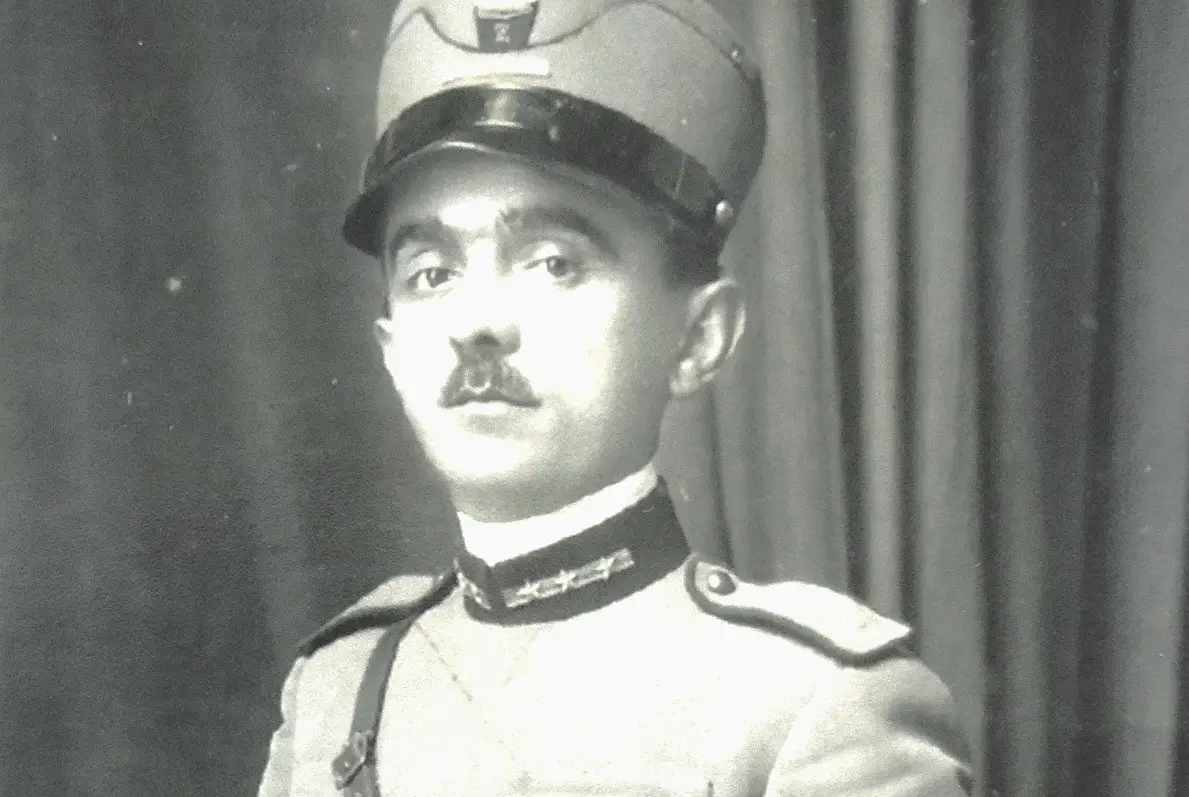
Major Skënder Çami of the Korça Questura, a 41-year-old from Konispol and an officer of the Ministry of Internal Affairs, was killed by five bullets on March 4, 1942, at 7:30 PM. In the information provided by the Prefect of Korça, Hysni Peja, to the Ministry of Internal Affairs, it is noted that Questor Skënder Çami was killed by unknown assailants 50 meters from his home. The murder was determined to be for political reasons.
Skënder Çami had served as District Commander in many prefectures and was regarded as one of the most capable men in the Gendarmerie. According to historian Kastriot Dervishi, “the explanation for this murder was clear: to silence him. Skënder Çami was a person who had served in Korça and Gjirokastra, and was consequently well-acquainted with the problems and intimate details of the inhabitants of this zone.” Regarding his murder, the name of Ramiz Aranitasi from Ballsh was mentioned; as a member of the communist forces led by Xhelal Staravecka, Aranitasi was later killed on June 22, 1943, in a blood feud by the gendarme Ali Kajmaku, who was a member of that same band.
The Aggression of Fascist Italy Against Greece
Despite Mussolini’s declarations that Italy had no intention of attacking Greece or Yugoslavia, the Italian government, immediately after the occupation of Albania, intensified military preparations, accompanied by a significant increase in the number of Italian soldiers in Albania. The aggression against Greece was preceded by frantic demagogic propaganda, circulating the thesis that this occasion would realize the unification of Chameria with Albania as a step toward creating Ethnic Albania.
The signing of the “Pact of Steel” (May 22, 1939) did not mark, as expected, a period of mutual understanding and trust between the two totalitarian regimes – Hitler’s Third Reich and Mussolini’s Fascist Italy. According to historian Roberto Battaglia, the establishment of direct political-military ties made the clash of fundamental interests between German and Italian imperialism inevitable, sharpening the struggle between the two autarkic systems as each sought full freedom of action.
By early August 1940, Count Ciano decided to wage his own war by attacking Greece. However, on August 17, Ribbentrop, on behalf of Hitler, asked Ciano and Mussolini to refrain from any action in the Balkan Peninsula, as “Hitler aimed to act in this zone only through peaceful means.” Hitler repeated the same warning to Mussolini during their meeting at Brenner on October 4, 1940. The Greek issue resurfaced on October 12, 1940, when the Duce learned that Hitler had occupied the oil wells of Romania. In Ciano’s presence, he remarked: “Hitler always confronts me with a fait accompli. This time, I will pay him back in the same coin. He will learn from the newspapers that I have occupied Greece; thus, the true equilibrium will be restored.” While Ciano thought this operation was necessary and easy, General Armellini, assessing the military balance of forces, hoped that the Duce – who had changed his mind several times – would change it again. His hope was not realized. Instead of withdrawing, on October 15, the Duce summoned Excellencies Ciano, Badoglio, Soddu, Jacomoni, and Visconti Prasca to the Palazzo Venezia. The Chiefs of Staff of the three branches of the military did not attend, to prevent any opposition.
Ciano’s intervention in this meeting had one goal: to reassure participants that “Greece will not resist” and that “it will collapse at the first blow.” Ciano’s ideas were reinforced by Jacomoni, his confidant. General Visconti Prasca, directly responsible for the operation, considered even the few divisions held in Albania to be excessive. Historian Roberto Battaglia underlines that: “apparently, he (General Prasca) feared increasing the number of divisions because the command of the operation might then slip from his hands to a higher-ranking general.”
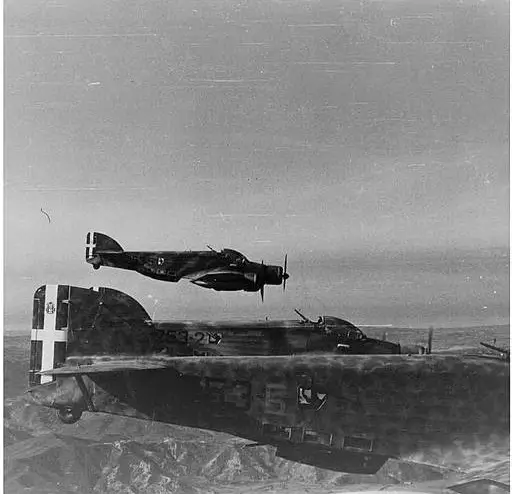
On October 28, 1940, following an ultimatum sent by the Italian government to Athens, Italy launched its attack against Greece. Three divisions – “Ferrara,” “Centauro,” and “Siena” – marched along the coast toward the Ioannina plateau, crossing the Kalamas River. The “Julia” division, on their left, headed toward the Metsovo passes to cut off enemy supply routes between the Epirus and Macedonian sectors. Further north, the “Parma” and “Piemonte” divisions stood in defense of the Korça plateau.
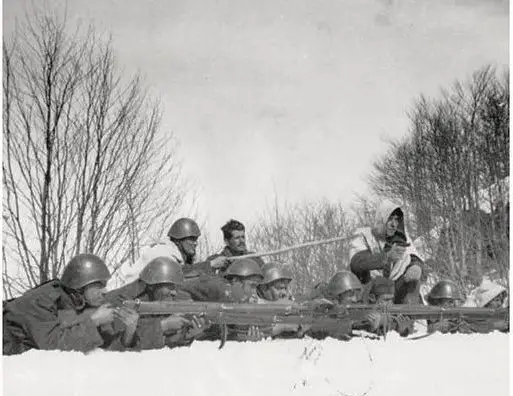
After some initial successes, the Italian army was forced to retreat, losing Korça on November 22 and Gjirokastra in early December. Historian Battaglia would note: “This was not a war, but a terrifying massacre in which people died more from snowstorms than from enemy fire.” Meanwhile, in Rome on December 24, 1940, despondent over the defeats in Greece and heavy blows in Taranto and Libya, Mussolini commented to Ciano: “This snow and cold are very good. This way, all the ‘starved-bellies’ and half-men will die, and this mediocre Italian race will be somewhat improved.”
The Actions of the Chameria Volunteer Battalion
The authors of The History of the Albanian People, IV, emphasize that: “Unlike the government of Shefqet Vërlaci, which, unable to withstand the pressure of official Rome, supported and joined the Italian fascist aggression, the Albanian people and progressive forces in the country positioned themselves firmly against it and in favor of the just struggle of the Greek people.”
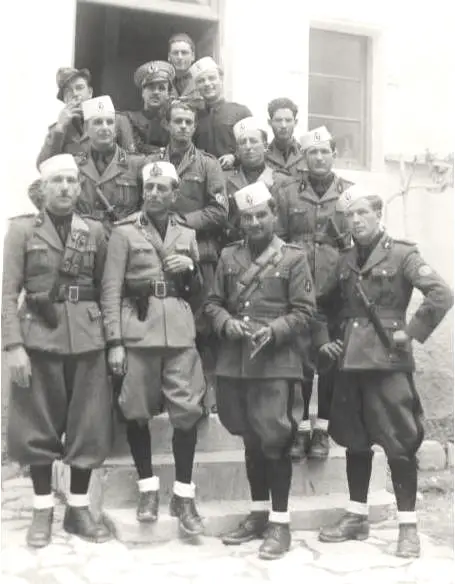
Fascist efforts to conduct military or “civilian mobilization” failed. Albanian soldiers in the “Tomori” and “Taraboshi” battalions, forced to the Greek front, refused to fight and deserted. Some joined Greek forces to fight the Italian aggressors. Others were disarmed, arrested, and interned in the Shijak concentration camp, from which many escaped. The Second Battalion of Chameria Volunteers, operating in the Chameria Theater, was led by Major Skënder Çami. Accused by a civilian of not having fought well with the battalion, Skënder Çami sent an explanatory report from Shkodra on August 29, 1941, to the Central Directorate of Police in Tirana.
In his cover letter to the Director General of Police, Mr. Zef Kadarja, he stated: “I do not grant importance to the information, as the authorities surely would not have believed it, since my actions during those two months are public knowledge… if some wish to hide reality, others will tell the truth.” The following is the full report, preserving the language of the document.
Personal Reserve
On the actions of Questor Skënder Çami during his time as commander of the II Battalion of Chameria Volunteers, and regarding false information given against him.
To the Central Directorate of Police in Tirana
A few days ago, I learned that a civilian – whose name I do not yet fully know – gave information, perhaps to the Luogotenenza, alleging that I did not fight well during my time as commander of the II Battalion of Chameria Volunteers in Chameria. To reveal the truth against this entirely false information and to inform my superiors of all actions taken, I request permission to state the following:
On October 23 (1940), by verbal order from the Inspector General of the Luogotenenza, Comm. Melloni, I departed for Delvina as commander of the II Battalion of Chameria Volunteers. Upon arrival, I found approximately 100 men prepared; within 2-3 days, the number reached 130 volunteers – all Chams residing as migrants in the districts of Delvina, Porto Edda (Saranda), and Konispol. With these men, I began the assigned actions under orders from the Command of the 3rd Grenadier Regiment. Only when the Greek stations were broken and we crossed into the Albanian villages of Chameria did we continue registrations, increasing the battalion’s strength to 300 men.
With this force, the following actions were performed:
This II Battalion, acting as the vanguard, was the first force to attack the Greeks, breaking enemy resistance at the Likojan Pass, Sajada, and Lopes, reaching the designated objective in Smarta of Filat near the Kalamas River. From the village of Lopes, the regiment command was notified of our arrival, after which the actions of the Grenadier Regiment and Cavalry began. After staying a few days in Smarta, the II Battalion, still as the vanguard, was the first to cross the Kalamas River and reached the second objective in the village of Shules Kastri, breaking all enemy opposition and forcing the opposing forces to vacate their positions in Varfani.
The next day, we received orders to advance further as the vanguard and occupied the towns of Igoumenitsa and Graikochori with order and discipline, touching nothing in the towns. That same night, we reached the third objective in the village of Nista, having marched nearly 60 km without rest. From Nista, per orders, we passed through the villages of Skopioni and Koutsi, reaching the next objective in the village of Arpitsa. Everywhere we went, the reception was truly enthusiastic. The entire population came to meet us with Roman salutes, cheering for the King, the Duce, Albania, and Fascist Italy. In many villages, Italian and Albanian flags – which they had prepared and hidden for a long time – were flying. From Arpitsa, we sent a platoon to the village of Agia and another to Margariti, as requested by the inhabitants to protect them from Greek komitadjis (bands) and to conduct patrols.
Up to this point, everything went well, though we noted that many volunteers – especially those from Delvina, Saranda, and Konispol – were there only for numbers and not to fight. Many did not know how to use weapons, others were afraid to advance, and some discharged their weapons uselessly behind their comrades’ backs, endangering lives. Others abandoned assigned positions.
While waiting in Arpitsa for orders to advance, the order for retreat arrived, pulling back to Graikochori. After one night, we reached the village of Phiniqi near Filat, intending to move to the positions at Mikros, 60 km from Filat. In Phiniqi, we were joined by the I Battalion of Chameria Volunteers, commanded by Major Aziz Çami, who until then had supported the Cavalry Regiment in another sector. Due to emerging needs, the order for Mikros was canceled, and we were ordered back to Graikochori to support the Grenadier Regiment, which was stalled in combat. We reached the front line that same night after a rapid 65 km march.
We stayed in positions on the hills, despite most of the II Battalion being exhausted, sick, without blankets, tents, or water canteens – and even without bread. In these difficult conditions, we remained under fire all day, preventing the opponent’s advance and saving nearly surrounded forces. However, just as the volunteers expressed a desire to attack, the order for retreat arrived again.
The volunteers began to feel discouraged, concerned for their unprotected families left in the villages at the mercy of Greek bands. Through encouraging words, we managed to keep them in service. Acting as the rear guard (shpinroje), we ensured the retreat was orderly – a service usually reserved for well-trained soldiers. That evening, we were ordered to cross the Kalamas again. The volunteers were tasked as the rear guard (retroguardia) on the banks of the river, where, despite being exhausted and demoralized by the state of their families, we fully secured the crossing of the regiments and transport.
By the time we retreated from Salitsa to Lopes and the Greek advance into Chameria began, the men were completely demoralized. They asked to be released to aid their families during the retreat; some left without authorization to transport their families to other regions. With authorization from the Division Command, I and the commander of the I Battalion presented ourselves to the superior command in Gjirokastra to explain the situation. We received dispositions that those who needed to leave for serious family reasons could be released.
Upon returning, at the village of Vagalat, we met some volunteers who had abandoned Lopes. They explained they had been ordered by Major Pescosolido to retreat behind the Pavlo River. We managed to organize them again. In the morning roll call, nearly 100 men were missing from the II Battalion, but many were returned by our patrols during the day.
We stayed at the Pavlo River for 4-5 days, serving against enemy infiltrations in Smineci, Mouri, Ftele, etc. Then, again acting as the rear guard, we crossed the Bistrica River and reached Delvina. From there, we moved to the fighting at Muzina, but after one day, we again served as the rear guard until the village of Tatzat. When we reached the rear zone of operations in Kreshpan, on December 25, the battalions were disbanded, and I was released to resume my normal activities.
This is the duty I performed. I believe I left nothing wanting for which to be accused, despite the difficulties of leading untrained, undisciplined volunteers without effective officers. When I was tasked as commander, I accepted every sacrifice; I faced enemy bullets with courage and did not hide in the bushes. I have been an officer for 19 years and understood how to fight to liberate my homeland, Chameria. Our cooperation with Italian officers was fraternal, proven by a commendation (elogio) from the superior command (Col. Andreini, Nov 11, 1940), who I am certain would still attest to the truth of the II Battalion’s actions.
I do not know who wishes to play with my fate, but I suspect a man who is known for claiming the good work of others as his own. He claimed in the Corriere della Sera (Oct 21) that he commanded “bands,” when in reality he only led 25-30 people and never stood at the head of his company. During the fighting at Shules Kastri, he left his company alone and hid 30 minutes away behind the river; in Muzina, he feigned illness. In Arpitsa, when he saw the battalion in danger, he fled a day early, only to reappear when we were in camp to boast of false bravery. I do not seek revenge with this statement, only the truth. I have been correct and loyal in my duty. The informant has erred by making a false accusation, and I ask that an investigation be made to see the truth and the worth of the informant./ Memorie.al
With Respect,
Questor Skënder Çami
(Signature)
August 1941 – XIX