Part One
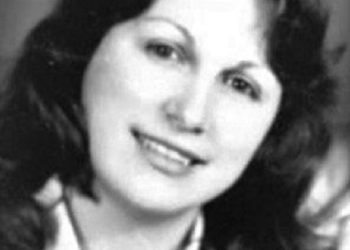
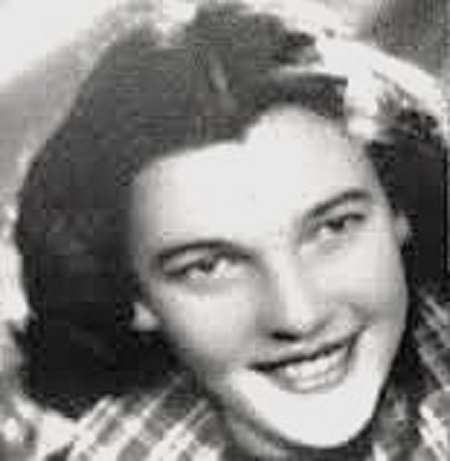
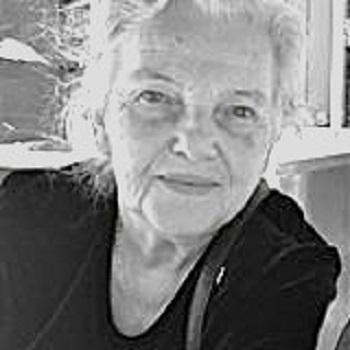
Memorie.al / She were the first in many events that made history. The first female surgeon in Albania. The first to discover threatening envelopes for a “death sentence.” The first as a Deputy in the Democratic Party, when the majority was still from the Party of Labour. The first time she confessed exclusively…! This was Rushen Golemi, the doctor who has been honored with several Albanian medals, where the highest, “Grand Master of Work,” stands out, and simultaneously included in an encyclopedia of Great Britain, where she was chosen as one of the 2,000 distinguished world personalities of the 20th century. Modest as she spoke to us about her contribution and equally modest in her way of life. When we conducted this interview, she was living with her husband, Alfred, in a small apartment, somewhere near “Rruga e Kavajës.”
It seems a little dubious to accept this as true, considering her years in surgery and politics, but all she had gained from these careers was just 800 old lek. The accounts start from 1957 when she graduated…
Ms. Golemi, how did you manage to gain the right to study Medicine?
Despite the biography, my father, Mahmut Golemi, was well-known throughout Albania, given that he had been the prefect of Durrës, Berat, Peshkopi, Korçë, etc., General Commander of the Gendarmerie in Tirana, and had worked almost all over the country. There was no Albanian who didn’t respect him. One of them was Medar Shtylla, Dean of the Faculty of Medicine. However, in fairness, it wasn’t that there were many applications to go to university at that time.
It was a time when girls were still married off before turning 16, while those who went to university were rare. I was assigned the branch of Medicine, which opened for the first time in Tirana. Only two high school graduates from Durrës went. The entire faculty had only 48 students, of whom only 8 were girls. In the end, 61 people finished the school because some students returned from abroad and joined us along the way. Almost all the professors were from Russia, while the Albanians were their assistants.
As one of the first 8 girls in the faculty, did you feel judged?
Of course…! We were counted on the fingers of one hand, and divided into groups of 12 students; there were two girls in each. During practice, and even later, patients often did not want to be examined or operated on by me, saying contemptuously that I was a woman.
When did you perform a surgical intervention for the first time?
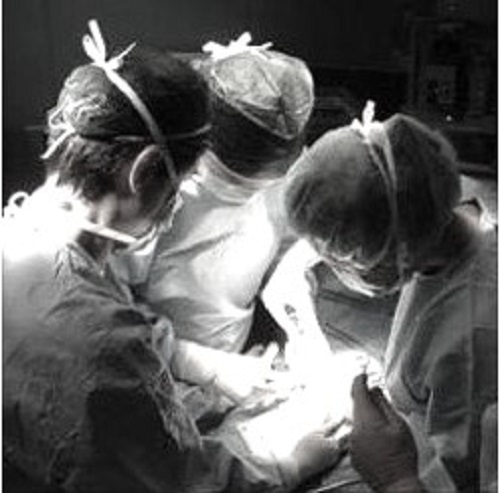
I performed my first operation in the fourth year. Even today, when I remember it, I feel emotional. I was taught by the “masters” like Professor Llambi Ziçishti and Petrit Gaçe, both true masters. One day, while I was following Professor Petrit, a patient with appendicitis was admitted to the hospital. Conditions at that time were difficult; the hospital only had one duty doctor, two nurses, and one orderly. Therefore, my presence there was a help.
I was standing on the patient’s left side, where, as always, I was watching what the professor was doing. That day, he moved me to the right side and told me to be his assistant. He gave me the operating tools and told me what to do. This was my first operation, and when I left the room, afterwards, I would ask every five minutes how the patient was. So, I returned there for a few days until he was discharged from the hospital. I remember that patient even to this day.
What else do you remember from that time to this day?
The moment of graduation, July 1957. Manush Myftiu was distributing the diplomas and would give a short speech for the best students, which included me. I was very emotional and had barely found clothes for the occasion. When it was my turn, Manush Myftiu confused my name and called me “Rustem.” At that moment, I felt very ashamed, and my enthusiasm completely dropped. Nevertheless, that was the day I officially became the first female surgeon in Albania and was appointed to the Tirana Hospital, even though I wanted to be in my hometown, Durrës.
Why, were there no female surgeons before, as I have heard that…?
No, there were only assistant surgeons or assistants with courses abroad. They had qualification certificates, but not diplomas.
During your work as a surgeon, did you lose any patients?
With regret, I say “Yes,” even two friends, who were suffering from stomach issues. It wasn’t that the operation went badly, but after the intervention, they had complications and passed away.
Did you have problems after these cases, I mean; were you punished or transferred…?
For every doctor who has such cases, the respective clarifications are made by the Hospital Council. As I told you, the problem for these patients came later. As for transfers, since we were few surgeons, I was considered essential in Tirana. However, only once at the beginning of my work was I sent on duty for 6 months to Peshkopi, where I slept in the operating room. This was in 1958, a time when many other important things happened to me.
Like what, for example?
I got engaged to Alfred, my husband. After finishing my temporary service in Peshkopi, I returned to Tirana, and concurrently, I was also a surgery lecturer.
Was your husband from Peshkopi…?
No, he lived in Tirana, but he came and met me there.
Does that mean you had a relationship before you were transferred?
No, it was an arranged engagement for me. Alfred was as known to me as he was unknown. He was studying Law in Moscow, but I had a close friendship with his sister, Doctor Krisafgji Reka. She was the wife of the Minister of Agriculture at that time, Iliaz Reka. Since Krisafgji had a small son, she often invited me to her house to study there.
And so, we became very familiar, but I knew nothing about Alfred. Shortly before I was sent on duty to Peshkopi, Iliaz mentioned him to me, but my mother initially didn’t want it because of the religious difference. They were Christians, while we were Muslims. Later, she was convinced, so we got engaged in 1959, and the wedding came a month later.
Did you have a honeymoon?
Hahaha! We did, but as honeymoons were at that time. We went to Pogradec, but we suffered greatly, as we barely found a truck to travel. After a few hours of waiting, we got on the trailer and arrived very late in Pogradec.
Due to your profession, I believe you often had to be the duty doctor. Was Alfred ever jealous?
I don’t know that, but at least he never manifested it. I can say that he never hindered me and was my right-hand man with the children. In fact, I remember one instance that is a bit funny. One day, the duty doctor called me and told me to go urgently, as a patient whose illness I knew well was experiencing problems. As an urgent case, an ambulance would come below my house. I went down and was waiting, trembling, because the temperature was $-7^{\circ}\text{C}$.
I waited and waited, but the ambulance wasn’t coming. Meanwhile, Fred came out onto the balcony and called out softly: “Come up, come up!” I signaled: “Get inside,” but he started raising his voice more for me to come up. I was embarrassed, as it looked like I had fought with him and left the house, but he only wanted to inform me that the hospital had called, and the patient had calmed down, so there was no need for me to go.
In your life as a surgeon, did you accept money?
My whole life, I received 800 old lek. And even those, I saw later in my pockets, and not at the moment when the visits or operations took place. I cannot understand the greed and corruption of today’s doctors, who bargain with people’s lives. The maximum gratitude we received from patients and their relatives was candy or some chocolate.
How did you transition from surgery to politics?
I didn’t transition immediately. While I became involved in politics, I continued to be a surgeon, as we didn’t even have a salary as deputies. As a family with a “stain on our biography,” we were immediately involved in favor of changing the communist system. In fact, my son, an adolescent at the time, participated in the overthrow of the bust of the dictator Enver Hoxha, without our knowledge. A Security officer, a family acquaintance, called about my son, Konstandin, because he had been seen pulling the bust’s rope.
We were very worried, and as soon as he came home, his sisters, Iris and Inis, took a knife and started tearing his new jacket so that, in case of arrest, he could say he was forced to participate in the overthrow of the bust. Then they took him to the neighbors on the first floor, because it was the greatest chance for him to leave or escape if they came to arrest him.
However, I don’t believe the reason for your candidacy was the episode with your son…?
Not at all, I just mentioned it as an episode. At that time, the method of selecting candidates was different. Due to many years of work as a surgeon, everyone knew me. Many of those who joined the Democratic Party had been either my students or patients.
Just like the right-wingers, as a lecturer or surgeon, the left-wingers knew you at that time. Could they have nominated you too…?
True, I was just about to say that. In 1991, the Party of Labour also wanted to nominate me, and at the same time, the Democratic Party did too. The DP people proved to be quicker, and without asking my permission, they just notified me that they had chosen me as a candidate in Tirana. However, even if the Party of Labour had chosen me first, I would not have accepted.
Where did you run?
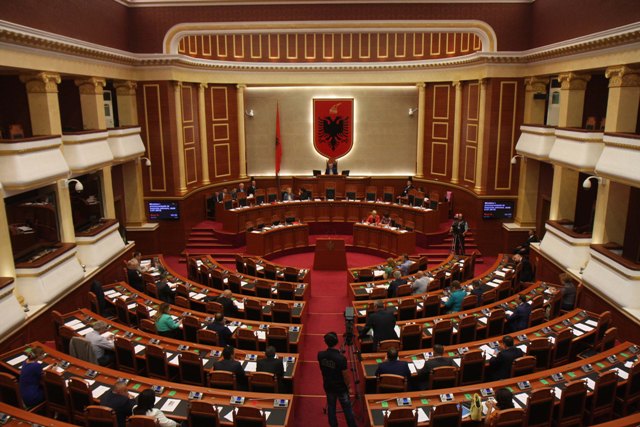
I ran against Aleks Luarasi in Tirana, whom I consider a friend today, and I won. In those elections, a total of four women deputies came out of the DP: Gjinovefa Ndrenika, Lindita Prifti, Natasha Lako, and I. A reminder, we were a total of 250 deputies, with only 75 from the DP and 175 from the Party of Labour. From the APL, there were 6: Elvira Shaplla, Gagaçe Bregaj, Nadire Prifti, Lumturi Rexha, Themie Thomai, and Marie Biba. The beginning was difficult, as I didn’t even know how to give speeches. Natasha Lako taught me little by little.
Do you recall any debate in parliament?
I recall the one with Haxhi Lleshi. A man had entered his yard, and he had shot him with a gun. This seemed very excessive to me, and I debated harshly, but also with great emotion. He actually didn’t react at all; nevertheless, I managed to raise it as an issue and change the situation.
Did you ever feel threatened while you were a deputy?
A full 5 times. 5 envelopes were sent to my house, threatening me that I was condemned to death. Not to mention the other words written there, which were the most disgusting, frightening, and terrorizing. I did not keep those envelopes; I burned or tore them immediately after reading them, as I did not want them to fall into the hands of my children, but I remember their content well. Based on these and other threats, deputies often asked to accompany me for safety, especially Azem Hajdari, but I never accepted./ Memorie.al.