From Ali Buzra
Part Thirty‑Four
LIFE UNDER PRESSURE AND SUFFERING
(APPRAISALS, COMMENTS, NARRATIVES)
Memorie.al / At the request and wish of the author, Ali Buzra, as his editor and first reader, I will briefly share with you what I experienced in this encounter with this book, which is his second (after the book “Gizaveshi through the Years”) and which naturally outlines his writing style. The sincerity and frankness of the narrative, the simple, unmodified language, the accuracy and precision of the episodes, or the absence of a deliberate, after‑the‑fact elaboration or the non‑exploitation of imagination, I believe have served the author positively, who comes to the reader in his original form, inviting us at the very least to get to know unknown human fates and sufferings, whether by chance or not, leaving us to reflect as a beginning of awareness toward a catharsis so necessary for the Albanian conscience.
Bedri Kaza
Continued from the previous issue
Refat Gurra, the son of Shaban, recounts that at weddings and funerals in the village they did not go for coffee, because they knew it might cause trouble for the families. He worked at the construction enterprise in Librazhd. He was constantly followed and surveilled. Refat was the son‑in‑law of Haxhi Balliu from Funars, a family of kulaks [wealthy peasants]. In 1976, when Haxhiu was arrested, Refat was summoned to the Department of Internal Affairs. Through pressure and torture, the Security operative demanded that he testify that Haxhiu had said to sell the cows because the cooperative would take them. It was the year when the collectivisation of small livestock began in the Librazhd district.
He was to testify that Haxhiu had told him to put iron markers on the land boundaries because a day would come when the cooperative would break up, etc. – “He didn’t tell me that,” Refat replied, “how can I sign what I don’t know?” The torturer struck him several times with his fists, leaving him unconscious. For three nights in a row, after finishing work, he was forced to go to the investigators. There they tortured him all night, and in the morning he would go to work. “Even if Haxhiu had told us, how could I sign and testify against my father‑in‑law?” Refat recounts. On the third night, after torturing him, they put him in the boot of a car and dumped him at the Spathar Bridge, telling him: “If you utter half a word, we will make you disappear without a trace.”
The surveillance and provocations against him, as well as against the other men of the kulak families of Gurra, were constant, but they were wary of spies and avoided any provocation. Refat was a master builder. With his golden hands, together with his brigade mates, they built almost all the waterworks buildings in Librazhd, as well as other facilities in the town. His brother Liman, who had taken a wife in Muzhaq in Polis, was scorned and labelled as the standard‑bearer of the kulaks. Being a skilled craftsman, he worked in the construction brigade in the Spathar sector. Working in another village, he would return home late at night. His poor mother waited with a frozen heart every night until her son returned from work, anxious and afraid that they might arrest him.
Another event, as absurd as it was significant for the forms of terror employed by the Party‑state against the so‑called kulaks, was the order to work also at night. I first learned about this from Et’hem Gurra, 98 years old, in 2016. Later, I also asked other family members of former kulaks, who painfully recounted this cruel act practiced on members of their families. An order came, it is not known from whom or who proposed it, that after the kulaks finished work in the evening, they would go to the mountain at night to collect manure and bring it to the brigade!
Et’hem, compared to the other labourers, was older, but the order made no exception, and he could not separate himself from the others. One night Et’hem took the manure from the mountain, but in a small pannier, and in the morning, together with the others, he came to the brigade centre. The brigade leader weighed the manure – as was done every day with each person – and said to him: “Seven kilograms you have.” “Seven I have, write down seven,” Et’hem told him, “but tell the one who ordered this that one of the animals was killed by the saddle, and it can’t carry more weight.”
Even Liman, who worked in Spathar, was forced after finishing work to come home, and from there go to the mountain (in Vlaskë) to bring manure to the village. Likewise, Refat, who worked at the Construction Enterprise in Librazhd, was not exempted. So, as can be seen, the problem was not unknown even to the state authorities in Librazhd; on the contrary, it might have been an instruction from them to torture and physically exhaust the *kulaks*. Refat’s wife tried to set out for the mountain earlier. She often hurried, took a sack, and brought it halfway down the road.
She left it there for her husband, who arrived late from Librazhd, and then set out again to get another for herself. In the morning, before starting work with the others, the men and women of the kulak families of Dragostunja waited with their sacks in hand for the brigade leader to weigh them. A “pure” discrimination and a true torture. Even work animals work all day and rest in the evening, whereas these people were forced to work at night as well. This work continued for nearly 20 days without interruption. Afterwards, seeing that it had become too banal and problematic, an order came to stop it.
The contempt and mistreatment of families labelled kulak were evident in various areas and regions of the country. The methods and forms of mistreatment should not be seen merely in the village or area where they occurred. There were special orientations and directives from the Party regarding these families. The implementation of the measures was based on them, with more force and brutality in some places, and milder in others; this depended on the local leaders. I say this prompted by an identical example in a village in Vlorë. In October 2018, while staying for a few days in Llixha Elbasan, I met an elderly couple from Dukat in Vlorë.
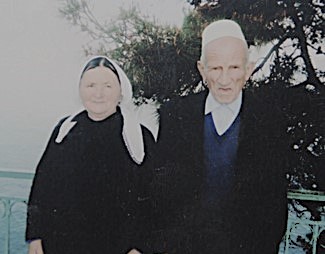
During a chance conversation with them, they told me that during the communist dictatorship they had been classified as kulaks. I was continuing my work on the book, and I asked the head of the family, Qazim Nelo, for details about their life under the dictatorship: “In Dukat, there were 50 families without a Front [i.e., not members of the Anti‑Fascist Front] card, classified as kulaks,” he told me. “When the people’s assembly was held, they first asked us to go there. Before the start of the meeting, in the large hall of the cultural centre, they lined us up in front, saying: ‘Come out, you kulaks, let us have a look at you,’ and then they would put us outside. But we could not leave. We had to stay out there until the meeting ended, and then we would go home.”
Thus, in every village and area, various forms were devised to keep these families under terror and dictation, to denigrate them, always based on the orientation of the Party‑state that governed the entire life of the country. I cite this case to say that the mistreatment inflicted on these families was not a coincidence, nor merely the wish of local authorities in villages and areas. Everything was conceived and planned by communist scribes with a Marxist‑Leninist orientation, in the service of the development of class struggle under the conditions of the dictatorship of the proletariat.
In those cases where certain elements, even communists, tended to soften the class struggle, the State Security officers—this cruel weapon of the dictatorship – were vigilant and engaged in surveillance, filling files and carrying out arrests. Not to exonerate those who zealously served the Party, but it must be said that fear was present and dominated everywhere. At the same time, I must also mention the fact that there are many examples where persons holding Party and state positions in villages acted reasonably, with restraint, and tried as much as possible to avoid any instance of mistreatment against these families, about whom they now speak with admiration.
For 45 consecutive years, in a special way, the families of Daut, Selim, and Shaban Gurra in Dragostunja experienced imprisonment, persecution, contempt, and social differentiation by the communist dictatorial system. Like many other noble families of Librazhd, they survived proudly, through work, collectivity, and love and respect for one another, throughout the years of the dictatorship. Not only their sons and daughters, but also their grandsons and granddaughters were deprived of the right to be educated to the level they deserved. The declaration of political pluralism and the overthrow of the communist dictatorship system, as elsewhere in Albania, made it possible for the kulak families of the Gurra in the village of Dragostunja to be freed from the half‑century‑long shackles and pressure.
THE VILLAGE OF DORËZ DID NOT ESCAPE SURVEILLANCE AND PERSECUTION
11.1 A brief history of the village of Dorëz and the origin of the Dosku clan
Dorëz, a village with a considerable territorial expanse, is located to the north‑east of the town of Librazhd. It borders Gizavesh to the north, Librazhd‑Qendër and Librazhd‑Katund to the south and east, and to the west the Zall i Qarrishtës, which ends at Rrapun, separates it from Zgosht. This village appears to have been inhabited since antiquity. In the Middle Ages, it is recorded under the name Dereza. In the Ottoman register of 1467, it is known as the Timar of Karagjoz, Gulan of Izir Beu, with 10 Christian families. One of the heads of families was called Gjin Derezi, who, as can be seen, bears the name of the village as a surname, which is inherited today as Dorëz.
The subsequent peopling of this settlement increased with clans coming from Mat, Dibra, Golloborda, Mallakastra, Tirana, etc., thus acquiring its present composition of 33 clans and over 400 families settled throughout its territory. A legend, which may refer to the late Middle Ages, says that three brothers came from the castle of a place called Dorëz in Tirana: Alushi, Hida, and Mustafa. The three brothers settled their families here, buying land and houses, and then left for war.
It is said that they never returned, having been killed during the fighting. The families of the three brothers mentioned lived here, from whom descend the present‑day clans of Allushi (from the family line of Alush), Hidri (from the line of Hida), and Muça (from Mustafa). In any case, this legend remains open to further research, from which data about the origin of the village clans may be discovered.
The relief of Dorëz is mainly hilly, but low‑lying flat areas are also present. The altitude above sea level ranges from 300 metres at the Zall i Rrapunit to 900 metres at the “Dosku” hill in the “Ortojon” neighbourhood. The latter has the shape of a picturesque pre‑mountain plateau extending to nearly 800 metres in altitude. It is surrounded by hills covered with oak forest, from which clear springs flow, creating a microclimate well suited to its territory.
The inhabitants of Dorëz have traditionally had a rich experience in agriculture and livestock. Dorëz has its own mountain of the same name above Qarrishta, where they pastured their livestock during the summer months. This tradition is maintained to some extent today by renowned livestock breeders such as Azem Brazhda, Xhevit Shalja, Rrahman Skeja, etc. Alongside livestock breeding, they have also developed agriculture, cultivating cereal crops, fruit trees, and vineyards.
Dorëz inherits patriotic and freedom‑loving traditions. From its bosom have come men noted for their special contribution to the national cause. In the Shkodra War of 1913 against Montenegrin forces, volunteers from Dorëz also rallied, among whom were Hamit Shkurti, Bajram Kurti, and Halil Mema. Hamit Shkurti, born in 1875, was an emigrant in Izmir. He worked for a Turkish landowner at a hunting reserve. Regarding this, he stated that news arrived there that Shkodra had been taken by Montenegro.
Hamit set off with his horse for Albania. In Greek territory, he encountered groups of looters who took his horse. He felt great regret for it, as he had used it for many years in Izmir. Hamit came home, and from there set out for Shkodra. There he served as a commander of artillery emplacements. After the war, he returned to the village, while Bajram Kurti died during the fighting.
The Dosku clan, which constitutes a significant part of the village’s history, is thought to have come from Mallakastra around the middle of the 18th century. It is said that from there came the family of Old Aliu, with his two sons, Selim the First and Mersin the First. After several decades, from their family a large clan formed with several family branches. In the branch of Hysen Dosku’s family, there were five brothers: Hysen, Halil, Daut, Banush, and Jonuz. In their time, they were economically quite well off.
They owned considerable land areas, forests, and pastures, and raised nearly 2,000 head of small livestock, cattle, draught oxen, and pack animals. Even after the brothers separated, their economy remained stable. It is said that to reach the wooden dairy containers of Halil Dosku, one had to climb a ladder. In Halil’s family, the men of the house worked, but he also employed hired labourers.
Patriotic activist Hysen Dosku, a victim of internal power struggles
One of the most prominent figures of Dorëz village, who enjoyed special prestige and authority in the village and area, was Hysen Dosku. He was a friend of Aqif Pasha Elbasani (Biçaku). Being an important figure at the time of the Declaration of Independence of the country and afterwards, Aqif Pasha trusted and found support in Hysen Dosku. In 1920, Aqif Pasha would preside over the proceedings of the Congress of Lushnja, which produced the new government headed by Sulejman Delvina. In a contemporary document signed by Aqif Pasha, it is stated that “we will not set off without Hysen Dosku from Dorëz.” Thus, it is now known that Hysen Dosku, with a group of fighters, escorted Aqif Pasha Biçaku to Lushnja, both on the way there and on the return.
The Paris Peace Conference, after many debates, decided to recognise Albania’s Independence, with some minor border changes in the north of the country. After the Congress of Lushnja, it is said that Hysen Dosku was entrusted with the duty of assistant for the north‑eastern border of Albania with the newly formed Yugoslavia in 1919. In the years 1920–24, the political situation in the country was extremely conflictual, with over 12 governments changing. Precisely in this tense situation among political groups, which also maintained and used rival armed groups, Hysen Dosku was killed together with his son Sadik, on the hill of Ortojon, by numerous opposing military forces.
In this mysterious murder, the Serbian government may also have had a hand, because of his role as assistant on the Albanian‑Yugoslav border. Contemporaries have recounted that his son Sadik died on the spot, while Hysen passed away a few hours later at home. “Do not shoot,” he told his relatives, “or the whole neighbourhood could be devastated.” Thus ended the life of one of the most renowned leaders of the region, Hysen Dosku, a result of the internal political conflicts between rival factions in the country.
Shahin Dosku, the head of the ‘Balli Kombëtar’ in Dorëz and contributor to the National Liberation War, is arrested and condemned by the communist regime
Even after Hysen’s death, the Dosku family was considered the leading family of the village of Dorëz. As everywhere, the fascist occupation of the country was met with deep indignation. The aforementioned brothers were no longer alive by the time of the war. The person who distinguished himself and became part of political life not only in Dorëz but also in the wider area was Shahin Dosku, the eldest son of Halil, who after the liberation of the country would be persecuted and imprisoned by the communist regime. From a young age, staying close to his father, he was part of the gatherings of men that met from time to time in the konak [large traditional house] of the extended family of Halil Dosku.
After his father’s death, he became the pillar of the family consisting of seven brothers: Shahin, Latif, Aziz, Sehit, Maksut, Muhamet, and Hamdi, who remained undivided. They inherited from their father a fairly good economic situation for the time. They owned about 120 dynym [approximately 120,000 m²] of land and pasture, aside from woodlands, in the “Ortojon” neighbourhood, in the centre of the village, and in Mal i Hysës. They raised nearly 1,000 head of small livestock, of which over 700 sheep and 200 goats, 15 head of cattle, 4 pack animals (mules and horses), and 20 draught oxen, of which they gave 8 yokes for work on a share basis. Their house in “Ortojon” was two‑storey, with 8 rooms. Opposite it they had another one‑storey house containing the sons’ rooms. Their family consisted of over 60 members.
The men and women of the family were engaged in agriculture and livestock breeding. Two women were housewives and performed the kitchen work. In the evenings, the women of the family sewed, made knitted garments and socks, and worked on looms, making woollen rugs. Next to the mosque of Dorëz was Halil’s old two‑storey house, which Shahin turned into a shop where various goods were sold in the village. He also placed there a tinsmith artisan named Nas Zaharia.
The latter performed simple work on household furnishings and tinned copper utensils, which at that time were widely used in village families. During the war, Shahin, with the aim of expanding his trade, built a house in Librazhd, where it is said he bought the land from the Gjeta family. The master builders who worked on the construction were Rexhep Çota from Togëzi and Ibrahim Brazhda from Dorëz. In 1943 he bought about 12 dynym of land from Murat Brazhda, which today is owned by Hamdi. / Memorie.al
To be continued in the next issue