
By Dr. Gjon Boriçi
Part Three
Memorie.al / The great debate that has unfolded over the last two centuries following the birth of Marxist theory and Christianity would undoubtedly leave its marks in harsh political clashes among countries where the communist ideal, inspired by the teachings of Marx, would persecute the societies of countries with a one-party communist system. In 19th-century Europe, after the conclusion of the Congress of Vienna and the establishment of a new system in international relations that put an end to the wars of the French Revolution, a variety of radical, republican, and socialist ideas began to flourish on the old continent. The years 1830-1840 were years of political and ambitious inspirations, taking as examples Frederick the Great, Jacobin ideas, the thoughts of Kant and Fichte, and the innovation of the new era. Marx’s political thought was formed precisely in this era. The rational legacy was particularly important for distinguishing identity from what became known in the 1830s-1840s as ‘socialism.’
Continued from the previous issue
For Catholic writers, the issue was not so simple to dismiss. Even though they were supported by Rome (Propaganda Fide) and after the 17th century by Austria, the literary work they created was something that served the Albanian cause. Henceforth, the phrase “Catholic literati” would be replaced by the phrase “the school of Catholic clergy of Shkodra,” the official enemy of socialist realist literature in Albania.
At this conference, the central figure of the Catholic Clergy in literature that had to be struck and anathematized was that of Gjergj Fishta. The Central Committee of the Party of Labour of Albania gave instructions that anyone who would report on Fishta, even if some merit was recognized before 1924, should not present that merit in the paper to be delivered at the conference. The formulation to be taken as a basis regarding Fishta’s work was as follows:
“Regardless of whatever merits Fishta may have – which will be determined by future criticism – he placed his capacity and talent in the service of imperialist puppets in our country. He primarily diverted the struggle of the Albanian people, which should have been directed against Turkey, against the neighbors; his chauvinism in ‘The Highland Lute’ has reached the level of cannibalism, also falsifying the feelings of our people.”
The School of the Catholic Clergy in Shkodra was indisputable in its cultural influence on the country, also through the two magazines “Hylli i Dritës” (The Star of Light) and “Leka”. However, the work that would be anathematized and banned until the end of the communist regime’s life in Albania was undoubtedly “Lahuta e Malësisë” (The Highland Lute). The communist regime called it a chauvinist work directed against Albania’s neighbors. According to the communist nomenklatura, “Lahuta” did not stop at chauvinism, but took chauvinism to a level of true racial hatred, characteristic of fascism and imperialism.
According to the Albanian communists, the Catholic school of Shkodra had also caused another very great damage by hindering and shaping the development of the Albanian language, enabling the triumph of the Gheg dialect or the Shkodra dialect. With this act, the Albanian communists began the regional division among Albanians.
The Efforts of the State Security (Sigurimi) to ‘Process’ the Catholic Clergy
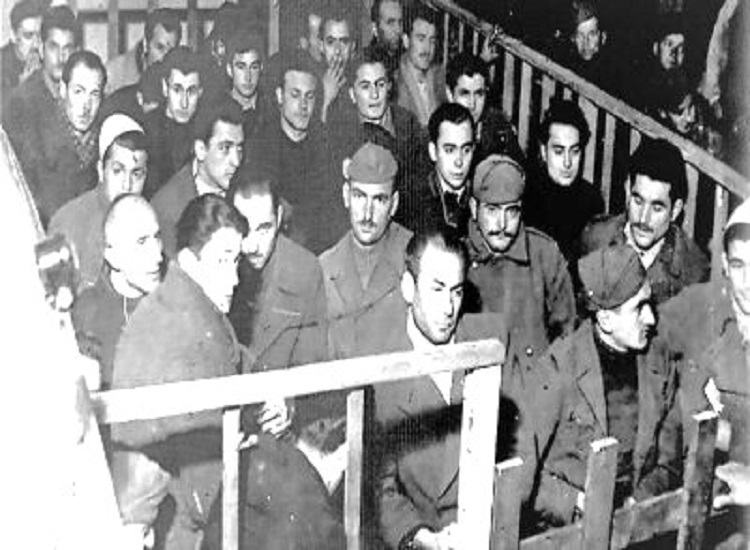
The State Security (Sigurimi), as the body that had struck the Albanian Catholic Clergy the most and the hardest, made every effort to destroy the “enemy no. 1 of the people.” If it failed to do so, then it made every effort to ‘process’ them and have them completely as a tool in its own hands. Apart from the difficult early years of the second half of the 1940s, in 1950, under immense pressure, the Albanian Catholic clergy who were still alive took an unprecedented action.
On October 5, 1950, according to a notification from Zenel Islami of the Party Committee of Puka district, three Catholic clerics, Dom Engjëll Kovaçi, Padre Leonard Shajaku, and Dom Jak Gazulli, had sent a letter to the President of the Security Council in New York, against the Anglo-American aggression in Korea. The letter from the three Catholic clerics of Puka was accompanied by three other letters, this time from Shkodra, from the Catholic Clergy in that city, as reported by Tonin Jakova on November 25, 1950.
But unlike the clerics of Puka, four Catholic clerics – Father David Pepa, Father Konrad Gjolaj, Dom Nikoll Bushati, and Dom Pjetër Tusha – had not signed the letter to the Security Council regarding the war in Korea. Particularly regarding Dom Pjetër Tusha, due to his refusal, it was recommended that he be denounced in the press. Meanwhile, the rest of the Shkodra Catholic Clergy, starting with Bishop Bernardin Shllaku, followed by the signatures of 22 other clerics, had signed the petition.
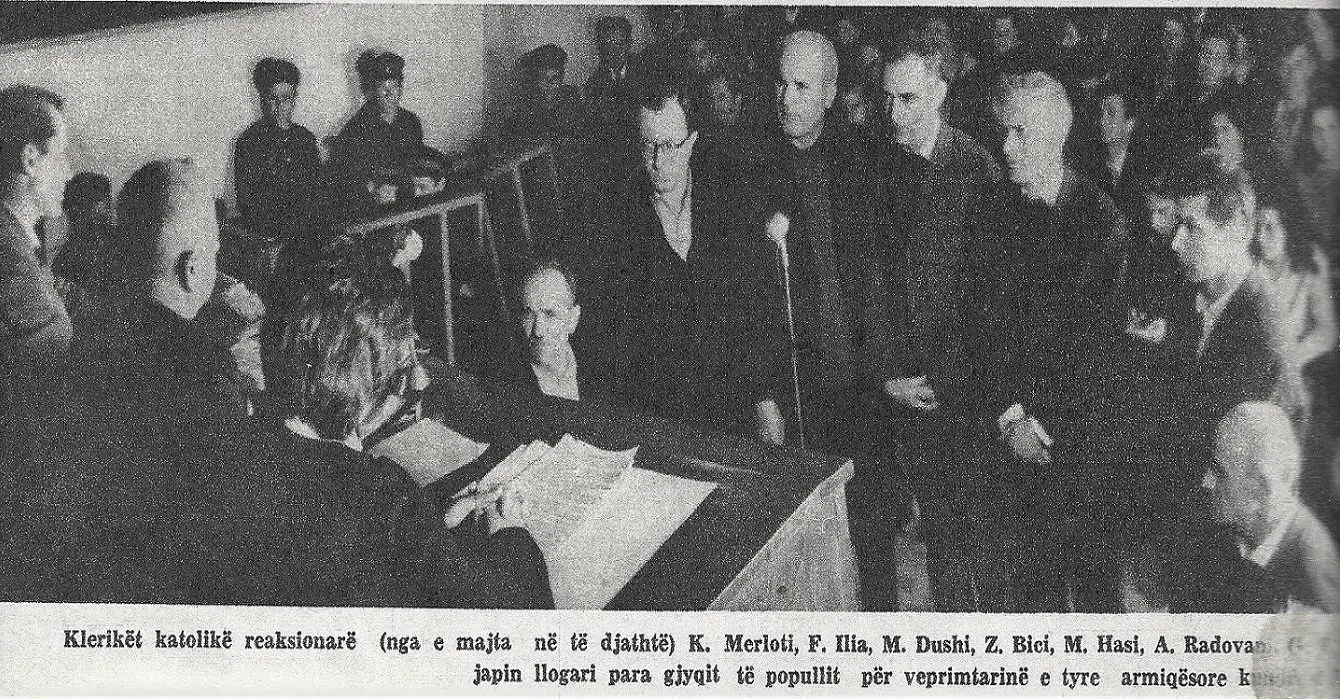
Interesting is the fact that the letter/petition was identical to the one from October signed by the clerics of Puka. There was not a shred of doubt that this letter had been prepared either in the Party Committee or in the offices of the Internal Affairs Branch. The same letter, this time undated, was also signed by the Catholic clerics of Tirana, Dom Mark Dushi, Dom Zef Bici, etc. The Catholic Abbey of Mirdita had acted the same, as had those of Zadrima, Lezhë, and Durrës.
In a 1951 report, it was emphasized that “the work of party activists, compared to the work of the Catholic Clergy, was very weak and that party cadres did not have the appropriate education to counter the doctrine of Catholicism.” Enver Hoxha himself left his notes on this rather pessimistic report. In handwriting on page 7 of this report, he wrote: “This is not good.”
The State Security could not succeed with the Catholic clergy without implicating them in every act of “treason” that occurred in the socialist camp. Thus, upon the breakdown of relations between Albania and Yugoslavia, the Catholic Clergy was attributed the “treason” of being in the service of the Yugoslav Titoists. Through pressure, the Sigurimi had also managed to recruit Catholics into the illegal bands of Pal Bib Miraka, Kol Çuni, and Zef Pjetër Marashi.
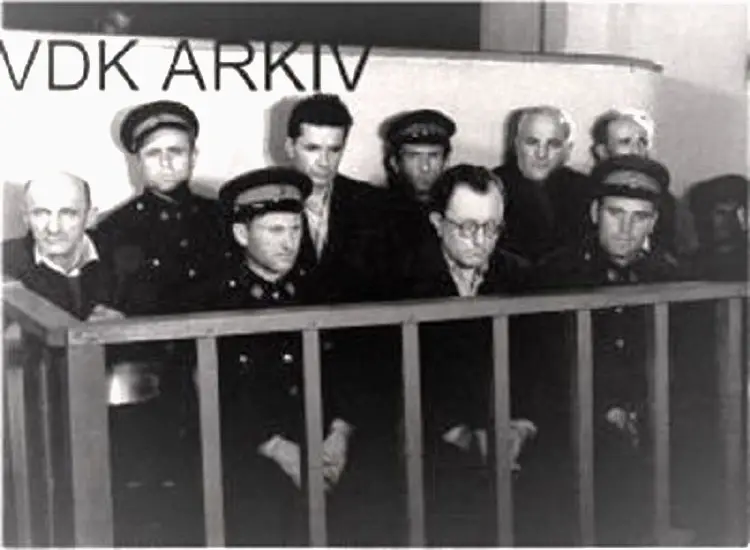
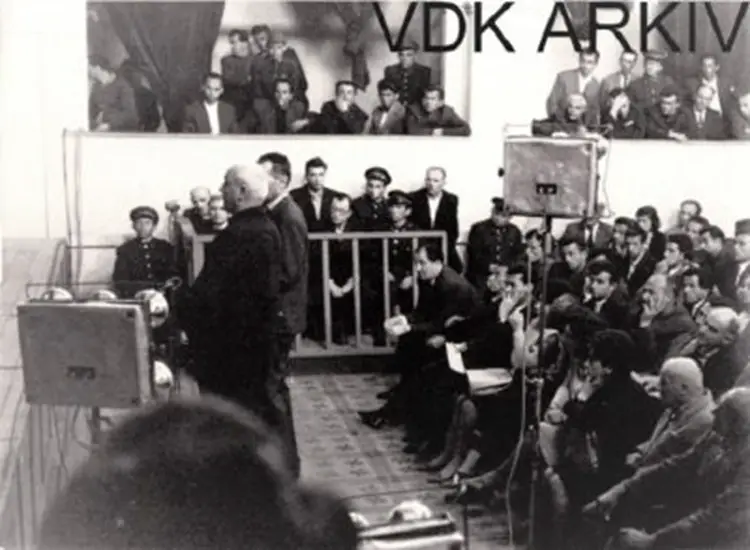
A former Catholic cleric, whose name is not disclosed, took responsibility for the “guilt” of being an agent of Italian Intelligence, confessing everything in his trial. From researching hundreds of pages of documents on the Catholic Clergy, one is struck by the fact that every Catholic priest who was executed or imprisoned and who did not accept the “guilt” is attributed with “fantasy-science-fiction” agent-like attributes.
The Deputy Minister of Internal Affairs himself, the “famous” Mihallaq Ziçishti, with a top-secret order dated November 17, 1958, ordered a plan of measures for continuing active measures against the Catholic Clergy. Any priest who refused to cooperate with the State Security organs was first interned.
His instructions are an important fact showing where the State Security had concentrated its work to recruit agents within the leadership of the Catholic Church of Albania. The ‘Xhakos’ (a term possibly referring to a specific group or individuals) were a good element to be accepted as agents by the Sigurimi; they were even promised careers in the ecclesiastical sphere if they agreed.
According to statistics I have researched from the archive of the Ministry of Internal Affairs, it appears that by the end of 1958, there were 42 free Catholic clerics in the Shkodra district, of which 9 were under ‘processing’ 2-A, 1 under B.P. processing, 17 under operational control 2-B, and 15 were contingent of the Sigurimi.
Likewise, regarding Catholic nuns, whose number was 39, 17 were under operational control 2-B. Out of 132 members of church councils, of which only 2 were in 2-A and 9 under operational control 2-B. Within the ranks of this contingent, 3 agents, 22 informants, and 2 hosts were working for the State Security.
With the closure of churches, many Catholic priests were re-arrested, while the cult buildings were turned into sports grounds for the relaxation and entertainment of the working masses. Even though it suffered the “final” blow, to the surprise of the State Security, the word of Monsignor Ernest Çoba was shocking: “We do not renounce our faith, even unto death.”
In 1973 in Shkodra, the cleric Mikel Gjergj Gjoni was arrested and sentenced to death. His execution took place in 1974. In the period 1974-1975, clerics Ndrek Krroqi and Martin Tushi were arrested, accused of being followed as potential agents in the service of foreign intelligence services. Even though, according to the Sigurimi’s own report, nothing was proven against them at trial, they were sentenced to 10 years of imprisonment each, for “agitation and propaganda”!
In 1976, former Bishop Ernest Çoba was arrested, along with his former colleagues: Zef Hardhija, Kolec Toni, Lec Balto Sahatçia, Ndoc Ndoja, and Gaspër Jubani. Their arrest was made because it was “known” that they were sworn enemies of the homeland and the people and had cooperated with internal and external reaction, against the interests of the freedom of the people and the homeland.
Interesting is the fact that in every accusation it was repeated that: The Catholic Clergy throughout all historical periods of the country had been in the service of foreign imperialist intelligence services and the Vatican. In the arrests of clerics, one notices the fabrication of accusations where they were classified as collaborators even with the “traitors” of the party, starting from Tuk Jakova to Beqir Balluku and other conspirators in the army, economy, art, culture, etc.
In 1978, in the Shkodra district, there were 33 free clerics, of which 29 had higher theological education, while 5 others had completed Franciscan school. Among them, 7 clerics were under processing 2-A by the State Security, of which 4 were followed as agents of foreign intelligence and 3 for counter-revolutionary activity in the form of agitation and propaganda. 21 were under operational control and 3 of them were contingent of the Sigurimi.
Also, the Sigurimi had identified 224 other persons who had connections with Catholic clerics, of which 7 were under processing 2-A, 37 under operational control 2-B, and 111 contingent of the Sigurimi. Apart from the above-mentioned figures, from these contingents, 21 clerics had been arrested and were serving sentences in camps and prisons.
Within the ‘processing’ ranks of the Catholic Clergy, the State Security had 6 agents and 12 informants, of which 3 had higher theological education, not to mention, according to the report, those collaborators who worked for other departments but also provided data on the ‘processings’ and contingents of this department.
Conclusions
The long battle of the communist system in Albania against the Catholic Clergy and Albanian Catholics in general ended when, on November 11, 1990, in the city of Shkodra, Dom Simon Jubani celebrated the first mass after 23 years in Albania. The information coming from Shkodra about the mushrooming of religious cults after the rain was the most significant fact regarding the failure of the communist regime in its war against religion in Albania and the Catholic Clergy in particular.
It was a long 45-year battle that began in 1945 and ended in 1990. Enver Hoxha himself, in his speech before the “elections” of 1982, had declared that religious belief and its practice were left to the judgment of each individual. In the second half of the 1980s, pressure from Western states on the communist government of Albania was increasing, and permitted visits by some Albanian clerics who had fled the country were becoming more frequent.
The culminating visit of an Albanian cleric was that of Mother Teresa in August 1989. During her visit, Mother Teresa was also met by Enver Hoxha’s widow, Nexhmije. In every report I have researched from the documents of the former State Security regarding the “hostile” activity against the homeland and the people of the Catholic Clergy, almost at the end of each report, the phrase was repeated: “they have not renounced the struggle against the people’s power and the dictatorship of the proletariat.”
The massive ignorance of the Albanian communists was laughable! Despite all these physical, psychological, and propaganda attacks, they still did not understand one very simple thing. Catholicism is the only State-Religion in the world. Catholicism, not only in Albania but everywhere in the world, is not simply a symbol, nor a flag, nor a currency, nor a person; it is a system that has lived for 20 centuries with an emblem, the Cross of Christ, and with an authority on earth of this emblem, the Pope of Rome.
The Albanian communists had taken the “flag” of anti-religion and anti-Catholicism in particular, without understanding that they were simply committing one more crime against the Albanian people and society. In conclusion, the debate between Father Zef Pllumi and the brother of Ramiz Alia, in the last week of religious freedom in 1967, when the latter tries to “explain” to him the non-existence of God, is very telling:
“Father Zef Pllumi: Now I am starting from that materialist thesis of yours, which says that the brain produces ideas, the brain being matter – ideas cannot emerge outside of matter, or its possible real forms.’ Based on this materialist theory, which you defend with such fanaticism, I ask you: God, who you say was created by the human brain, can he be a creature not based in reality? Can the human mind create something that does not exist? I am asking you these questions, based on the theses of your philosophy.”
The brother of Ramiz Alia: Wretch! Wretch! I have heard that the Catholic Clergy is very vile, but to go this far, to try to prove the existence of God through materialist doctrine, this I had neither heard nor ever imagined!… You truly have proven to be wretches.” / Memorie.al