

Part Two
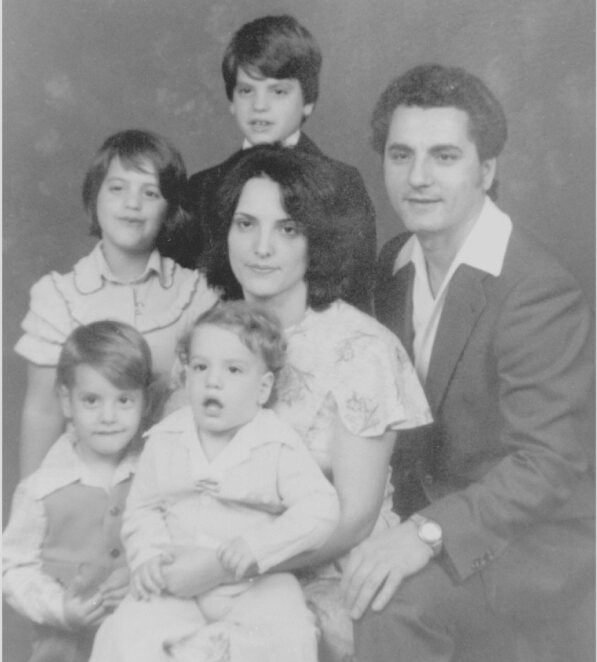
Memorie.al / On April 13, 2022, Zef Balaj, the well-known businessman and activist of the Albanian community, passed away. For several decades, he was a participant in all the most important events of our community. A staunch supporter of the “Albanian American Civic League,” the “Vatra” Federation, the Albanian Catholic Church in New York, and the newspaper “Illyria.” On this occasion, we are republishing this section dedicated to him and his family in the book “Albanians of America,” authored by Vehbi Bajrami, the publisher of the “Illyria” newspaper in New York. The black-and-white photographs are part of the book, donated by the deceased himself.
Continued from the previous issue
New York
On the night of June 30, 1951, the six-member Balaj family left their home and everything else they owned and took the path of escape. Knowing that the Sigurimi (Secret Police) forces were already monitoring them, the Balajs, instead of going to Vau i Dardhës (Dardha Ford), as everyone who left their homeland did, went to the Bjeshkët e Dardhës (Dardha Mountains). After two weeks, the food they had brought with them ran out. They now had to fight against hunger as well. They went three days and three nights without eating anything.
Finally, after finding just enough food to keep their spirits up, they set off toward Vau i Dardhës. There, they took another family with them and resupplied themselves with food. Traveling at night and hiding during the day, they crossed the Drin River and reached Qafa e Zogajve in Malësia e Gjakovës (Gjakova Highlands). Zef, with his mother, sister, two brothers, and sister-in-law, stayed for 10 years in Kosovo. They never felt calm or safe during the time they lived in Meja and Novosela of Gjakova, Pozhoran and Kabash of Vitia, and in Binça, where they resided the longest.
After finishing primary school, Zef continued his studies at the Pristina Gymnasium along with Gjin Lekë Buçaj, Zef Përnoca, Ali Çela, Sejdi Bitiçi, Zenun and Hamdi Nezaj, and many others, whom he would meet again many years later in refugee camps in Italy and distant America. In 1959, the Balaj family, except for Zef, was transferred to the Gerovë camp. A few months later, he also went there with the goal of moving to the Free World. But achieving that was not easy.
It was destined that the Balajs, having crossed the border once in 1951 and, thanks to God, having been saved, now had to take the next, equally dangerous step: to cross the Yugoslav border to reach Italy. And one day, after much effort to get out of the camp, together with the Përpepaj family and Lina’s uncle, Pren Kuraj, they set off. Somewhere above Rijeka, the Yugoslav authorities tracked them down, caught them, and returned them to the camp. The authorities took revenge. They kept all the men in solitary confinement for 30 days.
After being released, they decided to attempt the insecure route towards Italy again. This time the journey was successful. They crossed the border and arrived in Trieste. These two families were among the first to escape the camp. Later, others followed their example and did the same. Thus, about 20 families gathered in Trieste. The influx of refugees into Italy caused relations with Yugoslavia to become strained. Not only Albanians but also Yugoslavs were crossing the border, and Italy was sending the latter back from where they came.
Italy accused Yugoslavia of being unable to secure its own border to prevent all those violations. Initially, Italy did not know how to handle the escapees from Albania, as Yugoslavia would not accept them since they did not have the citizenship of that country. For months and years, Italy neither sheltered them in safe places nor returned them. Finally, after two years, the Balaj family was allowed to immigrate to America, the land of freedom and hope that they had lost in their own country.
On March 2, 2002, the Balaj family celebrated the 40th anniversary of their arrival on the new continent. When one day Zef, nostalgic for his homeland, told his relatives that four decades had passed since they came to America, one of the children suggested they have a “party.” This anniversary is worth celebrating with joy. His idea was approved by everyone. They reserved a restaurant, brought the musical group of Raif Hyseni and Merita Halili, whom Zef had known for a long time and respected, as they often entertained our diaspora at national holidays without any compensation. 45 family members, most of them born in America, gathered together and, with a table full of food and drinks, thanked “holy America” once again, where they have created a good life and lack nothing but the longing for their homeland.
Until 1990, the Balajs did not see their relatives they had left behind, who endured a life of suffering. The communist government treated all families of escapees poorly. They were imprisoned and forced into hard labor. Those who emigrated to the free world created material well-being, but spiritually remained broken. They were even more shattered when they went back after communism fell. They found the country worse than they had imagined. How much that nation had suffered under the dictatorship? It will take entire decades to heal the wounds inflicted by that ominous system.
The emigrants from Albania worked against that regime since the time they arrived in America. They held demonstrations, wrote letters, and petitions to American politicians and institutions. Zef was one of them. Be that as it may, even though he and the other emigrants hated Enver Hoxha’s regime, they loved Albania. When foreigners, in this case the Greeks, sought to grab Southern Albania from Albania, the Albanians united and came out against them.
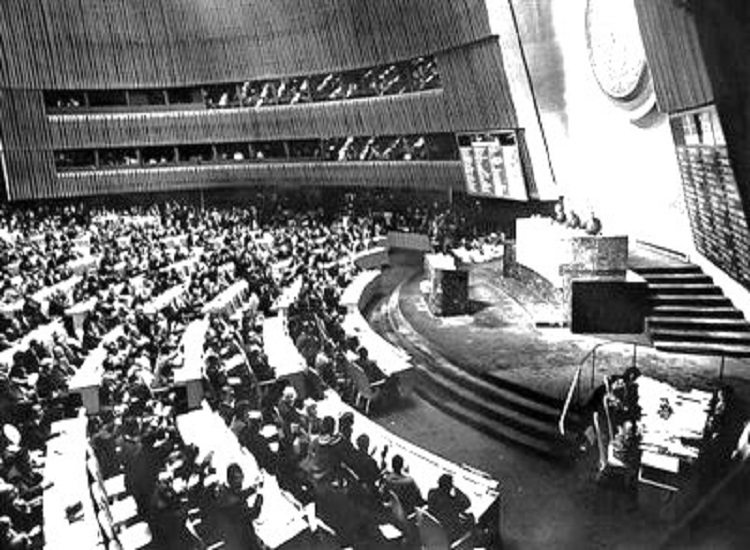
In 1962, the same year Zef came to America, an anti-communist demonstration was organized in front of the United Nations. It coincided with Mehmet Shehu’s speech at the UN. That same day, Greeks were demonstrating on the other side, not against Mehmet Shehu, but against Albania. They demanded the so-called “Vorio Epir.” The Albanians “forgot” Mehmet Shehu and turned the demonstration into an anti-Greek manifestation. Physical clashes began between the Greeks and Albanians, with the latter emerging victorious.
Even though they were fewer in number, Zef, Pren Kuraj, Gjokë Dragusha, Bibë Gjoka, Prel Përpepaj, etc., were younger and proved more determined against their opponents. The conflict was even reflected on the front pages of American newspapers such as the “Daily News.”
– “I heard that Mehmet Shehu, later on, declared about us: traitors, traitors, but when it comes to his homeland, the Albanian shows his true self,” – recounts Zef.
He developed his activity on two fronts: against communism in Albania and against the oppressive regime of Belgrade towards Albanians in Kosovo, Macedonia, Montenegro, and Preševo and its surroundings. In demonstrations and meetings, he was always ready to offer his help. When asked where he is from, Zef answers: “Born in Mzi, Albania, raised in Kosovo, and grown old in America.”
Today he is active in the Pan-Albanian Federation “Vatra,” where he is a member of the presidency, and in the “Albanian-American Civic League,” where he is part of the governing board. – “What ‘Vatra’ did for Albania at the beginning of the last century, the League did for Kosovo many years later. There have never been organizations in the community like them that developed such fruitful activity for the national cause,” – says Zef, who is also one of the initiators for the founding of the Albanian Catholic Church in New York.
He supported it morally and materially all the time, just as he supported numerous activities for Albania and Kosovo. Through “Vatra,” he also helped the Albanian Orthodox Church “Saint Mary” in Elbasan, led by Father Nikollë Marku. Zef has also been benevolent towards the Albanian book. Last year, together with his brother Pjetër, he sponsored the book by historian Beqir Meta on Albanian-Greek relations. Zef emigrated here with his brothers and never separated from them.
He is grateful to them that when they decided to escape abroad, they did not turn their backs on him, as happened with many others, but took him with them and taught him how to walk safely on the difficult paths of life. Zef and Lina Balaj are today successful businessmen in New York. Their company “Balaj Realty,” located in the Bronx, deals with real estate.
– “Albanians in America have mainly had success in two businesses: real estate and the restaurant field. They started working here, washing dishes and cleaning buildings, and step by step have reached where they are today: well-known businessmen throughout New York,” – he says and sets off to meet his old friend, Sejdi Bitiçi, in his beautiful restaurant in Manhattan.
Zef and Lina paid special attention to the education of their children. The eldest, David, graduated from “Fordham University” and earned a doctorate in real estate; the second, Geraldina, from “Pace University”; the third, Daniel, after graduating from “Manhattan College,” continued his studies and became a certified teacher, while the fourth, Joseph, also graduated from “Pace University.” David’s wife, Maria, daughter of Gjon Zadrima from Ulcinj, is a lawyer. In March 2000, God blessed them with twins: Luka and Natalia. Zef and Lina Balaj became grandparents. They spend their free time with their granddaughter and grandson. Memorie.al