
By Prof. Gjon Sinishta*
Part One
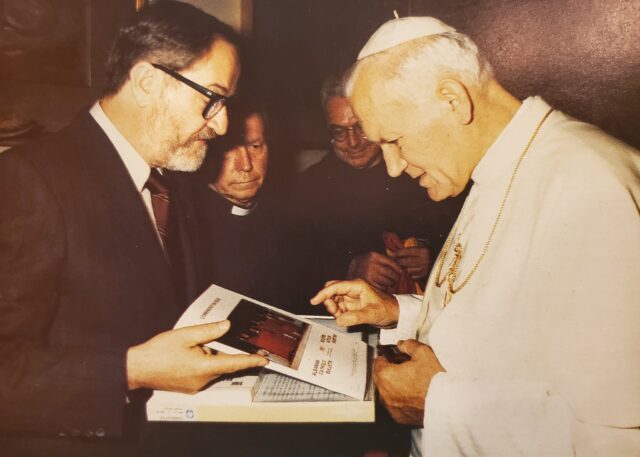
Memorie.al / The following material is a not very well-known document for the Albanian reader, a scan of the persecution of the clergy and religious faith in Albania, written by Prof. Gjon Sinishta in 1983, an Albanian anti-communist originally from Montenegro, imprisoned in former Yugoslavia in the 1950s. At the time of the material’s publication, he was a professor at the University of San Francisco in the USA. Mr. Sinishta himself had studied at the Jesuit Seminary of Shkodra until 1946, with the desire to become a priest, therefore his approach to the violation of the rights of believers in communist Albania is unique and of particular importance.
Gjon Sinishta was born on April 8, 1929, in Podgorica, Montenegro, then part of Yugoslavia, and died on May 9, 1995, in San Francisco, USA. He attended the Jesuit Seminary of Shkodra until 1946, hoping to become a priest. After the closure of the school and the communist repression against Catholics in the north of the country, Gjon and his family moved back to Yugoslavia, where he worked for several years in radio, until in 1956 he was arrested as an anti-communist and sentenced to 5 years in prison. After leaving prison, he escaped to Austria, then went to Italy, and in 1965 immigrated to the USA.
Sinishta completed his university studies in Michigan and graduated from John Carroll University in Cleveland, Ohio. In 1967, he published “Sacrifice for Albania (1946–66)”, dedicated to the persecution of the clergy by the communists. Later, he founded the “Albanian Catholic Information Center” at the University of Santa Clara in California, which moved with him in 1977 to San Francisco, to the Jesuit University, where from 1980 the “Albanian Catholic Bulletin” would also be published. His main work remains “The Promised Kept”, published in English, Italian, and Spanish in 1976 in Santa Clara, California, on communist persecution.
Repression has been a bitter truth for years in Albania. The communist government, which has been in power for 38 years, has a shocking record against human rights. From its very beginnings in 1944, this government has continuously abused the most elementary rights and freedoms of Albanian citizens, openly violating the laws and international agreements which it solemnly agreed to uphold.
Although the illegal acts of the Albanian government against its citizens are numerous, here I will present only one aspect that has recently drawn attention, namely the abolition of religious beliefs and practices. Before 1967, the communist government, which theoretically supported religious freedom by constitution, in fact mercilessly interfered with those who exercised the right to practice and profess their religion. This farce ended in 1967 when the government, by outlawing religious practice, in fact “legalized” religious persecution.
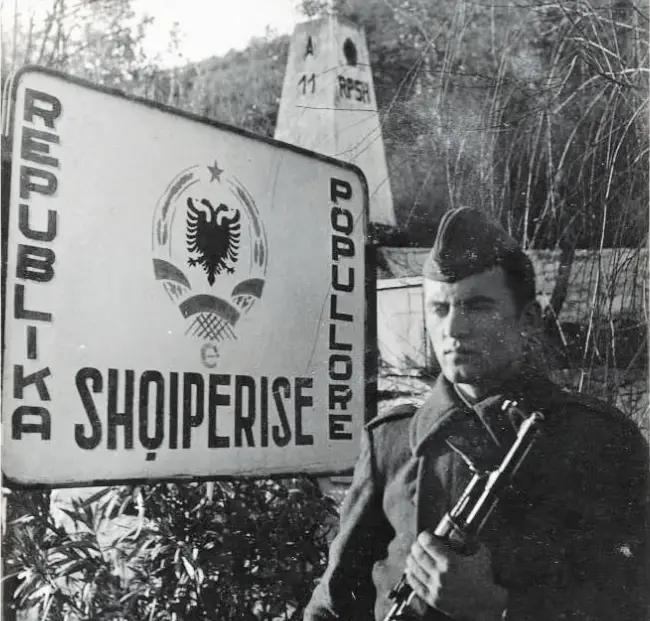
To better understand this situation, it is necessary to present a brief background on the country and the Albanian people. Albania is a small mountainous country on the eastern shores of the Adriatic and Ionian Seas, between Yugoslavia and Greece. Only forty miles of the Adriatic Sea separate Albania from Italy. Its size is about 11,100 square miles. Albanians are descendants of the ancient Illyrian tribes, considered the oldest inhabitants of Europe. They call themselves in their native language “sons of the eagles,” and their land “the land of the eagles.”
Saint Paul himself introduced Christianity to Albania during his missionary journeys. Dioceses such as Durrachium (Durrës), Aulon (Vlorë), Scodra (Shkodër), and Nicopolis (Preveza) are among the oldest in the world. However, during the long rule of the Ottoman Empire, which lasted from the fifteenth century until 1912, a large number of Albanians, especially in the lowlands, converted to Islam. Today Albania is the only European country with a Muslim majority of 68%; the remainder is 19% Christian Orthodox and 13% Catholic.
The total population of Albania today is about three million. However, more than three million Albanians live outside the country. About two million reside in Yugoslavia; there are 200,000 in the USA and Canada, including the Italo-Albanians called Arbëreshë; in Italy 300,000; and the rest in Greece, Turkey, Romania, and other countries.
After gaining independence from Ottoman rule in 1912, Albania became a battlefield during World War I and was occupied by Italy and Germany during World War II. After regaining its independence in 1944, Albania ended up in the hands of ruthless communist rulers led by Enver Hoxha, who also began the process of destroying religious freedom, a process that has not softened over time but has, in fact, intensified.
This deliberate political process of inciting hatred against religion clearly confirms the determination of the Albanian government and the Communist Party to eliminate religion – with particular emphasis against Catholicism – from national life, both by force and by legislation.
Religion as a target
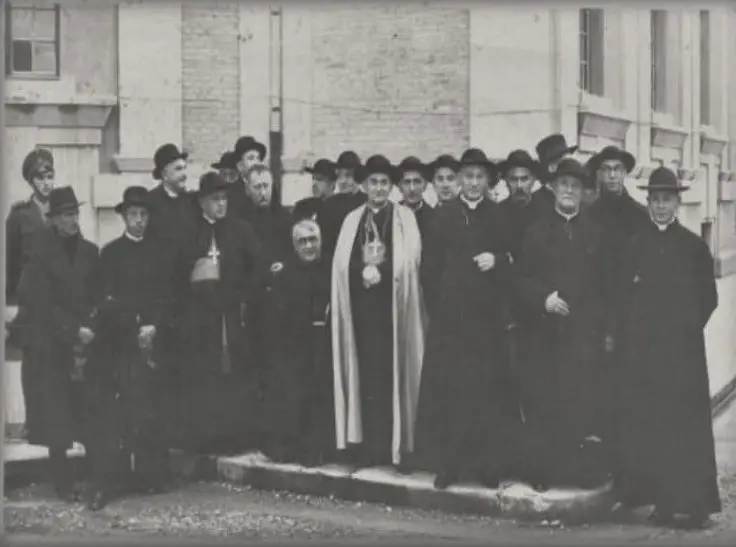
Between the World Wars, Christians and Muslims were free to practice their religion in a spirit of mutual trust and ecumenical relations. With the advent of communism at the end of 1944, this freedom and harmonious relationship among believers began to be deliberately attacked. The new government, as soon as it consolidated power, launched a dual anti-religious program.
First, in an effort to dominate all religious faiths, the communist authorities began to reduce the entire religious structure in the country in order to undermine it spiritually and functionally, exploiting whatever formal power the churches had in support of the aims of international communism. Second, as a simultaneous measure, the regime implemented continuous public agitation against religion.
In carrying out this overall program, the regime followed three distinct but interrelated strategies:
- Tolerance, within limits, of Islam. In general, with some exceptions among the high clergy, the Muslim faith was not a major obstacle to the new regime. By applying feigned leniency, the government wanted to use it as a propaganda tool towards the Muslim world.
- Although the regime considered Eastern Orthodoxy generally hostile, it nevertheless tried to use the Orthodox Church because of its traditional patriotism, as an instrument to mobilize the Orthodox population of Albania behind its own policies.
- The complete elimination of Catholicism because of its strong spiritual, cultural, and organizational power. For centuries, the clergy and followers of this church were the leaders of the national, cultural, and religious renewal of the Albanians. The vast majority of Catholics were not well-disposed toward the new (communist) regime.
To pursue this program, the government and the apparatus within the Communist Party devised various methods to deprive the churches of their basic income, to curb their influence, and to outlaw religious teaching in public, expropriating the property of monasteries and religious orders, all the various schools, including seminaries, libraries, etc.
At the same time, propaganda organs engaged in a massive slander campaign against all religious leaders, especially the most steadfast, with the aim of discrediting their spiritual leadership and moral character. New laws and special orders that soon followed prohibited the election or appointment of church officials without government approval.
All pastoral letters, messages, speeches, and memoranda to be printed or made public in any form had to be sent to the Council of Ministers prior to publication. Furthermore, the new laws required that the education of the young be done only by the state. Likewise, religious communities were forbidden to operate in hospitals, orphanages, welfare institutions, printing presses, and to own real estate.
The Muslim Faith
Enver Hoxha, the head of the Albanian communists, who is himself a Muslim, has repeatedly stated that: “The Muslim faith, its followers and its clergy were not a serious obstacle. Even before the occupation of the country, but even more so afterwards, the hierarchy of the Muslim faith was weak, without the proper experience to cause us trouble…! On the other hand, the Party and the government could not offend the religious feelings of a large number of Muslims closely connected with the Party and the people’s power…!” (History of the Party of Labour of Albania, pp. 622-624).
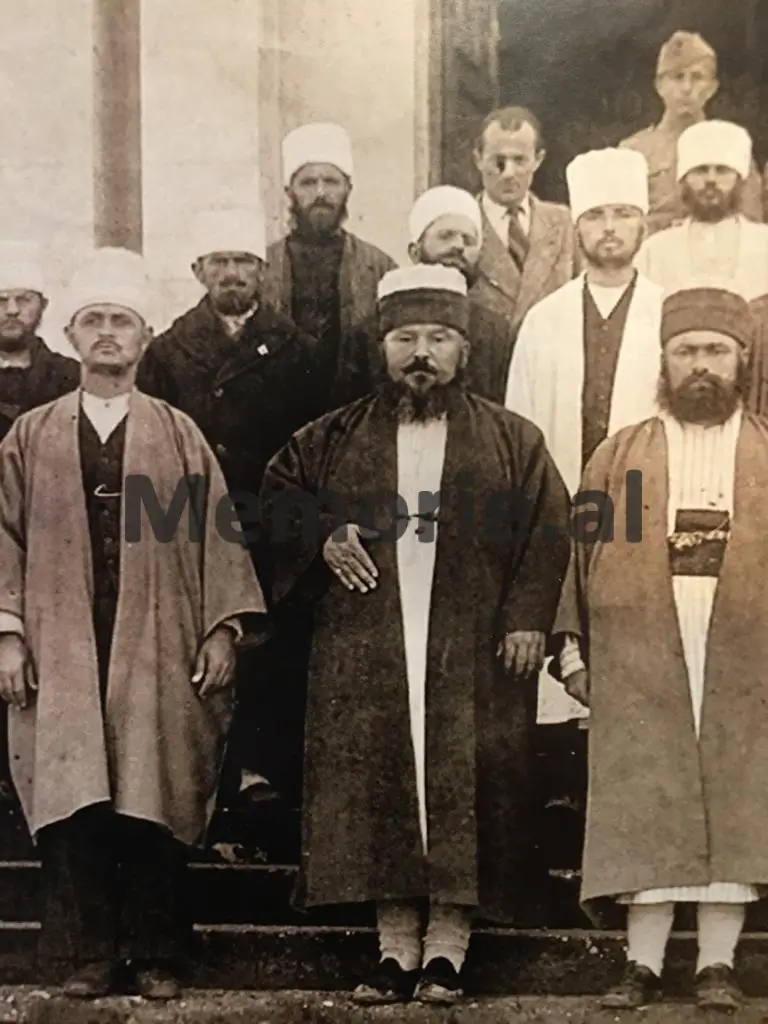
Thus, within a short period, without direct confrontation, the regime managed to completely control this faith by attacking separately, one after another, the numerous Muslim sects in Albania, to systematically weaken the entire complex of this religious body. Initially, the regime favored the powerful Bektashi sect and three of their leaders: Baba Faja, Baba Fejzo, and Sheh Karbunara were elected “deputies to the People’s Assembly in 1945.” When all three were later killed, this alliance came to an abrupt end.
Then the regime used the well-known tactics of imprisonment, torture, and execution of the entire leadership of the Muslim clergy, who were: Baba Zylfo, Baba Qamili, Baba Ali Tomori, Baba Myrteza, Baba Xhemal Koshtani (Sheikh of Bilisht), Mustafa Varoshi (Mufti of Durrës), Baba Kamberi, and Dede Abazi. Others, such as Hafiz Ibrahim Dalliu, Sheh Xhemal of the Tirana Bazaar, Hafiz Ali Tari of Shkodra, and Hafiz Ibrahim Dibra, the Grand Mufti of Albania, were sentenced to long imprisonments or were sent to forced labor camps never to return.
It is worth noting that the communist government used the Muslim faith for a considerable period of time to fulfill a specific purpose regarding Muslim countries, demonstrating to them “the harmonious compatibility of the Muslim community with communism.” Under the guise of religious and cultural aims, numerous Albanian Muslim delegations were quite active in the Middle East and North Africa to propagate the Moscow line and peace initiatives. At the same time, delegations from these societies were invited to visit Albania and see “progressive” Muslim life for themselves.
However, in 1967 when Enver Hoxha began the frontal attack against all religions, this activity was interrupted. The Muslim world reacted very critically to this anti-constitutional and anti-human measure of the Albanian government against its own people. Al Arabi, an Islamic cultural publication from Kuwait with the largest circulation in the Arab world, clearly stated in an article about Albania: “Albania has never been a Muslim state in the constitutional sense of the word, and the 1967 decree (abolishing all religions) is a natural process of the development of the religious question in Albania”!
The Orthodox Church
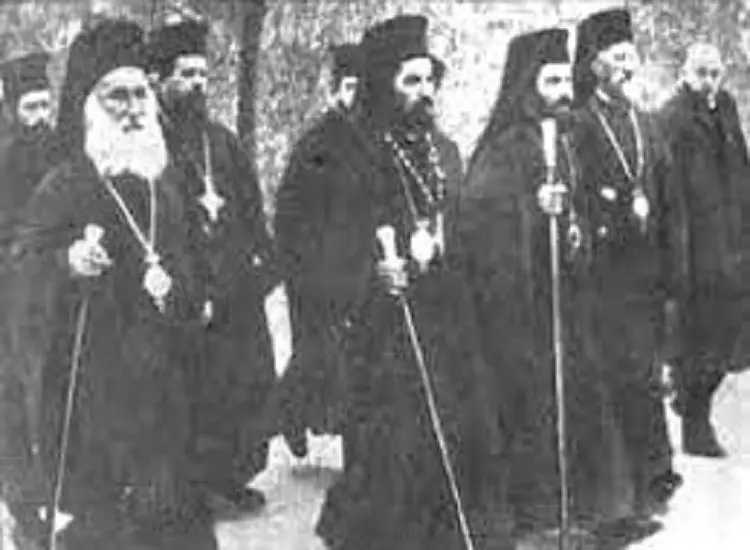
Albanian Orthodox Christians and their church have not always found it easy to declare their faith and national identity. Proclaimed as Greeks because of their adherence to Orthodoxy by Greek chauvinist clergymen and politicians, they have fought vigorously to identify with the Albanian nation. Because of the traditional nationalist character of the Orthodox Church, the government’s plan was, first and foremost, to use it as an instrument to mobilize the Orthodox population behind its own policies.
At the same time, steps were taken to eliminate elements within the Church considered “untrustworthy.” To succeed with the plan, all churches and monasteries were infiltrated by communist agents and sympathizers. Immediately after the implementation of this, the regime placed the entire Church under its control. Their only seminary was closed, while several church and monastery buildings, such as those of Ardenica, Narta, Vlorë, and Voskopoja, were confiscated.
The elimination of the heads of the Orthodox Church was carried out in the same manner as with the Muslim and Catholic clergy – by murder, execution, imprisonment, and torture. Thus, during a period of less than five years, the regime killed or imprisoned in jails and labor camps most of the hierarchy, which included: Visarion Xhuvani, Archbishop of Elbasan; Bishop Irine of Apollonia (Pojan); Bishop Agathangjel Cance of Berat; Bishop Irine, deputy-metropolitan of Korçë and Gjirokastër; Papas Josif Papmihaili, promoter of the Uniate Church; and many other simple priests and deacons.
The highly cultured Archbishop Kristofor Kisi, head of the Albanian Orthodox Church, was removed and taken to prison, where he died humiliated. He was replaced by the government with Pais Vodica, an ordinary married priest and communist agitator.
As in the case of the Muslim faith, the government also used the Orthodox Church for foreign policy purposes. During the Soviet tutelage of Albania, the Autocephalous Orthodox Church of Albania was forced to cooperate closely with the Moscow Patriarchate, and Pais Vodica participated on behalf of the Albanian Orthodox Church in all the peace conferences organized by the Soviet Union. However, after Albania broke with Moscow in 1961, the ties between the two churches were abruptly cut off. / Memorie.al
*University of San Francisco (1983)
Taken from the book of George Fox University, “Occasional Papers on Religion in Eastern Europe,” Volume 3, No. 5.
To be continued in the next issue