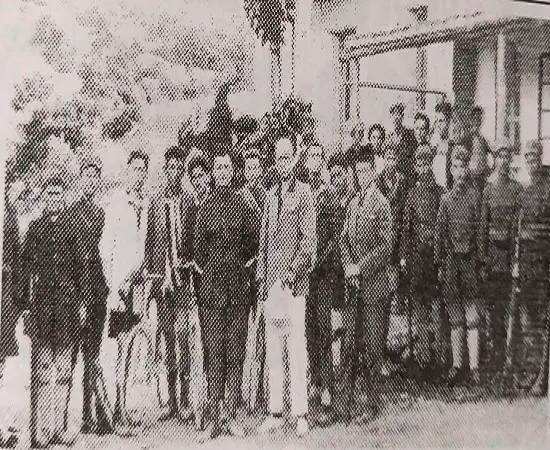
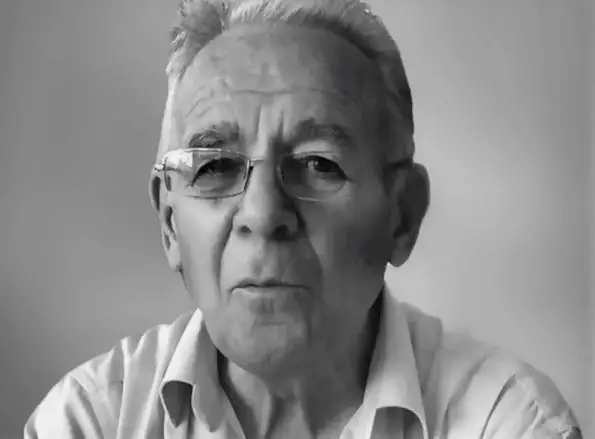

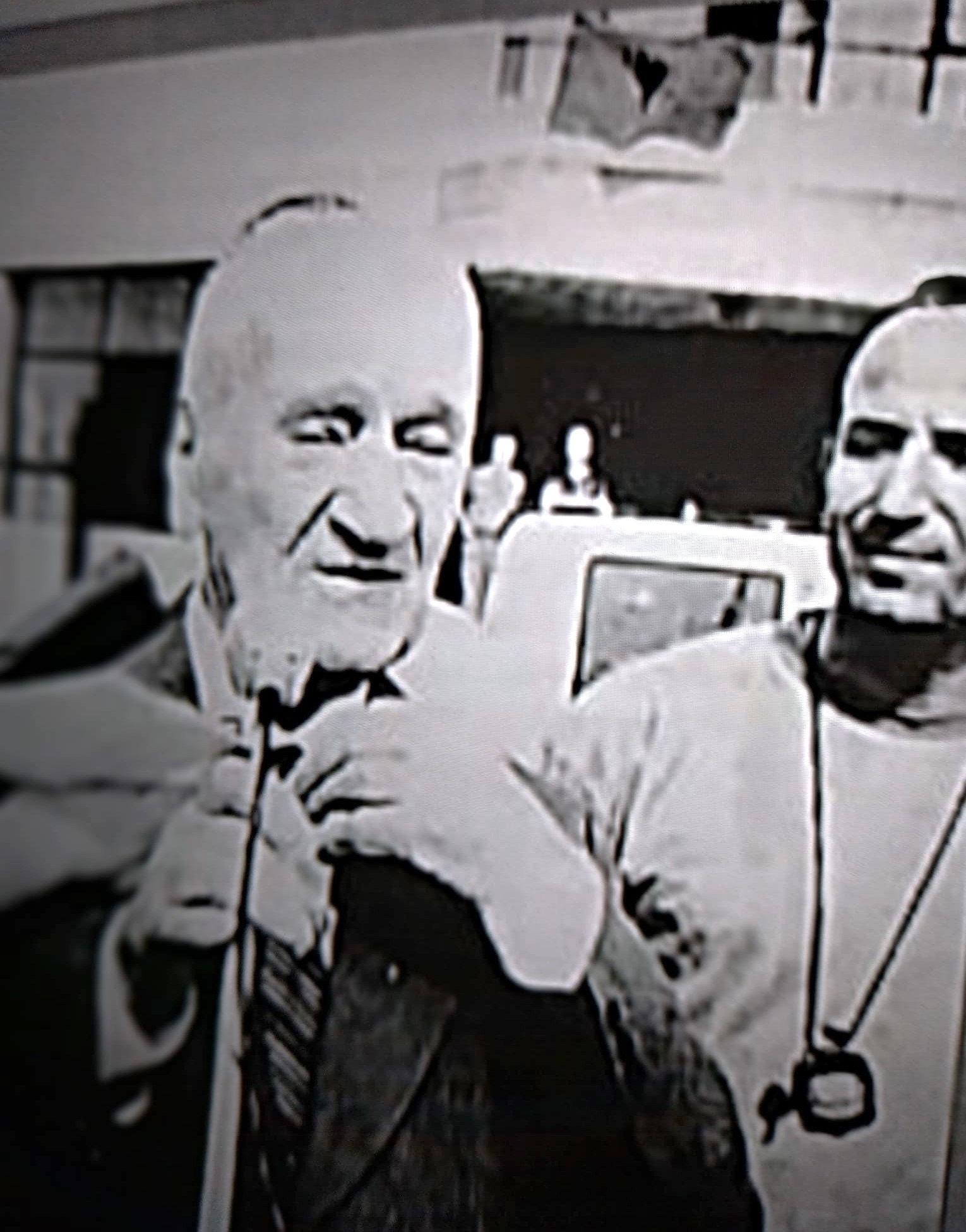
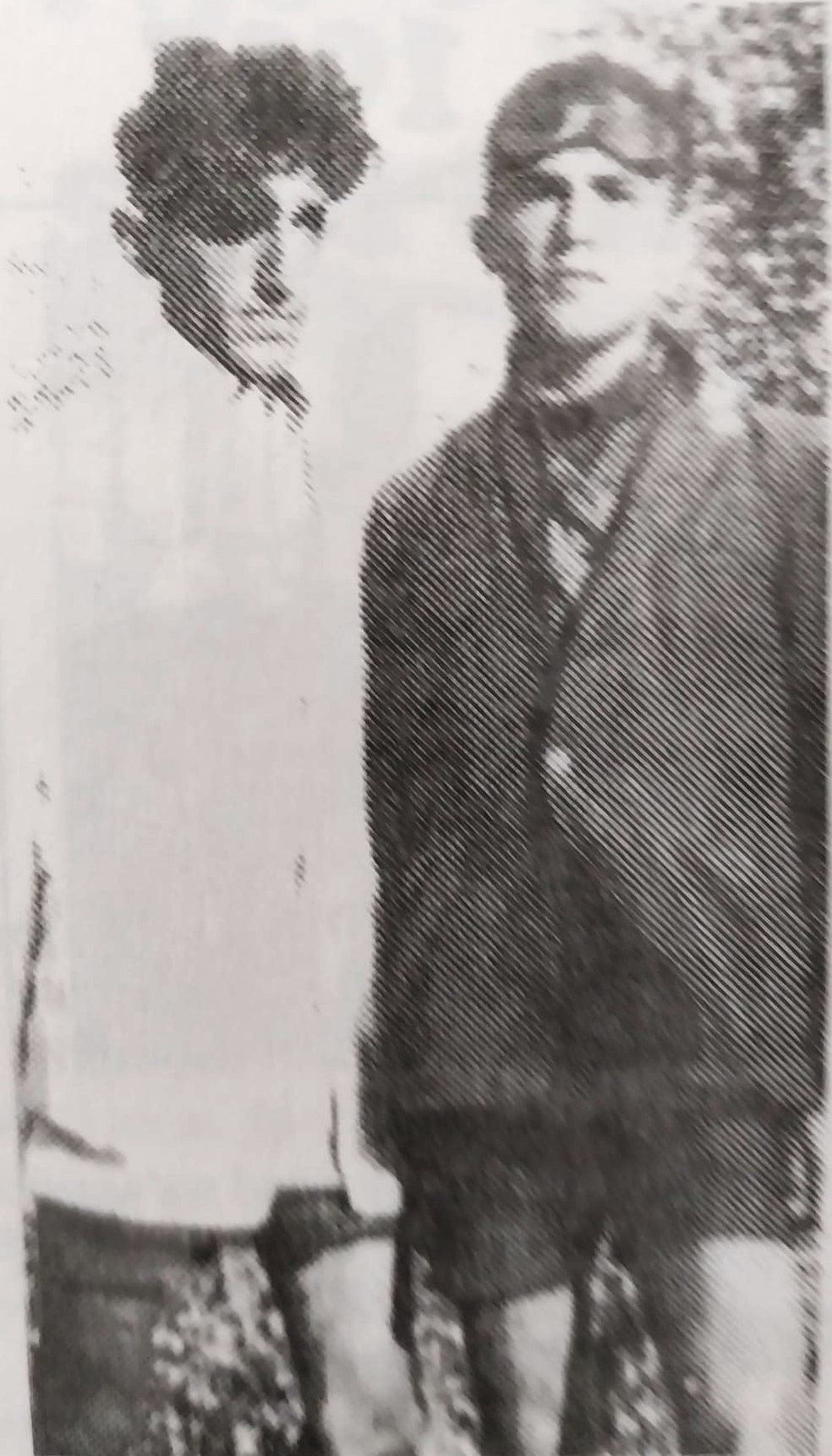
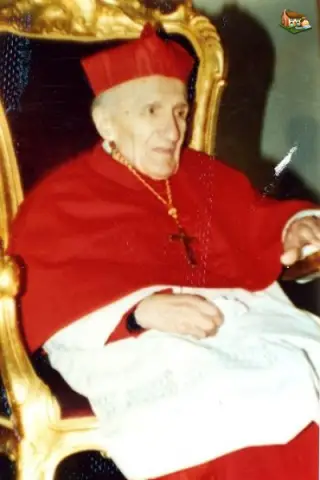
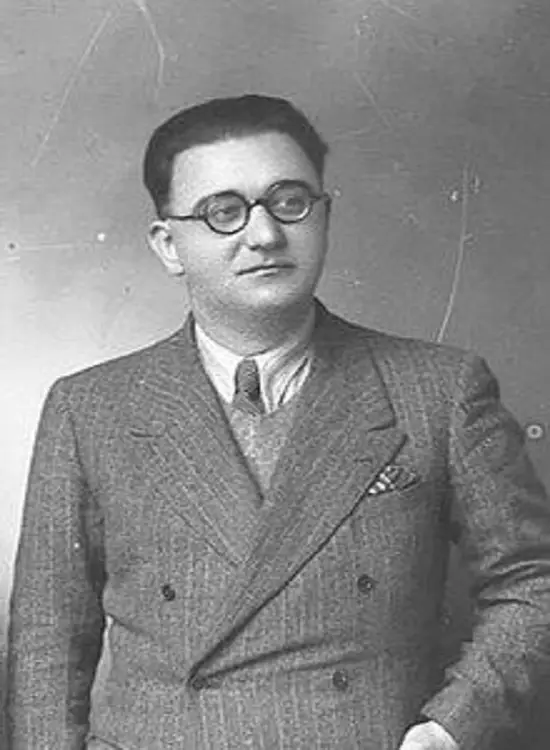

Memorie.al / Guljem Koliqi, one of the five brothers of the most prominent Koliqi family in Shkodër, who had escaped to Italy with a group of Albanian nationalist’s just days before Dictator Enver Hoxha’s communist government, entered Tirana, stepped onto his native soil of Shkodër after 56 years. What made this return even more emotional and nostalgic – having left behind his two sisters and his brother Mikel, the first Cardinal of the Catholic Church, who was tortured and sentenced in Burrel prison – was an invitation from the Municipality of Shkodër. He was invited to participate in the 70th-anniversary commemoration of the First Cycling Tour of Albania, an event where Guljem Koliqi himself had been one of the participants.
The commemoration of this sporting event in June 2000 was a flawless organization by the Municipality of Shkodër under its mayor, the former basketball player and “Merited Master of Sport,” Filip Guraziu – himself a victim of communist persecution. Also involved were the Regional Olympic Committee of Shkodër, led by Mr. Skënder Bushati, and the Albanian Cycling Federation, which organized the 54th Cycling Tour of Albania, headed by the well-known sports journalist Besnik Dizdari.
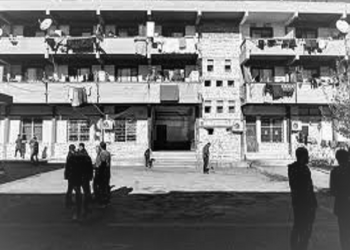
A scientific session was also held to highlight the historical values of the first cycling tour, which marks its 100th anniversary this year. Guljem Koliqi felt honored by this invitation, which was as much sporting as it was historical. After reuniting with his relatives – his nephew Bepin Kurti welcomed him into his apartment – many friends of the 91-year-old Koliqi took the opportunity to recall their youth. On this occasion, I had the privilege as a sports journalist to interview Guljem Koliqi. Thanks to his brilliant memory, he relived that cycling race as if it had happened today.
The Interview
Guljem: “Shkodra was a city where art, culture, and sport had made it known in Europe, thanks to the passion and love of its citizens, both Catholic and Muslim, affirming talents of European levels. In our family, while Mikel took up music and Ernest became a renowned writer and Minister of Education, Paçi and I dedicated us to sport. In those years, football, cycling, and equestrianism were the favorites.”
Question: Mr. Guljem, how was sport organized 70 years ago, at the beginning of the 20th century, in Shkodër?
Guljem did not hesitate and listed the names of the sports societies one by one:
“‘Juventus’ was a sports society with talented elements in football, cycling, swimming, etc. The merger of ‘Juventus’ with the ‘Studenti’ Sports Society enabled the inclusion of a generation of athletes who would make a name for themselves with ‘Vllaznia’ and later with ‘Bashkimi Sportiv Shkodran’.”
Question: Guljem, as a cyclist and footballer, and Paçi as a footballer, did you have the opportunity to show your talent in Bari, Italy, where you lived?
“It was a ‘Bianchi’ bicycle – a brand well-known in Albania during King Zog’s Monarchy – that pushed me to test my strength in national and international races against Italian and European cyclists. I remember the first race in Bari with about 700 professional and amateur cyclists, where I ranked 7th, and in the second race, I came in 11th.
But alongside the Bianchi bike, I kept a football near me – a ball I brought from Shkodër. We played against Italian teams in Bari in six-a-side matches. They were all Italians; I was the only Albanian. I remember that among 14 teams, the team where I played as a striker took second place.”
(Guljem shows a photo from the 1920s newspaper ‘Messaggiorno,’ which stated that the Koliqi brothers, Paçi and Guljem, showed great promise. Despite the years, the then 91-year-old Guljem spoke with great respect for ‘Sporti Shqiptar’ and its director, the famous radio commentator Anton Mazreku).
Question: Mr. Guljem, what memories do you keep from your return to Shkodër in 1922?
“I returned among my childhood friends, finding great warmth and interest in how we would organize sporting life. We created the ‘Juventus’ Society, involving both Catholic and Muslim youth. We formed a football team and gathered a group passionate about cycling.
I clearly remember the names of those friends who are no longer with us: Rud and Marketin Gurashi, Luigj Radoja, Kel Abati, Lec Ndreka, Shefqet Keçiçi, Gaspër Gurashi, Rexhep Krasniqi, Mark Berisha, and others. We were a serious society, and when we merged with ‘Studenti,’ we attracted many talented youths.”
Question: You were the winner of the first Shkodër–Koplik cycling race. Do you remember the joy of that first victory?
“It was truly a race where I drew attention not only as the winner but because my Bianchi bicycle sparked great curiosity. The Bianchi Company even wanted to give me the dealership rights for Albania, which I declined. It wasn’t just the echo of the race itself, but the branding of Bianchi that prompted the Italian press to write about this sporting event.”
Question: Leading up to the first national tour, were there other races?
“Yes, the Shkodër–Tirana race was an event that surpassed all levels of interest, and again, I was the winner. I want to express my consideration for the organizer of these races – not just cycling, but athletics and football – Palok Nika. We called him Captain Paloka; in fact, under King Zog, he was a military officer. Very serious and authoritative. He didn’t do it voluntarily; he was paid by King Zog’s government. His word carried weight, and sport was in his blood.”
Question: How does a 91-year-old remember the first National Cycling Tour (The Giro of Albania)?
“I always call it the ‘Xhiro of Albania.’ Even though life brought other commitments and conflicts, I have always recalled the ‘Xhiro’ with friends. Now that I am here for these commemorations, I think about how this people – despite all the troubles of a fierce dictatorship, the fiercest in Communist Eastern Europe – never forgot its sporting history.
Back then, when they wrote about Albanian sport, my name and those of my persecuted friends were crossed out. They were forced to mention Captain Nika’s name; otherwise, they couldn’t write about these events at all. Europe was right to write about the ‘Xhiro of Albania’ because such an activity had not yet taken place in the Balkans.”
Question: How do you remember the start in Shkodër?
“At ‘Milet-Baçe’ (The People’s Garden), hundreds of citizens had gathered. The municipal brass band played; there were greetings and photos. I remember photographer Shan Pici was present throughout the ‘Xhiro.’ I entered the race to compete for a place of honor, but for health reasons, I had to withdraw. I wanted to return to Shkodër, but Paloka kept me near his staff.”
Question: Do you remember anyone who was Captain Nika’s right-hand man?
“Yes, it was Hysen Lohja, a well-known professor in Shkodër who contributed greatly to sport. One should ask Hysen, as he was always close to Paloka. I was told Paloka also left a manuscript on the history of Shkodran sport.”
Question: Do you have other impressions from the ‘Xhiro,’ even after three-quarters of a century?
“Following my friends along the difficult roads of Albania, I entered the competition in the Tepelenë – Gjirokastër stage, without the right to be classified, and I came in first. We even crossed into Greek territory, to Doliana, 20 km from Kakavija.
The final stage, the finish in Tirana, was a grand reception where thousands applauded our courage and character. We were met by representatives of the Municipality, the Prefecture, and King Zog’s Government. A member of the Toptani family – I don’t recall the name – hosted a large reception. We were told that the next day, King Zog I himself would receive us in Durrës.
The departure from Tirana toward Durrës was conducted as a real race, in which I participated. I arrived first at the finish line and was again applauded by hundreds of sports fans. At the Villa of King Zog, we were received by the King himself, who congratulated us on our will and sacrifice. He rewarded us personally: he gave me two clips of gold Napoleons as the winner of the race, and gave Paloka another two clips of gold Napoleons to distribute among the cyclists. King Zog I delivered a speech on the importance of sports development; it left the impression that he truly loved sport and supported it, calling on the youth to practice all its branches.”
Question: What about the teammates who honored Albania?
“I must mention those who made Albania’s voice heard in newspapers in Italy, Yugoslavia, Greece, and the Balkans: Jonuz Gjylbegu, who was declared the overall winner of the ‘Xhiro,’ Aleks Haveriq, Rud Gurashi, and others who were rare athletes. There was also one named Gjeloshi, an admirable athlete, and Muhamet Halili, with whom I had a great friendship. Remember these figures, for they gave much too Albanian sport, even if the dictatorship tried to forget them.”
Question: Did the 1927 event in Cetinje leave you with memories?
“That was a Balkan Olympiad. In the 22 km cycling race, I came in first – the fans supported me because they knew me. Gjylbegu was second, and Rrrok Gurashi was third. There was also an athlete, Pjetër Andoni; he was legendary in the 100 meters, where he took first place.”
Question: Has returning to your hometown Shkodër renewed your energy?
“Yes, I truly feel rejuvenated; sport gives your life. I thank all the Shkodrans; they came to my house to meet me, which was very moving. I thank the Mayor of Shkodër, Mr. Filip Guraziu, for the invitation to follow this diverse program for the 75th anniversary of the ‘Xhiro of Albania,’ where I even had the honor of awarding the first-place medal to the winner of the modern cycling tour.” / Memorie.al