
Part Two
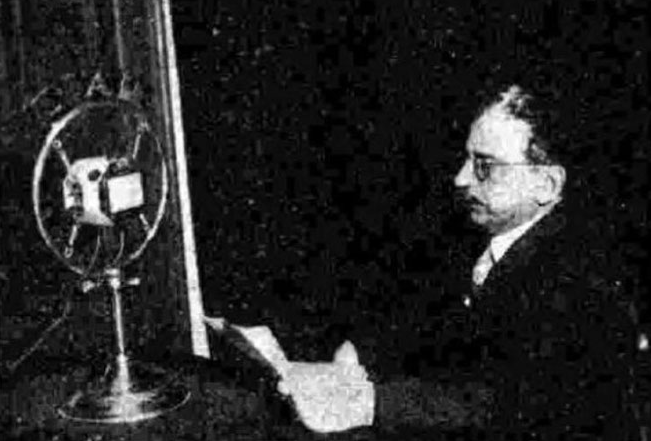
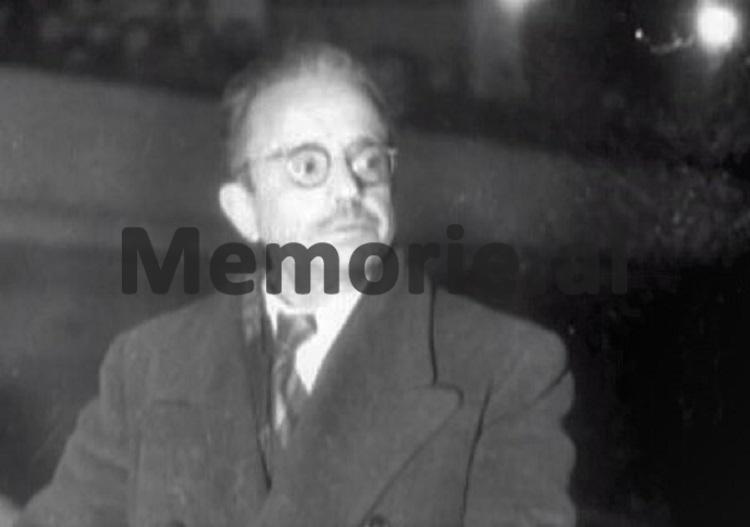
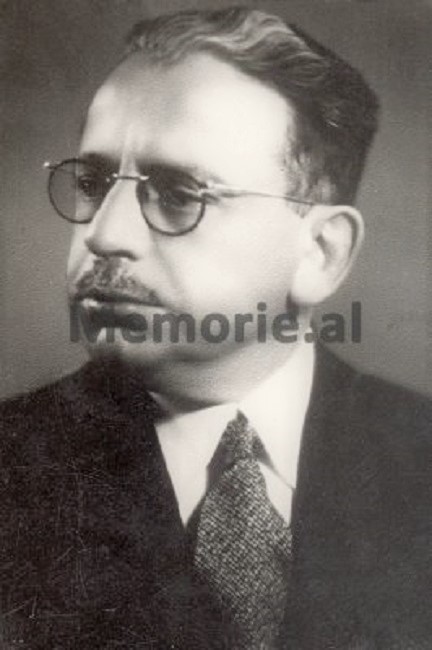
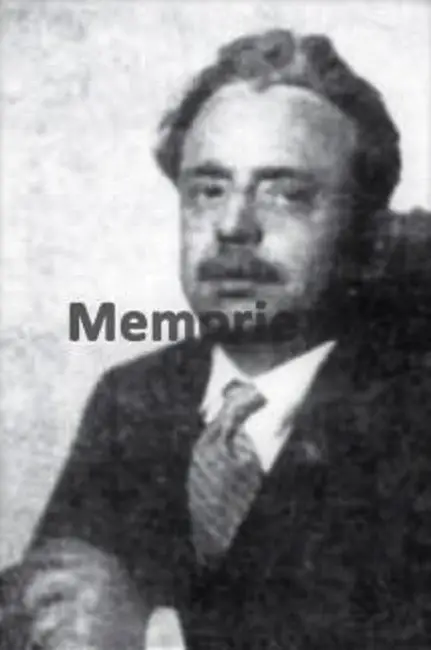
Memorie.al / No Albanian inside or outside Albania has attracted and pushed me to do something for them, by leaving them a couple of fingers of paper as a memory to be imprinted in the memory of descendants, so that they remember with the greatest honor, the man who loved Albania with all his heart. Although his ancestors left as early as the 15th century, nevertheless Terenci finds the strength and remembers the land of his ancestors. He wrote a lot, not because he was a writer, as his profession for which he studied was jurisprudence, but he found time to also engage in writings, which I, when I have read them, have been amazed by the depth of thoughts and the primary consistency he had for Albanians born and raised under the shadow of the Canon of the Mountains.
Continued from the previous issue
Then, we can affirm with our hand on our heart that the late Lumi, who had left his homeland in 1911, allegedly because the Turks were pursuing him “for anti-Ottoman activity,” when the Turks’ legs were shaking for themselves and Terenc Toçi was creating the Provisional Government in Mirdita, so as not to submit to the Turks, did not know the patriots who wrote under pseudonyms, such as: “Patriotikus,” E.D., “Dashuni e Shqipërisë” (Love of Albania), P. Kordha, “Brutus,” “Critukus,” “Gilasius,” etc. etc.
Could it be that Terenci had in mind the “patriot Lumi” when he wrote: “If we had not had compatriots in exile, in a foreign land, perhaps we would have remembered much later that our language is very beautiful, sweet, developable, and on a higher level than some other European languages, because our masses have and give birth with the heart of poets.”
SUPPORT FOR INTELLECTUALS WITH WESTERN CULTURE
Terenci, through his works, tried to introduce Italian culture into Albania. For this purpose, he published in 1928 an Italian grammar, for the service of Albanians. The critics of that time received that grammar well and gave fair judgments. He worked as much as possible so that the Italian people would know Albania as a neighboring country with a glorious culture. He managed to do this by translating into Italian the work of Pashko Vasa Shkodrani: “Albania and Albanians.”
That work had been translated into French under the supervision of the author and into German in Berlin. “This work is signed by the author Vasa Efendi, a Christian-Albanian official of Turkey,” we read in the “History of Albania” by the author Tajar Zavalani. The author made this translation under the pseudonym; “Milo Shini,” which he had also used when expressing opinions about the national poet, Gjergj Fishta.
About Albania and its fates, the protection of virtues as a heritage of the Arbëresh race, many foreign Catholic missionaries have also written, such as: Ernesto Cozzi, Lavro Mihaçeviç, Fabian Barcato, etc. Some of them, in the post-liberation years, were imprisoned and executed, such as: Father Zef Maksen, a German missionary, Father Jak Gardini of the “Jesuit” society, who was of Italian origin, but with mind and heart, a true Albanian in words and deeds. This was done by the communist dictatorship, not because they were foreigners, as such were also Mugosha and Popoviç, but because they exposed the greed of the neighbors to the detriment of Albanians and elevated their virtues. Fishta wrote: “The Albanian people as a race and as a tribe are more generous and more heroic than the Slavic peoples of the Balkans.”
The repressive stances towards intellectuals and their elite continually became more severe. Terenc Toçi, with his mature thoughts, lined up as an erudite man with extensive knowledge alongside intellectuals with Western culture such as: Gjergj Fishta, Ndre Mjedja, Lasgush Poradeci, Jakov Milaj, Eqrem Çabej, Stavri Shundi, Enriko Grassi, Arshi Pipa, Lefter L. Dilo, etc.
During the years he traveled throughout all the Albanian lands, outside and inside today’s borders, he became acquainted with the difficult life of the poor people, but proud of their character inherited as a European race.
These high qualities and virtues, Terenc Toçi reflected truthfully, bowing before them with the work he titled; “The Arbërore Eagle,” which he published in 1943, one year before the communist occupation of Albania. In that volume of short stories, which in sequence exceed two pages, the author has reflected many feelings of the Canon, which, as a jurist that he was, he valued as a Constitution that guided our people in those years when modern laws were lacking. There he writes: “… we, the most ancient people of Europe, make all the mistakes of a young people … we have lacked political education … from indiscipline, we appear like an assembly of Caesars, or like a small village, where each is convinced that he is the only one capable of grasping the elder’s stick.”
Often in his writings, he criticized and opposed Italian and Austrian policy, highlighting the policy of England and the hostility of France with Russia. As can be understood, Terenci intended not to agree with anyone who worked to the detriment of Albania. After the placement of Prince Wied in Albania by the Great Powers, he writes: “Prince Wied was sent without military organization … surrounded by foreign intrigues with Greeks inside the state…! Secretaries lined up on the side of the sovereign, one an Italian carabinieri captain and the other an Austrian consul.”
The Congress of Lushnja, which held its proceedings in January 1920, Terenci evaluates by calling it: “National Congress,” but there did not emerge the man of History… a man with authority… to be placed at the head of the nation…! In the government created in 1920, after the Congress of Lushnja, Minister of the Interior was appointed Ahmet Zogu, the future president of Albanians. Terenci had sympathy for that man and later would write a book about him, entitled: “The King of Albanians,” which he would publish in Milan in 1938, one year before the occupation of Albania by the Italian fascists, which would happen on April 7, 1939.
Precisely, this biographical book would be used by Ilir Ushtelenca to write the multi-year study, “Diplomacy of King Zog I,” Tirana, 1996.
At that time, Terenci described the King of Albanians: “Tall, athletic, energetic, eagle-eyed, handsome, twenty-five years old, he had all the data for shaping a good future for Albania.” In the ’20s, Terenc Toçi was sent as Consul General of Albania to Egypt, where he stayed until May 1922, and later we see him as director of press for the government and he directed the bi-weekly newspaper, “Shtypi” (The Press).
During those years, he translated from Italian the children’s book, “Cuore” (Heart), by the author Edmondo de Amicis, accompanying it with a long preface to aid young Albanian readers. It is a book that, I believe, every Albanian child got their hands on when they went to school and we have seen a story of his as a film; “From the Apennines to the Andes,” titled “Marku in Search of his Mother.”
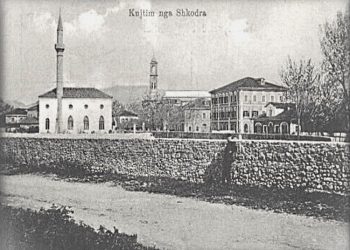
On January 31, 1925, Toçi was elected president of the Penal Court of Cassation, where he contributed to the signing of the Treaty of Friendship with Italy on November 26, 1926. Until that year, Terenci lived in Shkodër, but, for work reasons, to have it closer, he moved to New Tirana. Here, Toçi’s daughters attended Albanian school, and even their mother read the Albanian ABC book. During those years, Toçi worked and brought to light a valuable study; “Criminal (Penal) Law,” the preface of which was written by two renowned jurists in the field of jurisprudence, Enrico Ferri and Eugenio Florian.
TERENCI, A POLITICIAN WITH A WESTERN VISION
For the sake of truth, we must say that Toçi, during those years, translated into Albanian speeches by Mussolini, which were published at that time in the Italian periodical press and Albanian newspapers. One of those was: “Fascism,” Tirana 1928, a work that was also appreciated by Mit’hat Frashëri, who would later be the founder of the Albanian Nationalist Party. Mit’had Frashëri wrote in “Dituria” (Knowledge): “If the Albanian reader reads in Albanian, where it is written in Italian, and ‘Albania’, where it is written ‘Italy’, that book can be considered … a good advisor that deserves to be heard and implemented.”
Often Terenci, in his speeches and writings, would defend the Albanian press. He wrote: “I never foresaw that one day I would have to defend the freedom of the press against the representatives of the people, the rights of the standard-bearers of the country’s progress.” With his great love for books, Terenci had in Tirana one of the richest libraries, with over 5000 volumes on various topics and of incalculable value, because, as his daughter asserts; “… there were books printed before 1500, including rare volumes with parchments.”
Regarding this library, Terenci, thinking that it would serve one day and that he would emerge “unscathed” from the communist prison where they would one day handcuff him, tells the investigator who was asking him that his library should be checked by competent people who value books, but, what became of that library from that day to this is unknown?! During the years when Albania was a republic, Terenci worked as a secretary near Zogu, but when the Kingdom was declared, about which Zogu asserted that “… they forced me,” Toçi withdrew.
Later, he did a study entitled, “Gendarmerie according to International Law,” which was adapted for the gendarmerie school opened in Burrel. Through his efforts, Terenci managed to introduce the Italian language into the Female Magistral Institute (“KYRIAS”) in Tirana, as a language of culture instead of the English and French languages that were taught until then. Certainly here he expresses his nationalist tendencies, regardless of the international character of the two languages: English and French.
In the spring of 1938, he was a member of the Government as Minister of National Economy and on that occasion had brought specialists from Italy from all fields. They were at the level of scientists in zootechnics, agronomy, economics, veterinary medicine, bacteriology, land reclamation, arboriculture, and forestry. “Those specialists set to work to change the aged face of Albania.” Thanks to the interest of the Italian specialists and the energetic and hardworking character of the people, the Albanian economy experienced unprecedented development.
Albanians began to specialize and get educated so that later they would take the reins of their country’s economy. One of those specialists was the talented artist of the Variety Theatre in Tirana, the beekeeper passionate about beekeeping, Ali Duma.
Somewhere we have read: “… further, so that Ali Duma’s work would have more visibility throughout the country, the then Minister of National Economy, Terenc Toçi, took the specialist into the ministry…”.
Terenc Toçi resigned as Minister of Economy on May 31, 1938, as we have said above.
After the occupation of Albania by Fascist Italy on April 7, 1939, King Zog, when he left and was passing on the road near Thessaloniki, addressed his farewell message to Terenc Toçi and told the intimate friend accompanying him: “If I had listened to Toçi, I would not be on this road now.” Later, Terenci dedicated himself to a study entitled: “Half a Century of Balkan Life,” where he writes: “I never believed that the fascist government of Rome truly wanted to occupy Albania…, I had the impression that the Italian army was coming to liberate the Albanian nation from the governmental systems that were asphyxiating.”
When Albania was occupied by Fascist Italy, Toçi wrote to the King’s Lieutenant, Jacomoni, telling him that; he should be concerned about the cerebral poverty of some narrow-minded people and those sick with political colorblindness, who want to assign to Italy the unjust and unforgivable task, that of the gravedigger of living people.” He would also make these thoughts known to Father Gjergj Fishta and the veteran and brave fighter who came from martyred Kosovo, Father Pal Dodaj.
In the winter of 1939–1940, fascism was doing for Albania not the merging of two peoples, but enslavement, denationalization, and sidelining of the Statute. Regarding fascism, Terenci, without knowing what “Hylli i Dritës” (The Star of Light) and “Dituri” (Knowledge) had written, said: “Fascism has not invented anything new…, but it has killed three things; the plunder of others’ lands, theft, and the suffocation of the freedom of the people’s criticism. It was born well, but it developed and died badly. In bankruptcy! But this is not enough.” Toçi specified, in his own time, the mistakes of Mussolini’s, Ciano’s, and General Pariani’s policies.
THE “INGLORIOUS” END
When the Nazis entered Albania, many Italo-Albanians left for Italy, while Terenc Toçi stayed in his villa in New Tirana, until the partisan half-opanka (traditional shoe) was heard behind his door. They, without knocking, entered his room and, as if he were a criminal, handcuffed him without giving explanations and without waiting for clarifications.
Terenci thought it was some misunderstanding of theirs and didn’t worry much, since his recent activity had been; work – home and vice versa. He himself said: “When I had no work at the office, I stayed at home and worked those two palms of land.”
From Tirana prison, Terenci wrote to his wife and daughter that; they should not worry, as he had done nothing…! But the “belt” was tightening every day, especially when his house was seized by the family of Bedri Spahiu, which was a partisan family with 10 members. They restricted the homeowners to the kitchen and, to enter the bathroom, a schedule was set! Through the letters that Terenci sent to his family from prison, he advised them not to worry and to remain calm, thinking that Albanian justice would not have materials to accuse him, and he hoped in his defense speech, since he was a lawyer!
During those days, he thought of writing a letter to Father Pal Dodaj, to publish in “Hylli i Dritës” (The Star of Light), the last chapter of the book “The Arbërore Eagle,” where the story “Polikroni” was found, which, in his opinion, could give absolute precedence to social problems, which might somewhat alleviate the inhuman torture that the communist executioners were inflicting in prison. In that article, Terenci, among other things, wrote: “The columns of our country are: God, Homeland, Family, Honor, and Courage.” Not even this was enough to convince the judges with law degrees, which they had completed in the mountains while waging civil war with the Ballist-Legalists.
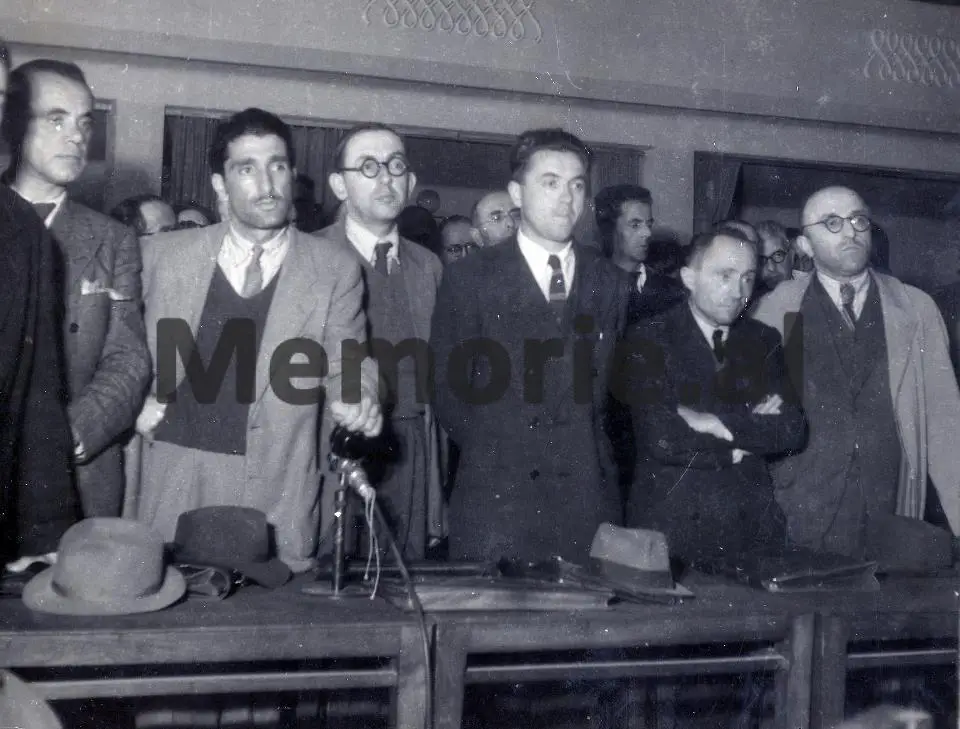
Toçi, through logical facts, tried in court to clarify that he had worked for the honor of Albanians and their heroism and that he had not spared himself, “as the well-known brave soldier, Spiro Moisiu, whom I have defended against fascist slanderous accusations, can testify.” The dead-end he had fallen into was impassable for Terenc. What he had done for Albania, for the partisans was only “treason,” because only they had “fought” for the homeland and for victorious communism, the savior of humanity.
There was no way a man who had a multi-story villa inside Tirana could escape with his life, because it would be needed by the barefoot ones from Dibra, Mat, Mallakastra, and Kurvelesh…! Even if Toçi had not had an iota of guilt, the communists were masters at fabricating it, executing without trial and granting pardon afterwards, just as they had done with their brothers in the mountains when they were supplied with canned meat and English coats, donated by the Anglo-American missions.
Along with 17 Albanian men, staunch patriots and intellectuals, with higher education completed in the West, on April 14, 1945, at 7:00 PM, Terenc Toçi was also executed by firing squad on the slanderous charge: “War Criminal.” Today, in post-communist Albania, will any government official remember to give Terenci a place of honor for his efforts on behalf of Albania, given that they are declaring as “Honorary Citizens of Albania” and “Honor of the Nation” people who have given nothing to the country, if not hindered the raising of the Albanian flag?!/ Memorie.al