By Agron Aranitasi
Part Eight
THE TRUTHS I BELIEVE: THE FRENCH AGENT
Introduction
Memorie.al / When I began writing the book “The Truths I Believe” (PAPIRUS Publishing House), I hadn’t intended to write about myself. The initial impulse arose when I encountered the State Security (Sigurimi) files regarding the surveillance of Citizen Agron Hajdar Aranitasi. Those files are further testimony to how an individual could be persecuted once they were categorized, at a specific moment, as an enemy of the “people’s power.” Nothing was taken into account – not how one had worked, behaved, or lived. Not even the standing of parents, brothers, or numerous cousins was considered; they were automatically subjected to the brutal blow and suffered the consequences through no fault of their own.
Continued from the previous issue
Agron Aranitasi and Albanian Radio Television (RTSH)
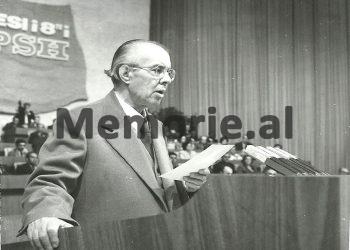
It wasn’t until 1978 that Ramiz [Alia] understood what “Ampex” magnetoscopes were capable of. That year, Enver Hoxha made a lengthy visit to Gjirokastër and Saranda. Great importance was attached to this visit. The people needed to see that he was in good health, as his medical condition had long been a cause for concern. During the visit, Enver delivered several speeches, but unlike in the past, his speech was no longer fluent; he often stammered, stuttered, made numerous errors, and even lost his train of thought. All of this had to be “cleaned up” during the editing process.
Ramiz Alia handled the editing himself. He came to the television station every day and worked with the female editors. In effect, he became an editing director. “Panxo,” Pandora Gjylapi (Bega), had mastered the use of the “Ampex” machines. I mention Panxo (there were others like her) because during those days of “purging” Enver’s lapses, she was the one working with Ramiz. After the editing was finished, Ramiz seemed very pleased. He was amazed by the quality of the “Ampex” machines.
He praised me for purchasing them. I simply smiled at him and… Remembered being labeled an “idiot in politics.” The purchase of “Ampex” magnetoscopes continued until April 1979. That year, I traveled to France with Hysen Dine, an employee of Makina-import. We bought three magnetoscopes, which turned out to be the final purchase from the Americans during the communist regime. The “Ampex” machines enabled the creation of an archive on magnetic tape.
Unfortunately, after the fall of the communist regime, the RTSH archive (in which Germans and Italians showed interest, offering to digitize it for free on the condition they be given materials from the PPSH congresses and political activities) continues to be at the mercy of fate. It is dying amidst neglect and the poor conditions in which it is kept. Someone does not want that memory, filled with materials from the communist regime, to survive. Is it a coincidence or intentional?!
When I returned to TVSH after nearly nine years in Fushë-Arrëz, I learned that Shpëtim Ruli was no longer alive. He had passed away due to a serious illness. Soon after, Hysen Dine also passed away from a severe illness. He was followed by Andrea Arqimandriti and Pandi Papalilo, who also died of the same disease. They, too, had been involved in the “Ampex” purchases. Vullnet Musaraj also passed away from a serious illness. I didn’t escape it either, but I proved more fortunate…! It seemed as though a curse followed those who introduced the prohibited equipment of the American company into Albania!
In recent years, I came across the State Security file for RTSH (ORV “Object of Special Importance” – RTSH). There, I read information from a former Sigurimi collaborator working at RTSH. He had alerted the operational officer covering the institution to “monitor the person who sent the video-head units of the magnetoscopes abroad for repair.” The collaborator claimed to be certain that “a small piece of gold was being removed from the used heads.”
The informant had discovered the next enemy! He was Kadri Hazbiu’s son-in-law! I thought: “What a far-sighted informant!” He had discovered the enemy even before Enver Hoxha did! I write about this event to show how insincere Enver’s family members have been. Nexhmije, until she died, and her son, Ilir, wrote in their memoirs that “the West never sent any signal to de-escalate relations with Albania.” The “Ampex” story proves the opposite. It was the first sign from the USA of an opening toward our country.
The Americans, after improving relations with the Chinese, attempted to approach Albania as well. They broke the embargo, agreeing to provide Albania with strategic equipment that was also used by the US military. There wasn’t a single American aircraft carrier without “Ampex” magnetoscopes on board.
One might ask: “Why didn’t the USA stop the sale of such equipment after Enver’s speech at the congress?” They didn’t, I believe, because ever since the Russians removed the “Vlora Base” (following the agreement between Kennedy and Khrushchev in Vienna, Austria), the Americans were cautious toward our country. They did not want a realignment of Albania with the Soviet Union and continued President Wilson’s policy toward Albania. Even when they decided to overthrow the communist government during their intervention (1949-1953), the American government stated clearly: “Albania’s territorial integrity will not be touched,” despite Great Britain’s proposal that “Albanian territory be divided between Greece and Yugoslavia, while respecting some Italian interests.”
Declassified CIA documents speak to this American stance, which we saw in the chapter on “State Security Radio-Games” (see the book “Operation Valuable”). Equipping TVSH with “Ampex” video recorders was the first world-class project realized by Albanian Radio Television.
1972-73: Todi Lubonja as Director of RTSH
Todi Lubonja was appointed General Director in February 1972. He came from the Korça District Party Committee, where he had served as secretary for ideology. I knew him. I also knew his wife, Liri, and his son, Fatos. His appointment was well-received at RTSH. He was a member of the Central Committee. He had been the First Secretary of the Central Committee of the Labour Youth Union of Albania (BRPSH) and editor-in-chief of Zëri i Popullit. His appearance was striking; he dressed well and was an athletic type.
Todi had the reputation of a man free from the constraints of the time. He was liberal and approachable with subordinates. You could talk to him about any problem. Even when serious technical defects occurred, especially during transmission, he wouldn’t “hound” or mistreat you; he would listen and then decide. However, I kept my distance. He held an unfriendly attitude toward Fatos Arapi (my uncle), who did not get along with Ismail Kadare.
Todi Lubonja made changes to the organizational structure of the institution. He removed some and promoted others. He developed a poor relationship with Klimi Misja, the then-director of TVSH. It reached a point where Klimi suffered a severe heart attack, the consequences of which he suffered until his death. Klimi was a good man and respected by the TVSH staff. In the conflict between him and Todi, many – such as Fuat Bozgo, Kadri Metohu, and others with reputation at TVSH – sided with Klimi. I have always thought this significantly damaged Todi.
Todi also changed the programming structure. Production began on a series of new programs for television and radio. Everyone remembers the start of Western music programs on Radio Tirana. Since I was accidentally “entangled” in these programs – or rather, with their songs – I wish to say a few words. In January 1971, Enver Hoxha had a conversation with Agim Mero, the First Secretary of the Central Committee of the BRPSH. In this dialogue, Enver Hoxha struck the pose of a liberal.
He emphasized that the youth should not only deal with military training and production work, but (this was the new part!) they should be provided with opportunities for rest and entertainment – offered more films, concerts, shows, and dance evenings. He gave instructions to fight manifestations of conservatism in the party’s attitude toward them… I read the transcript of this conversation, which Liri Aranitasi brought to me.
How could she know, let alone I, that a year later, in March 1972, I would be given the chance to “contribute” to the liberalization of Radio Tirana’s musical broadcasts. In February 1972, the television station, as usual, had run out of raw materials for program production. Magnetic tapes and spare parts for the magnetoscopes were missing. In early March, Todi sent me on a mission to Italy. Before I left, Nefo Myftiu, then Director of Radio Tirana, called me. She gave me a long list of songs.
They were songs by the Beatles, ABBA, the Rolling Stones, Adriano Celentano, and many other Western singers. She instructed me to buy them on the open market (in stores). As a fan of the Beatles, I looked at her with a smile. “Does Todi know about this?” I asked. “He knows,” she replied. “The list was seen over there too,” she added, gesturing toward the Central Committee building.
They gave me two thousand dollars for the purchases (the magnetic tapes would be bought by our trade representation via a regular contract). Those songs that Radio Tirana began to broadcast were the ones I bought (tape reels and vinyl records). Their broadcast had a great impact among the youth, but there were also reactions from some of their parents.
In fact, one elderly officer, upon hearing the songs his son was listening to, confronted him harshly. The son replied: “What’s wrong, Dad? Radio Tirana is broadcasting these songs!” The officer was stunned. During the meeting of his local party organization, he recounted the case and performed self-criticism “for not keeping up with the times” (!). I am curious: What did he think a year later, when the war against liberalism erupted?
It was a trip that exhausted me, full of mishaps and pointless clashes with certain embassy employees. The first secretary of the embassy asked me, more than once, if I was authorized for such purchases. I showed him the letter signed by Nefo, but it didn’t calm him. Nevertheless, embassy staff helped me buy them, and before I returned to Tirana, they recorded the songs on their personal tape recorders (!).
The situation changed in December 1972, when the 11th Song Festival was organized on Radio Television. This festival first cost Todi Lubonja his head; later, when the criticism of liberalism extended to the fields of art and culture, Fadil Paçrami was also condemned. And not just them. The festival’s director, Mihallaq Luarasi, and playwright Minush Jero ended up in prison, and dozens of artists and singers were moved out of Tirana. To Fushë-Arrëz, where I would go ten years later, they sent the “Albanian Adriano,” Françesk Radi. The main lightning bolts fell on Todi and Fadil. They engulfed their families as well. Todi’s eldest son, Fatos, was also arrested. There is no need to dwell on this, as their fate and suffering are well known.
Ramiz Alia wrote about both of them in his memoir “My Life.” Twenty years prior to the publication of that book, he had given a series of interviews to three Kosovar journalists. The interviews were published as a book titled “I, Ramiz Alia, Testify to History.” Ramiz recounted how Enver Hoxha decided to strike Todi and Fadil as liberals, and even struck “hard” at Ramiz himself, giving him the (lighter party measure) “warning with a note on his Party membership card.”
Todi was sentenced to 13 years in prison, while Fadil received 15. Ramiz aligned himself with Enver and supported the punishment of his friends. He spoke against them (as only he knew how) both in the Politburo meeting and the Central Committee plenum. Up to this point, one cannot blame him, knowing the times in which these events took place.
His characteristic hypocrisy would appear many years later, precisely when he was writing his “book of life”: “I never approved of their (and their families’) punishment (!). I remained silent, obeying the party line and discipline. Even when I was at the head of the party (!), I did not help Todi. I feel the weight of guilt. The great problems and difficulties concerning the fate and future of the entire country, as the transition from one system to another was occurring, delayed me in helping my friend.”
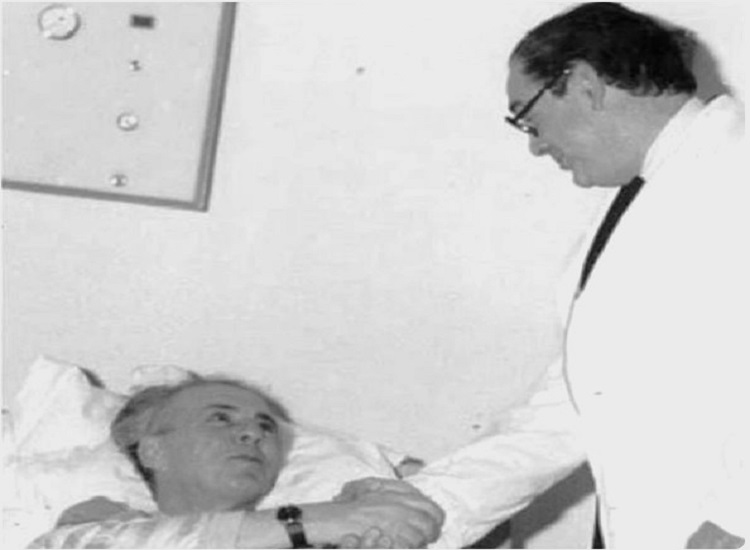
Ramiz presents himself as he was his entire life: hypocritical and vile. He took power in early 1985, when the transition to the other system was still far off. If he had wanted to, he could have released Todi. He had a strong reason. What I am writing below was told to me by a well-known doctor. He is Hektor Peçi, Enver Hoxha’s doctor before Mr. Isuf Kalo. One day, Hektor was informed he had to report to the Ministry of Internal Affairs.
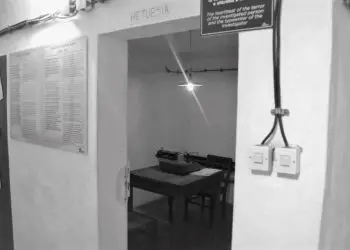
Without delay, they told him they were going to Burrel Prison to visit a sick inmate. When he entered the cell, Hektor froze. Todi was lying on the bare concrete. It was known that he suffered from diabetes, and under prison conditions, his illness had worsened. Prisoners and internees had been released even during Enver Hoxha’s time. Ramiz had the power to release Todi, even under the pretext of illness. He never did! And he could not do it.
In 1982, in the indictment against Kadri Hazbiu (read: against Mehmet Shehu), the names of the “putschists” (Beqir Balluku with the military) and “economic saboteurs” (Abdyl Këllezi, Koço Theodhosi, and others) were included, who, under Mehmet Shehu’s “direction,” were to “overthrow” the people’s power. With Ramiz Alia’s intervention, Todi and Fadil were also included in the group of conspirators recruited by Mehmet Shehu!
There is testimony from the individuals who drafted the indictment. One of them, the late Neshat Tozaj, testifies to Ramiz’s actions in his book “Why I Speak.” How could he release Todi? How would he justify the accusation he had placed on his back? And how would he suppress the opposition of Nexhmije and the “February 6th horde” (as Mr. Spartak Ngjela calls the bureauerats Isai, Çuko, Miska, Stefani, etc.)?
In 1973, when the campaign to strike Todi Lubonja began, meetings were held at RTSH to show solidarity with the party for his punishment. In the TVSH staff meeting, when his one-year “hostile” activity was analyzed – because, in truth, that is how long he worked at RTSH – I was one of those who criticized him. He “repaid” me nearly 20 years later. He wrote in his memoir, “Under the Weight of Violence,” that when I was speaking, “it felt to him like he was hearing a dog barking. It was Kadri Hazbiu’s son-in-law.” I hold absolutely no grudge over those words. I read those lines when life had already taught me many things…! But I must say that my stance at that time was the same as the stances Todi himself held when he was still in power.
Todi left RTSH in March 1973. He was sent for a time as the director of a construction enterprise in Lezha, and then arrested, sentenced, and his subsequent fate is known. His son, Fatos, also ended up in prison. The family was interned in a village in Lezha.
After his release from prison, Todi showed himself to be magnanimous toward Ramiz Alia. He extended his hand to his former persecutor friend. He remained a companion and friend until the end of his life.
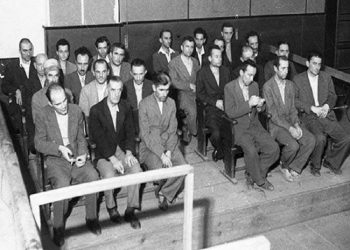
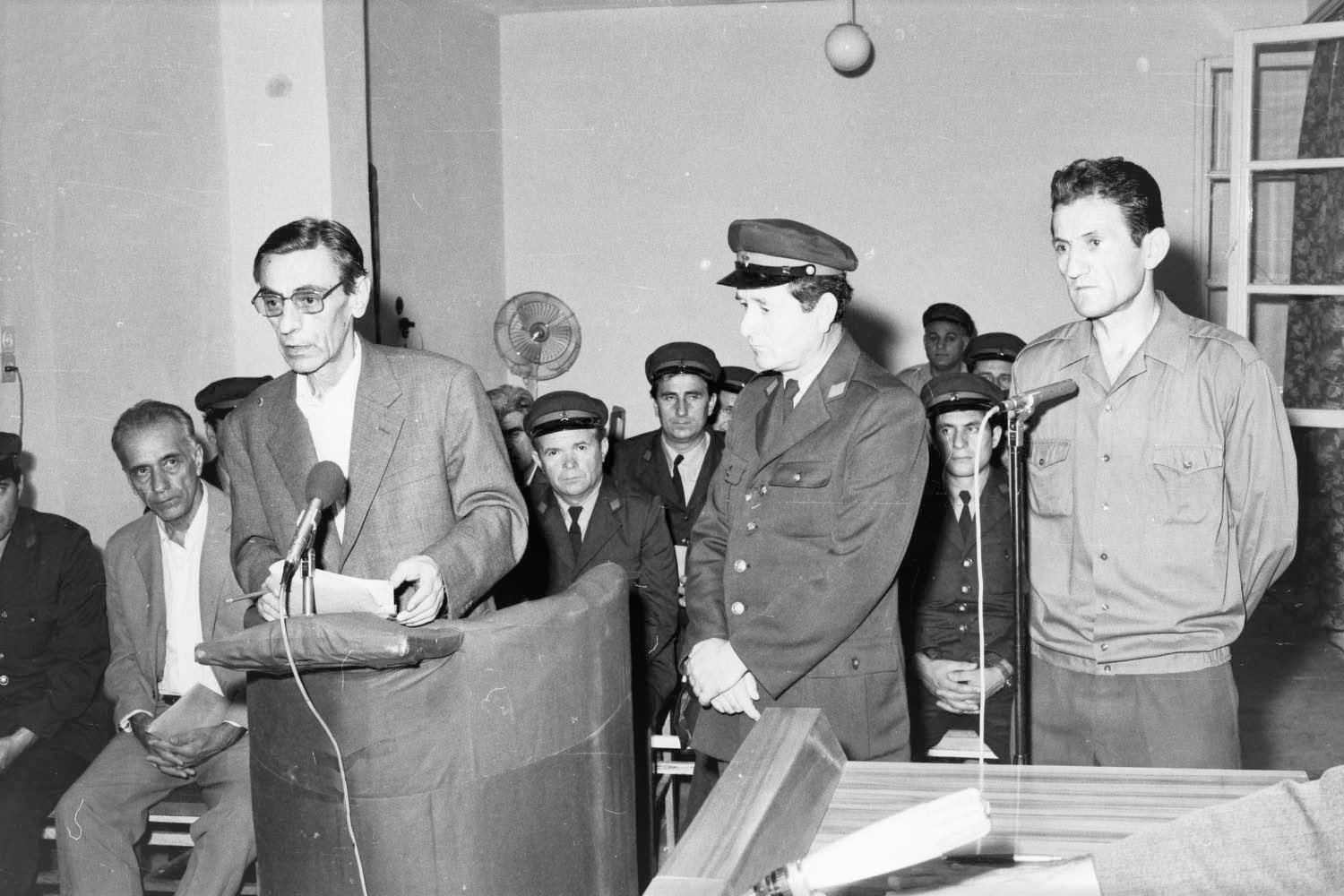
I remember when he was called as a witness against Ramiz in the “Coffee Trial.” They hoped he would take revenge on him. The judges became witnesses to Todi Lubonja’s nobility. He gave courage to the friend of former days. I saw that scene myself (TVSH recorded the trial). I understood that the suffering of prison had made Todi a better man. He knew how to forgive…! For this, he deserved only respect.
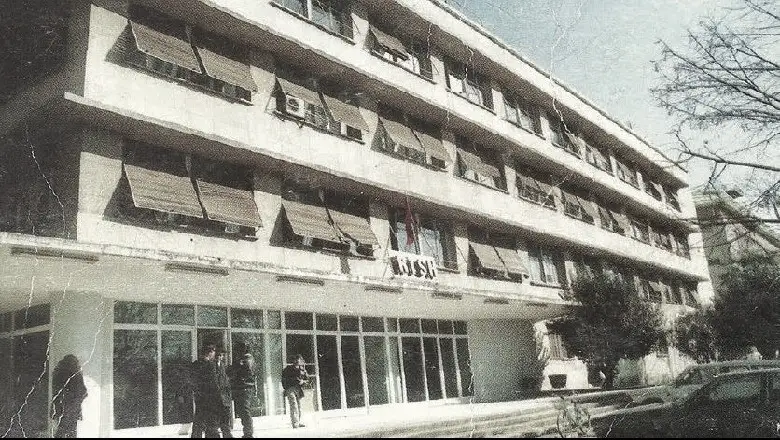
In front of the first building by the Lana, many cafes have opened. I often went there with my friend, now deceased, Artian Tepelena. Todi would also come there with Agim Mero and Ramiz Alia. We would listen to their conversations. Todi would praise Ramiz, telling Agim that it was he who wrote Enver’s speeches. There was no bitterness, no resentment. I listened to him and thought: Ramiz Alia surrendered his friends and colleagues (Todi, Fadil, Agim). He surrendered them while he was free. What would he have done if he had landed in prison?! He was lucky; he died in his own bed! / Memorie.al
To be continued in the next issue