Part Twelve
Excerpts from the book: ‘ALIZOT EMIRI – The Man, the Library, and the Noble Newspaper’
TWO WORDS AS AN INTRODUCTION
Memorie.al / When we, Alizot’s children, told “Zotia’s” (Alizot’s) stories in joyful social settings, people would often ask us: “Have you written them down? No! What a pity, they will be lost…! Who should do it?” We felt increasingly guilty. If it had to be done, we were the ones to do it. But could we write them? “Not everyone who knows how to read and write can write books,” Zotia used to say whenever he handled poorly written books. While discussing this “obligation” – the Book – among ourselves, we naturally felt inadequate for the task. It wasn’t a job for us! By Zotia’s “measure,” we were incapable of writing this book.
Continued from the previous issue…
AFFINITY WITH CULTURE
Glimpses heard from Zotia, in secret!
IN MILAN
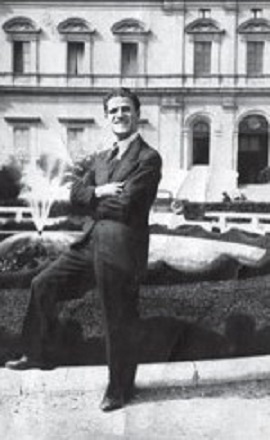
He was part of a social circle of artists and cultured people of that era. He knew the Albanians studying and working in Italy. He personally knew Tefta Tashko Koço and had seen her performances. He frequented the “LA SCALA” Opera in Milan and had seen the world-renowned tenor Beniamino Gigli performs on stage.
He was a client and friend of the famous record company “ODEON,” where he bought gramophone records. He enjoyed telling a story from Milan around the 1940s: He had won a board game with a group of Albanian and Italian friends. With the liras he won, he organized a surprise cocktail for those who had lost. He bought drinks and a large cake. He called them over as usual and served them.
Present at this dinner was the great Albanian artist, Tefta Tashko Koço, who was in Milan recording Albanian folk songs. She was thrilled by her compatriot’s gesture and told him: “Well done, Alizot, your noble gesture honors us all!”
At the “ODEON” house, he had met the famous Milanese singer Luciano Tajoli. Among the gifts Zotia usually brought to the studio, he recalled that Luciano especially loved the dried figs from Nepravishta, which Zotia brought in a basket. Luciano asked Alizot to bring a basket of figs whenever he returned. To ensure he didn’t forget, he made a symbolic gift: a special record where, during a pause in the song, Luciano would say: “Alizot, don’t forget the basket of figs!” before the music resumed.
That record was played many times on the gramophone Zotia brought to our home in “Palorto,” until it was confiscated along with the house’s belongings after his arrest. Zotia retold this story often in the 1960s when an Italian film featuring Luciano Tajoli’s songs was shown in Albania. The whole family went to see the film dedicated to our father’s friend – we even took our mother!
IN TURIN
He had a special reverence for the great Albanian poet Migjeni. One day, I heard him telling an intellectual friend in the bookstore how he had gone and placed a large bouquet of flowers at Migjeni’s grave in Italy. He described it in detail.
He was in a taxi with a wealthy man from Gjirokastra, whom he was assisting as a translator in trade meetings. He didn’t tell him where they were going, but he instructed the driver to head to the cemetery.
“I imposed it on them!”
The wealthy man was annoyed when they stopped at the cemetery, and then became curious. What did Zotia want in an Italian cemetery?
“I left the ‘Aga’ outside. It was pointless to explain. He didn’t know books. This rich man was too poor to understand the deep spiritual connection between a reader and the great poet of the nation’s pain. I bought a large bunch of fresh flowers at the entrance and asked the administrator for the address. I went alone through the graves. I found him alone!! I placed the bouquet. I teared up thinking that our country was unable to honor its best sons who suffered in life for Albania, and who, after death, could not find rest in their own soil. I returned to the car shaken. I didn’t want to speak, nor be spoken to.”
Apparently, the wealthy man read his mood; despite being angry at the delay, he remained silent. Only later, over coffee, did I speak to him. He was surprised! He thought I, a young man, had a girlfriend buried there. Having seen my despair, he was moved.
“Alizot, why didn’t you tell me so we could go together? I don’t know him, but I too am Albanian!” the man from Gjirokastra said.
He was right. I felt selfish and guilty for both of them! I had a lump in my throat! It felt as if I had added to Migjeni’s despair: “Why alone, Alizot?”
“HAS ANYTHING ARRIVED FOR ME?”
This had become a common phrase in the bookstore. I was too young to understand its significance. People in a hurry would enter just to ask: “Has anything arrived for me?” Sometimes Zotia felt bad, answering like a debtor late on a payment: “No, no, nothing has arrived yet, but don’t worry, I have you in mind.”
Sometimes they would shout from outside: “Alizot!”
“Not yet!” – he would reply using the code known only to the bookseller and the reader. They would wave, and the reader would move on.
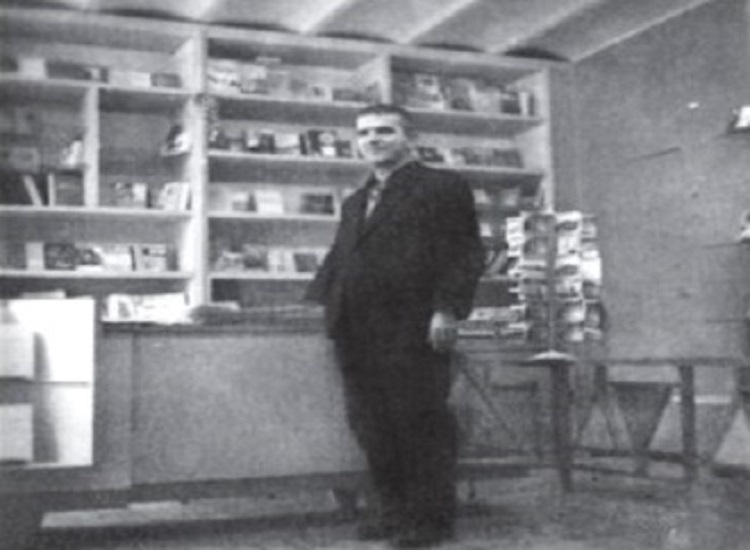
Zotia was very attentive to the regular readers of Gjirokastra. He reserved books for them, even though it was not allowed in a state-run bookstore. He knew his readers of fiction well; he knew what each liked. He analyzed and differentiated them in discussions where he was an active participant. When long-awaited books arrived, Zotia was overjoyed. He would stock the shelves and set up the window display in one breath!
“Books should never be left to grow cold; they are like bread!” he would say. And he felt like the richest man in Gjirokastra! He had something to welcome his friends with. He would be honored! As soon as he saw them, he would signal them or call out with humor: “Turn back a bit, don’t be so aloof, we don’t owe you anything!”
They would turn back. Zotia must have brought something good. “He doesn’t stop you for nothing!” They would enter, and Zotia would meet them with the long-awaited book. But not always openly. If the public sale of a book had ended, Zotia would give it to them secretly. He would pull books wrapped in newspaper from under the counter; they would take them and leave without paying, as if they had received something personal.
“I cannot leave a reader without this book!” Zotia would say seriously. “He is hungry. He will devour it. He tastes it, takes all its value, and squeezes it like an orange. Conversely, it is a waste to give a book to someone who has no hunger for it. They bite the book but don’t chew it; they don’t finish it, they throw it away like a piece of unfinished bread. It is a sin before God to waste a book. Let anyone say what they want, I will save the book for the reader; after all, that is the bookseller’s primary job. Books aren’t sold like vegetables.”
He was called to report by the director of the book enterprise (K.N.) in Gjirokastra.
“We have heard that you save books for your friends!”
“It is very true that I save books,” Alizot replied, “but not for my friends – for the friends of the book!” He insisted that his action was not wrong.
The clash ended there. Perhaps because the director wasn’t pushed by his superiors, or because of the natural goodness of that man who didn’t want to harm Zotia. Seen in the context of that time, this was extraordinary! Zotia made distinctions and privileged a certain group – not party militants, but individuals based on their intellectual and human values. This was impermissible by the norms of that system.
This toleration was temporary. A new director arrived, and Zotia had to account again for these “ugly” actions. And the “mouse” – the friends of the book – could not slip past every director’s mustache. R.L. pursued the matter with party zeal and finally managed to have Alizot dismissed from his job, just six months before his retirement.
“Has anything arrived for me…? Anything for me…? Alizot, do we have anything…?”
These calls have followed me constantly. Every time I pick up a book, they take on a new value. How meaningful they are – how intimate, deep, trusting, and grateful! With what kindness and trust they addressed the bookseller Alizot Emiri!
“Do you have anything for me?” It sounds like a child’s cry, full of naivety! Strange, how is it possible? Those calling out were the intellectuals, the most learned people of the city. Like children asking for food, the readers had entrusted Alizot with their artistic taste, their selection of literary works, and their spiritual nourishment!/Memorie.al