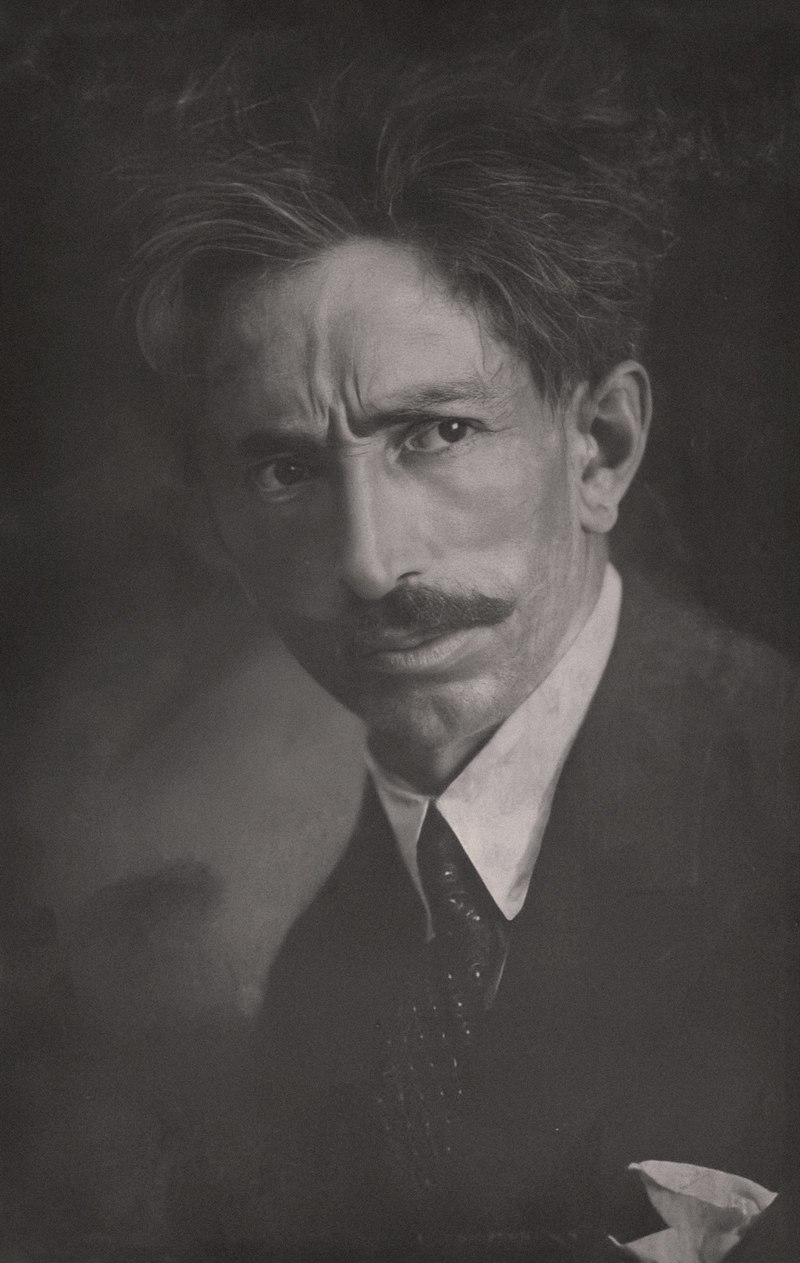

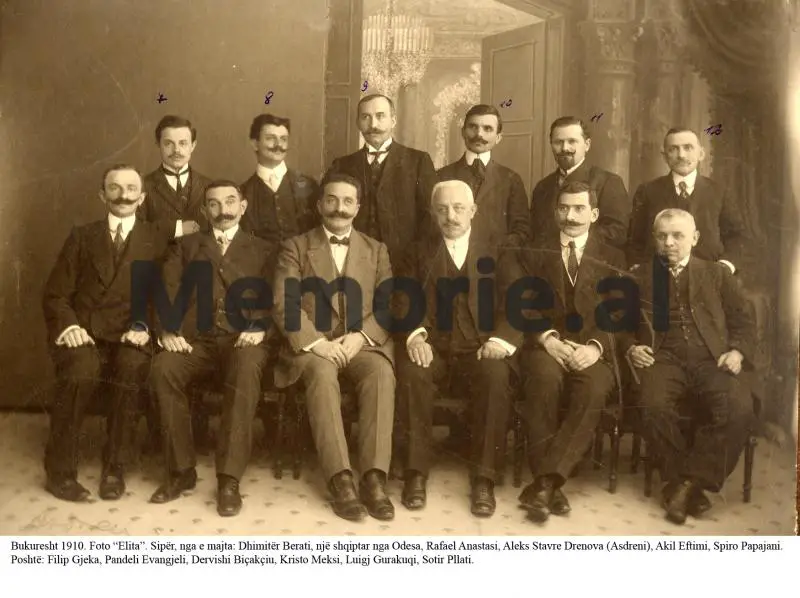

Memorie.al / On a Sunday in January 1925, the newspaper “Indipendenca Shqiptare” announced on its front page: “Zija Dibra has been killed. Former Captain Zija Dibra, previously a minister in Pandeli Evangjeli’s cabinet, accused in a Bolshevik affair, while being interned in Berat, passing through the village of Harizaj in the District of Kavaja, tried to escape and run away from an aspirant who was escorting him to Berat. Thus, while mounted on a horse, he spurred it forward with all his strength. The aspirant yelled at him once or twice to stop, but since he did not listen, he shot him in the head and knocked him dead from the horse.”
Zija Dibra, a well-known figure in Albanian politics of the early 20th century, was killed on the same day the republic was proclaimed in Tirana with Ahmet Zogu as president, who had returned triumphantly from Yugoslavia. Very few people believed the official version of the murder. Zija Dibra was known as a determined opponent of Ahmet Zogu; he himself had participated as a military officer in the uprising led by Hasan Prishtina in 1921.
In 1923, he was part of an anti-Zogist organization founded in Vienna by Aqif Pashë Elbasani. In June 1924, he had fought with a weapon in hand, alongside the insurgents, and then settled in the Shkodra garrison. In 1924, Noli had sent Zija Dibra to convince Elez Isufi not to join Zogu.
Dibra succeeded in convincing Elez Isufi by reminding the Dibra residents of the long-standing hostility with the Serbs and also by using a hefty sum of money. Zogu’s men had every reason to get rid of him, but not only because he was a ‘Fanolist’ [supporter of Noli]…!
A Big Question Mark?
Like many other politicians involved in the events of June 1924, Zija Dibra had embarked on the path of exile. On January 23, 1925, he was seen traveling on a Durrës-plated truck, along with Sulejman Delvina and Sejfi Vllamasi – the former being the ex-Minister of Foreign Affairs, and the latter a member of the High Council.
Vllamasi recalls asking him if he would go across the sea with them or stay in Albania. “No, I will not leave; Myfit Bey Libohova has given me a guarantee for my life.” Thus, Zija Dibra did not go to Italy like hundreds of others, but for some unknown reason, ended up in Vlora. Myfit Bey Libohova was marching south to assist Zogu’s forces descending from the North.
It was here that Zija Dibra was arrested and sent, accompanied by a gendarme, to Berat, where he was to be held as an internee. What exactly happened that cold day near Harizaj of Kavaja was known only by the “unnamed” gendarme.
Kosovar Leaders and Ahmet Zogu
Zija Dibra was very closely connected to the leading Kosovar figures, such as: Bajram Curri, Hasan Prishtina, Bedri Pejani, and Hoxha Kadri, those who constituted the heart of the “National Defence Committee of Kosovo” headquartered in Shkodra.
Five years before the assassination of Zija Dibra, in 1920, the Italian poet and politician, Gabriele D’Annunzio, organized a meeting in Trieste of all nationalist organizations whose peoples had remained under Serbian rule, now within the newly created Yugoslavia.
The representative of the Kosovars and the Shkodra Committee, according to Eqrem Bey Vlora, was “the old patriot Beqir Vokshi”. At this meeting, D’Annunzio promised the Kosovars weaponry with the aim that they would begin the “liberation of Kosovo,” attacking from the Kukës side.
The ship with weapons arrived in Shëngjin in the summer of 1920. At that time, the Vlora War was at its peak. The Yugoslav army prepared for intervention on the Buna side. Ahmet Zogu, Minister of Internal Affairs at the time, was against the unloading of D’Annunzio’s weapons in Albania.
He, but not only him, thought that an attack by the Kosovars against Yugoslavia would bring the fragile Albania into open conflict with Yugoslavia, a war that Albania was certainly not ready to face at that time, and apparently not later either.
To resolve the issue, Zogu sent Sejfi Vllamasi and Xhemal Naipi to Shkodra. They also had 20,000 gold francs with them. “…In the late hours,” Vllamasi recalls, “we met with Bajram Curri to convince him, as he was more reasonable than the others. We discussed the matter from every point of view, but we could not convince Curri, as he was influenced by Bedri Pejani, who was in favor of unloading the weapons.
Then, that same night, we went to the Prefecture, where the deputy prefect Sulçe Bushati, with the Gendarmerie commander Malo Bushati, was waiting for us to hear the conclusion of the talks. Since all efforts through talks failed, military measures were decided upon. Malo Bushati, under the command of Captain Hasan Bushati, sent a gendarme force to Shëngjin to forcibly prevent the unloading of the weapons…”!
The first strong rift between the Kosovar leaders and Ahmet Zogu had occurred.
The Chain of Assassinations
Zija Dibra served as a liaison between the Kosovar leaders and the Macedonian nationalist leaders of the VMRO, Teodor Alexandrov and Petar Chaulev. In 1924, the Yugoslav consul in Shkodra had repeatedly reported to Belgrade about the plans to attack Yugoslavia. Chaulev had met with Hasan Prishtina, while Alexandrov had met with Bajram Curri.
Zija Dibra was even accused by the Yugoslavs of being the organizer of a meeting between Noli and Alexandrov, but this meeting was denied by official Tirana. Within a few months, Yugoslav agents managed to kill the VMRO leaders, Alexandrov in August 1924 and Chaulev in December 1924, having followed him all the way to Milan after his return from Albania.
Another anti-Yugoslav nationalist who had ties with the Kosovars in Shkodra was the Montenegrin Marko Raspopović. He, along with two other Montenegrins, had participated, even with weapons in hand, in the events of June 1924. In early 1925, the Montenegrins were still in Shkodra. A witness of the time, Asim Kopliku, recounted:
“I was called to the Yugoslav consulate in Shkodra. I reported to the Yugoslav consul, who asked me to hand over Raspopović, along with the two Montenegrins, who were under my command. The consul said that the three Montenegrins were dangerous enemies of Yugoslavia and Albania…! At the barracks, I talked extensively with Marko Raspopović. He spoke Albanian well. I showed him the danger that threatened him, and we agreed that I would get him out of Shkodra, accompany him to Bërdicë, and then he would go to Shëngjin and cross over to Italy. But in Shëngjin, Marko Raspopović was captured. The Montenegrin trio was handed over to Ceno Bey Kryeziu, who hanged Marko Raspopović in Krumë!”
A few months later, Ceno Bey Kryeziu would declare to a Belgrade newspaper: “I caught and I killed your enemy, Marko Raspopović. I killed Zija Dibra, Bajram Curri, Luigj Gurakuqi, for your peace and ours…”! Was this a sincere statement, or merely a boast in exhilaration?! History is sometimes not as clear as we would like.
In 1925, the “National Defence Committee of Kosovo” practically no longer existed. Some of the leaders were killed, the rest hid in emigration. Memorie.al