Memorie.al / Although Albania in the period of March 7, 1914 – September 3, 1914, was administered by the German Prince Wilhelm von Wied, during this time Kosovo and other ethnic Albanian territories – which by the decision of the London Conference were left under Serbian occupation – were experiencing the most difficult moments in their history.
At that time, Kosovar leaders: Hasan Prishtina, Bajram Curri, Isa Boletini, and hundreds of other refugees from Kosovo, who had fled after the uprising of October 1913, were sheltered in Durrës and Shkodër. Since Prince Wilhelm von Wied and his government failed to establish a stable political stability within the borders of London-defined Albania, there was little hope that concrete steps would be taken by him for the liberation of Kosovo and other Albanian territories, as some Kosovar leaders had initially thought upon Wied’s arrival in Albania.
Thus, in time, it became an imperative task for the Albanians themselves to prepare for a liberatory uprising against the Serbian occupiers. And this heavy burden would be undertaken by the patriot Hasan Prishtina. In the second half of 1914, after abandoning the post of Minister (of Post-Telegraphs) that he held in the government of Durrës, Hasan Prishtina moved to Northern Albania with the aim of organizing an anti-Serbian uprising. It was the time when Serbia was engaged in war with Austria-Hungary, due to the assassination of Prince Franz Ferdinand (on June 28, 1914) in Sarajevo, and Hasan Prishtina considered these circumstances favorable for the preparation of an uprising for the liberation of occupied Albanian lands.
On August 6, 1914, the Austrian consul, Karl, reported from Durrës to the Ministry of Foreign Affairs in Vienna, “on the commencement of actions against the Serbian occupiers,” by Hasan Prishtina, Selim Batusha, Bajram Daklani, Qazim Begolli, and Halim Deralla (son of Mehmet Deralla (my note, Sh. B)), who had with them “explosives and ammunition for Mauser rifles.” Two days later (August 8), Mr. Karl again informed Vienna of a protest by the Serbian consul Gavrilović, addressed to the Albanian government (of Durrës), regarding the start of preparations by Albanians against the Serbs, led by Hasan Prishtina.
That this issue, in the diplomatic aspect, had become deeply concerning for Serbia is understood also from a notice of the Ministry of Foreign Affairs of Serbia sent to the Serbian royal legation in Rome on August 12, 1914. There, the activity of Hasan Prishtina, Bajram Curri, Isa Boletini, etc., against “Serbian chauvinistic policy” is pointed out. These are also confirmed by the press of the time.
But what was the itinerary of Hasan Prishtina after his departure from Durrës?! According to the memoirs of Ismail Strazimiri, from the end of July 1914, Hasan Prishtina with some 150 men from Dibra and other fighters from Kosovo had set out from Durrës and initially stopped in Peshkopi. Here he gathered the leadership of Dibra and in conversation with them, emphasized that Austria-Hungary had brought weapons and ammunition to Shëngjin, and requested that an uprising be prepared against the Serbian occupiers. This uprising – according to Hasan Prishtina – should be carried out as soon as possible and without the help of a foreign state.
In the gathering with the people of Dibra, Hasan Prishtina requested that this declaration also be approved:
a. To demand from Serbia the release of Albanian lands, because they are not hers and she has no right nor is she capable of governing them;
b. In case Serbia does not agree to release them willingly, force will be used against her;
c. From Dibra, Hasan Prishtina with his fellow fighters, passed into the region of Luma. In those days before Hasan Prishtina reached Luma, the leaders of this region in an assembly held in Bicaj, had decided (bound by besa), not to interfere (to remain neutral) in the political and military developments of the time. In the taking of this decision, the dramatic events of October-November 1913 had also influenced, when 27 villages of Luma were burned to ashes, while hundreds of people from Luma were killed and massacred by the barbaric Serbian army. Despite this decision, he found support among a part of the Luma leaders, such as Hoxhë Mehmeti, Qazim Lika, Sali Spahija, Sulë Elezi, Xhafer Bislimi, Xhafer Shema, the Laçët of Bardhoc, but also with the sub-prefect of Luma himself, based in Bicaj, Sadik Gostivari.
In the villages of Luma, there were also dozens of patriots who had fled from Kosovo and were waiting for the moment to return there. During this time, Hasan Prishtina was sheltered in many patriotic families of Luma such as: in Kolesjan, in Kukës, in Shtiqën, in Bicaj, in Gjinaj, in Kalimash, in Surroj, in Bardhoc, in Has, etc. He had also moved in Has and in Malësi, to unite the highlanders of this zone in the war against the Serbian occupiers.
Such a thing would also be done by Bajram Curri in the Malësi of Gjakova. There were also insurgent movements in the region of Dibra, but not on a large scale. In February 1915, with the initiative of Hasan Prishtina (aided also by the Luma leaders and the sub-prefect Sadik Gostivari), two assemblies were organized in Luma: in Bicaj and in Kulla e Lumës.
In the first Assembly held in the mosque of Halil Aga in Bicaj, many leaders from Luma and other leaders from the parts of Kosovo sheltered in Albania participated, such as: Hasan beg Gizolli, Sheh Hasani of the Rufai sect (Prizren), Ajet and Selim Dervina, Mehmet Konjuhi (Llap), Keri of Sadik Bardhi, Sadik Gostivari, Mehmet Delia, Isuf Mehaniqi, Rexhep Delia of Pozheran, etc.
From the leaders of Luma were Sulë Elezi and his nephew Xhaferi, Isuf Dina (Bicaj), Mustafë Zyberi (Surroj), Hoxhë Mehmeti and Xhafer Shema (Shtiqën), etc., but Islam Spahija, Cen Daci, and some others did not come there, because they remained faithful to the besa (at the meeting of the Land) not to be involved in the political developments of the time. In the assembly, the preparations that should be made to attack the Serbian forces at the border and to subsequently liberate Prizren and other places under occupation were discussed.
d. After this assembly, to investigate the political and military situation in Prizren and its surroundings, Hasan Prishtina sent three men from Luma there: Xhafer Shema (Shtiqën), Sinan Hyseni (Shahe), and Rasim Istrefi (Ramhas), who during the entire time campaigned against the Serbian occupying regime, as well as recruited people in service of the national cause. In Prizren and the surrounding villages, tracts and calls for uprising were distributed, while to hinder Serbian agencies, vigilance was increased in the regions of Luma and Has.
4. After the necessary preparations were made and a strike force of more than 300 people was secured (some sources speak of 600 people), in the second assembly held in Kulla Lumë, the plan was prepared to initially attack the Serbian Garrison deployed in the village of Zhur.
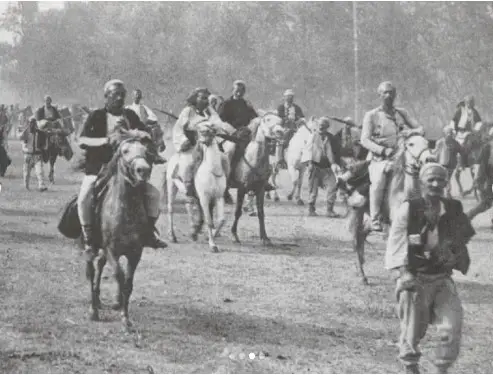
5. The Albanian insurgents led by Hasan Prishtina and other leaders: Hasan beg Gizolli, Ajet and Selim Dervina, Mehmet Konjuhi, Keri of Sadik Bardhi, Mehmet Delia, Isuf Mehaniqi, Sulë Elezi, Xhafer Bislim Elezi, Mustafë Zyberi, Isuf Dina, Cen Seda, Januz Kurti, Xhafer Shema, etc., from Kulla Luma concentrated in the villages of Bardhoc and Morinë and then in the early hours of the morning of February 13, 1915, through the mountains of this village, continued the way to Zhur.
Since the fighters had occupied all the paths and roads that led toward the Gorge of Zhur, initially the group led by Hasan Prishtina cut the telegraph and telephone wires (connections) in the mountains of Koretnik.
6. During this time, on the right side of the slope of Mount Koretnik, highlanders from the villages: Zapod, Belja, Lojme, Nimc, etc., led by Rasim Selmani, would also arrive to support the attacks to be carried out against the concentration of Serbian border forces.
7. The Albanian insurgents at the break of dawn, aided by Mulla Nasuf Hoxha of Zhur, entered the village and after surrounding the Serbian garrison, the fighters were positioned in the trenches (istikame) that the Serbian forces themselves had opened. The sign for the start of the attack was the explosion of a bomb by the fighter Xhemë Voka from Shtiqën. The Serbian command, alarmed by the explosion, gave the alarm to move into positions, but the Albanian forces furiously attacked the Serbian units. The battles were bloody and there were hand-to-hand clashes.
With the insurgents, many men from Zhur, Dobrusht, Shkoza, and Vërmica joined, who with rifles and axes, scythes and knives, attacked the Serbian soldiers. The call to join the ranks of Hasan Prishtina was given by the patriot from Zhur, Asllan Rexhë Ademaj, who in those moments called out: “Fall upon them men, fall upon them brave ones, it is today or never, the time has come to remove the shka (enemy) from the homeland!”
8. In this battle that lasted several hours in a row, about 100 Serbian soldiers were killed (including some officers) and the enemy units were completely shattered.
9. The Albanian insurgents after taking control of the Pass of Zhur, marched in the direction of Prizren. Although the sounds of bombs and rifles had alarmed also the central Serbian command in Prizren, it had sent several military units in the direction of Zhur. Meanwhile, when the Albanian insurgent forces reached the Bridge of Vlashnja (south of Prizren), they faced the Serbian units.
The Albanian insurgents, concentrating in the zone – Bank of the Drin – Vlashnje – Poslisht – Billushë, engaged in a bloody clash with the Serbian units, which on this occasion used even heavy artillery. In these clashes, by cannon shells were killed: Nebi Latifi and Brahim Jashari from Brrut and two brave men from the village of Kabash of Prizren.
After a heroic resistance, the Albanian forces (in lack of ammunition) and being faced with an enemy many times larger in number and armed with cannons and machine guns, were forced to withdraw in the direction of Zhur, to then pass through the mountains of Koretnik and Gjalica, deep into the region of Luma. Hasan Prishtina after leaving the combat zone, experiencing this defeat heavily, would declare: “We fight and perhaps we enjoy nothing (freedom), but those who come after us will find our footprints…”!
10. Hasan Prishtina with some fighters from the village of Dobrusht crossed the White Drin and emerged in Has, from where after a few days he would go to Shkodër. For the Battle of Zhur, folk songs have also been composed, here are some verses: “In the Kulla of Luma they have gathered / two hundred youths have bound their besa. / Sulë Elezi spoke a word: Who is a man and who is alive / quickly to cross the border / to surround all of Zhur / to help Hasan Prishtina.” / “Hasan Prishtina was like a hawk / For he leads these people of Luma well / All the mines he has surrounded / Many of the enemies he has damaged.”
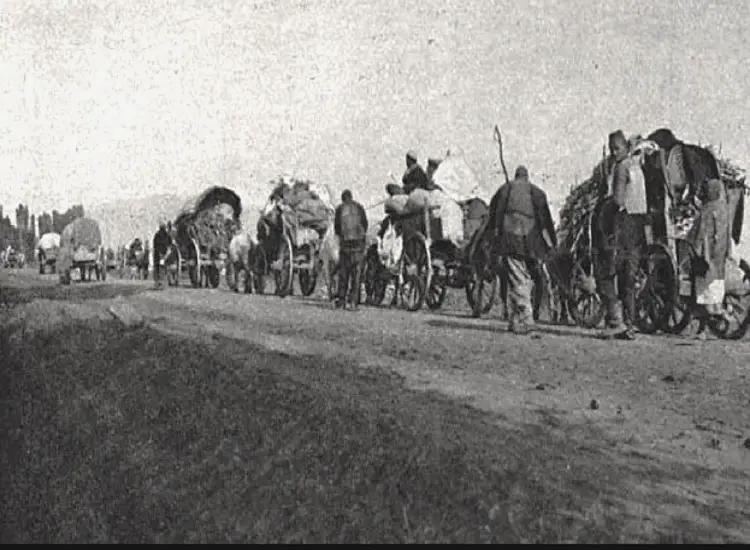
After this bloody uprising, the residents of the villages of Zhur, Shkozë, Dobrusht, and Vërmica, to escape the Serbian massacres, were forced to displace and were sheltered in the villages of Luma: Shtiqën, Nangë, Bicaj, Gabrricë, Kolesjan, etc. They stayed about 3 months away from their homes and precisely on the day of Saint George, May 6, 1915, they would return to their hearths, now looted and burned by the army and the sreckaliti (irregulars), the so-called; “Serbian raya” of Prizren.
11. The Serbian occupiers, despite the killings and massacres, burnings and destructions of Albanian villages, the violent disarmament, the taking of hostages and numerous imprisonments, the displacement of thousands of Albanians to Turkey and elsewhere, could not extinguish the Albanian resistance for liberation and national unification. / Memorie.al