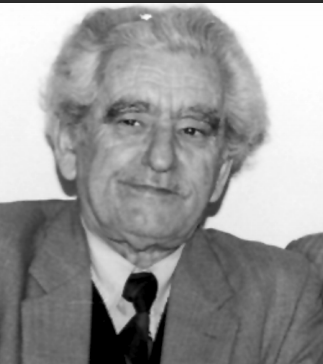
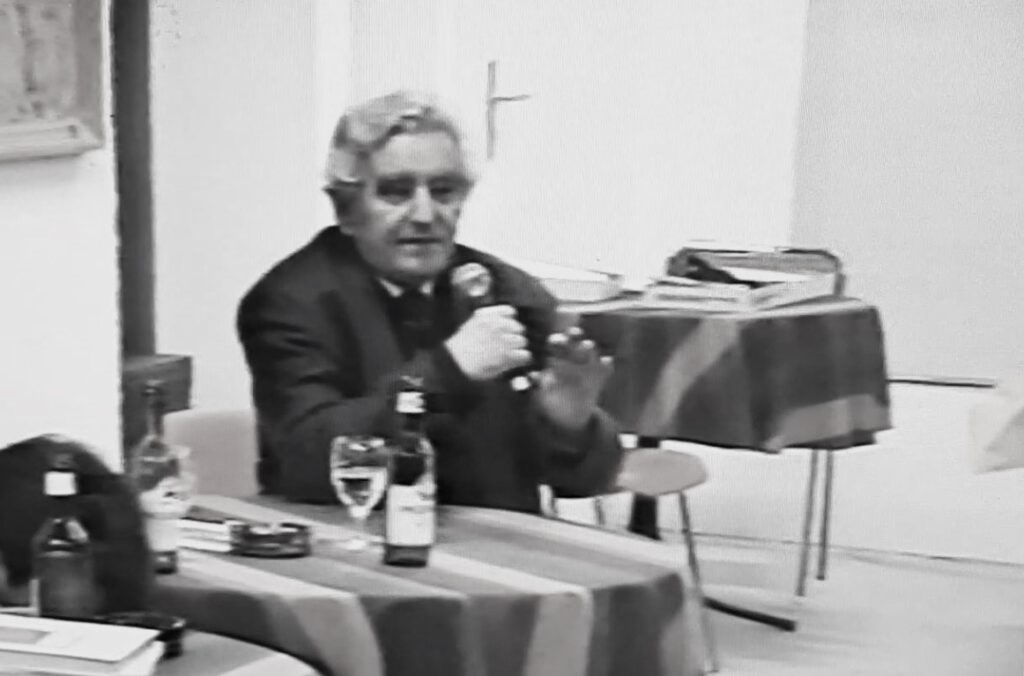
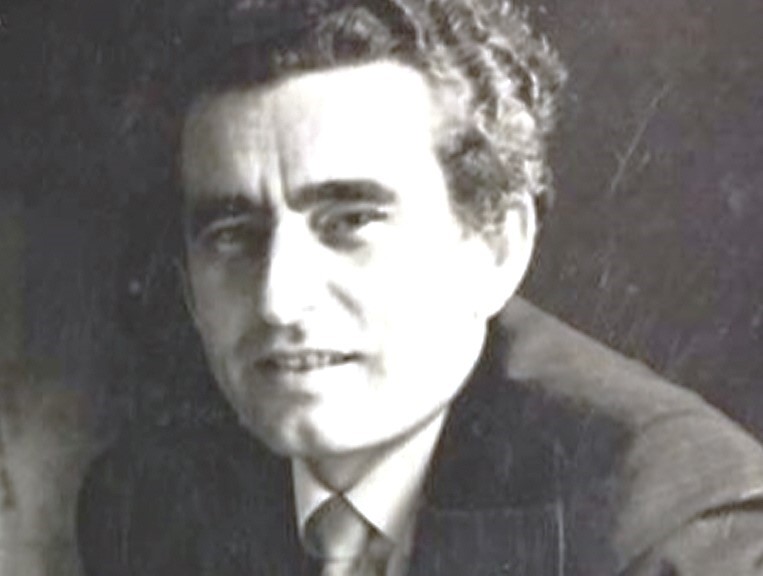
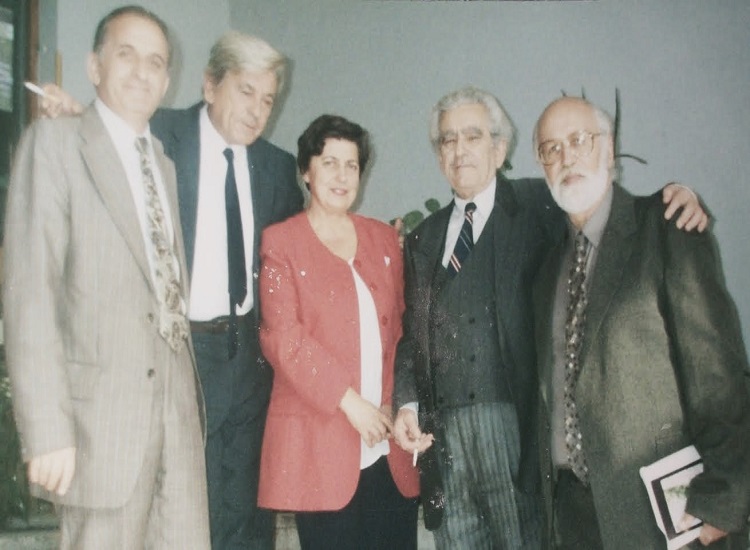
Memorie.al / In his life memoirs, Prof. Bedri Dedja noted that he was born on November 20, 1930. There, he expressed: “I feel proud to have been born in Korça, the cradle of national secular education… the queen of art and science, and a brave heart of patriotism in times past and present.” He completed high school in Durrës in 1949 and graduated from university in Moscow in 1953, specializing in two branches simultaneously: Psychology-Pedagogy and Children’s Literature. He began his career as a lecturer of psychology and the history of pedagogy at the Higher Pedagogical Institute of Tirana. As he wrote himself, it was there that he “ignited the generators of noble professional ambition.” For nearly 40 consecutive years, he served as a professor of psychology in the country’s higher education institutions.
It was natural, therefore, that he recalled with pleasure: “Even today, decades later, my former students tell me that I lectured beautifully in the auditorium, even from those first years at the Institute.” With the division of faculties at the Higher Pedagogical Institute and the creation of two new deaneries, at just 24 years old, Bedri Dedja was appointed Dean of the Faculty of History and Philology. By that time, he had begun making a name for himself through his writings in the press and youth activities.
In the summer of 1954, he was sent on vacation with a group of children to Varna, Bulgaria; in 1957, he was in Moscow with the Albanian delegation for the World Festival of Youth; and in 1962, he attended a similar festival in Finland. He was later invited to participate in the First Congress of Soviet Psychologists, among other events. With the founding of the University of Tirana in 1957, he passionately delivered psychology lectures at the Faculty of History and Philology.
In 2001, Prof. Bedri Dedja’s memoir was published under the evocative title, Nëpër ravat e jetës (Through the Furrows of Life). In the introduction, the author wrote: “It has seemed to me that my life paths resemble ‘ravat’ (mountain goat paths – author’s note) more than anything else. Regardless, this will be best witnessed by the reader, who I believe will treat this book with kindness.” The unforgettable Professor had told me that he had sent the aforementioned book to press, and I waited impatiently for its release.
When it was published, he presented me with his new book – a gift for our 45-year friendship – inscribed with warm and benevolent words. I immediately noticed the great pleasure and a sense of spiritual relief he felt. This was natural, as within those 525 pages, he had “confessed” to his readers like in no other previous book. As noted in those memoirs, in April-May 1945, Bedri Dedja had published the children’s magazine for the former Durrës district, Flamurtari i vogël (The Little Flag-bearer), which “pushed him toward true literature.”
Furthermore, among the most interesting pages are those describing his period as the first editor-in-chief of the educational-cultural newspaper Mësuesi (The Teacher), starting in 1961. From the second issue of that paper – while I was still a student – I began publishing my own modest writings there. Like many other teachers and collaborators, I always found support, encouragement, and kindness from Prof. Bedri, a talented publicist and pedagogue.
Prof. Bedri Dedja’s activity in the field of the pedagogical press was extensive, featuring numerous writings of pedagogical and psychological value in the newspaper Mësuesi and the magazine Arsimi Popullor (People’s Education). His scholarly-pedagogical work intensified following his 1965 appointment as Director of the Institute of Studies and School Publications. Later, he served as Director of the Directorate of Studies and School Publications at the Ministry of Education and Culture. In late 1970, he was appointed Deputy Minister of Education and Culture, a post he held until November 1972.
Upon the commencement of the Albanian Academy of Sciences on December 6 of that year, he was entrusted with the role of its Scientific Secretary. He performed this duty for over two years with full conscience and high professional skill. Subsequently, Prof. Dedja was also swept up by the “wave” of downsizings and rotations, being sent as a “volunteer” to the base (the field). Thus, on August 25, 1975, he began working as a lecturer at the Higher Pedagogical Institute of Elbasan (now “Aleksandër Xhuvani” University). After the typical back-and-forth and anxieties of the era, he was finally able to return with his family from Elbasan and, in June 1980, resumed his work as a professor at the University of Tirana.
Bedri Dedja is the most prolific and popular writer of Albanian children’s literature, an activity he began in his youth. He created and published dozens of original works and 33 adaptations and translations from world classical literature for children and young adults. Who hasn’t read his famous works, such as: Heroizmat e Fatbardh pikaloshit (The Heroics of Fatbardh the Freckled, 1954), Kalamajt e pallatit tim (The Kids of My Building), Një udhëtim i rrezikshëm (A Dangerous Journey), Shkolla e pyllit (The Forest School – which won the “Republic Prize” in 1970), Republika e 1.100 çudirave (The Republic of 1,100 Wonders), Qyteti me tri kështjella (The City with Three Castles), Përrallë madhja (The Great Fairy Tale), etc.
Most of these have been reprinted several times in Albania and Kosovo and translated into foreign languages. During his tenure in Elbasan alone, he published three children’s novels, a science-fiction novella, two poems, and a volume of literary criticism; he also wrote two plays performed at the “Skampa” theater.
A cherished memory for him was his first visit to Kosovo in 1973. A Kosovar friend, the poet Agim Deva, would send him a book year later with a verse-inscription: “Do you remember Uncle Bedri / when we turned verses into children / we wanted you here in Kosovo / and you wanted us in Albania…”! After its liberation, and even just days before his passing, he visited Kosovo several times, where he was welcomed with love for his many merits as a pedagogue, writer, and researcher.
Prof. Dedja, like many contemporary intellectuals, was exhausted by life and burdened by intensive creativity. Yet he always maintained steel will and remained unbowed. He never ceased his creative, literary, and scientific work, being one of the most active members and collaborators of the Academy of Sciences, the Ministry of Education and Science, the Institute of Pedagogical Studies, and the League of Writers and Artists.
We recall, for instance, that in 2003, the major work History of Albanian Education and Pedagogical Thought was published, of which he was the primary author and head of the editorial board. I had the fortune to collaborate with him during that period of his life. I always sensed his rare abilities, broad horizons, and his tact in collective work.
Similarly, within the framework of the Academy of Sciences of Albania, he led the education department for the revision of the Albanian Encyclopedic Dictionary; he chaired the evaluation board for literary-journalistic publications for children at the Ministry of Education and Science, where I collaborated with him. He was the chairman of the All-Albanian Association of Psychologists and the honorary chairman of the All-Albanian Association of Writers for Children and Youth.
Furthermore, he was a collaborator with the University of Cambridge for the drafting of biographies of distinguished people, and his name is listed among the members of the World Federation of Pedagogical Sciences. Due to funding issues, his project to organize the First All-Albanian Congress of Psychologists remained unrealized.
Prof. Bedri Dedja participated in many national and international gatherings where various problems of psychology, pedagogy, and children’s literature were examined. Notably, at the Congress of Albanian Orthography (Tirana, 1972), he read his paper titled: “On Psychic Acceleration and its Impact on Learning the Literary Language.”
Alongside the dozens of books he had published in various fields, even when significantly worn down by life and illness at over 73 years old, he affirmed: “I have folders of creations that I have prepared, fully or partially, for publication as separate books. And they are not few; they are thousands of pages that my bibliography may or may not yet include…”
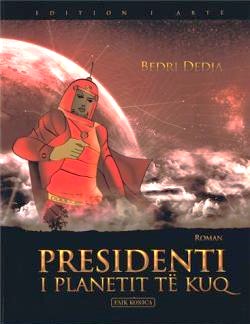
It was a special pleasure for all former colleagues, students, collaborators, and his many benevolent acquaintances when, in April 2009 – on the 5th anniversary of his passing – another of his dignified works for children was inaugurated in the capital, Tirana. It is titled Presidenti i Planetit të Kuq (The President of the Red Planet).
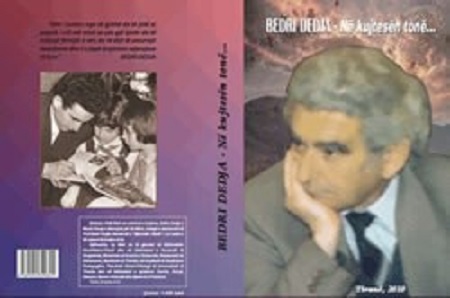
As a friendly obligation and an honor for me, in 2010, in memory of his life and multifaceted activity, I prepared and later published the book Bedri Dedja, in Our Memory. It includes writings by many authors, colleagues, friends, former students, and family members from all ancestral lands and the Albanian diaspora.
In November 2000, on his 70th birthday, the President of the Republic awarded him the high title “Grand Master” (Mjeshtër i Madh). Previously, he had been honored with the “Republic Prize” and many other well-deserved decorations and evaluations for a life spent in service of national education, literature, and Albanian science. Prof. Bedri Dedja passed away on April 13, 2004, but his name and work will remain forever alive in the memory of our generations./Memorie.al