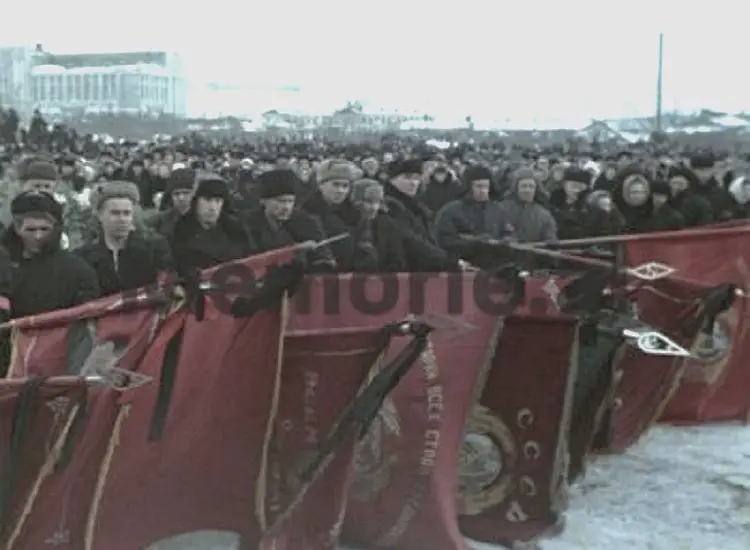
Memorie.al /Exactly 72 years ago, as the dawn of March 5, 1953 approached, the leader of the Soviet Union, Joseph Vissarionovich Stalin – who had headed the Communist Party of the Soviet Union since 1924 (immediately following Lenin’s death) – died suddenly from a cerebral hemorrhage. He passed away at his residence in Kuntsevo, on the outskirts of Moscow, just one night after dining with his closest associates, members of the Politburo of the Communist Party of the Soviet Union. Immediately following this, by decision of the Central Committee of the Communist Party of the Soviet Union, five days of national mourning were declared. Hundreds of thousands of people from across the Soviet Union participated in the tributes held before his body at the “Hall of Columns” in central Moscow.
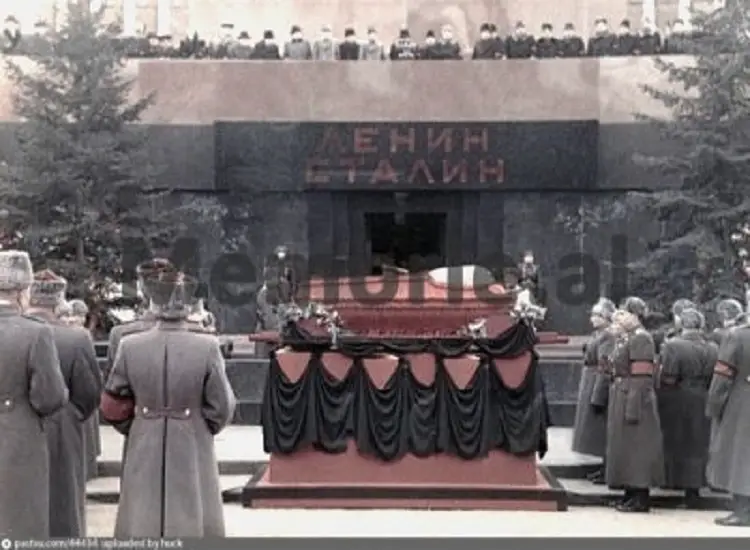
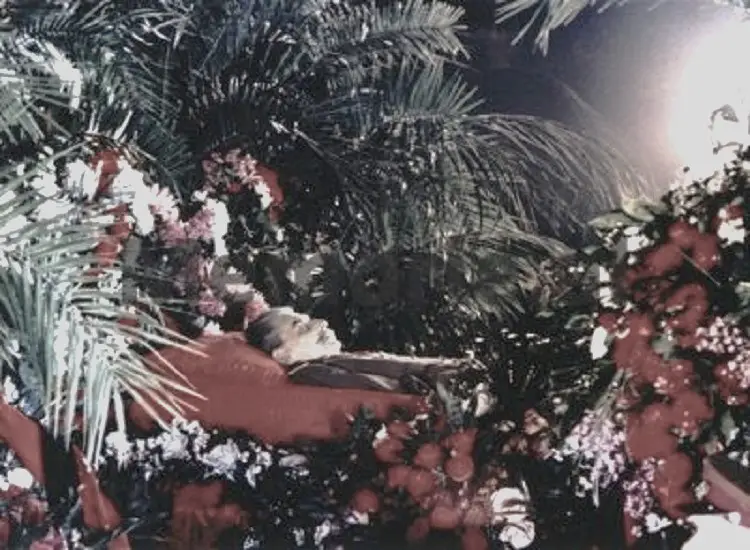
Likewise, in all funeral ceremonies conducted until March 10 – when the embalmed body of Joseph Stalin was placed in the Mausoleum erected within the Kremlin walls – foreign delegations from almost every country in the world and all five continents attended, primarily those from socialist and communist nations.
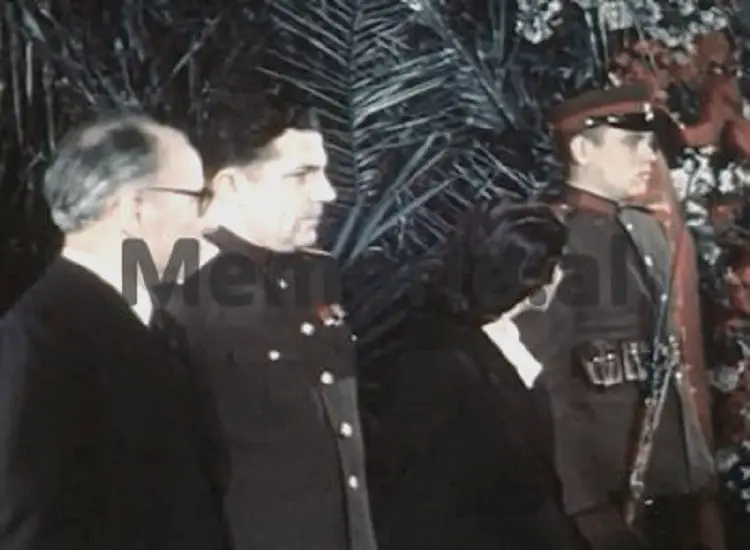
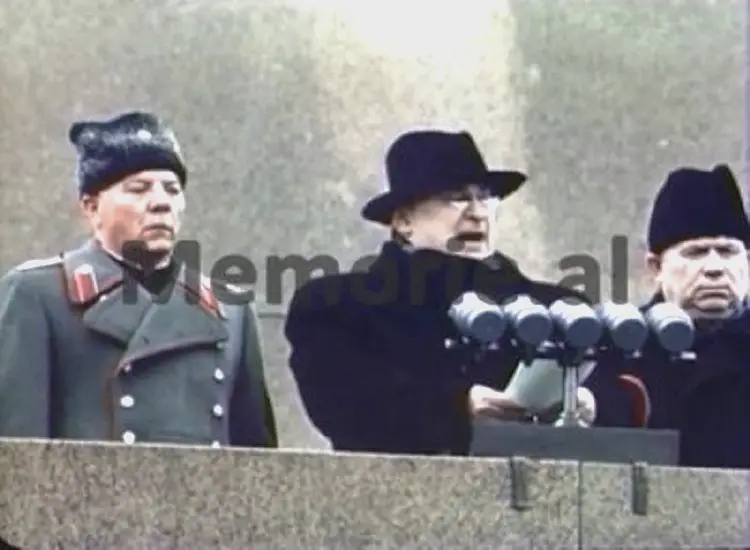
Among them was the official Albanian delegation, which consisted of Spiro Koleka (Vice-Prime Minister and member of the Politburo of the Central Committee of the PPSH), Lieutenant-General Beqir Balluku (Chief of the General Staff of the Army at the Ministry of People’s Defense and member of the Politburo), Liri Belishova (member of the Politburo, secretary of the Central Committee of the PPSH, and member of the Presidium of the People’s Assembly), Ramiz Alia (member of the Central Committee and first secretary of the Union of Working Youth of Albania), Abdyl Këllezi (Minister of Finance), and Vasil Nathanaili (Plenipotentiary Ambassador of the People’s Republic of Albania to the Soviet Union).
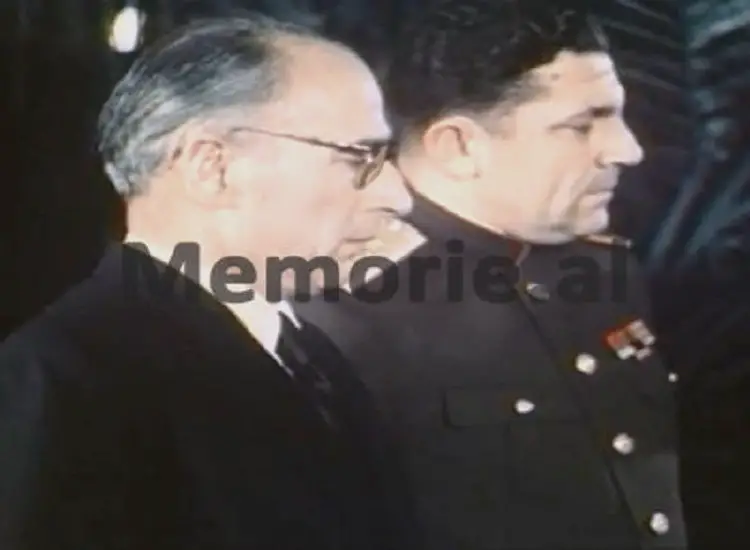
From those funeral ceremonies, only two photos exist in the Albanian state archives – specifically the archive of the former Central Committee of the PPSH. Surprisingly, Soviet photographers and cameramen seem to have focused on only a portion of the official Albanian delegation, as only Spiro Koleka, Beqir Balluku, and Liri Belishova are visible. These photos have remained unknown until today and are published for the first time by Memorie.al.
Meanwhile, Ramiz Alia, Abdyl Këllezi, and Vasil Nathanaili do not appear at all; as noted above, no photos of them at that funeral ceremony, where official delegations from all socialist countries participated, can be found in the Albanian state archives.
Additionally, besides Enver Hoxha, other top leaders of the Albanian party and state were absent from the delegation, such as Mehmet Shehu (the No. 2 figure after Enver Hoxha, who at the time held the post of Minister of Internal Affairs and member of the Politburo), Tuk Jakova (Vice-Prime Minister, member of the Politburo, and secretary of the Central Committee), and Omer Nishani (Chairman of the Presidium of the People’s Assembly).
Another aspect worth noting is the absence of Enver Hoxha himself from those funeral ceremonies. He was the only leader from the communist countries of Europe and the world who did not participate in the tributes for Stalin’s death in Moscow, despite the fact that he (Enver) considered himself, and was in fact, one of Stalin’s most loyal pupils among all the leaders of the Communist East.
Enver Hoxha’s absence from Joseph Stalin’s funeral remained shrouded in mystery for years. It was only in 1980, when Hoxha published the book The Khrushchevites that he gave his official version of why he did not participate. According to his memoirs, the Albanian communist dictator justified his absence by claiming he feared a possible physical elimination by Stalin’s successors – specifically citing Nikita Khrushchev and Lavrenti Beria.
Dictator Enver Hoxha “illustrated” his fear and paranoia with the example of the death of the Czechoslovak leader, Klement Gottwald, the First Secretary of the Czechoslovak Communist Party, who died in Prague on March 14, 1953, immediately after returning from Moscow. The official version was “acute pneumonia,” while it was suspected he had been poisoned by the NKVD (predecessor to the KGB) on Khrushchev’s orders as part of a purge of Stalinist leaders.
Another noteworthy aspect is that, paradoxically, Enver Hoxha’s Albania was the only communist country in the world to declare a full 15 days of national mourning in Stalin’s honor, while the Soviet Union itself declared only five days. Furthermore, Enver Hoxha forced hundreds of thousands of Albanian citizens to kneel before the Soviet dictator’s monument in Tirana as a sign of loyalty.
The kneeling of the highest leadership of the PPSH before Stalin’s monument in Tirana clearly demonstrated the unwavering loyalty and continuity of Albanian communism toward one of the most brutal communist dictators known to humanity. Such an act did not occur in any other capital of the communist states in Europe or the world.
Referring to footage of the time – not only in Moscow but also in Warsaw, Berlin, Prague, Budapest, Bucharest, Sofia, Beijing, and Pyongyang – ordinary citizens were simply forced to place bouquets of flowers at Stalin’s respective monuments in the main squares of those capitals.
Ironically, years later, when Enver Hoxha publicly declared the breaking of official relations (political, economic, and military) with Nikita Khrushchev’s Soviet Union, three of the six members of the Albanian government delegation who attended Stalin’s funeral were punished by Hoxha himself, accused of being “pro-Soviet and agents of Moscow.”
Specifically, Liri Belishova was punished in 1960, Beqir Balluku in 1975, and Abdyl Këllezi in 1977. While Belishova remained in internal exile until 1991 when the communist regime collapsed, Balluku and Këllezi were executed – in November 1975 and May 1977, respectively./Memorie.al