By Ali Buzra
Part Twenty-Two
– LIFE UNDER PRESSURE AND SUFFERING –
(ASSESSMENTS, COMMENTS, NARRATIVES)
Memorie.al /At the request and wish of the author, Ali Buzra, as his first editor and reader, I will briefly share with you what I experienced in this encounter with this book, which is his second (after the book “Gizaveshja Through the Years”) and which naturally continues his writing style. The sincerity and frankness of the narrative, the simple and unmodified language, the accuracy and precision of the episodes, or the lack of a refining, intentionally subsequent imagination, or its non-utilization, I think have served the author positively, who comes to the reader in his original form, inviting us to at least get to know unknown human fates and pains, whether by chance or not, leaving us to reflect as a starting point for awareness towards a catharsis so necessary for the Albanian conscience.
Bedri Kaza
Continued from the previous issue
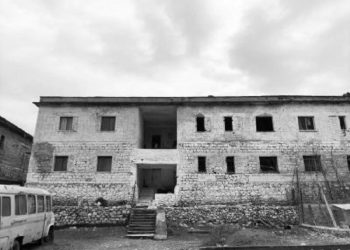
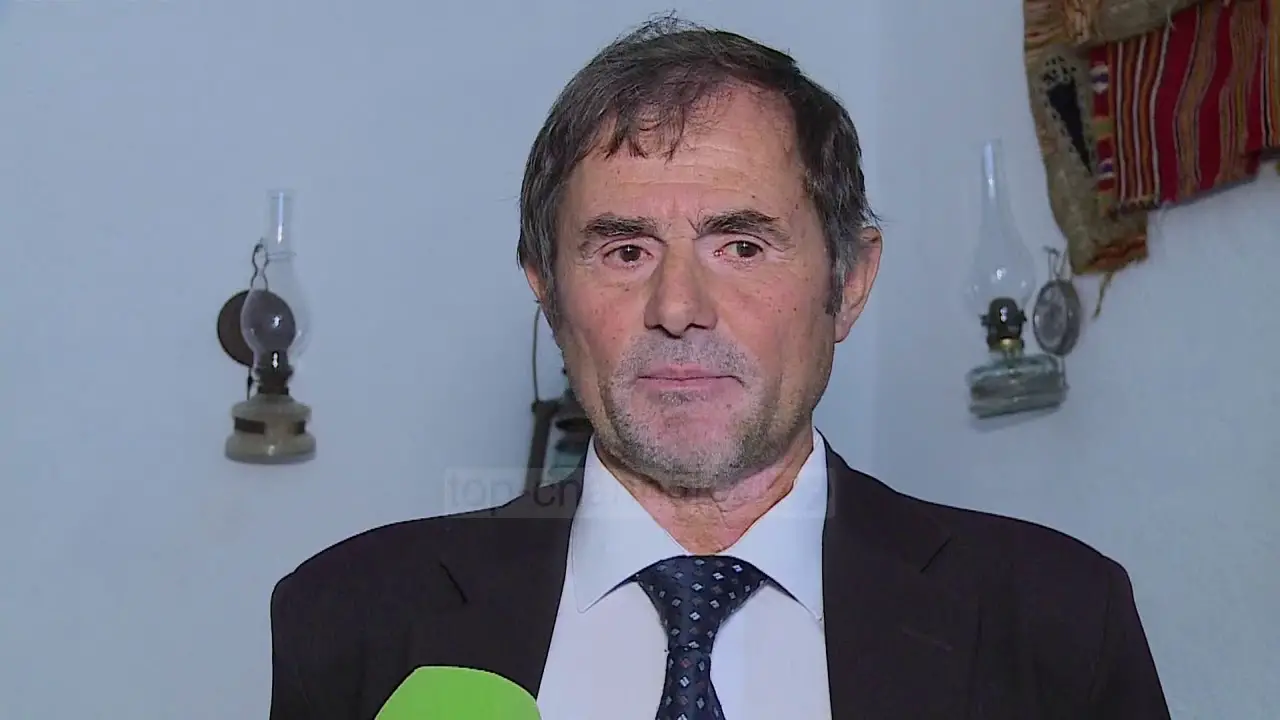
In 1945, Isak Alla’s family was moved from the village to internment. It consisted of 9 members; the mother of the three Alla brothers, called Gizaveshja, now elderly over 70 years old, three sisters-in-law (the wives of Isak, Halil, and Kamber), two sons of Isak, and three sons of Halil. The only survivor today from this family, whom we contacted, is Faik Alla, Halil’s son, born in 1943. The family was initially sent along with many other persecuted families to Berat, to the Castle, into a barracks. Faik was not yet 3 years old, his older brother Sehit was 9, while his little brother, Kurt, was a few months old. The latter could not survive the harsh conditions of internment and died there in Berat.
Their mother, Hejdija, who was the only daughter of Hamit Qoshi, from Zgosht, passed away a few months after the little infant at the age of 27. The other two sisters-in-law and their elderly grandmother took care of the other two children, Sehit and Faik, left orphans, without a mother or father, in the macabre conditions of internment. The accounts of the survivor, Faik, are harrowing. Although I have already reflected the accounts regarding Tepelena, as suffering united these families in their most difficult days, I am obliged to give again details obtained from the survivor, Faik Alla. After Berat, in 1949, they were interned in Turhan, where according to him they stayed outside for some time and later they were placed in a horse stable.
Later they were taken to Tepelena, to the former army barracks, where they were also surrounded by barbed wire and guard police, on all four sides. “Roll call was done three times a day. It was given to young and old, 400 grams of bread in 24 hours,” says Faik, then 6 years old and an orphan, without a mother or father. “They started cooking a soup broth with rice or bulgur for them, where they removed the worms by hand and then ate the soup with unprecedented hunger.” I asked Faik if they had any improvised place like a canteen where they ate the food. “No!” he replied, “people would go with an aluminum bowl in hand, in line to get the soup, while they would eat their bread ration quickly, hungry as they were, without leaving the line.”
They stayed there until the age of 11-12 along with his brother, Sehit. Nearby, Faik remembers, a small child dies, and the family members for two days did not show up to get his bread ration. In the prison camp of Tepelena, there were over 3000 people, of which few were men, while the majority was women, children, and the elderly. Not only men and women, but also grown children were sent to work, where they produced and carried firewood manually in a forest, in the village of Dragan in Tepelena, he recalls. Beyond the camp, on a hill, above a stream, there were many fig trees. When returning from work, in some rag bag they carried with them, they would take a few figs to give to the children and the elderly. Although in secret, this action was noticed by the service police. Near the barracks, the police started checking their bags, pouring out the figs and trampling them underfoot.
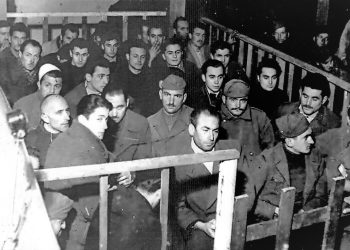
Two people managed to escape from the Tepelena camp. This was considered a serious event. The brutality and mistreatment towards the prisoners in the camp increased. Over 20 young men were arrested, suspected of being able to escape. Among them, Isak’s son, Haki Alla, was also arrested. He was sentenced to 14 years in prison, which he served in Gjirokastër and Burrel. Some women from the camp were taken and sent to Vlorë, to carry stones, while their children remained in the camp in Tepelena. Among them, they also took Isak’s wife.
Meanwhile, her mother-in-law passed away there in the Tepelena camp. This woman, wise, brave, kind-hearted and generous, known in the tribe and in Zgosht by the name “Gizaveshja”, passed away at an advanced age, in inhuman conditions, with a complete lack of food, clothing, and without any medical assistance. With pain in her soul, with a heavy heart for the situation in which she left her four grandchildren in the prison camp, her daughters-in-law, and not knowing anything about her three sons in hiding, she departed from life at the height of grief that a mother can experience.
Thus, the communist state of Enver Hoxha exiled hundreds of Albanian mothers. With unprincipled ideas, labeling them “enemies of the people,” the communist government, the so-called “people’s government,” persecuted without any cause innocent mothers and women, elderly men advanced in age, boys and girls in the age of youthful dreams, as well as minor and newborn children. When she returned after a few weeks from Vlora, Isak Alla’s wife cried bitterly, because they did not allow her to come to bury her mother-in-law, whom she loved so much. Just like for hundreds of fellow sufferers who died there, for the mother, and for her son’s wife, the mother of Sehit and Faik, today there is no grave.
Meanwhile, while their family members were in the Berat camp, the armed group of the Allaj and Biçak families stayed sheltered mainly in mountain caves, waiting to join a general anti-communist uprising, coordinated with a possible intervention from abroad, something that never materialized. The Anglo-Americans, apparently, left Albania to the Communist East. The problem of the establishment of communism in Albania was never taken seriously. They contented themselves only with supporting and inciting some former Albanian fugitives, helping them with air and land drops.
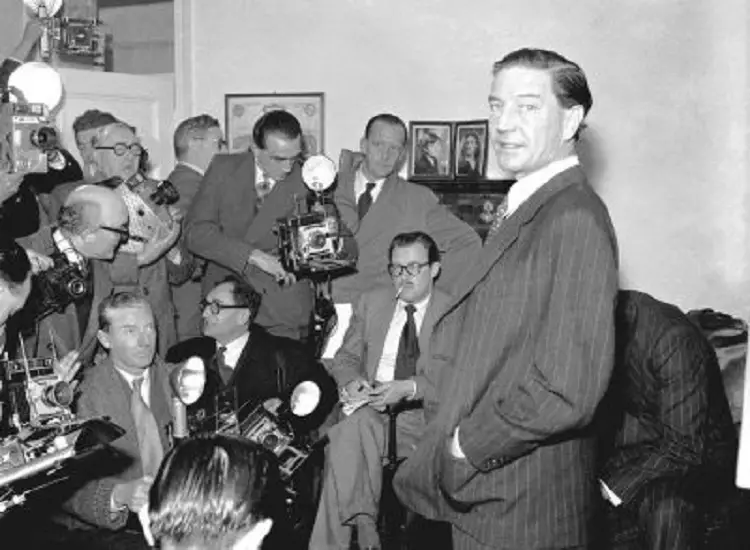
Most of them fell into the trap of the Albanian State Security (Sigurimi), well informed by the Russians about every case, as a result of the infiltration of the English agent Kim Philby into Soviet intelligence. From the accounts of some of the surviving participants in these operations, it appears that the Alla brothers were also involved, becoming part of meetings for organizing an anti-communist uprising in Albania. Below we give the account of Zef Luka, according to the original:
One of the paratroopers sent to Albania testifies for the first time from the USA. Testifying from Cleveland, Ohio, USA, is Zef Luka, one of the few paratroopers dropped by Anglo-American intelligence agencies to overthrow the communists and who lived for 13 months in the mountains of Northern Albania, escaping the Pursuit Forces, which, aided by the Russians and Kim Philby, caught and killed most of the paratroopers.
Zef Luka, the anti-communist from Shkodra who survived and did not fall into the trap set by the Albanian State Security in cooperation with the Russian counter-intelligence; (a trap fed by Kim Philby, the English double agent, who operated in Washington; later he went to the Kremlin, was declared a “Hero of the Soviet Union”). The former paratrooper lives in Cleveland, Ohio. Zefi never forgets for a moment his comrades-in-arms with whom he shared the difficult days of the anti-communist war. He has an exemplary diary that reflects in detail the activity of those he himself calls “One hundred eagles that came to bring freedom.”
Zefi’s messages to write about those who lost their lives in this war have been frequent, but he has especially asked to write about “the professor,” Alush Lleshanaku. Zefi asks that the truth be written, not conjecture; he asks that some of the events be clarified, because misinformation, even unintentionally, distorts history and this is not in the good of the nation, especially since those who could testify have become rare as the scythe of death has mowed them down one after another. Zefi is the only one among the living paratroopers who landed at that time in the mountains of Northern Albania to overthrow Enver Hoxha’s regime.
I got in touch with Zefi again on the phone to hear his voice and to get testimony about Alush Lleshanaku, whom he, like many of those who knew the professor, adored. On July 28, 1946, the announced meeting of Allajbeg was organized, where it is thought that more than 200 fugitives from that area participated, who had long left their family hearths and taken up arms to overthrow communism. Also present at this gathering was Hamit Matjani, one of the most dangerous anti-communist fighters. Hamit was accompanied by Hima, his brother Ibrahimi, who would later be killed and give his life in the fight against communism, left killed along with his three nephews: Hasan, Dalip, and Hajdar.
The sacrifice of the Matjani family in the name of anti-communism would not end there; Hamit’s other brother, Asllani, and his uncle’s son, Veliu, would also fall in the effort. Among the well-known names of the anti-communist war, participants in the Allajbeg meeting would also be Nuri Plaka and Ramadan Kelmendi. Hamit was from the village of Matjan in Lushnjë, Nuri Plaka from Gostima in Cërrik, Elbasan, while Ramadan Kelmendi was from Kosovo.
In Fiorolo’s notes, it is written that all three: Hamit Matjani, Nuri Plaka, and Ramadan Kelmendi, would fall into the trap of the State Security, betrayed by Xh. Mema, D. Kurti, and B. Hoxha, not forgetting the contribution of Zenel Shehu, who had also long agreed to play the State Security’s game. Among the participants in the Allajbeg assembly, it is also worth mentioning other anti-communist fighters such as: Latif Karafila, Adem Tafani, Veiz Gjolena, Fetah Shabani; the three brothers Sefer, Shaban, and Pasho Gjika from Shalës in Elbasan; Emin Lamçe; Cen Graceni, Mersin Muzhaqi; there was the one called the hero and brave man of the Zgosht cave in Librazhd, Isak Alla with his brother, Kamber.
Isak had become a legend in song for the war and heroic resistance he had made at the Zgosht Cave in the years 1945-’46. Azis Biçaku and Xhevdet Blloshmi could not come to the assembly, as they had obstacles on their journey. It was a regular meeting, where not only the leaders discussed. In the minutes of that meeting, the speech of the organizer and leader of that assembly, Alush Lleshanaku, who opened the meeting, has also been preserved.
He told those present about the efforts being made by the mountain fighters to overthrow communism. He spoke about the meetings he had had in the north of the country, with the head of the Committee of the Northern Mountains, Llesh Gjonmarkaj, as well as with Jup Kazazi from Shkodra, who, after a month, would be at the head of the uprising. After the failures that came following the suppression of Postriba, Alushi tried once more to coordinate the forces.
For this purpose, he went to Zgosht in Librazhd, to meet with Isak Alla and Azis Biçak, and then went to Okshtun in Dibër, to meet with Fiqiri Dine, but there he learned that Fiqiri, together with Prenk Previsi and Hysni Dema, had gone to Greece. He had no choice but to cross into Greece as well during ’47, (there in camps he also met Zef Luka and others). Alushi would return again to Albania to continue his mission on February 15, 1949, and December 1949.
4.2 Isak Alla, along with his brother, Kamber, leaves towards Greece, while the wave of persecutions continues against their family members
In one of the attempts with numerous Pursuit forces, on the outskirts of a place called “Mali i Mirakut” (Miraku Mountain), Halil Alla is seriously wounded, and he cannot survive his injuries, while the opposing forces had several killed and many wounded. Although in very difficult conditions, Isaku goes to a village in Golloborda, said to be Borova, takes a hodja there and buries his brother, performing all the religious funeral rites.
At the end of 1947, after strong and manly resistance against the forces of the Army and State Security, the armed group of Azis Biçak and Isak Alla is forced to leave the country towards Greece. This movement route was undertaken because, to their knowledge, relations between Yugoslavia and the Albanian government were good and the Yugoslavs could not be trusted. And not only that, but Azis Biçak was and remained a determined anti-Slav.
Greece was embroiled in a civil war between the right-wing forces and those of the Greek communist partisans (1945-‘49). In Greece, they make contact with the command of the Greek right-wing army. From the information we have, they become part of the anti-communist war on Greek territory. Regarding this, Isuf Biçaku, who returned to Albania after the fall of communism, has stated: “Father, (Azisi) with Isak, – they said, – stay strong men! Fight there, and fight here.” It is said that Isak, on the front of the civil war in Greece, was put in charge of a unit of soldiers.
After staying for some time in Greece, Azizi together with his son Isuf, goes to Turkey, while Isak with his brother, Kamber, heads to Italy and then to Belgium. While the other brother Halil, was killed in an attempt with the State Security forces, in 1947. After staying there for several years, the Alla brothers went to America. After the death of his father, Aziz, Isuf Biçaku immigrated to Belgium, where he stayed until he passed away. In 1952, Isaku comes from Belgium to Zgosht, with the aim of taking his family, who at this time were in Tepelena.
Late at night, in secret, he makes contact with Jakup Alla. They also call Zylyf Shpata, his nephew, there. Isaku tells them: “I have come to take my children and family.” Jakup and Zylyf tell him: – “Go and save yourself, because where they have sent them, even if ten Isaks came, you couldn’t get them out.” In these circumstances, he leaves again, unable to retrieve his family. In 1954, the infamous camp of Tepelena was closed. The surviving families are sent to other internment camps.
Alla’s family and Biçak’s family were sent to Savër in Lushnjë, while Halil’s two sons, Sehit and Faik, who remained orphans without a mother or father, are released. Regarding this, the survivor Faik Alla has told us further about the arrival in his birthplace. They leave Tepelena, and with great difficulty manage to come to Rrogozhinë. Sehiti, the older one, was 17 years old, while Faiku was 11. There they board a train, and get off in Elbasan.
From Elbasan, with a truck, they come to Librazhd. There, the poor boys ask passersby to orient themselves on the road to Zgosht. They set off on foot and late in the afternoon, they arrived in the neighborhood. “It was November 1954,” he recalls. “On the ruins of the burned house, ten years earlier, there were only nettles. Jakup Alla took them and sheltered the two orphans in his own house. They stayed in his house for about two years.
Jakup was an educated man, having graduated from the Elbasan normal school (teachers’ college) during Zog’s time. Getting employed as a teacher was out of the question. He himself, and his family, were constantly under surveillance by the state security. Thus Jakup was very careful not to fall prey to possible provocations. The boys wanted to build a hut, so as not to be a burden to Jakup’s family. The latter, despite many difficulties and harsh economic conditions, kept and treated his cousin’s children very well.
Communist terror was present everywhere. The dignitaries of Zgosht had no tendencies to oppose, but the state security had spread its spider’s web in every village. Whoever communicated with them, or tried to help them, was surveilled and seen as suspicious. Finally Idriz Qoshi comes, and builds them a hut made of wood and fence, and plasters it with mud. He covers the roof with straw. There in that hut, the boys cooked and lived. Growing up and starting to work. Their marriage remained a problem.
With the interest of Ibrahim Brazhda from Dorëzi, who was the nephew of Nazif Alla, in 1960 Sehiti gets married. They engage and marry him to the daughter of Hasan Hoxha, Beja, also from Dorëzi, who was the granddaughter of Selim Brazhda, Ibrahim’s brother. The same interest is shown by Beg Hoxha from Dorëzi, who was also a nephew of Nazif Alla.
Thus, in 1967, he engages and they marry Faik with Habibe, the daughter of Jonuz Brazhda, who was the granddaughter of Murat Dosku, sentenced to prison by the communist dictatorship. Both brothers performed military service in labor units, without the right to bear arms. Sehiti in Libofshë, while Faiku in Rinas, Berat, and Gjirokastër. They were skilled workers. After being discharged from the army, both brothers built a two-story stone house on the ruins of the old house, using its very stones.
Sehiti worked mainly in the cooperative, while Faiku in state enterprises; as a worker and specialist in the Wine Factory, and in a construction enterprise until 1990. Thanks to the care of even some party leader in Zgosht, the brothers Sehit and Faik Alla were not classified as “kulaks” (rich peasants). They were provided with Front (Democratic Front) cards and were not persecuted. However, the weight of class and social differentiation was felt from time to time. For this, I will mention one case, which happened in Librazhd. / Memorie.al
To be continued in the next issue