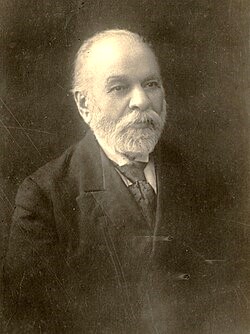
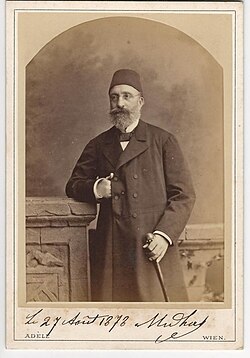
Memorie.al / Ismail Qemal Vlora often remained unknown to the world, including the Albanian one, for his great diplomatic ability, his extraordinary sharpness, and the clear vision of the world politics of his time. Although he entered history as the champion of Albania’s independence, he lacked recognition as a great politician and diplomat with international reputation. His value as a distinguished witness of the history of Eastern Europe and the Balkans, as described in his “Memoirs,” an exceptional source for European historians, was long overlooked.
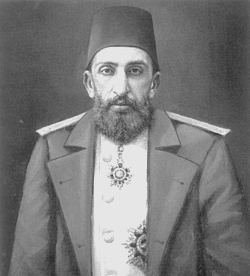
But his career within the Ottoman state structure was extraordinary. He participated in the political life of the Porte from a liberal perspective, which he would never give up, even in the most critical moments; in fact, he maintained these positions until the end, even at the risk of angering the unstable Sultan Abdul Hamid and despite the exile he faced. A liberal and advocate for a reformed Turkey according to Western democratic principles, from a young age he had been one of the most valued experts and advisors to the Grand Vizierate and the Court on European policy.
His liberal vision allowed him to positively value the cultural, ethnic, and religious diversity of the Empire. He saw in the different cultures of the Empire – or “nations,” as he called them – a true richness, not very different from what exists among European states. Not only his dual Albanian and Ottoman culture and his knowledge of Greek, Turkish, and several Western languages, but also his choice to marry an Orthodox woman (Greek of Albanian origin), allowed him to form a vision for things free from ethnocultural rigidities.
One of the key aspects that distinguished this worldview was the importance given to dialogue. The great virtue of Vlora, the Sage (i Urti), as he was known, was his belief in the good word: the conviction that through dialogue and listening to others, peaceful coexistence could be achieved and thus contribute to the progress of humanity. Moreover, he strongly believed that the moral integrity and loyalty of the “Politician,” the statesman, contributed to a good relationship with the population and the emancipation of society.
These were virtues that his Albanian compatriots were the first not to understand and even stigmatized with superficial indifference. Perhaps, however, as the Italian diplomat Pietro Quaroni argued, in the Albania of the early 20th century, it was still quite difficult to understand the vision of a man who was “too Western.”
Concerned about the Armenians
A high official of the Porte, Secretary-General of Foreign Affairs, Advisor to the Grand Vizier, Governor of Tripoli, repeatedly proposed as Minister of Interior and Foreign Affairs, and a close and distinguished collaborator of the Sultan, Ismail Vlora was one of the few politicians of the period who addressed the “Armenian question,” condemning the persecution. He did this since the first wave of 1893-’94 and again in his “Memoirs,” at still unexpected times, between 1917 and 1919.
Ismail Qemal Vlora was deeply affected by the treatment reserved for Armenians, “for whom,” he wrote, “I feel a connection not only in the political sense but also in a human and personal sense.” Among his close friends and among the Ottoman statesmen he valued the most were Armenians. Ismail Vlora states: “I had the opportunity to study their souls and measure their intellectual and moral capacities,” saddened that such a worthy people should suffer such absurd and violent persecution, which seemed inexplicable to him.
“I have never been able to explain or understand, just as I have never been able to accept, the martyrdom suffered by these brave and hardworking people through any theory of Abdul Hamid’s capricious deviation,” he wrote. In the past, this ancient people was considered – among the unconverted – “sadik milleti,” the faithful people. But modern times seem worse in this regard, paradoxically less tolerant and more violent.
Modernity seems to have a moderating function only in a democracy already established over time; elsewhere, where it is merely imitated, it seems to give rise to deviations. A well-wisher of British democracy and a defender of individual freedom, Vlora saw the oppression of Armenians as an expression of the personal hatred of an insecure and suspicious ruler, immersed in Eastern absolutism and therefore unable to understand forms of freedom and independence foreign to his power. The motives seemed clear to him: Armenians were Christians, and the Sultan could not control their education, ideas, and culture.
However, at the same time, unlike their Muslim subjects, who were controlled and educated in submission, by speaking Turkish, they could spread liberal ideas throughout the empire that the authorities could not control and censor. It is no coincidence that the Sultan showed a particular idiosyncrasy toward the main Armenian advisors and ministers, throughout history, advocates of liberal and modernizing policies that he disliked, believing they weakened his personal power.
Moreover, the Armenians maintained close ties with Great Britain for commercial reasons, and the Sultan was immune to the intervention of the Western Power, failing to understand that it was the only power that could save the “dying East” – as Ismail Vlora astutely noted – at that moment. But beyond this aspect of the Sultan’s internal policy, Ismail Vlora emphasizes another very important, often overlooked factor: the fact that Armenians had long lived very poorly and had been persecuted by Russia itself.
Russia had initiated a policy of persecution and de-nationalization against Armenians in the new territories occupied from the Porte (Treaty of Adrianople 1829), where Armenians lived. This had provoked radical attitudes among them, which frightened a suspicious and insecure Sultan. Thus, the Armenian population found itself without support, as Russia played a double game: claiming to protect Armenians as Christians, while verbally guaranteeing the Porte “support in all circumstances,” even in the case of persecution of a Christian population.
Indeed, “one wonders,” writes Ismail Vlora, “where did he (the Sultan) find the courage to do what he did? […] What was he relying on, daring to commit such crimes without fearing a reaction from Europe”? Russia’s behavior and the various power games of the other Powers certainly guaranteed the Sultan impunity.
As an experienced politician who knew international dynamics very well, Ismail Vlora advised the Sultan not to trust the Tsar and, instead, proposed following the path of constitutional modernization and gaining the support of Western forces, while carefully avoiding internal conflict between different ethnic groups, upon which the enemy relied.
He undertook a strenuous diplomatic process to achieve some kind of cooperation between the Sublime Porte and Great Britain. This was to convince the Sultan to abandon his neo-absolutist policies and, above all, to stop the continuous persecution. To achieve this, he even suggested to the diplomats of London that Great Britain deploy its warships in the Bosphorus to forcibly impose, if necessary, reforms and, above all, the end of the persecution against Armenians.
But the fate of these trivial events would continue. “The ships arrived,” writes Ismail Vlora, “but the massacres continued anyway, and Europe no longer cared”! Meanwhile, the Ottoman Empire, a dying beast, concluded its “Armenian persecution” during the First World War, between 1915 and 1916, but few know that it had started much earlier.
Thus, this great Albanian statesman, in line with the culture of his people, was also one of the first Ottoman men to denounce and distance him from this terrible crime, which would be followed by many others, with Europe, as it would prove on other occasions, merely a spectator. It was also this Holocaust that shook Ismail Qemal Vlora, pushing him to question the fate of his own people and urging him to personally engage in the independence of Albania, now that the era of hatred had begun.
An extraordinary man, Ismail Qemal Vlora, who came from the future to an Albania anchored in the Middle Ages, was not only misunderstood and misinterpreted by his contemporaries at the beginning of the 20th century, but was also censored for another 70 years. Both regimes, first that of Zog and then that of Hoxha, never allowed the publication of his “Memoirs,” which had to wait until the fall of the communist regime.
Very few of his extraordinary “Works” (not only regarding the national issue) were transmitted to the Albanians, and this is understandable, because in the face of a man of his stature, his political theories, his extraordinary sense of res publica, or even simply his life or his ability to translate it into a “history,” the small dictators, like any other recent Albanian politician, would vanish. / Memorie.al