By Ali Buzra
Part Five
– LIFE UNDER PRESSURE AND SUFFERING –
(EVALUATIONS, COMMENTS, NARRATIVES)
Memorie.al / At the request and wish of the author, Ali Buzra – as his first editor and reader – I will briefly share with you what I experienced during my encounter with this book. This is his second work (following the book “Gizaveshi Through the Years”) and it naturally continues his established writing style. The honesty and sincerity of the narrative, the simple and unembellished language, the accuracy and precision of the episodes, and the lack of – or refusal to use – a deliberate, post-processed fantasy, have all, in my opinion, served the author well. He comes to the reader in his original form, inviting us at the very least to recognize unknown human fates and pain, whether by chance or not, leaving us to reflect as a beginning of awareness toward a catharsis so necessary for the Albanian conscience.
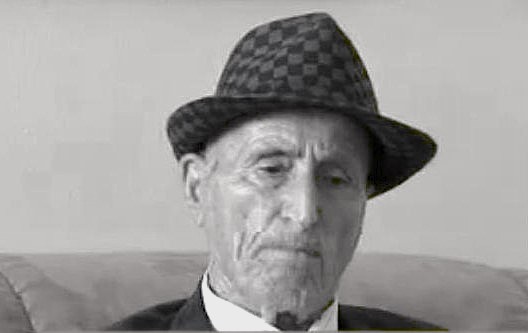
This is how an elderly Kosovar remembers the time of the exodus caused by Slobodan Milošević many years later – a man fate brought me to meet in the warehouses of the “Togëz” neighborhood in Librazhd. One day, like many of my fellow villagers, I decided to go and help their children there in some small way. In the warehouse I entered, I called out to the children and gave them chocolates and biscuits I had bought for them.
The children thanked me for the symbolic gifts and went back to their families, who were lined up one after another, using foam mattresses for bedding. An elderly man gestured for me to sit beside him. I went gladly, and after greeting each other, we began to talk.
He had two sons in the ranks of the KLA (UÇK), while the third had been killed by the Serbs during an operation near their home. He was there with his sons’ wives as well as his grandsons and granddaughters. Among other things, he told me: “You are very hospitable, and so is your government; they opened the doors to us.” I asked him about the period of World War II. “I remember it well,” he said. “I was grown then; I was with Shaban Polluzha’s brigade.
We fought against the Germans in several battles, but we were betrayed (u premë në besë); the Yugoslav army forces attacked us, and they killed Shaban.” “The Albanian partisan brigades were there too,” I said, “did you know that?” The elderly Kosovar lowered his head and remained silent. At that time, I didn’t have much information regarding the activities of the Albanian partisans there, but I knew they were under Yugoslav command.
It seemed he had much to say, but he didn’t want to speak out. Noticing my persistence, he turned to me: “Do you want the truth?” (“A sak e dons?”). “Yes,” I said. “The Albanian partisans did not help Kosovo. I saw with my own eyes how they would point a Nagant pistol at the head of anyone who spoke ill of Tito and his Party. Our hearts and minds were and are with Albania, but the Albanian partisans in Kosovo… I do not want to remember them from that time.”
With that, he ended the conversation, and I did not question him further, seeing that he was truly deeply wounded by that era. It is now a known fact that the Albanian partisans sent to Kosovo helped the Yugoslav army suppress the Kosovars – who had begun to govern Kosovo after the German departure – by establishing the Yugoslav military administration there.
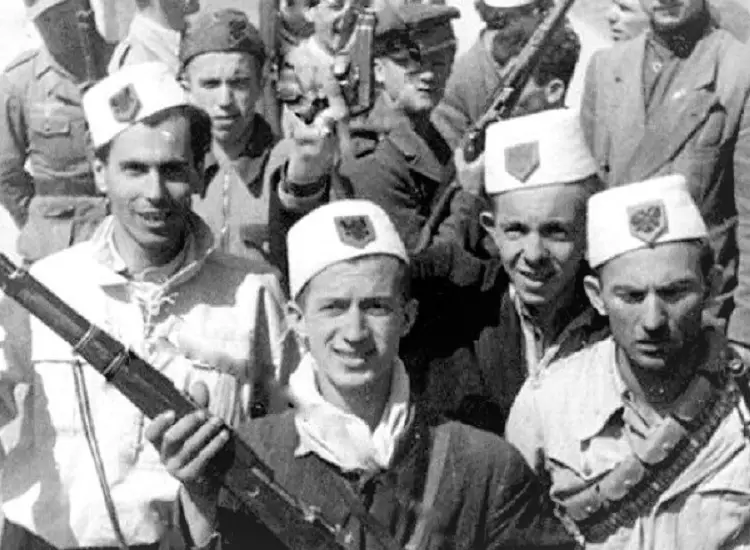
The partisan brigades remained there until the resistance of the people of Kosovo was crushed and the Serbian military regime was established. They left by an order from Tito through a specific crossing point in Ohrid. It is said that most of them returned with broken hearts and bowed heads, leaving Kosovo bloodied under Serbian captivity, betrayed by Enver Hoxha.
I think it is worth mentioning the Massacre of Tivar (Bar), previously unknown from the documents of the Labor Party of Albania (PPSH/PKSH), about which many readers still lack knowledge. In March-April 1945, thousands of Kosovar nationalists – fighters from Shaban Polluzha’s Brigade, the “Second League of Prizren,” the “Balli Kombëtar, and ”the“ Besa Kombëtare” organization, and others – were gathered under the guise of “military recruitment.” They were disarmed under the pretext that they would be equipped with weapons in Tivar.
Accompanied by special armed Yugoslav units, they marched along the route: Prizren – Kukës – Pukë – Shkodër – Tivar. This march was organized under the claim that they would be sent to the front lines in Trieste and Istria. The Tragedy of Tivar appears to have been designed by the Yugoslav communist state in agreement with the Albanian communist state.
It was part of the long-standing Yugoslav plan of Čubrilović for the ethnic cleansing of Albanians: “extermination and displacement,” followed by the colonization of emptied Albanian lands. The Yugoslav Communist Party propagated this war against Albanians as a struggle against “Greater-Albanian reaction,” against “collaborators of anti-fascism,” etc.
Josip Broz Tito, in his capacity as the Commander-in-Chief of the Yugoslav National Liberation Army (UNÇJ), requested from Enver Hoxha the passage of the National Liberation Army of Albania formations into Kosovo and Yugoslavia. The sending of Albanian brigades to Kosovo was kept secret even from the British.
For this reason, Enver Hoxha instructed Dali Ndreu, the Commander of the 1st Army Corps, “not to show the English the objective of the 5th and 3rd brigades that will go to Kosovo.” The 5th and 6th Divisions were placed under the orders of the 5th Army of the Yugoslav National Liberation Army.
They became part of the establishment of the military regime in Kosovo, the suppression of the Kosovar resistance, and its re-occupation. In most cases, the mobilized Albanians of Kosovo trusted the calls of the command of Albania’s 5th and 6th Divisions and surrendered; but in an act of treachery, they were handed over to the Yugoslav military command, which would then send them toward their annihilation in Tivar. This has also been admitted by the Albanian authorities of the time.
Thus, Zoi Themeli, Chief of Forces of the 3rd Defense Division of the Shkodra District, admitted in his declaration that the mobilized Kosovar recruits “were killed in mass on the road to Albania, without any guilt, while those who escaped the columns to save their lives and surrendered to the Albanian state authorities, were handed back by the latter to the Yugoslav commands, where they met their deaths. And this was done by the order of the highest leaders of the Albanian state.”
Meanwhile, a survivor of the Tivar Massacre, recruit Azem Hajdini, who experienced its horrors, testifies: “When we entered the territory of Albania, we were immensely joyful, thinking that from then on we would be under the escort of the soldiers of our own state, Albania, and that we would no longer experience the atrocities we had continuously suffered in Kosovo from the Serbs, Montenegrins, and Macedonians.
Very quickly, we became convinced that there was no room for joy here either, as the pre-prepared scenario continued to be executed with precision. Along the road through Albanian territory, the escorts increased the torture and killings against us. They no longer considered us their brothers-in-arms, not even as prisoners of war…! They didn’t even consider us a herd of cattle…”
“When we passed Puka,” Hajdini testifies, “they pulled three young recruits dressed in national costumes out of the column and executed them before the eyes of the column and in front of a squad of Albanian soldiers. To our astonishment, while we wept bitterly, the soldiers of the Albanian squad accompanied their execution with applause.”
Azem Hajdini further testifies regarding the Tivar Massacre: “We reached Shkodra around 4:00 PM on March 30, 1945. Thousands of people waited on both sides of the streets; most of them greeted us while weeping, whispering, ‘Where are they taking you? Surely to a place of no return.’
Many offered us bread and especially water, and here, for the first time, we quenched our thirst. In the Shkodra barracks, 11 Albanians were executed, while at the Buna crossing, another 18 were killed. At midnight on March 31 and April 1, 1945, in the small town of Tivar, a trap had been set according to a pre-arranged plan for the annihilation of all Albanian recruits. The 10th Montenegrin Brigade was tasked with carrying out the massacre.
The slaughter began at the entrance of New Tivar, reaching its peak in the courtyard and premises of the Tobacco Monopoly building. According to data from Yugoslav archives, 126 Albanian recruits were killed in a state of agony in Fushë-Arrëz while they were sleeping.
Their corpses were thrown into a trench. According to calculations made from testimonies and archival documents, it results that about 1,500 Albanian recruits from the second column were killed in Tivar by the 10th Montenegrin Brigade, commanded by Marković.
The same happened with other columns mobilized mainly from the Albanian regions of Gostivar, Tetovo, Kumanovo, Kičevo, and Skopje. Even in the Albanian archival documents kept secret, it is stated that over 1,000 Albanians were killed and disappeared across Albanian territories, while according to Azem Hajdini, the number reached 1,500. Regarding the Tivar Massacre itself, figures of up to 4,000 killed are cited.
The 50-year silence of the Albanian communist state regarding this massacre of Balkan proportions naturally has significance. The reader can draw their own conclusions. But what I must emphasize is: can those who allowed such an act of terror on Albanian territory – where an Albanian government already existed – be honored or valued?
The Albanian government, led by Enver Hoxha, by allowing Yugoslav columns with forcibly mobilized recruits to pass through Albanian territories, became a party to this barbaric massacre. I do not know if there is an Albanian historian who would not judge this action or inaction of the Albanian government as a shameful and anti-national act.
Let us make a simple parallel: During the time of Milošević, the Albanian government led by Pandeli Majko – a well-known figure of the Albanian left – became a shelter and offered aid to thousands of Kosovars forcibly expelled from their lands without the slightest hesitation.
If I were to face Pandeli Majko, I would ask him: how would you have acted if you had held that state post at that time? I am fully convinced his answer would be: “I would have stopped it by any form and means.” Today, it is easy for anyone to think, analyze, and judge the “values” of that Albanian government that emerged from the war and the sacrifices of simple partisans and fallen martyrs.
Referring to historian Uran Butka, we find the correct scientific conclusion: “A nation cannot be fully free if it does not know its history; it cannot be cultured if it does not distance itself from every kind of crime and violence; it cannot be at peace and progress if it is not at peace with itself and others.” No one can deny that Albanian partisans fought with bravery and self-sacrifice for the liberation of the fatherland. To deny this fact would be historical myopia.
On the other hand, one cannot ignore the fact that Enver Hoxha and many leaders of the National Liberation War accompanied it with a civil war, eliminating, killing, and massacring hundreds of potential political opponents. From documents and data of the war period now made public, over five thousand people were killed in the civil war in Albania.
In the centuries-old history of the Albanian people’s wars, there have naturally been deserters and collaborators with the enemy, but there is no other example of a war degenerating in this manner. In many Albanian uprisings, the foreign occupier has won, but there is no other case like that of the National Liberation War where the future “occupier” is Albanian. Thus, Albania was liberated from Nazi-fascism and violently occupied by communism.
We say this because the victory of communism in Albania was achieved by seizing power through unprecedented violence and genocide against political opponents. Justifiably, many foreign scholars have termed the victory in the National Liberation War a “Bitter Victory.” Examples of the striking down of elements thought to be obstacles to the premeditated establishment of the totalitarian communist system number in the thousands.
The Case of Mestan Ujaniku
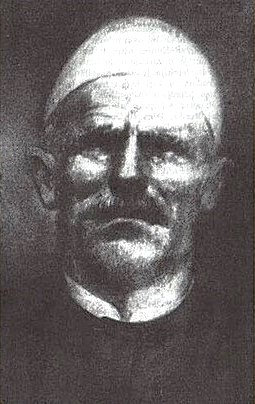
Before closing this chapter of my book, which constitutes not even a drop in the ocean of the chilling crimes that occurred during and after the war in Albania – authored by the Albanian Communist Party, later called the Labor Party of Albania – I will mention only the case of Mestan Ujaniku, the legendary captain of the Skrapar Mountains. In 1941, he created a small self-defense unit in Tomorrica. From this core, on March 14, 1942, the “Old Unit” (Çeta Plakë) of Skrapar was formed, with Mestan Ujaniku as commander.
The Communist Party sent its representative, Gjin Marku, there to keep the unit under its influence. This was the first partisan formation in the Berat District and possibly in all of Southern Albania. His unit fought several battles in the areas of Berat, Korça, Roskovec, Mallakastra, etc. In September 1942, after fierce fighting against Italian forces, Çorovoda was liberated, becoming the first free province in Albania.
This event was made known by Radio London, Allied missions, and the occupiers themselves. Mestan had even taken his three sons into the unit (such a family sacrifice is rare). With the merging of units into larger military formations, he was appointed Commander of the Berat District Staff, where Kahreman Ylli served as commissar. Enver Hoxha did not like Mestan Ujaniku, as he noticed his nationalist convictions.
In a letter sent to Gjin Marku, Hoxha expressed reservations about Mestan Ujaniku, while he told Kahreman Ylli: “If he does not listen, ‘decorate’ him” (meaning, kill him); but the latter did not do it. He was a family friend. After the country’s liberation, thanks to his indisputable authority, he was sent to the General Staff of the Army in Tirana in 1946 with the rank of colonel. But Enver Hoxha was not at ease. He sought to denigrate his figure.
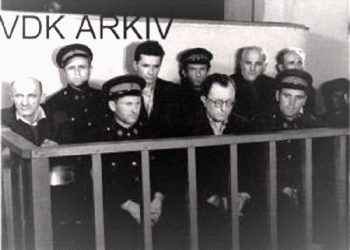
He was not kept long in Tirana, being transferred to Shkodra. Even there, he made a name for himself, gaining authority in official circles. He openly expressed his beliefs for a true democracy, which clashed with the constitution of the totalitarian state. In May 1947, he was arrested, labeled for hostile activity with the “Group of Deputies.”
This was an indisputable absurdity. A fervent and proven warrior, a brave and loyal commander to his fatherland, was accused of hostility. His only mistake, like that of many other non-communist war commanders, lay in the fact that he trusted the communists. This can also be explained by the fact that he was uneducated. Facing him in the Tomorrica area was Abaz Ermenji.
Educated at the Sorbonne in Paris in the Faculty of Literature (specializing in history), and recognizing the communist danger to the country, Ermenji positioned himself with the Balli Kombëtar. Had the Albanian Communist Party not been on the scene, these two men of Skrapar, like many other prominent men of Albania, would have been in the same trench fighting for freedom.
After several months of investigation without any concrete evidence, Mestan Ujaniku was sentenced to life imprisonment in January 1948. After enduring the most inhuman tortures, he passed away in July 1948 at the age of 46. Certain sources say he was found dead in prison with a slit vein.
Thus ended the life of the popular captain, the legend of Skrapar, Mestan Musabelliu (Ujaniku), just like many other prominent fighters and patriots of Albania who today do not have a grave. I do not believe the patriotic and brave people of Skrapar can forget this lion of their mountains, massacred by communist treachery directed by Enver Hoxha himself. / Memorie.al