Part One
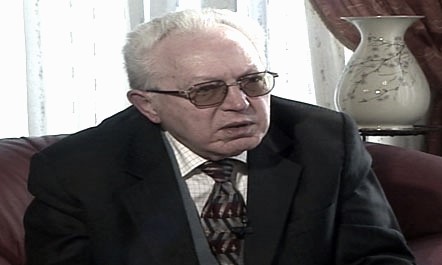
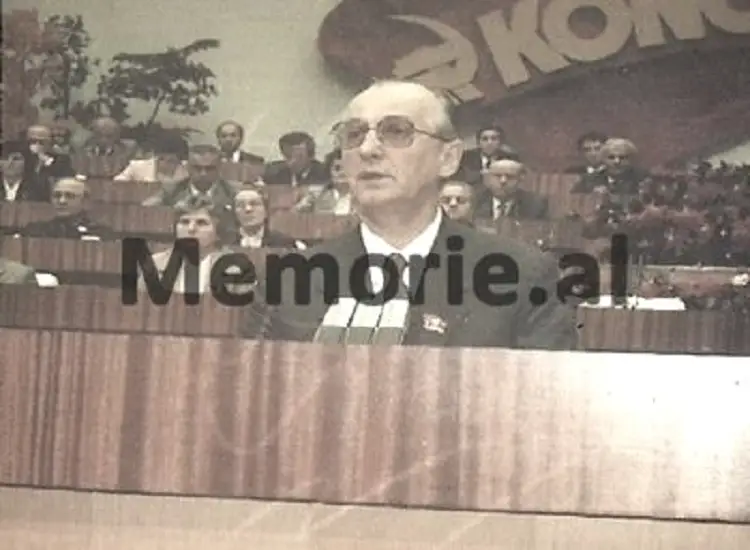
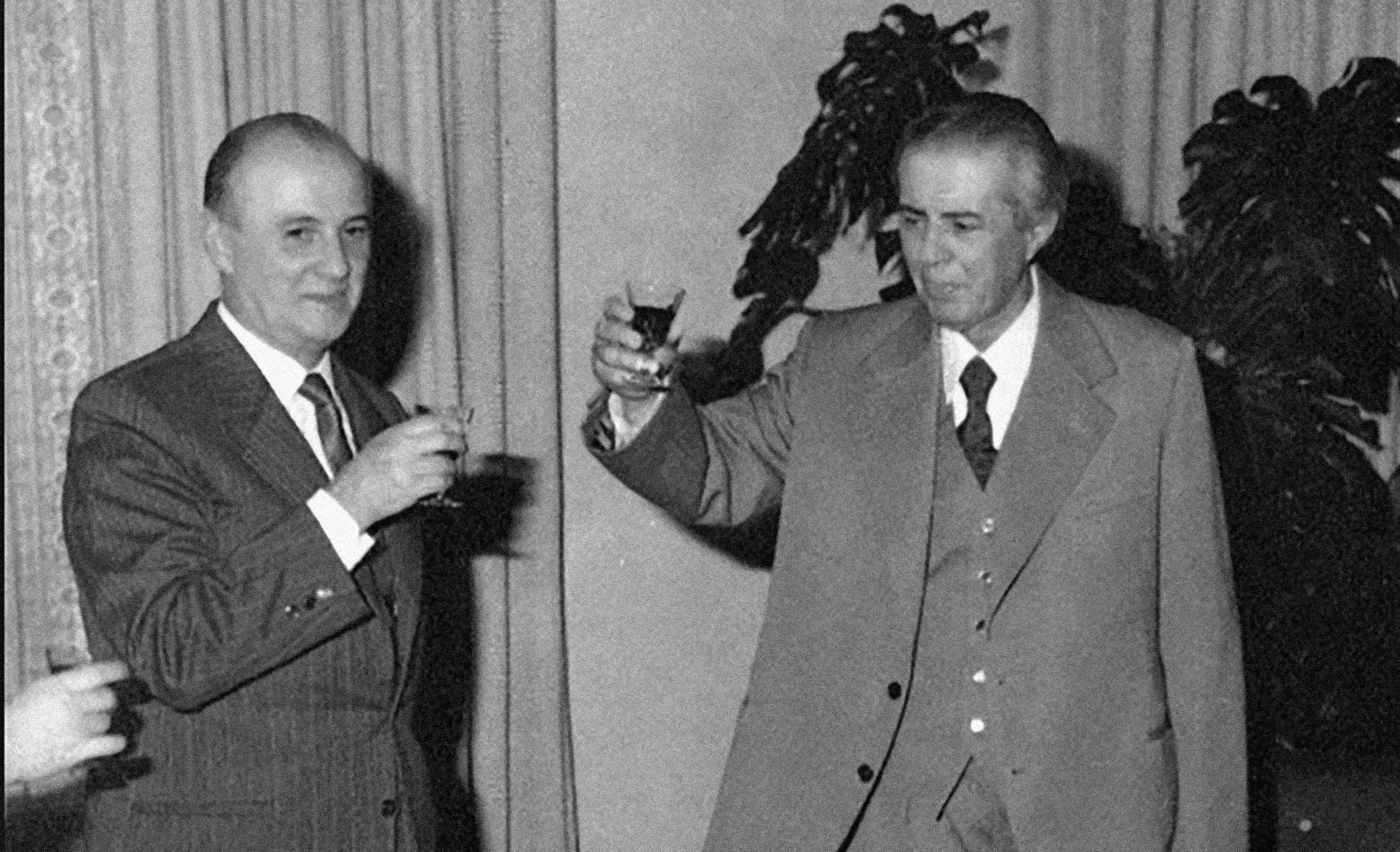
Memorie.al / In an exclusive interview for the author of this article, Academician Ylli Popa speaks about the piece “In Search of Lost Time,” published on April 27-28, 1990. He recounts how in Albania, following Enver Hoxha’s death in 1985, people were looking for change from the new head of state, Ramiz Alia. However, he was not implementing these changes, and as history has shown, Albanians are always late in determining their future. Professor Popa affirms that Teodor Keko had asked him for an article for the newspaper “Drita,” but after reading it, Keko suggested publishing it in the Party of Labour’s newspaper, “Zëri i Popullit.” Popa then describes the tribulations that followed the publication of the April 1990 article. Regarding this and other events from that period, Mr. Popa introduces us through this writing.
Mr. Popa, in late April 1990, you published an article in “Zëri i Popullit” titled “In Search of Lost Time,” which is the title of Proust’s novel – at the time considered a banned book…?
The situation was such that we had lost a lot of time; the country had taken a different direction from the one it needed. I took the title from Proust’s novel, which I had at home, as it seemed fitting for both the article and the country’s situation.
Writing such a piece must have been problematic for you and for your family as well, right?
After I wrote it – once I gave it the final touch – the first people to read it were my family. I asked them whether I should send it for publication, as the article carried its own risks. They told me “yes,” and so I sent it.
After the publication, there was much talk that you hadn’t written the article, but rather Ramiz Alia?
Yes, there were such rumors and gossip because people were shocked that such a powerful article could come out that way, especially written by a doctor and not a journalist. Many were so surprised that they claimed it wasn’t my writing but Ramiz Alia’s – as if he were using my name, since I was well-known in many circles. There was jealousy; people asked how I could be the one to speak out when there were many others before me who thought like I did.
You say that academic circles, but also society, were simmering with quiet demands for change…?
The idea of change had been voiced by others who wondered why it wasn’t happening! In fact, it was discussed so much that Ramiz Alia gained a lot of points because people viewed him as the man who would bring the expected change. He started leading the state late, but the changes -which were even demanded by those who had fought [in the war] – were not happening. Because I was a cardiologist, I did house calls, and after examining people, we would have all sorts of conversations.
Once, I was visiting Andon Gjermeni. After the check-up, we were drinking a coffee served by his wife. During the conversation, he said to me: “What is this Ramiz doing? Why isn’t he moving (he had been a partisan himself)? If he’s afraid, let him come out and tell us openly on television: ‘I want changes, but there are obstacles’!”
He was referring to Nexhmije [Hoxha]: “Even those of us who fought are ready to go out and fight again. Let him tell us openly and plainly.” But in fact, nothing happened. Later, even the game played with the student movement was manipulated.
You were asking a regime to change; could the regime change from within itself?
Communism in all Eastern countries was harsh; in our country, it was savage. The Chairmen of the Central Committees and the members of the Politburos in all Eastern countries resembled one another; thus, communism’s behavior toward our society was the same. In 1948, when I was in Romania for studies, the faculty allowed us to use human bones for anatomical studies. I used to walk from the faculty to the dormitory.
Once, while walking this route with my bag of bones, on a street near the faculty – a beautiful street full of villas where professors lived and the scent of linden trees – a large crowd had gathered. I approached and saw a dead body on the street and a heavy silence.
Someone told me he had been executed by the regime and left on the street. I remember that in all the squares of Bucharest, there were executed people. And this happened during the time of Gheorghiu-Dej, who was seen as a “milder” dictator.
Many of these regimes were very savage; there too, people were persecuted, interned, imprisoned, killed, and sent to labor camps. In Albania, there was the Maliq swamp, where prisoners were sent to drain it; a similar place was called the Danube Delta.
The regime there wanted to dominate the delta to prevent flooding and sent prisoners to work there; some died on the job, some fell ill, and so on. Even the party leaders in the Eastern Communist countries wanted to act according to their own law; they all had to be the same, otherwise, Russia would remove them, as its influence was very strong.
If these leaders did not implement its policy, they were removed from the political scene. In our country, it was even more savage, as in 1967, religion was also banned. In Romania, religion was not banned, but the State Security (Sigurimi) had placed its people in religious seminars to control faith as well.
The general line of these regimes was brutality. If we look at the “Counter-revolution” in Hungary, the suppression there was extremely strong and harsh. The West was not reacting after the Hungarian protests, so Russian troops intervened. I heard this from a small radio on an Italian station.
I listened as the commentator spoke on the radio: “Here come the Soviet tanks!” The Russians carried out a massacre in Hungary; they took people and executed them, tying bodies to cars and dragging them along the road.
I was in Budapest to take patients for dialysis. It hadn’t been long since the “Counter-revolution” had been suppressed (this was the terminology used before the ’90s by communist propaganda and historiography); in fact, it had been a revolution. Near the clinic where dialysis was performed, I spoke with people who had witnessed the terrible events. On “Üllői út” street, there was a church, and when the Soviets entered with tanks, people went inside to seek shelter.
The Russians dragged them out of the church and executed every single one of them, and then the tanks ran over the bodies several times until the square was filled with blood and mangled remains. This event was also told to me by Ahmet Kamberi, who later became Minister of Health. With these examples, I want to say that such regimes resembled one another in their savagery.
By this, do you mean to show that Albanian history is a consequence of developments in other Eastern Communist countries?
If I look back, our history is a history of being late to act. Albanians have contributed to everyone else but haven’t thought to act for themselves first. I remember the history of the Ottoman Empire. In 1823 in Greece, Albanians made a great contribution to its victory for independence.
There were many Albanians from Ioannina and Thessaloniki who participated in the revolts against the Ottoman Empire, and in the first parliament after independence, Albanian deputies were almost as numerous as the Greek ones. They didn’t give this help for themselves, but for others.
Albanians also had engagement and contributions in the independence of other countries like Bulgaria and Serbia, and when all of them won their independence and took their land, they emerged with claims for other lands – for Albanian land – because we were still under Ottoman rule. We were late, which is why we are in this state. We stayed behind others also because we didn’t know how to rise up at the right time.
And who asked you for the article?
Ramiz was dragging this business out; he had undertaken “reforms” such as the small plots and the small herds of goats and sheep (which he set up only with male livestock because he didn’t want them to multiply). At this time, intellectuals used to gather for coffee across from the “Berlin” [Hotel]. There I met the writer Teodor Keko, one of the editors of the newspaper “Drita,” whose mother, the famous director Xhanfise Keko, I knew.
He said to me: “Doctor, write us a piece for the newspaper.” I replied that I had started writing something but didn’t think it would interest him. But he came to my house and took the draft to read. When he finished, he put his hands to his head; he looked shaken! He told me: “This article is a bomb.”
Then he told me that I should take the article to “Zëri i Popullit,” as it had a larger circulation and more people would read it than in “Drita.” I took it to Marash Hajati, then the editor-in-chief of that newspaper. The entire staff read it and liked it.
Someone suggested making some changes to soften it. Or there were those who insisted I change the title, or another who asked: “What time has the Party lost?!” I changed nothing. I told them, if you make any changes, I will sue you.
Marash liked it too, but before it was published, I told him: “If you are afraid, tell me.” He wasn’t afraid, so he decided to publish it. But when the article came out – I found out years later – Marash was removed from his position and reprimanded because he had expressed agreement with the content.
What were the first reactions after the article was published?
The article appeared in two issues, on April 27 and 28, 1990. A week had passed since the publication and opinions were boiling everywhere. At that time, I was still the Head of the Cardiology Clinic, Chair of the Faculty Department, and simultaneously a Deputy of the People’s Assembly. I was in my office at the hospital when there was a knock at the door and a student of mine entered.
I asked him: “Why did you come, Petrit?!” He told me he hadn’t come for himself, but for me and my article. He then told me that the article had created dissatisfaction and that a decision had been made for me to be followed step-by-step by the State Security (Sigurimi), my phone was to be tapped, and everything about me was to be monitored – who entered and left my house.
I understood he was telling the truth because he knew these things from his father. I acted as if I didn’t understand, so I asked: “What does this mean?!” and he explained it again. After he left, I thought that since I was a Deputy of the People’s Assembly, permission had to be obtained to tail me from the secret service structures – the Sigurimi of that time.
Enver had proposed me as a Deputy because I was close to him, to the family; I used to sleep at his house because he needed me due to his health crises. Even the house they gave me here was given specifically so I would be near him. Anyway, I kept wondering how the permission to follow me had been obtained, since such permission could only be issued by the Chairman of the Assembly, who at that time was Ramiz Alia – who might have even given the approval for this thing! / Memorie.al