By Ilia S. Karanxha
Part One
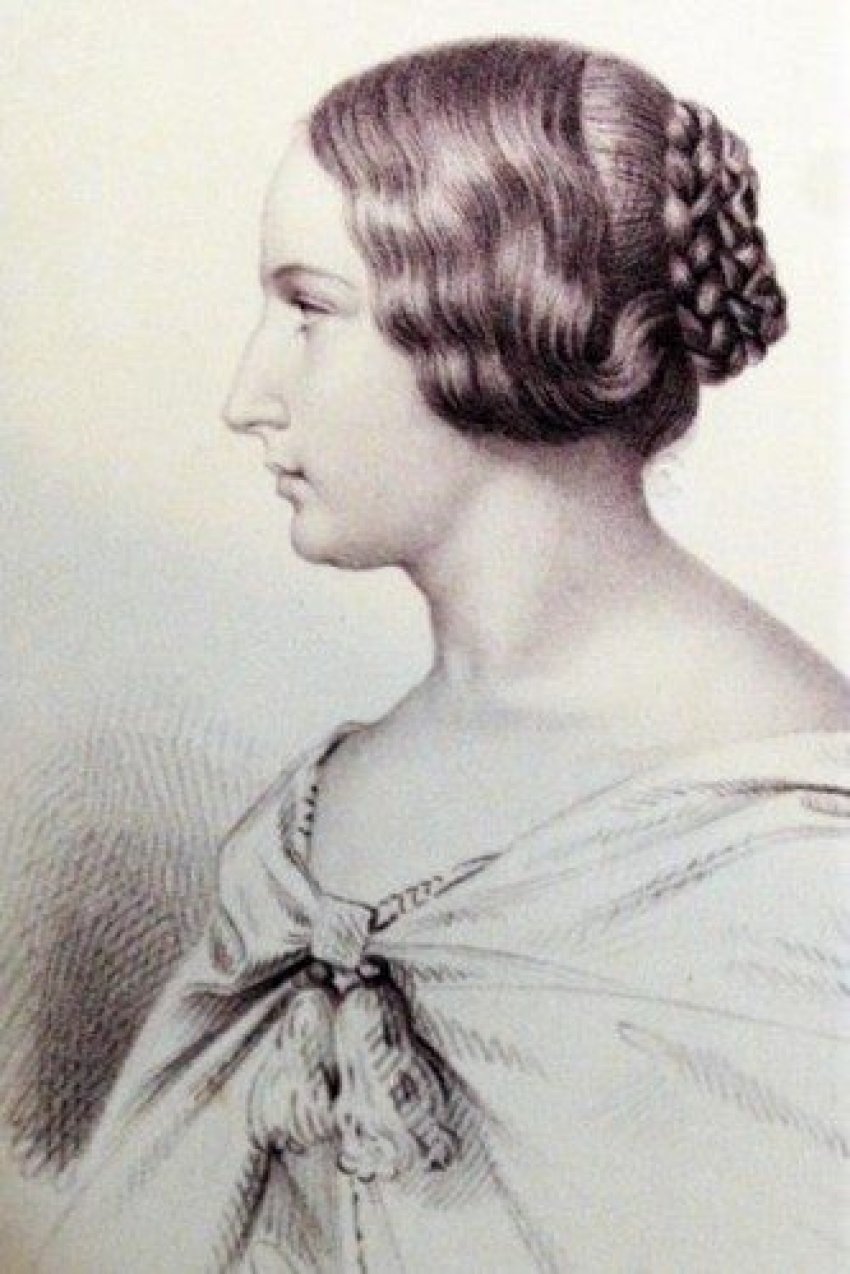
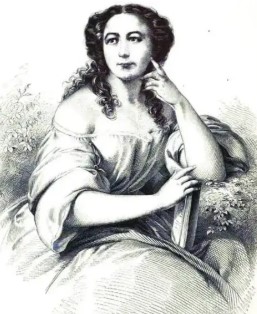
Memorie.al / The name of Dora d’Istria occupied a place of honor as early as the period of the Albanian National Renaissance and have remained untouched until the present day. Both during her lifetime and after her death, laudatory writings, studies, or monographs vocalizing specific or complex aspects of her life and work have not been lacking in Albania, but also in other countries, particularly in Romania, Greece, Italy, France, and elsewhere. Her fame spread very quickly in Europe and, shortly thereafter, across the ocean. In the USA, during a visit she made in the summer of 1880, she was received with special honors; during her meeting with the prominent American writer Henry Longfellow (1807–1882), he pledged to her that he would write a poem about Skanderbeg.
This was a prominent instance, and not the only one, where Dora d’Istria utilized her fame and prestige before distinguished figures of science, culture, art, or politics to impose her views for the benefit of the Danubian-Balkan peoples fighting for national causes and social progress. The list of these personalities with whom she had contact at different times and on various issues is quite long.
To provide a partial idea of the value and importance attributed to her, we can mention prominent individuals such as: Louis Benloew (1818–1900), Johann Georg von Hahn (1811–1869), Angelo De Gubernatis (1840–1913), Bartolomeo Cecchetti (1838–1889), Lorenzo Valerio (1810–1865), Niccolò Tommaseo (1802–1874), Adam Wolf (1822–1883), Edgar Quinet (1803–1875), Francesco Protonotari (1836–1888), Paolo Mantegazza (1831–1910), Giuseppe Garibaldi (1807–1882), Giorgio Asproni (1808–1876), Federigo Sclopis (1798–1878), Felice Schiavone (1803–1881), and many others.
The Albanian public has become acquainted with the relations between Dora d’Istria and our prominent patriot Jeronim de Rada – and through him with other renaissance figures like Zef Jubani, Thimi Mitko, and Dhimitër Kamarda – through her epistolary, published partially by J. Kastrati (A. Popullor 3/1963), A. Kondo (1977), J. Bulo (Nëntori 12/1987), and finally, with scientific competence in the original language and in a nearly exhaustive variant, by researcher Merita Sauku-Bruci (2004), who brought to light 112 letters of Dora d’Istria with corresponding commentary.
Regarding Dora d’Istria’s epistolary, with publications made in Albania and some in Romania, we remain in the early stages of this important editorial undertaking. Publications of her letters in Romania were made in the “Revue historique du Sud-est européen” directed by N. Iorga (in 1925, 1928, and 1932) and recently by Georgeta Penelea Filitti in Biblos magazine (Iasi) (no. 9-10/ 2000).
There remain epistolary collections and documents related to the life and activity of Elena Gjika yet to be tracked and brought to light in the archives of the National Library of Florence (correspondence with A. De Gubernatis – 156 letters; with F. Protonotari – 18 letters; with N. Tommaseo – 7 letters; and several other funds there). Additionally, there are funds in the Labronica Library of Livorno (about 20 letters addressed to various persons), the Library of the Archive of the Risorgimento in Florence (Fund on the Brotherhood of Artisans), the Historical Archive of the Municipality of Florence (Funds of the National Institute of the Deaf-Mute), as well as other collections currently located in Turin, Venice, Pisa, Rome, Cagliari, Genoa, Graz, and Bucharest. The funds in the Cosenza library regarding the correspondence with Jeronim de Rada can be considered exhausted by the aforementioned publications.
Alongside her relations with prominent figures on a broader scale, she was known and honored by a series of cultural and academic institutions. In 1873, B. Cecchetti – evidently in consultation with Dora d’Istria herself – transmitted to us, alongside her works published up to that moment, a list of these institutions that recognized and honored Dora d’Istria’s name. Regarding this, he writes:
Princess Dora d’Istria has been accepted by many academies in Italy, France, Greece, European Turkey, Asia Minor, and Austria. She is an honorary member of the Archaeological Society of Athens (May 28, 1860), a member of the Geographical Society of France (January 19, 1866), a corresponding member of the University of Venice (March 8, 1868), and an honorary member of many Italian academies (1868–1873), including the Physio-Medical-Statistical Academy of Milan (June 18, 1868). She is an honorary member of the Minerva of Trieste, an honorary member of the Syllogos of Athens (May 1867), an honorary member of the Syllogos of Constantinople (August 8, 1870), and honorary president of the Helicon (society) of Smyrna (Asia) (March 17, 1871).
Likewise, she was accepted as a meritorious member of the Royal Academy of Raphael in Urbino (December 17, 1871), a literary member of the Society for the Promotion of Theatre in Italy (Florence, January 21, 1872), honorary vice-president of the Society of Greek Women for Female Institutionalization (September 11, 1872), a member of the Academy of the Consulta (Quiriti) in Rome (February 1873), an honorary member of the Parnassos of Athens (February 28, 1873), and an honorary member of the Pythagorean Academy of Naples (May 24, 1873). She was a foreign correspondent of the National Academy of Literature and Sciences of Barcelona (Spain) and the Archaeological Institute of Buenos Aires (America) (May 30, 1873), and honorary president and patron of the Chark Society of Constantinople (April 20, 1873), etc.
Cecchetti closes the list here, unable to enumerate all the institutions, leaving us the task in the coming years to complete this list. We can add that she was also a member of the Society for Oriental Studies (Nov 9, 1873). It is clear that she quickly became one of the three most famous women of the 19th century, alongside George Sand (Amantine Lucile Aurore Dupin, 1804–1876) and the Countess d’Agoult (Marie Catherine Sophie, 1805–1876, also known by the pseudonym Daniel Stern) – a fact referred to in a commemorative piece one month after her death (December 16, 1888) by the magazine “Nuova Antologia,” where Dora d’Istria had published many of her studies.
Returning to B. Cecchetti, the former director of the Venetian archives, besides his merit as the caretaker and Italian translator of the work “The Albanians in Romania,” he also took care to follow Dora d’Istria’s publicistic life with special attention and was the first to compile her bibliography. This bibliography first appeared in 1868 and was republished with new additions in subsequent years.
In 1873, he released the fifth edition of this bibliography, and this work helps us understand how vast and diverse the creative activity of this distinguished woman was. This information has special value because it was compiled while Dora d’Istria was still alive, and Cecchetti clearly did not lack her advice and information. They have a weak side in that some things remained unmentioned and their publication in later years was not followed up.
Among the first honored intellectuals to express gratitude to Cecchetti for this careful and important work was Jeronim de Rada himself, who in 1868 dedicated a poem to him in the Arbëresh dialect, even in the name of the Albanians of Calabria. The 1869 bibliography was structured according to the arguments Dora d’Istria had treated in her publications, and Cecchetti divided them into 8 chapters.
In the 1873 republication, the same concept of regrouping writings by theme was preserved, but this time it was divided into 10 parts, with sub-divisions in some cases. The first part is dedicated to the history of literature, containing: 1. popular poetry of the eastern peninsula. 2. Popular poetry of the Finno-Mongolians. 3. Epics. 4. Literary portraits.
Accordingly, studies were listed under these sub-divisions: Literature and the Romanian Nation according to Folk Songs, followed by the Serbian nation, the Albanian nation, the Greek nation, and the Bulgarian nation – all published in the “Revue des deux mondes” from 1857 to 1867. This section also includes National Dances and Songs of the Romanians published in “Acta comparationis literarum universarum” (May 1884).
The immediate and special interest in the article regarding Albanian folk songs is striking. Their immediate republication was done by Luigi Luciano Bonaparte (1813–1891), one of the nephews of Napoleon I, whom Cecchetti presents as a distinguished philologist and Albanologist (though he focused more on the Basque language). Shortly after, they were translated into Greek (Therianos), into Italian (E. Artom), and into Albanian by Dhimitër Kamarda. The Italian version was published in Cosenza (Calabria), accompanied by a portrait of the author realized from a sketch by Felice Schiavone. Thus, within the year 1867, they were republished four times, and today we find them in a modern Albanian republication edited by Drago Siliqi (2002).
Popular poems of the Hungarians (August 1871) and those of the Eastern Turks (February 1873) continued to appear in the same Parisian magazine. The latter were republished in French in the “Europea” magazine (1876–77), in Italian (La poesia degli ottomani…) in “Cornelia” magazine (1877), and in English (The poetry of the Turkish People) in “The Penn Monthly” (September 1878 onwards). In 1877, a collective volume appeared in Paris titled “La Poésie des Ottomans,” while a modern variant was published in Turkish as “Osmanlilarda siir- Istanbul” (1988).
Under the influence of researcher Angelo De Gubernatis, after 1870, Dora d’Istria dedicated herself to Indian and Persian culture. Thus, in the ‘Epics’ chapter, Cecchetti summarized these studies, beginning with: Indian Studies in Upper Italy – Mahâbhârata and King Nala. This study was first read before the Archaeological Society of Athens and published in 1870 in the “Gréce” magazine, then as a separate brochure in Athens. That same year, there were other publications in Italian.
Other studies of this nature where Dora d’Istria treated these arguments were received with equal interest: The Indian Epic – Râmâyana (1871); The Death of King Dasharatha (1871); Uttarakanda (1871); The Persian Epic – Shahnameh (1873). Subsequently, other studies not mentioned by Cecchetti appeared, such as: Poetry of the Persians under the Qajars (1879); Life of the Klephts in the Persian Empire (1879); and Russian Epics (Les épopées russes), the latter published in “Revue Internationale” (1883–84).
Under the heading ‘Literary Portraits’, Cecchetti begins with Dora d’Istria’s study on Albanian Writers of Southern Italy (1867), which initially appeared in Athens and was immediately translated into German in the “Internationale Revue” of Vienna (January 1867). In Italian, it was translated by Prof. N. Camarda and published as a separate brochure in Palermo (1867).
The study on Romanian literature, treating George Crețianu and Eliade Rădulescu, was first published in the “Rivista Orientale of Florence” (1867) and later translated into Italian by Prof. Pietro Ardito and published in the magazine “L’Umbria e le Marche” (1868–69). A piece on Rădulescu was also published in Illustration (November 14, 1868). Other figures treated by Dora d’Istria in this section include: a study on Giuseppe Veludo (1869), a piece on Marco Polo (1869), The Russians and the Mongols and Jean du Plan de Carpin (1872), and an obituary for Eliade Rădulescu (Neologos 1872).
A study on historians in German literature appeared in Constantinople in the “Evridiki” magazine (January 15, 1872), while the study on 19th-century French literature was published in “Revue Internationale” starting from December 1884 and continuing through many issues until August 10, 1885.
The second part of the bibliography Cecchetti dedicated to religious issues treated by Dora d’Istria, listing the well-known work that made her famous in Europe: Monastic Life in the Eastern Church, published in Brussels (1855) and later in Paris (1858). Further studies include: Romania and the Orthodox Church (1857); The Romanians and the Papacy (1856); Letter to an Athenian Philosopher (1860); Zoological Mythology (1873). Other writings not mentioned by Cecchetti regarding this argument include: The Church and the Empire in the 4th Century regarding Prince Albert de Broglie (1856), The Orthodox Church (1874), and The Theology and Miracles of Madame de Krüdener (1888).
The third part, listing writings of a social character, Cecchetti divided into two sub-chapters: 1. Women’s Issues and 2. Polemics against War. The bibliography here begins with the famous work: Women by a Woman (Paris 1865) and continues with many writings and studies that appeared in various periodicals of the time. These include: The Condition of Women in Austria (May 1873); The Condition of Women in Germany (June 1873); Strong Women (New York 1871); A Russian Princess on Women’s Rights (New York 1871); Letter to the President of the Association of Greek Ladies for the Education of Women (1872); Letter to the President of Parnassos (1873).
The Condition of Women among the South Slavs (1878); Letter from Princess Dora d’Istria on Restrictions in Women’s Work (1878); Letter from Princess Dora d’Istria on Women’s Suffrage (1878); Letter to Mrs. Aurelia Cimino Folliero (1873), etc. Here we can also include the piece Christian Albanians published in a magazine (1874), where problems related to marriage customs in Albania and the situation of the Albanian woman are addressed. /Memorie.al