
From Ali Buzra
Part Thirty-Three
– LIFE UNDER PRESSURE AND SUFFERING –
(ASSESSMENTS, COMMENTS, ACCOUNTS)
Memorie.al / At the request and wish of the author, Ali Buzra, as his first editor and reader, I will briefly share with you what I experienced in this encounter with this book, which is his second (after the book “Gizaveshi over the years”) and which naturally continues his writing style. The sincerity and frankness of the narration, the simple and unmodified language, the accuracy and precision of the episodes, or the lack of a refining, intentionally subsequent imagination, or the non-exploitation of it, I think have served the author positively, who comes to the reader in his original form, inviting us to at least get to know unknown human fates and pains, whether by chance or not, leaving us to reflect as a starting point for awareness towards a catharsis so necessary for the Albanian conscience.
Bedri Kaza
Continued from the previous issue
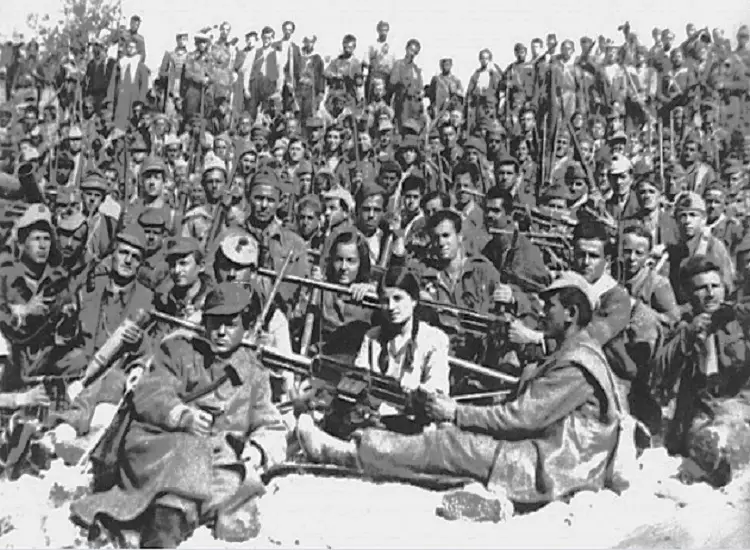
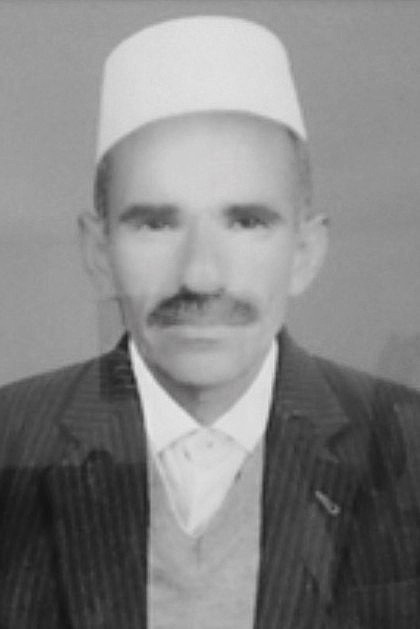
Another lived fact, and which is known in Dragostunja, is that of the winter of 1944. Around the end of January, or maybe the beginning of February 1944, seven tired, unfed, and frozen partisans pass through Dragostunja. They are found late in the afternoon, on the road, by a resident of the village of Dragostunja, in a completely exhausted state. That night, Sali Balliu takes them into his house and serves them as best he could. Dauti was informed of their condition, and the next day he sends his brother Shaban to fetch them. The partisans stayed in Gurra’s house for 11 days, being served until their health improved.
To avoid falling into the hands of the Germans, Dauti’s son, Ahmet, together with another person, escorts them to Hotolisht, where they hand them over to Sehit Alliu, who was the chairman of the National Liberation Council of the village. The latter forwards them to Bërzeshta. The partisans were from Opar in Korça. After the liberation of the country, five of them come to Dauti’s trial, testifying that he saved their lives. Regardless of his positioning, not with the Front, but with the Balli Kombëtar, for the reasons we discussed above, Daut Gurra’s activity and actions were in the interest and favor of the village of Dragostunja and other neighboring villages.
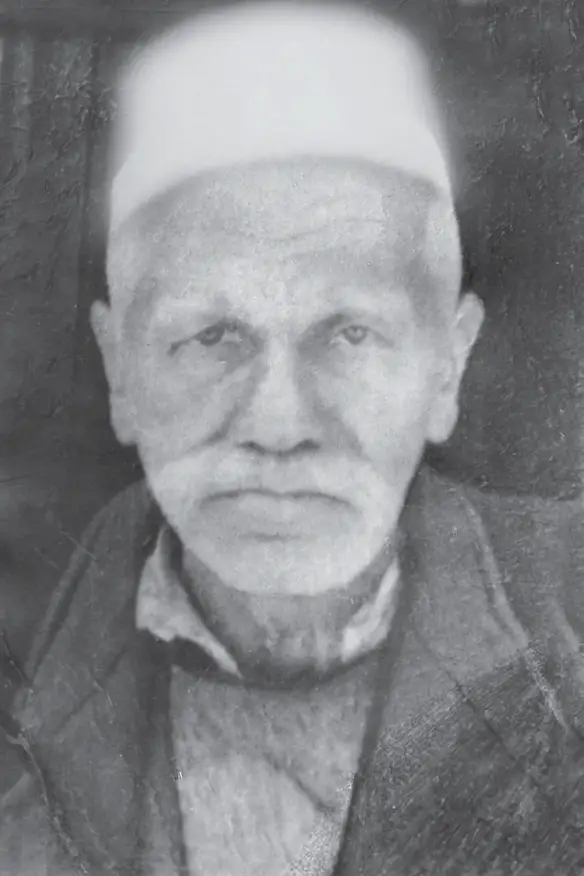
The above examples, as well as many others that we could not mention in this book, but which I hope will be included later in a monograph about him, provide an accurate panorama of the figure of Daut Gurra, as a patriot and nationalist. Throughout his activity, from the time of Turkish rule, before and after the Declaration of Independence, during the First World War, and during the years of the Second World War, Dauti worked, fought, and contributed to the national cause. His anti-Slavic and anti-communist stance during the last war period, and his non-involvement in the war against the Germans, cannot diminish his figure as a warrior and aspirant for the nation’s interests.
10.3 After several months on the run, the Gurra brothers decide to surrender
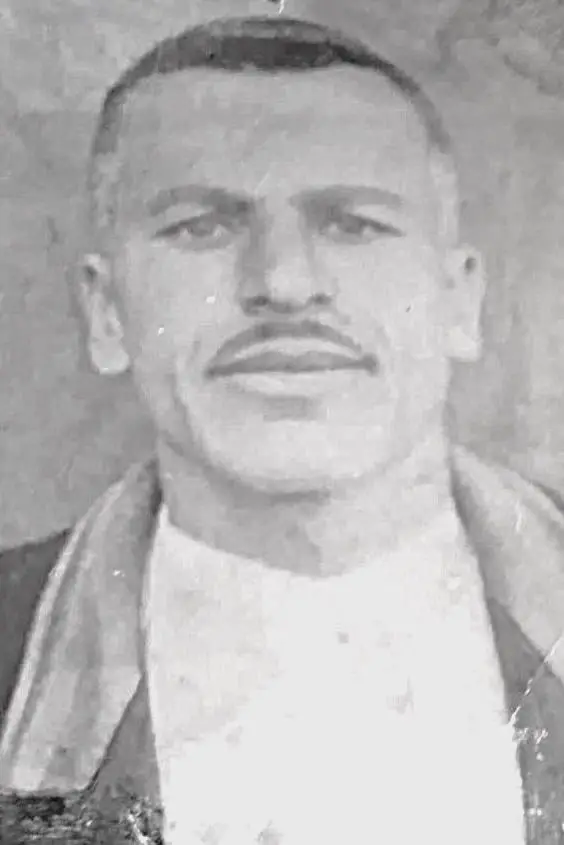
At the end of 1944, with the victory of the Communist Party in Albania, Daut Gurra initially does not surrender. The partisans come to the village and burn the houses of Dauti and his brother Selim, throwing the family members out in the middle of winter. Dauti leaves, settling in a tent on the mountain of Dragostunja. He was one of nine. Dauti with his five sons and Selim with his two sons. His family members left out in the village took shelter with families of the Bici clan in Dragostunja. Zeq Bici sheltered Dauti’s family, while Mahmut Bici sheltered Selim’s. After the burning of the houses, strong pressure is put on the village to learn the whereabouts of the fugitives. Mahmut Çela, who had a summer pasture in the mountains and was thought to have knowledge of the Gurras’ location, was tortured.
Despite the severest tortures, he did not utter a word about them. Among them, the Egyptian of the village, whose house was near them, was also called in. Despite the pressure exerted on him, he too did not put himself at the service of the State Security forces. In the conditions of a bitter winter in 1945, difficulties in supplying food, and continuous pursuits by Army forces, the group of fugitives splits into two parts. In the first group with Dauti stayed: his sons, Xhemali and Hamdiu, as well as Selim’s son, Ganiu. In the second group with Selim were: Sehiti, Selim’s son, as well as Estrefi, Ethemi, and Ahmeti, who were Dauti’s sons. For the sake of truth, it must be said that, despite the difficulties created by the state in pursuing them, during the months of escape they were supplied with food by their relatives and friends from Dragostunja and Librashk-Katundi.
Dauti gives orders to his brother Selim not to surrender under any circumstances, because they would do this only after the regular judicial system was established. He did not feel safe surrendering in circumstances where the situation in the country was chaotic. And indeed, at the end of 1944 and the beginning of 1945, many people were executed without trial by the partisan army commands. On the other hand, being conscious of the fact that they had not been involved in criminal acts, he hoped that the court could not punish him and his family members. In the spring of 1945, Dauti’s brother Shaban, who was not a fugitive, and Dauti’s wife are arrested. Both are tortured badly, beaten all night. Shaban is transferred to a dungeon where they let the water in. Regarding this, he testifies that in the dungeon washed in blood, he found the belt and watch chain of Latif Musta from Borova.
The tortures inflicted on arrested persons who were thought to have knowledge of the fugitives’ whereabouts were among the most inhuman. In these circumstances, when his brother and wife were in prison, Dauti decides to surrender along with Selim. They surrender under sworn protection (besa) to Miftar Hoxha in Mirakë, whom Dauti considered a friend. In their testimonies, it is said that they were taken into custody by a partisan commander named Nas Vithkuqi, a serious and trustworthy man. In his first contact with Dauti, he creates a positive impression and likes his dignified and manly character. In the presence of the host, he addresses Dauti with these words: “If you have killed, I am releasing you. For 24 hours I will not pursue you. After 24 hours, if I catch you, I will kill you.” – “No,” Dauti replies, “we have neither killed nor assisted in any killing.” Dauti and Selim are held in investigation for nine months, being forced to admit guilt and provide information about other groups of fugitives. Then they are brought to trial.
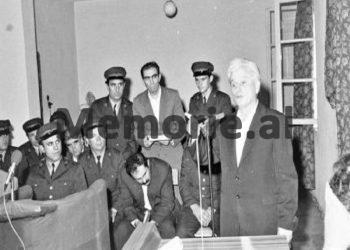
At the organized trial, those present are surprised by his responses, like a true orator. The chairman of the judging panel does not give in but feels inferior to his personality. At the trial, at the request of his family members, the five partisans from Opar come to testify, declaring that Daut Gurra saved their lives. This was also testified by Sehit Alliu from Hotolisht. The latter was threatened by the prosecutor, saying he was speaking in favor of the defendant. It is said that Xhelo Leka, at that time head of the Librazhd Sub-Prefecture, also testifies in Dauti’s favor. Nevertheless, the court sentences Dauti to 5 years in prison and Selim to 3 years. After groups surrendered, Dauti’s two sons, Ahmet and Estref, and Selim’s two sons, Gani and Sehit, were mobilized as soldiers. There, Ganiu was disappeared without a trace.
From the testimonies of his army comrades, it has been said that Ganiu was at dinner when roll call was taken, while in the morning, he was not. The news spread that he had died. Upon receiving the notification, after two weeks, Shaban goes there to get the body, but they do not give it to him. Nonetheless, his mysterious disappearance by the communist state remains an enigma. In 1950, the families of Daut, Selim, and Shaban were declared kulaks. The communist state, from its beginnings, tried to set the so-called declassed against each other. Shaban was asked to separate from Selim and sever relations with his two brothers to have the kulak title removed, but he refused.
Dauti served 3 years in prison and was released. The respected, measured, and wise man of the noble Gurra family hardly leaves the house anymore. He didn’t want to “bother” friends and relatives. He no longer even went to his daughters’ homes. Provocateurs sent by the State Security, ordinary and servile people who tried to entangle him, would come to his house. The wretches didn’t understand who they were approaching to provoke. Today, his family members recount how he would “turn his back on them” (dismiss them) as soon as they started the conversation, leaving like a dog with its tail between its legs.
Thus, even after leaving prison, the regime of the time tried to denigrate his figure but could not. Even today, there are many residents of Dragostunja, not only elderly but also young people, who speak with respect and high regard for his figure. In a chance meeting with the respected mathematics teacher from Dragostunja, Reshit Bajrami, I ask him: – “What can you tell me about Daut Gurra?” – “Dauti,” he replied, “kept and protected the village. He was a knowledgeable, loyal, and patriotic man.” Finally, in the historical perspective of events, Daut Gurra is and will remain a symbol, not only for Dragostunja but also further afield. He passed away in 1966. He deserved to be buried with honor and respect from the entire area where he lived, but unfortunately, under conditions of surveillance and persecution, the burial took place mainly only with relatives.
After the establishment of the first cooperative in 1947 in Krutje, Lushnje, this process continued nationwide, mainly in lowland areas. The taxes imposed on the peasantry at the beginning of the communist regime were generally high. This was aimed at making them accept joining the cooperative. Meanwhile, a special tax notice was issued for kulak families. The tax for these families was unbearable, exceeding several times the income they could secure from the land and livestock they owned. This was not done with the aim of making them join the cooperative, because they supposedly did not have that right for the time being. The goal was to pressure them economically to destroy them, and to force them to react, with the aim of imprisoning or interning them.
Dauti’s son, Et’hemi, recounted that taxes on agricultural and livestock products were so high that they were forced to buy them to deliver to the state, while at home they had no bread to eat. The persecution and mistreatment of the Gurra family would continue throughout the entire period of the communist regime. In 1959, Dauti’s two sons, Ahmet and Estref, are arrested under the absurd pretext that they “had planned to kill Khrushchev.” In a staged and closed-door trial, they are each sentenced to 4 years. They appealed, but initially, it was not taken into consideration. However, in 1961, Estref was found innocent and released.
Ahmet was also released, and he came as far as Librazhd, but they arrested him before he reached home, considering him a high-risk person. It is said that a fellow villager, who was a collaborator of the State Security, spied on him. He is brought to trial again. He was accused of planning to escape together with Veli Biçaku and Ferit Dosku. Three court sessions are held regarding him, but due to lack of evidence, he is not convicted. However, they do not let him go to his family but intern him in Rrëshen. For nearly a year, his whereabouts were unknown. Relatives asked at the Directorate of Internal Affairs, but no address was given.
10.4 Arrests and persecution against Gurra family members continue
The calvary of suffering and arrests for this family has not ended. Also in 1961, they arrest Dauti’s brother, Selim, at the same time as Mefail Biçaku from Qarrishta, a former shelterer of Jews during the war years. Selim was related by marriage to Mefail. He had taken Mefail’s daughter for his son, Sehit. Meanwhile, after a few days, Ahmet, who was interned in Rrëshen, is arrested again. After several months in pre-trial detention under torture, uncle and nephew are brought to trial. They are accused of attempted escape. With false witnesses and no evidence, they are sentenced: Selim to 15 years in prison, Ahmet to 14 years, while Mefail Biçaku is released, returning home ill. Selim, who was now elderly, spent much time in sanatoriums during his prison years.
The family and relatives, particularly his brother Shaban, take great care of him. The latter goes several times to Burrel, where his brother was serving his sentence. After serving 14 years in prison, Selim returns home, seriously ill, and passes away after a year. Ahmet passes away in Tirana prison under mysterious circumstances. His body was not given to the family. After 1990, with the interest of family members, it became possible to find and retrieve his bones, reburying him with the honor and respect he deserved. Despite the difficulties and hardships they went through, the Gurra brothers, as long as they were alive, tried to settle their sons and daughters in families. Thus, Dauti took for Xhemal a girl from the Blloshmi family, for Et’hem, the daughter of Qamil Balliu, for Hamdi, from the Çela family, for Ahmet, from the Bici family, while Estref did not marry.
Selim, for Sehit, took the daughter of Mefail Biçaku, for Ruzhdi, from the Dervishi clan in Martanesh (a kulak family), for Selaudin, the daughter of Jakup Cekani, a kulak from Gurshpata, for Ferit in Martanesh, who was the first cousin of Selaudin’s wife, while Ganiu was not married. Under continuous pressure, differentiated treatment, and high tax burdens, the kulaks continued to exist as individuals in difficult economic conditions. They were accepted into the cooperative in 1966, one year before the completion of the collectivization of agriculture nationwide. Initially, a brigade was created only with kulaks. A few months later, they were merged into brigades with the village. Even in the cooperative, differentiation for kulaks was noticeable.
Regarding this, Et’hem’s son, Bexheti, expresses himself: “It was a living death when the people’s meeting was held, and they would read our names for us to leave.” The latter gives a detail heard from his relatives, from the people’s meeting in Polis-Vilan. A delegate of the Party from the district goes to Vilan, where the majority was kulaks. There in the brigade, he tells those present that things are not going well, since there were many kulaks there. A girl from the Muzhaqi clan, without fear, addresses the party delegate, saying: “I wanted to ask you, what the word kulak means?” – “A wealthy family… with servants… exploiter…,” he answers harshly. – “Ahaa! I thought it meant gypsy,” she replies calmly. Thus, the party delegate leaves Vilani, angered by the challenge posed by the Muzhaq girl.
As we have also said above, most kulak families made marriages by taking among themselves, in different villages, but it also happened that young people fell in love with non-kulak boys and girls. This was a big problem at that time. There may be many who suppressed their love, as marriage became impossible under conditions of extraordinary state and social pressure. Such a case also occurs in Dragostunja. Xhevit Gurra, Dauti’s nephew, falls in love with and marries the daughter of Veli Bajrami. Immediately, the youth organization in the village meets and puts pressure on the girl to break off the marriage. The case goes all the way to the Party Committee and the district prosecutor’s office. Pressure is also put on the boy, but the two young people refuse to separate.
The communist mentality was evident, but also absurd. A representative from the Party Committee, as well as the district prosecutor, comes to the village. The meeting of the youth organization in the village is held again. The words of the prosecutor, the representative of the law, who addresses the Gurra boy with the words: “Hey lads, why do you pester others, take from your own kind!” remain in the memory of the youth. The representative of the law was no different from the representative of the Party. He treated the problem with the ideology of the time, although the law did not state that marriages between families of different class compositions should not take place. Mentioning the case in question, none of the above families can be blamed; on the contrary, they are to be thanked, as this marriage was not broken off, as a result of the determination of the two young people, despite the pressure exerted on them by the party-state during the time of dictatorship.
The meaningless social differentiation accompanied kulak families at all times, in joys and sorrows. In cases of death, the burial was carried out only with close family members. There were many village residents who wished to participate in the burial, but in such cases, the secret informants of the State Security were set in motion, who reported every detail, creating problems for those present. When Selim passed away, Isuf Bardhoshi, who was Shaban’s son-in-law, participated in the burial. The matter became serious. A “wall newspaper” critical of him was put on the sector’s emulation boards, and they threatened to classify him as a kulak as well. / Memorie.al
To be continued in the next issue