By AGRON ARANITASI
Part Seven
– THE TRUTHS I BELIEVE, THE FRENCH AGENT –
Introduction
Memorie.al / When I started writing the book The Truths I Believe (PAPIRUS Publishing House), I had not intended to write about myself. The first impetus came when I became acquainted with the State Security files regarding the surveillance of the citizen Agron Hajdar Aranitasi. Those files are one more testimony of how someone could be persecuted, who, at a certain moment, was placed among the enemies of the people’s power. Nothing was taken into account – neither how he had worked, nor how he had behaved, nor how he had lived. Nor was the stance of his parents, brothers and numerous cousins taken into account; they automatically underwent fierce blows and suffered consequences without any fault of their own.
Continued from the previous issue
Agron Aranitasi and Albanian Radio Television
I am not writing much about my schooling. I will content myself with saying that I started primary school in Korçë. In December 1953 I was in second grade. In January 1954 we arrived as a family in Moscow and settled in the well‑known Hotel Moskva. I started lessons in February. I did not know Russian. I had learned the Russian alphabet in Korçë. I could read Russian, but I did not understand what I was reading. I also stressed the words incorrectly. They placed me in first grade. I was best in mathematics, but in Russian… it was a drama. Nevertheless, they moved me to second grade. During the summer months Liria sent me to a pioneer camp. She sent Ladi to another camp, so that we would not have contact with each other. We returned to Moscow before school started.
We both spoke Russian. I stood out as not being Russian – either by my pronunciation (accent) or even by my appearance. I was often taken for someone from the Soviet republics of the Caucasus. Ladi spoke pure Russian. In Moscow I finished fourth grade with very good results. Every year my teachers gave me high evaluations. As soon as I started fifth grade, we were transferred to Tirana. I enrolled in fifth grade at the Russian school attached to the Soviet Embassy. Since my parents had been transferred to Vlorë, I lived at the school’s dormitory.
After a year, I was not accepted into sixth grade, on the grounds that the school did not have capacity for classes and the dormitory. So, in 1958, I started lessons at the “4 Dëshmorët” (today “4 Heronjtë”) school in Vlorë. In October 1959 Hajdari was transferred to Tirana. In November the family followed. I started lessons at the “11 Janari” (today “Edith Durham”) school. I completed high school at the “Petro Nini Luarasi” school (1961‑1964). Throughout my pre‑university education, I had excellent results.
I completed my university studies at the State University of Tirana (1964‑1969) with high results. During my years of work at RTSH, I specialised three times in France (Paris). In 1971 (March‑June) I specialised in video equipment at the French company Thomson CSF, from which video equipment for two television studios had been purchased in 1969. In the period September 1979 – June 1980, with a scholarship from the UNDP (United Nations Development Programme), I specialised at the largest French television, TF1 (Télévision Française 1).
There I completed the full course for the maintenance of video recording equipment – in other words, the American “Ampex” equipment. In the period October‑November 1998, through the intervention of the French Embassy, I was granted a scholarship by the French government. This time I specialised in digital television equipment technology.
For all these specialisations I received the relevant certificates, in which maximum praise is expressed for the results achieved.
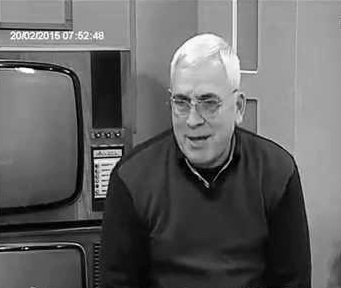
Agron Aranitasi, employee of Albanian Radio Television
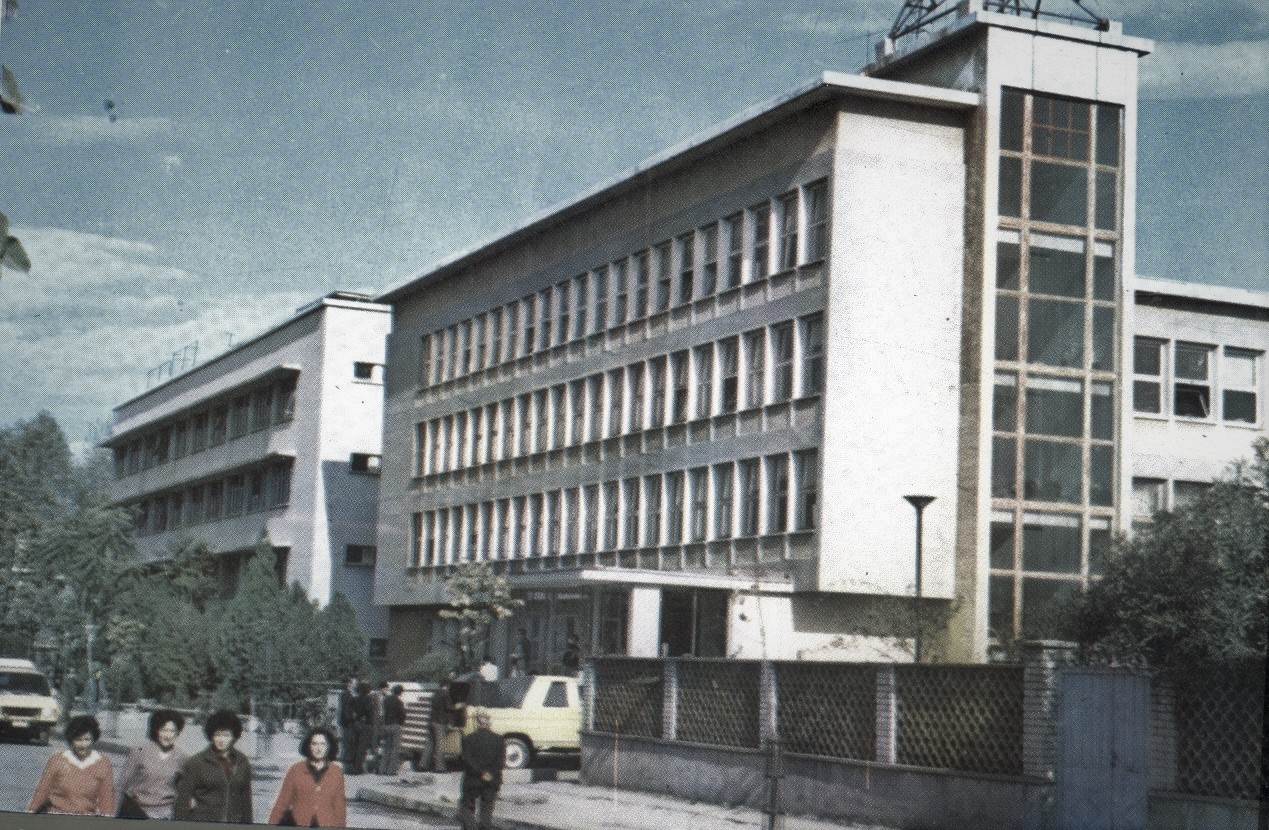
On 3 January 1970 I started work at RTSH. In the presence of Thanas Nano, Director General of RTSH, the chief engineer of TVSH, Alfred Xhufka, assigned me to work in the video recording sector. The name was grand, but in reality this sector did not exist. It had in its inventory a total of four devices: two “Philips” video recorders (Dutch manufacture) and two “Shibaden” video recorders (made by a Japanese company). Only the Dutch equipment was used; the Japanese ones were unsuitable for broadcasting.
The “Philips” equipment was industrial equipment intended for use in closed‑circuit television (recording medical operations, surveillance recordings with cameras, use in educational processes, etc.). They had poor picture quality and created stability problems (synchronisation problems on television receivers). In addition, they could not edit programmes. In 1971, the state trading enterprise “Makina‑import” managed to buy four industrial‑format video recorders, “IVC” (International Video Corporation), one of which could also edit picture.
These had better quality than the “Philips” equipment, but again they did not meet the requirements for professional programme production. Television studios in Western countries used only American equipment, manufactured by the company “Ampex”. Their inventor was a Russian who had fled after the October Revolution, named Alexander Mikhailovich Poniatoff. From the first letters of his name, as well as the excellence in quality of the devices, the name “Ampex” was formed. Later, American products also penetrated the televisions of the East, but not our country.
For American products, Albania was under embargo. During the years 1971‑1972, through the trading enterprise “Makina‑import”, we tried to find a way to buy professional recording equipment. Without success! The event I am writing about began in September 1973. Two years earlier, the People’s Republic of China had been visited by the US Secretary of State Henry Kissinger. Later, in February 1972, President Nixon went there. The establishment of diplomatic relations between the two countries was also felt in Tirana. Naturally, for the worse!
The Americans “land” in Tirana!
At the end of July 1973, the director of the office of the American company “Ampex”, based in Fribourg, Switzerland, arrived in Tirana. This was Arnold Buhlman, a citizen of Great Britain, who a few years later would sit in the vice‑president’s chair of the American company. He was accompanied by the sales manager for the Balkans, the Italian‑Swiss Renato Rezzonico.
Through the “Makina‑import” employee Shpëtim Ruli, they asked to meet the person in charge of the video recording sector at TVSH. Fate brought it about that this person was me. The meeting proved promising. Arnold Buhlman did not present the issue of the embargo as an obstacle. This seemed strange to me: the Americans did not forgive such things! First, it became necessary to convince the “government” of RTSH, i.e. the Director General, Thanas Nano. Then, to obtain the necessary funds, the “Shehu” government had to be convinced.
The funds had to be in hard currency (dollars). That would be difficult. Rubles they gave us as many as we wanted, but dollars were not so easy! Meanwhile 1973 were drawing to a close, and the requests for RTSH’s needs had already been submitted to the Prime Minister’s Office nearly a year earlier.
Director Nano agreed with the purchase of the video recorders (we called them magnetoskop from the French), but when it came to the money, he threw his hands up. “I don’t have any,” he told me. “The plans are made and submitted to the government; I cannot change anything. Only the government can do that.” And he looked at me meaningfully!
I decided to turn to the only person who could help us. That was Abdyl Këllezi, at that time Chairman of the State Planning Commission and Deputy Prime Minister. I knew him and he knew me well. I was friends with his children. US$235,000 was needed for the first purchases. Thanas Nano managed to “move” $85,000 from the forecasts that had been made. Another $150,000 was needed. Abdyli said that the final answer could be given only in September. And he kept his word.
Bypassing the embargo, a signal for official Tirana
For signing the contract, “Makina‑import” designated Paris. Our embassy there also covered Switzerland, where the Ampex office for Southeastern Europe was located. Vullneti (Musaraj) and I went to Paris. We worked on the contract with Thanas Gjoka, our trade representative. We knew him well. His daughter Tamara had been a classmate of ours in the Seven‑year School and in high school. Before signing the contract, the representatives of the American company explained how the embargo would be circumvented: “The video recorders would be reported as sold to Kosovo, which was part of Yugoslavia. Yugoslavia was not subject to the embargo.” In 1974, four portable video recorders (Ampex VPR 7903) and one stationary Ampex VR 1200C arrived at the Television. The latter was a marvel; it was practically one of the highest‑quality products in the world. In 1975 we bought another stationary recorder, and thus electronic editing began at TVSH.
The purchase of the second stationary recorder was accompanied by a new request from the Ampex Company. We had to sign a document for the US Department of Commerce, in which we would pledge that the video recorders would be used only at RTSH. I did not go into it deeply and, pushed also by the “Makina‑import” employees, I signed the document. I had fulfilled my dream, but I did not know that my action was in violation of the Constitution! Fortunately, no one remembered this when I was interned ten years later!
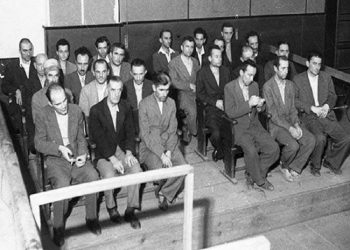
We come to 1976. Now the reader will understand why I am writing about the Ampex Company. At the beginning of 1975 (the first year of the new five‑year plan), Abdyl Këllezi, after our constant pleas, granted us the entire five‑year fund that had been foreseen for their purchase. He granted it in rubles (750,000 rubles, a little more than one million US dollars). To convert the rubles into dollars, the approval of the Minister of Trade, Kiço Ngjela, was needed. Kiçua hesitated. One million dollars was a lot. Nevertheless, partly pushed by Taku (Spartak Ngjela) and partly out of his own goodwill toward TVSH, he helped us. A short time later he would be arrested and convicted in a group with Abdyl Këllezi. At the centre of the accusation, the group was charged with trade with Western countries, where the “Ampex” affair was labelled as the main one (investigator Kristofor Martiro has testified to this in his interviews).
Together with them, the director of Makina‑import, Andrea Manço, brother of the “Hero of Socialist Labour” and member of the Central Committee of the PPSH, Todo Manço, was also convicted. Andrea was sentenced to death by firing squad. It was not understood why such a heavy sentence was given. According to a publication in Gazeta Panorama (which I have written about in the chapter on Kadriu), it was made known that on 13 April 1982 Kadri Hazbiu had complained to Enver about Andrea’s execution. He had asked Haxhi Lleshi to spare Manço’s life, but Haxhiu had refused. Enver had not attended the meeting that rejected Andrea’s request for a pardon.
In the summer of 1975, five stationary Ampex AVR2 (Audio Video Recorder 2) video recorders, which were their latest version, were contracted. The contract was signed in Tirana. The competent bodies (the Ministry of Internal Affairs and the Ministry of Trade) had approved the visas for the representatives of the American company. I later learned that they were kept under strict control by the State Security. Everything that was discussed with them was reported in writing to the Ministry of Internal Affairs by the Makina‑import employees. Such a thing was normal for the time and the trade employees applied the rules meticulously.
After all, foreign traders who came legally were suspected as potential agents of the secret services of their respective countries. The equipment was to be booked in 1976. Everything was going well, but…! That year the 7th Party Congress took place. In his report, Enver Hoxha, as usual, attacked Soviet social‑imperialism and American imperialism. He declared that Albania “has never had and will never have relations with them.” Not much time passed and the Americans responded.
The US Department of Commerce, in a statement given to the Financial Times, contradicted Hoxha’s words and declared that the USA had sold ten Ampex devices to Albania (only the stationary devices were mentioned) and a computer for the oil industry. Then, I heard, the latter had been installed in Patos by an American engineer named Cox, who was, no more no less, a cousin of President Nixon. The scandal broke! Who had approved the purchase of these devices?! Who had violated the Constitution of the People’s Republic of Albania?!
The matter was discussed in the Government. The Deputy Prime Minister who at that time oversaw RTSH, Xh.S., declared that he had not been aware of purchases from the American company. This was not true. RTSH bought magnetic tapes and spare parts for these devices every year. Moreover, almost every two months, shipments containing the stationary recorders’ video heads, which needed repair, were sent to the United States. Each repair cost US$1,200 and was done only in Reading, USA.
This could not have been done without the approval of the Prime Minister’s Office, and in fact, the relevant documents from RTSH were found in its archive. Regarding documentation, RTSH had always been careful. After a long and far from calm analysis, the only victim of the Ampex affair within RTSH turned out to be Thanas Nano, who received a severe reprimand in his party membership card and was pensioned off. The government decided that the contract should not be implemented.
To buy the video recorders, it was proposed to go to Japan and sign a contract with the company “Toshiba”, which had just started producing professional stationary video recorders. Together with Vullneti, we prepared a document explaining that Japanese products were still at the experimental stage and were not comparable to American products. Moreover, Japanese products did not support electronic editing.
Someone from the Ministry of Trade suggested turning to West Germans. West Germany, together with France, had produced a new high‑quality video recorder. But this product used a different recording format, which did not allow the playback of tapes recorded on Ampex equipment. Moreover, it turned out that for the purchase of Franco‑German recorders, permission from NATO would be required. That was out of the question! The matter was brought before the Political Bureau. The main argument for breaking the contract with the Americans was presented by Ramiz Alia. He argued that the Americans might sell us the equipment, but they might not supply us with the raw materials – that is, the magnetic tapes, the repair of the video heads, and the spare parts.
Then the Albanian Political Intelligence entered the game, acting as guarantor for meeting all of RTSH’s needs. The Bureau authorised the government to go ahead with the contract. Even after Enver Hoxha’s report, the Americans did not stop selling their equipment. “Makina‑import” continued to buy American video recorders and accessories for them, even though the Constitution of the time had not changed (although it was now called the Constitution of the People’s Socialist Republic of Albania).
Did Enver Hoxha not know this?! Did Mehmet Shehu and Kadri Hazbiu, who came forward as guarantor for meeting all RTSH’s needs, not know this?! They all knew, and they all approved that the contracts with Ampex should continue. And at the same time, Abdyl Këllezi, Koço Theodhosi and Andrea Manço were sentenced to death, and Kiço Ngjela and Vasil Kati were given long prison sentences. Vullneti and I got off lightly. Ramiz Alia labelled us “idiots in politics”, and with that, our matter was closed. / Memorie.al
To be continued in the next issue