Dashnor Kaloçi
Part Eight
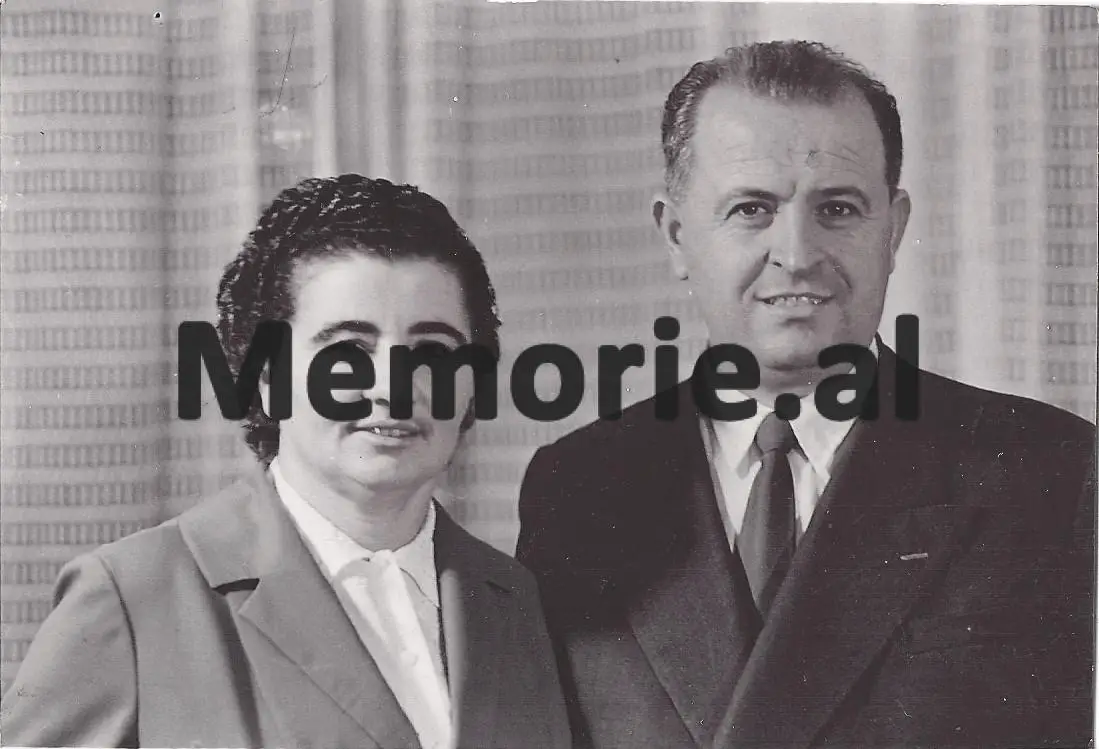
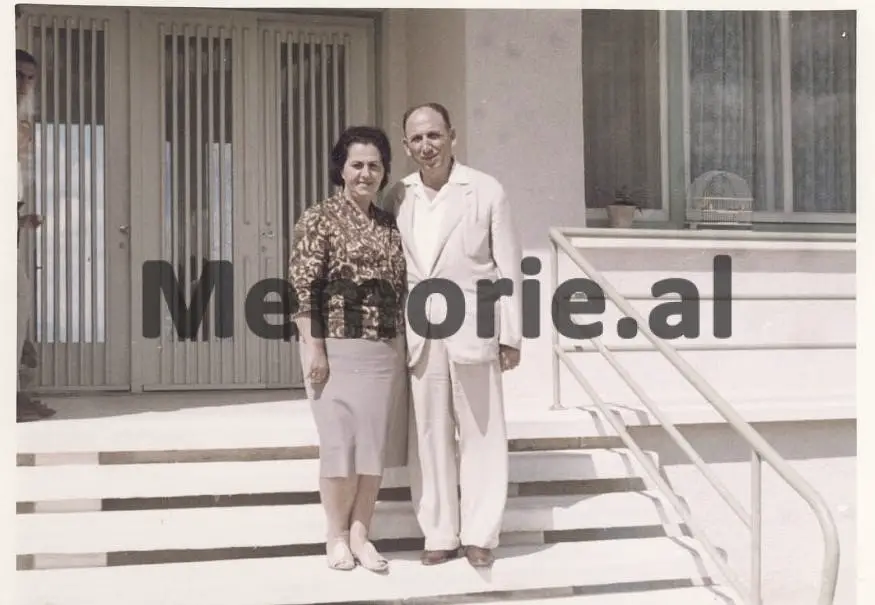
Memorie.al/ publishes the unknown history of Major General Panajot Plaku, originally from the village of Hoçisht in Devoll, Korçë. After graduating from the “Normal” school of Elbasan in 1936, he returned to the city of Korçë, where he connected with communist groups. During the occupation of the country (1939–1944), he became engaged in the Anti-Fascist Movement and for his activity was arrested and imprisoned by the Italian authorities in the city of Durrës. After his release, he joined the partisan ranks; being appointed deputy commissar of the First Assault Brigade commanded by Mehmet Shehu, upon its formation in August 1943 in the village of Vidhkuq, Korçë. How did Panajot Plaku climb the ranks of his military career after the war, starting as commissar and division commander in the Korçë district, corps commander, Director of the Operations Directorate and deputy chief of the General Staff of the Albanian Army in the Ministry of People’s Defence with the rank of major general, deputy minister of People’s Defence for the Border Directorate, and finally to the post of minister without portfolio in the government headed by Mehmet Shehu? How did Panajot Plaku manage to escape from Albania in June 1957 (while holding the position of minister without portfolio and Chairman of the State Committee for Geology) by secretly crossing the state border near Lake Pogradec from the village of Lin and reaching Yugoslavia, where he settled in Belgrade as a political asylum seeker and sent a letter to the leader of the Soviet Union, Nikita Khrushchev, denouncing all the crimes of Enver Hoxha and his regime? The mystery of Panajot Plaku’s death in 1966 in the hotel where he lived in Belgrade, and what he wrote in his memoirs about Enver Hoxha and the high leadership of the Party of Labour of Albania, which he compiled for publication in a book titled “Violence upon the Revolution in Albania”. After his death, the book was also translated into Serbo-Croatian (by Predrag Vuqiviq, editor of the newspaper “Borba”, and Vela Popoviq, editor of Belgrade Television), a book that had great resonance and was later published by the “Rilindja” Publishing House in Pristina in the Albanian language in 1985.
Continues from the previous issue
Memoirs of the former minister without portfolio, Major General Panajot Plaku, written in Belgrade in the years 1957-1966
Enver hid Khrushchev’s report!
At the 20th Congress of the Communist Party of the Soviet Union, the delegation of the Party of Labour of Albania was also present. At the head of the delegation was Enver Hoxha, and in the delegation, besides others, was also Mehmet Shehu. After the delegation returned to Albania, a plenum of the Central Committee of the PPA was held, in which Enver Hoxha, on behalf of the Political Bureau and the delegation, informed the Central Committee about the work of the Congress and about the closed session in which Nikita Khrushchev presented a report on the harmful works of Stalin.
However, it must be emphasized immediately that Enver Hoxha did not read Khrushchev’s report at this plenum, but in his own interpretation presented only a few softened fragments of the said report. The plenum was held in the hall of the ‘Brigades’ Palace. I was sitting opposite Enver Hoxha and followed the reading of the report attentively. I noticed clearly that during the reading he skipped several pages several times. But not only that. When he had read about two-thirds of the report, he suddenly interrupted the reading. Both from the fact that there were many unread pages before him, and from the content, it is understood that the report was interrupted.
I assume that Enver Hoxha gave up reading the rest of the report, deciding not to speak about those problems about which he would have had to say something more about the influence of Stalinism on the Party of Labour of Albania and about the severe consequences of this influence for the Albanian people. The reading was probably interrupted also because even the first part of the report had created such a heavy atmosphere among the members of the Central Committee.
Mehmet: No busts of Enver!
After a short pause, Mehmet Shehu said that in the ranks of the PPA there is no cult of the individual and pointed out that at a meeting of the Political Bureau, Enver Hoxha himself had declared that enough with the raising of busts and the glorification of his name, which a number of factories and facilities had taken as their name. Mehmet went on to say that no important state decision had been approved without the knowledge of the Political Bureau of the CC of the PPA or of the government, that the meetings of the Political Bureau, the Central Committee, the party congresses and conferences had been held regularly, and that party members had always been informed about the most important decisions and tasks.
“However,” continued Mehmet Shehu, “in our Party some mistakes have been made regarding Stalin’s positions that parallel to the strengthening of the socialist state, reaction in the country also strengthens to the same extent.” “In the conditions of our country,” emphasized Mehmet Shehu, “this should not be considered some terribly great mistake.” However, party organizations were informed only briefly about the plenum and its work, in the context of other materials related to the 20th Congress of the C.P. of the USSR.
It was only said that the CC of the PPA held a plenum in which “Stalin’s cult of the person” was criticized – and nothing else. Regarding the details – what this criticism consisted of and what needed to be criticized – no more detailed explanations were ever given. Nevertheless, both communists and the people of Albania, some less and some more, were informed about the new currents in the USSR and in other socialist countries. Although Tuk Jakova and Bedri Spahiu had been liquidated right on the eve of the 20th Congress of the CPSU, everyone hoped that positive changes would be made in Albania.
Resistance at the Tirana Conference!
In March 1956, after the 20th Congress of the Communist Party of the Soviet Union, the Tirana Party Conference was held, at which delegates for the Third Congress of the Party of Labour of Albania were to be elected. The Conference began according to the usual procedure. The main report was presented by the then first secretary of the Tirana Party Committee, Fiqrete Shehu. As a representative of the Central Committee, the member of the Political Bureau, first deputy chairman of the government, and Minister of People’s Defence, Beqir Balluku, participated in the Conference.
The report contained nothing particularly interesting, nor did it speak of any delicate issue that could provoke harsh discussions. However, after the report, when Fadil Paçrami, a member of the Central Committee, took the floor and gave full support to the positions of the report, massive protests echoed in the hall. This was a sign that the delegates did not want, nor could they bear to hear any more such apologetic discussions. Immediately after Fadil Paçrami – whose speech had in fact been interrupted – the deputy minister of Industry, Pajo Islami, requested the floor. He had been a Party member since 1942. He had participated in the National Liberation Movement from its formation. He was one of the most determined fighters for the liquidation of the faction in the 1943 organization.
During the war, he was a company commissar, then battalion commissar, and later deputy brigade commissar. After the war, he held various responsible duties. The delegates listened attentively to Pajo Islami’s discussion. He spoke about the brutal attacks of the Albanian leadership against the Communist Party of Yugoslavia and against its leadership. Then he recalled the extraordinarily warm and brotherly relations that existed between the two countries and parties before the Informburo Resolution. “Due to the mistake of the current leadership,” said Pajo Islami, “relations based on the blood of the best sons of Albania are now not even at the level of tolerance!”
He mentioned the unreasonable liquidation of the entire leadership of the people’s revolution of Albania and expressed the opinion that these people should be rehabilitated. He also spoke about the great shortcomings and mistakes in the work of the Ministry of Industry and about the bad relations among communists in the Ministry. Several attempts were made to interrupt Pajo Islami by the secretary of the Tirana Party Committee, Fiqrete Shehu, on the grounds that he was insulting the leadership and that such attacks were disloyal. All the delegates rose unanimously against these interventions, so the leadership of the Conference was forced to remain silent.
Iljaz Ahmeti against the “Bllok”!
Then the floor was taken by the then colonel of the People’s Army of Albania and chief of the Rear Services in the Ministry of Defence, Iljaz Ahmeti. He had been a participant in the Anti-Fascist National Liberation War from the beginning. He had become a Party member in 1942 and was one of the military leaders in the Gjirokastër district from the start of the War. “In such Party meetings,” he said, “especially after the 20th Congress of the Communist Party of the Soviet Union, it is necessary to openly analyze the work of our Party, to speak truly about mistakes so that they are not repeated.
For example, one mistake. I have made precise calculations that one member of the Central Committee costs our people at least one million lek per year. Here I am abstracting the use which, in terms of quality and prices, is a privilege of the highest degree – the special supply of textiles and all other necessary things under extremely favorable conditions. Also, I have not calculated that members of the Central Committee do not pay rent for their villas, neither in Tirana nor in Durrës. I emphasize especially that members of the CC of the PPA live in Durrës for more than six months a year and go every day to Tirana with state vehicles.
To all this must be added the fact that there exist a series of other completely unreasonable privileges, both in Tirana and in Durrës. Is this appropriate when one considers the fact that a skilled worker earns no more than 60,000 lek per year? Is this not a kind of isolation of the Party leadership from the masses of the people? Can that member of the Central Committee feel the problems and needs of the workers and be with them on the same level of equality? But not only that. Until now in the Army, we could not even open our mouths before our superiors! I will point out an example.
What mistake did Hamid Keçi make, who, after completing the ‘Voroshilov’ Academy, made some reasonable remarks regarding the plan for organizing a military exercise? Was it necessary for this reason that Hamid Keçi – a Party member from the beginning, who, like his whole family, gave everything for our revolution – should go to prison, where he is still? I can point out many such things. But each of you knows them, and I do not wish to waste your time. If we want to have a healthy party and correct old mistakes, I think that not only this conference but also the next congress should work in this direction.”
After Iljaz Ahmeti, Shyqëri Këllezi, director of the “Stalin” Textile Combine in Tirana, requested the floor. A Party member since 1941. He had held various leadership duties near the General Staff of the National Liberation Army. After the War, he was director of the Main Directorate of Automobile Communication. At the First Congress of the Communist Party of Albania, he was elected a candidate member of the Central Committee. Like Pajo Islami and Iljaz Ahmeti, he pointed out a series of mistakes in the Party’s work, the privileged position of Central Committee members, the liquidation of the proletarian core of the people’s revolution, and others.
The delegates of the Conference greeted the end of his speech, as well as the other discussions, with spontaneous applause. The atmosphere was such that the leadership of the Conference did not know how to behave. Everyone at that meeting was on their feet, and he was enthusiastically applauded as one of the brave communists who spoke the truth about their Party. In the afternoon, although the building where the Conference was held was surrounded by several cordons of police, the discussions continued in the same spirit.
Enver’s arrival at the Conference!
Thus it was also on the second and third days of the Conference, although Enver Hoxha and Mehmet Shehu had been urgently invited to come to the Conference. The first two days of the Tirana Conference were, in fact, a manifestation of massive protest against the policy of the Party leadership. It is characteristic, for example, that during these two days, members of the CC of the PPA – Kiço Ngjela, Minister of Trade, and Avdyl Këllezi, Deputy Chairman of the Government – wanted to speak. But neither the first nor the second could take the floor, because the delegates did not want justifications for the mistakes that had been made.
On the third day of the Conference, after being urgently invited, Enver Hoxha and Mehmet Shehu participated in the meeting. The first to take the floor was Enver Hoxha, in order to calm the discontent and resistance of the delegates. Criticizing the discussions of some delegates, he appealed for a “more constructive” approach to various problems and asked that when analyzing weaknesses, one should not speak with such great harshness. He appealed for the maturity of the Tirana Party organization and its traditions, emphasizing that the discussions of the previous two days were not in the honor that that organization enjoyed. That same day, Colonel Iljaz Ahmeti spoke again.
In the presence of Enver Hoxha, he argued his positions and harshly attacked the representatives of the CC of the PPA, Kiço Ngjela and Abdyl Këllezi, who had tried on the first day of the conference to hinder the manifestation of the revolt of the Tirana communists. Iljaz Ahmeti energetically unmasked the representatives of the CC of the PPA and documented all the things he had said on the first day. While Iljaz Ahmeti was speaking, Enver Hoxha interrupted him several times, so that at the end, the speaker begged the first secretary of the Party not to interrupt him anymore, because he was speaking precisely about the fact that there was no equality in the Party. “Otherwise,” said Iljaz, “when Enver Hoxha spoke, he said many things with which I do not agree, but I did not interrupt his speech.” After this, Colonel Iljaz Ahmeti had the opportunity to express his views to the end./Memorie.al