
By Qerim Lita
Part Three
– Ukë Cami, Distinguished Albanian Military Officer and Nationalist –
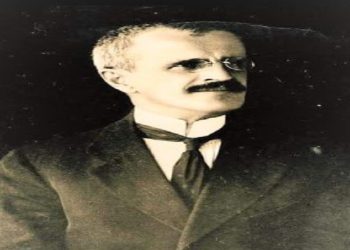
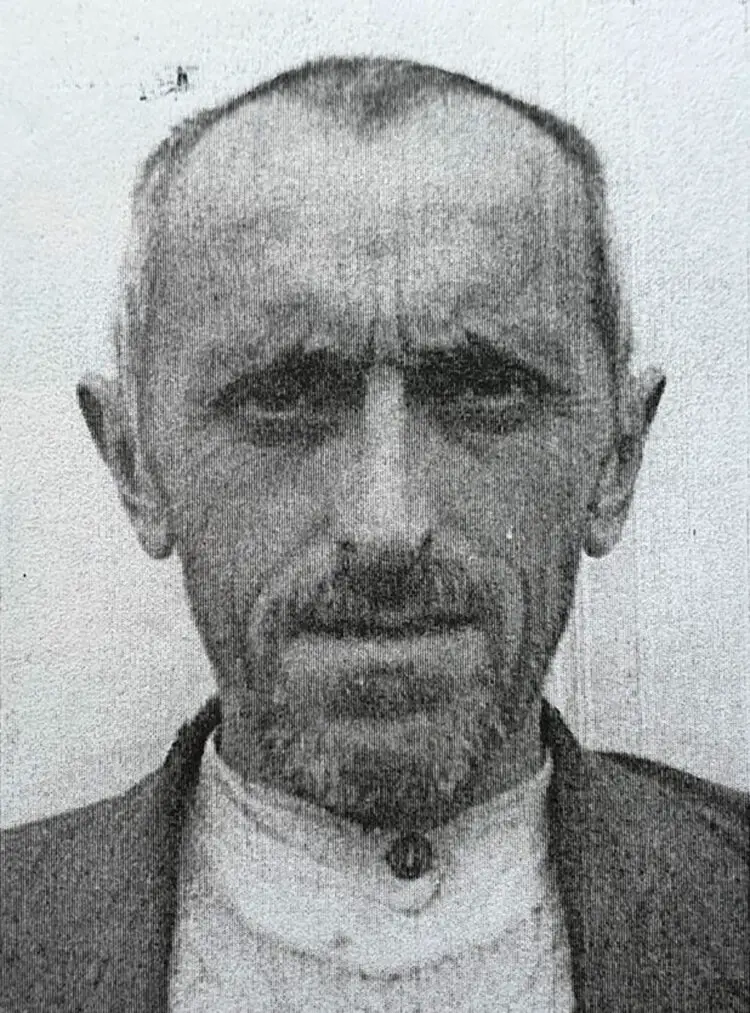
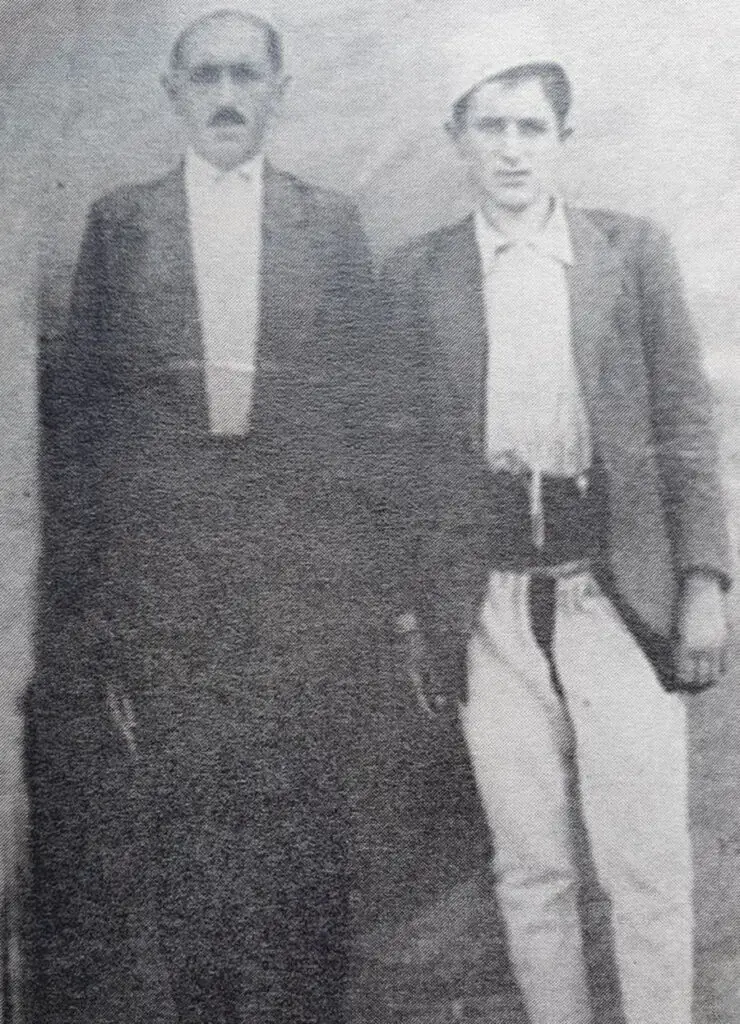
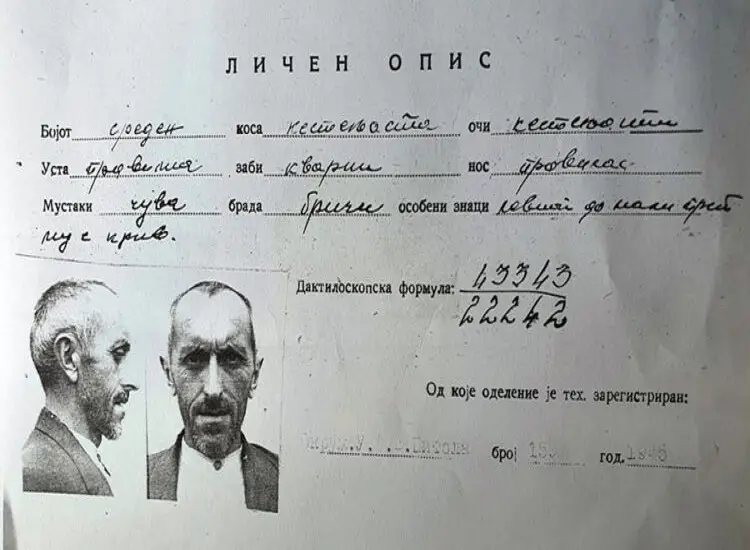
Memorie.al / Ukë Ramadan Cami was born in 1896, in Sepetovë, a neighborhood of Tërbaç, in the Ostren Municipality of Dibra. His house, located near the crossroads to Struga, Dibra, Golloborda, Gryka e Vogël, and Gryka e Madhe, was always open to the leaders and patriots of the national movement. His father, Ramadani, was a determined fighter for the constitution and among the first fighters for the formation of the “Bashkimi” (Union) club of Dibra. As an activist of the club, supported also by Eqerem Cami, he conducted extensive propaganda activities in the city and the highlands. The Camis are a large, prominent family of Dibra, residing in the villages of Gjorica, Viçisht, Golovisht, Sepetovë, and in Dibra e Madhe.
Continued from the previous issue
THE VOLUNTEER “KRESHNIK” UNITS IN THE “LIBERATED LANDS”!
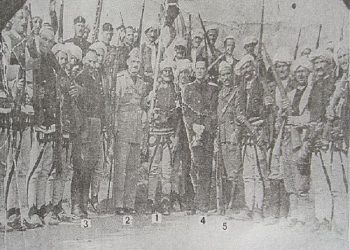
In the Dibra District, a total of four Kreshnik (Heroic/Frontier) units were formed under the leadership of Ukë Cami, Azis Kaloshi, Ali Maliqi, and Ramadan Hoxha. The field of operation for the volunteer unit led by Ukë Cami was very broad, covering Golloborda, Zhupa, Drimkolli, and Galiçnik. Since he possessed extensive military experience, by decision of the Chief of the General Staff of the National Command, Prenk Pervizi, he was promoted from Captain First Class to the rank of Kreshnik Major.
As foreseen in the program, the Mitrovica Government, in consultation with the High Council of Regency, formed an inter-ministerial commission tasked with reorganizing the Albanian gendarmerie and forming the volunteer (Kreshnik) military forces. Consequently, at the meeting held on January 7, 1944, the Commission approved the project for forming volunteer units in the Liberated Lands. The project envisioned the formation of at least one volunteer unit in every municipality (eventually two or three), depending on the size of the municipality.
The units were to consist of 100 volunteers divided into eights and platoons. For each unit, a commander would be appointed who had to be just, loyal, patriotic, and a good leader. Furthermore, he had to possess authority over the masses and have earned the trust of the volunteers under his command. Every second or third unit would be commanded by a senior officer with sufficient military experience. The organization was planned in two phases: the first phase involved organizing units near the demarcation line (within a distance of 25–30 km), and the second phase involved units further from the line.
The National Defense Command, through a circular, ordered the prefectures of the Liberated Lands – specifically Dibra, Prizren, Peja, Prishtina, Shkodra, and Korça – to immediately begin organizing the volunteer units. The circular stated, among other things: “…In consequence of this order, you are requested to order the Municipalities that, within the date of February 15, 1944, name lists of males aged 33 to 55 (1890–1910) be presented to this Command… choosing those persons who have influence and sympathy among the people…”
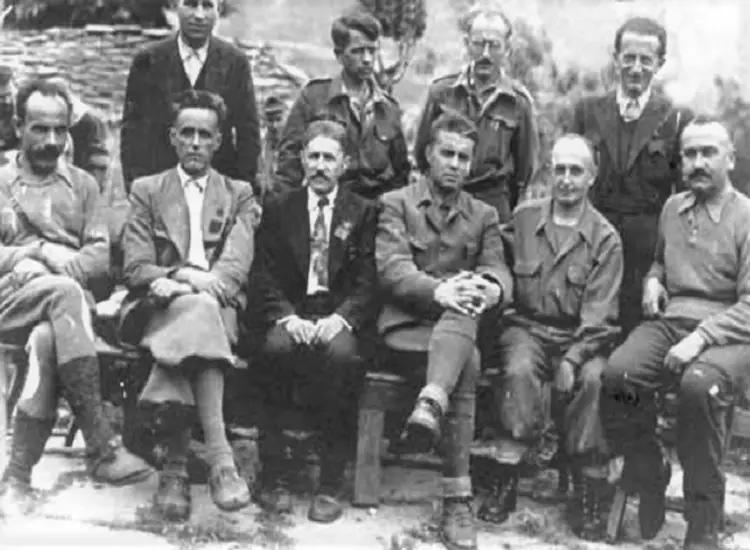
As a result, in the Dibra District, four units were formed. The scope of Ukë Cami’s unit included Golloborda, Zhupa, Drimkolli, and Galiçnik. His promotion to major came at the proposal of Hysni Dema and Myftar Kaloshi, who highly valued Ukë’s figure, whose influence extended into Gryka e Madhe, Gryka e Vogël, and the city of Dibra itself. Furthermore, he maintained close ties with Ibrahim Biçaku, Xhemë Gostivari, Mefail Zajazi, and many other prominent Albanian military and nationalist figures of the time.
It should be noted that alongside the Kreshnik units, the gendarmerie was also organized, with Myftar Kaloshi chosen as District Commander. This occurred after the Dibra leadership met in Tirana with the High Council of Regency and Prime Minister Rexhep Mitrovica. They requested that alongside the volunteer units, at least 2,000 Albanian gendarmes be organized and equipped with the most modern weapons available to the General Command.
MILITARY DEVELOPMENTS: MAY–AUGUST 1944
The organization of these units enabled temporary stability until mid-March 1944, when fierce fighting resumed between the Albanian volunteer/gendarmerie forces and the Yugoslav-Macedonian communist forces. In June 1944, Colonel Hysni Dema wrote to Prenk Pervizi: “The volunteers of Dibra have been fighting against Serbian, Montenegrin, and Bulgarian communist bands for three months… without the slightest reward. They have left their families without material aid and are barefoot, as not even opinga (traditional shoes) have been given to them until today!”
Previously, at the insistence of the Yugoslav delegate Svetozar Vukmanović-Tempo, the Regional Committee of the Communist Party of Macedonia had been formed, including some Albanian communists like the Agolli brothers, Hamdi Dema, and Lutfi Rusi. Several Macedonian partisan detachments operated under this committee, collaborating with the detachment of Haxhi Lleshi. Naturally, this cooperation did not aim at fighting the Germans but at annihilating the Albanian Kreshnik units, labeled as “reactionary forces.” This is proven by letters from Cvetko Uzunovski-Abas, sent on May 18, 1944, to the General Staff of the Albanian National Liberation Army, which stated:
“The breaking of the reaction in Central Albania and in the terrain of Dibra, Kičevo, Struga, Tetovo, and Gostivar, means isolating the German occupier… it means creating conditions to develop the war in Northern Albania and Kosovo, and the linking of the National Liberation Army of Albania with the National Liberation Army of Yugoslavia…”
As will be seen, Kreshnik Major Ukë Cami stood at the forefront of the Albanian forces, resisting for over five months the numerous Yugoslav communist forces sheltered in the regions of Debërca and Drimkolli. On May 15, the Prefect of Dibra, Abdi Golia, forwarded information from Ukë Cami noting that his forces had clashed with communists in the village of Llokmë near Struga. “Major Ukë’s force, unable to stand against superior communist strength, has retreated to the village of Selcë. They lack ammunition and urgently request bullets…”
A day later, it was reported that Major Ukë Cami had taken positions on the border of Debërca, while Shaqir Cami of Trebisht was in the mountains of Stebleva. Fierce fighting also took place in Galiçnik, where three Albanian gendarmes were killed. Miftar Kaloshi urgently requested ammunition, stating that the center of Rostuša was in danger. On May 18, Albanian volunteers launched a furious action in the village of Gajre against Yugoslav-Macedonian forces, who retreated toward Karaorman, leaving 13 dead.
On June 4, 1944, Gendarmerie Lieutenant Mahmut Pervizi with 50-60 men went to aid Major Ukë Cami’s forces. Together, they managed to take Koxhaxhik, forcing the enemy to retreat. Regarding this, the Prefect of Dibra wrote on June 9: “The civil force of Ukë Cami, together with the gendarmerie detachment… entered Koxhaxhik after a short fight… The communists, numbering near 50-60, retreated.”
However, in the village of Llokme, the forces under Ukë Cami, Ali Maliqi, and Aziz Kaloshi were unable to withstand the numerous Yugoslav-Macedonian units and were forced to retreat toward Dibra e Madhe. Fighting in the regions of Zhupa, Golloborda, and Reka continued through July and August 1944. The cooperation between Albanian and Yugoslav communist units intensified in early July after Enver Hoxha wrote that operations against Albanian nationalists in Dibra, Struga, and Tetovo must be combined.
Hoxha wrote to the Yugoslavs: “…these joint actions will have deep repercussions in Kosovo… in your national liberation front and in the Glorious army of the peoples of Yugoslavia, led with such brio by your great commander, Marshal Tito.”
THE ANNIHILATION OF ZOGIST FORCES
Consequently, the commander of the 1st Army Corps of the UNÇSH, Dali Ndreu, on July 3, 1944, ordered an action across the Dibra region to, as he put it, “annihilate the Zogist forces,” namely the nationalists under Hysni Dema, Ismail Dema, Ukë Cami, etc. Enver Hoxha expressed the same sentiment on July 6, ordering Mehmet Shehu that “the leaders of Dibra be hit harshly.”
Immediately, the Dibra partisan battalion under Esat Ndreu attacked nationalist forces in Homesh and Peshkopia. Among the casualties was the commander of the gendarmerie of Dibra e Madhe, Myftar Kaloshi. On July 4, it was reported that a communist band of 500-600 men under Mehmet Shehu, Haxhi Lleshi, and Kadri Hoxha, after leaving Mokra, clashed with the forces of Major Hazis Biçaku.
By July 13, 1944, the Elbasan Gendarmerie informed the Ministry of Interior that “a communist force of approximately 3,000 men in the place called Gryka e Ostrenit is fighting with the volunteer forces of Ukë Cami from Golloborda… The fighting is fierce.” On July 3, 1944, Colonel Hysni Dema reported that a Yugoslav communist force of Bulgarians, Serbs, and Macedonians (600–700 men) armed with heavy machine guns and mortars attacked the city of Dibra. After a quick intervention by the Albanian gendarmerie and the forces of Ali Maliqi and Fuat Dine, the Yugoslav units were forced to retreat, leaving over 100 dead. On the Albanian side, 31 were killed, including Captain Kadri Shehu.
During July 1944, the city of Peshkopia changed hands multiple times. On July 19, the 1st Macedonian Brigade and the 1st Kosovo Brigade attacked Dibra again. After four hours of bloody fighting, Albanian volunteer units and the gendarmerie repelled the attack, forcing the enemy back toward Karaorman.
The repeated failures to take Dibra led the Yugoslav-Albanian communist coalition to draft a new strategy. They created a joint operational staff consisting of Vidoje Smilevski-Bato, Petar Brajović, Dali Ndreu, and Mehmet Shehu. On August 1, 1944, a massive force including the 1st, 4th, and 5th Albanian Brigades, along with Macedonian and Kosovar brigades, attacked Dibra e Madhe again, meeting powerful resistance.
Despite this resistance, the morale of the Kreshnik soldiers began to decline by June 1944. A report stated: “In these last days, the political situation is seen as dark. The political activity of the nationalist rural population decreases day by day… as a consequence of the influence of communist propaganda.”/Memorie.al