
Part Two
– The testimony of Isuf Mullaj: how he was recruited and trained by the State Security, and how he was treated by the intelligence services in Greece?
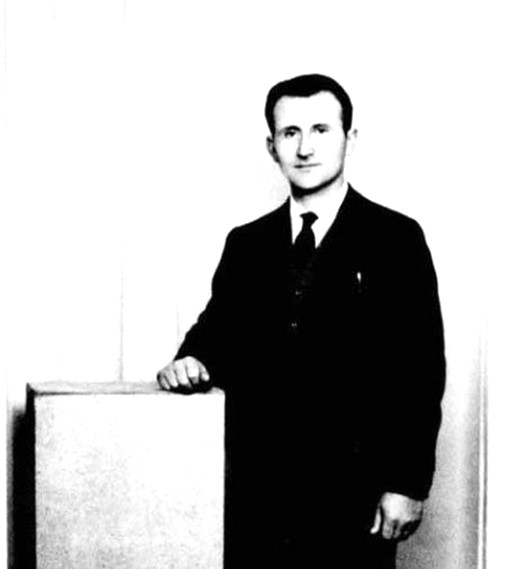
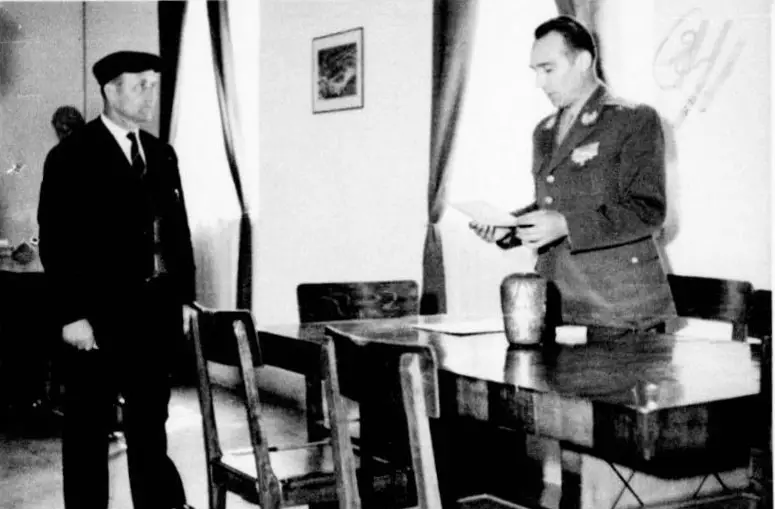
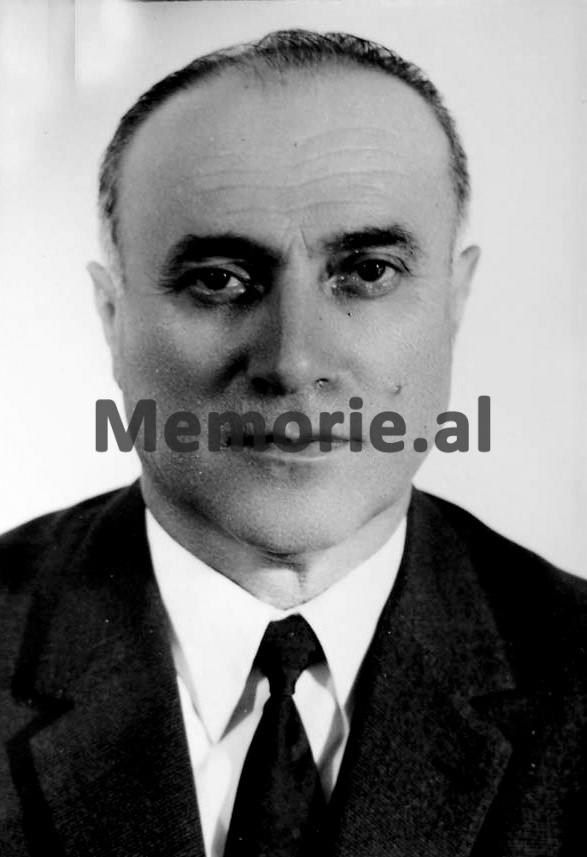
Memorie.al / Isuf Mullaj, also known as Cufe Mullaj, one of the key former men of the Albanian Secret Service around the world, recounts for the first time on “Opinion” with journalist Blendi Fevziu everything about the dark years of the dictatorship: his initial recruitment in Albania and his dispatch to the West to gather as much information as possible from the “enemies”, and how he escaped the Greek secret services after the torture he endured in their camps.
Continued from the previous issue
But they didn’t like it that you wanted to get up?
He tells me that they are more trusted than us – why don’t you have trust?! No, man, I have trust, but for this kind of work I don’t, not for other things. For this job, they beat someone over there and he talks – better they beat me and I talk myself, but not for someone else’s fault. That was my insistence. He tells me, no, no. This is how it will be, he tells me; for this work we will not do differently. I had this conversation with the instructor in Tirana himself. I go to Tirana and he says: “Isuf does everything with the liaison, just as we have done, but with foreigners he refuses to make contact; he won’t put his head on the line for someone else with foreigners.” “How?” they ask him. Kadriu got upset. He says to my close friend: “Look; now he’s going to bring us trouble, he won’t cooperate with others.” Because my close childhood friend was the one who had given the strongest recommendation – we were friends together; he was at the Tirana Prosecutor’s Office, recently.
So they called me; they had held a meeting because I refused. Hasani comes to me and says: “Isuf, what have you done? Now in the end you’re ruining things for us.” “What did I ruin? The work is in order,” I said to him. “I told him that I do not make contact with foreigners. With you, yes, and with those from the embassy, the first secretary, whoever it may be. With them I agree. And if he betrays, at least he betrays Albanians.” I know, he says to me, that they had a meeting there and they put all the blame on me. But he says to me: “You should have handled this matter better, because he deals with foreign intelligence.” “But what can I do, since he was my friend?! Tell me to do this, and I’ll do it too.” “We’ll do it as we have programmed.” “No, but this is a tricky matter – why didn’t you take a little?” “It’s tricky. I left it to you,” he says to me. “You say you don’t want to make contact with the Soviet general. The world wants to make contact with them, while you say: ‘I don’t want that one…!’ I only trust my own head – maybe they beat him over there and he talks. For this, not for anything else.” “No, no,” he says to me, “accept it.”
“I don’t accept it,” I said. “With foreigners, no. With foreigners, no – I don’t make connections with others, period! I don’t trust foreigners. That’s my psychology; I don’t trust them.” I would leave in two months, cross the Albanian border and get to Greece. This matter would go all the way to Enver Hoxha. Kadriu says to Hasani: “Do whatever you want, but I’m not going to Comrade Enver to tell him that an intelligence agent came, took all our secrets, we’ve told him everything we learned in the Soviet Union for three years, and now this one refuses to make contact with them.” And this matter, he says, “I cannot tell Comrade Enver about this, bam bam.” Mihallaq Ziçishti also told me this later, after I returned. He told me that this, this is how it happened for you at the time. “All right,” I say, “what are we going to do?” He says: “Look, you go, Mihallaq,” Kadriu tells him, “tell them there that we have a problem. This and that. We have a problem. We’ve prepared him, he finished the course and everything, he’s accepted everything, but now he tells us: ‘With foreigners I don’t want to make contact; with you, yes.’”
“Man,” he says, “all right,” he says. “We will tell Comrade Enver, but he will say: ‘Why didn’t he come here himself?’ He was busy,” this one says. “Have you taken responsibility for this matter?” “I have, my friend,” he says. “No, no,” he says. Comrade Mihallaq goes to Comrade Enver and tells him this and that: “We have a case.” Enver says: “Where is he from?” “From Gjirokastra,” he says. “Well, from Gjirokastra?” Enver says. “What place is he from?” “From Fushë‑Bardha,” he says. “And what does he say?” Enver says. “He accepts everything,” this one says, “but with foreigners he will not make contact. Without asking you, we cannot send him abroad.” “He is more than refined,” he says. “Who has been most involved in this matter?” “Cafi,” he says. “All right, let him come one night to my place.” So he comes, and I am in Tirana at nine in the evening, together with Cafi, to Comrade Enver. We both went then.
He welcomed us, embraced us like that. “So, Cafi,” he said – he knew what Zhulali had told him. “Here, Comrade Enver,” Cafi says. Enver says: “Do you work a bit?” “I work,” this one says. “And this friend, where is he from?” he says. “From Fushë‑Bardha,” he says. “We were together in school,” this one says, “then we worked constantly in the field, and everything.” “So how is the situation now?” he says. “But it’s not that they told me.” “All right,” he says, “I’m not against you,” Enver says. “He doesn’t want, he doesn’t want – it’s not said,” he tells Cafi. “It’s not said – either he makes contact with them, or not. We will create opportunities for him to make contact with our own intelligence officers, not with foreigners.” “And you,” he says to me, “how are your situation?” “I’m fine with everything. I don’t know what’s left for me. I may also be wrong, but these foreigners, I’ve never liked them,” I said.
And then I said to him: “In ‘41, I was about to finish the academy and I didn’t accept to be sent to Italy and become an officer like Asim Zeneli, who is a ‘Hero of the People’. I was at that level.” Enver laughed. “All right, better,” he says. “There’s nothing,” he says. He says to Cafi: “Leave us alone for a bit.” He went out; we were by the door for two‑three minutes. “There’s nothing to be alarmed about,” he says to me. “You spoke well,” he told me. “Foreigners are foreigners. But they have alarmed this thing unnecessarily,” he says to me. “Don’t be afraid, because wherever you go, you have the Party with you, you have the people with you; we have comrades and friends wherever you go. You will also have another secret code; if you want, you can even notify me; if you have any difficulty, a two‑minute talk there.” Then Cafi came in; we finished. “All right,” he says. That was the big secret. We left. The fear of those others was gone.
When were you sent to the West?
In August, after two months.
To Greece?
Yes, to Greece. So it was done, and the fear of those others was gone. However, they didn’t dare question Cafi; no one asked what Comrade Enver had said there. He said what he said; they know that. And these things were like enigma work. He didn’t say anything. But those others who were there, Kadriu and the rest – what did Comrade Enver say there? Like, if Hasani had told Enver. We told him what I’m telling you; two or three minutes and we left. “Go, we’ll help; wherever you go, it’s nothing.” I left with Hasani; he didn’t ask me what Enver had said when we were alone; we were alone only a short time. He didn’t ask, and I didn’t say anything to Hasani. We left and went there to Comrade Kadri. “Well, finished?” they said to us. “Finished,” we said. “All right,” he said, he asked us and so on. “Well, you’re from Comrade Adil’s (Çarçani) village.”
And then?
Everything was set up; all the instructions, contacts and liaisons were taken. It was settled that I would not meet foreigners anymore. Besides that, in ’60 when we broke with the Soviet Union, we again insisted on this because we were in danger of being taken over by the Soviets. We told them: they may be wrong or right, but we are with Tirana, and we were saved. The intelligence officers who came didn’t know what had happened in Albania, the truth – because if you said something, how could I believe that you were telling the truth? So we told them in ’60: whether it’s right or wrong, we are Albanians and we will remain Albanians. Whether the Chinese or the Russians like it, we don’t need anything.
After the 1960s, did Russia maintain contact with Albanian Security agents abroad?
No, man, they didn’t. They might have maintained contact with others, I don’t know. I mean, even now when I read those materials that write those things, many things surprise me – man, what are these people saying, you understand? They may have had platforms, but now, no, we don’t.
How were you sent to Greece?
Then they prepared the terrain. Everything on August 7th – because on August 6th two comrades came from Tirana.
Your family knew nothing at all?
No, man, what family? It was shameful
How many children did you have at the moment you were about to leave?
I had two, and my wife was pregnant, about to give birth – she was three months along.
Did you feel bad that you were leaving?
How can you not feel bad, to be separated from your homeland?! Not just the family – you feel bad even for the mountains. I was looking at Mount Gjerë, tears came to my eyes. I would climb up a hill and surrender in a certain place there, to the Greek consular post; I had everything planned.
Did you think you were leaving for three or four years?
Yes, that’s what I had in mind. Four years – I’ll do what I have to do for the homeland, for Albania, for the people. I did everything for the people.
You set out and two Security officers picked you up. Where did they take you on August 6th?
They came there as if they were coming to a celebration; they came with me. They gave me a ticket as if I had set out from there – because the Security part over there, how you passed, how you went – a hundred questions immediately, as is their custom; that’s how this work is. Those two comrades from Tirana came, and there where we had planned to cross – with bars, electric wire, bells – every kilometre had been excavated; everything left a trace. We had planned it there by the river, in some brambles. We lifted the wire up; I went under the wire and crossed. I crossed from this world and went out into another world.
The Security officers accompanied you all the way there?
They came that far.
It was night, what time?
Around 12 at night.
How were you going to proceed?
I had the plan on a map – how I would go. They had prepared how I would go from the river; climb up a hill, a Greek post was there. They didn’t guard the border well – not like we did; they weren’t very interested in guarding it. I crossed those brambles; it was a guarded zone. I felt like I was on a war front, in Siberia. I went there – it was a three‑hour journey, maybe from 12 until 3 or 4 in the morning – I climbed the mountain; it was about one kilometre high. I had it on the map, on the plan, to surrender there. When I got there, a villager saw me. I was torn because I had gone into the river, with wet socks, covered in mud, just as if I had come from the war front. That villager saw me; he saw that my clothes were not like the Greeks’. A coming villager, with a rifle.
He came over. “Stop,” he said to me – the villager knew Albanian, he knew Albanian. I turned my head. “Eh, mister, what do you want?” I said to him. “Wait there,” he said to me. “How are you?” He was two‑three metres away, with a rifle. I said to him: “What are you looking for?” “Where do you come from? Where did you cross?” “I come from Albania; down there I crossed the border. At night, how should I know? They say the name, I don’t know.” I pretended to be a fool. “All right, what do you want, why have you come here?” he says to me. “I want to go to a police station, the border or whatever there is.” I knew that one kilometre further it was there. “Where do I know?” I said. “I’ve been walking aimlessly; wherever I end up.” “All right,” he says, “I’ll take you.” “All right,” he says. He speaks to another villager, also with a rifle, civilian. He didn’t trust going alone; he was scared. I was unarmed, I had nothing. Fear guards the vineyards.
When the other one came, there were two, and they put me in the middle, one in front, one behind. I saw that and I put myself under control, pretending I didn’t know anything. We climbed up one kilometre and got there. It was the time when consulates had just been set up; they were still washing, surrounded by wire; it was that post. “Stay here,” he says to me. “I’ll go to him.” There was a marshal there. He goes and says: “I’ve brought an Albanian, a fugitive from Albania.” “Come inside,” he says. When I got there: “How are you? All right.” “Where do you come from?” he says to me. They put me in a room there, with a guard at the door. “Stay here,” he says, “until we notify the border.” They would take the border – how they hadn’t dictated to me.
They notify the intelligence service, a Greek major with a big dog; he came there in an hour. If you saw him – a major with ranks, with a big dog, two soldiers with automatics. “Where do you have that saboteur?” he said. I didn’t know anything, I just watched their faces. “We left the door open,” they said – the guard was there, but I was lying on a bed there. “Where do you have him?” “Here.” “Have you searched him?” “No,” they said to him. “What would they search me for? I didn’t have anything.” I was shouting because I didn’t know Greek. That major was angry, but the others who were at the post behaved very well. They weren’t refined for such things.
“Come here,” they said. The two soldiers with automatics who accompanied them, the dog outside. I came there. I didn’t speak Greek any more. They took the villager who knew Albanian as an interpreter – that Albanian who knew Albanian. “Come here,” they said to me. “Take off your clothes.” I took off my clothes, completely naked, as my mother bore me. They searched me. “Open your mouth, open this, open that,” and so on. They took all my clothes as they were, sent them to another place, and brought me soldier’s clothes, all of them. Old ones, from released soldiers. “Take them and wear them,” they said. I wore them, even a cap, a Greek cap. I looked at them: “Come on, man,” I thought.
And then?
They searched my clothes there. The post marshal made a record: where did you come from, where did you go. I knew it by heart, like a gramophone record – I would say it a hundred times whenever they called me, because those are work methods. They call you a hundred times to catch you where your statement isn’t the same as before. They checked my pocket here; they found a truck ticket. We had made that on purpose to mislead them, to combine with the legend: that I went to Delvina to escape from the communists so they wouldn’t follow me, and from there I found a truck and came as far as Jergucat, on the road that turns towards Libohova, then from there I took the road to Greece. I wanted to find it myself in parallel.
This would coincide with the legend that had been created. It’s a ticket, I said to the marshal – I was there, I stayed there to disguise myself so they wouldn’t catch me, then on a random truck I got on and got off heading towards Libohova, in Dropull. They took it and looked at it; the ticket was from the previous day, made on purpose, the kind truck drivers used. It was a deception base – that this fakir doesn’t know anything about these things. He came because he’s a fakir. “All right, so it is,” they said. “Go with soldier’s clothes.” I got in the car; two soldiers, I was in the middle; one in front with the dog, with automatics, in that jeep heading toward the Greek division in Kalivaç.
There, at a stream. The car made me sick at that time – I had travelled a lot, and they were mountain roads, speeding; I got car‑sick and it almost killed me. When we got there, they took me to a division tent, put me there, and three or four guards all around. “Stay here,” they said to me. I looked at those soldiers, guards all around. What are they doing? They didn’t suspect that I might be a provocateur. They removed the soldiers over there, opened the tent door – the division was in one tent, we were in another tent higher up to the side, so that I would have the opportunity to slip into the forest above and escape. I said to myself: I have come to stay. If you want to run, run; if you want to leave me alone, do whatever you want. You can do 500 manoeuvres here for all I care.
Then what did you do? Where did they send you?
To Ioannina.
To prison?
To prison.
How long did you stay there?
Four months, or five months.
What did you do in prison?
There, interrogation, night and day.
What questions did they ask you in prison?
“You are sent by the Security.” That was the main one. I said no. He says: “We have all the data that you are sent.” That would mean the plan as he had it. But before saying that, he would take your whole career, your biography.
Did they have agents in Albania to verify whether they were true or not?
How could they not have? When I was in that interrogator’s room, the Greek captain, English, American and all came, but the main ones were the Greeks. He had the whole wall covered with a map, my whole region, with rivers, with villages, and the stones were marked – with churches, mosques, roads, and numbers. He did that, and it was also psychological pressure on me. I was a radio‑telegrapher, and he said to me: “You know these,” and he tapped Morse “52”. He had written that number on the map there, and it was our region, our village. Written there in red ink, 52, for you to see. I thought: wow, this guy has been to Fushë‑Bardha, he has my biography down well. I’d better tell him.
Did they torture you?
How could they not torture?! I knew their tricks.
Clubs?
The club was a flower, but with electroshock, with electric current.
They tortured you constantly?
Yes, in prison we did those.
And then when it ended?
When it ended, to a concentration camp – but it didn’t end immediately, in Athens. In the end, they used the method of snakes; they kept that for last. I was prepared for that from here, because with that you could die on the spot; it was terrible. Even now when I see it in films, it’s very disturbing. But I had learned in school that they would apply psychological pressure. “Don’t be afraid,” they told me, “they will do this.” However, I remembered a little the word from the course, to pull myself together and endure. I knew they would use these kinds of tortures. If you resist, you pass; if you don’t resist, you’re finished.
When did you finish, after you had resisted everything?
From there straight to Athens, where the Greek intelligence commands was. Accompanied, I boarded a bus with two people – I don’t know what they were – I went to Athens. When I got there, I didn’t know where they would send me. They told me: “You are finished with us; you will go to Athens.” They sent me to Athens, but sometimes I have also been lucky. When I got there, a Himariot – he was an interpreter there, a lawyer in Zog’s time here, and a friend of my father – he had known him when he was a lawyer in Tepelena, in Tirana; he was very clever. Papadhimo was his surname. Misto Papadhimo – I knew that name; I knew he was a friend of my father, but I didn’t know where he was or not. We go there, he says to the Greek colonel of intelligence: “Bring him here.” He had the file there on the table. When I saw him, “Oh boy,” I thought, “this night has really come.”
In the end, I went there. A big office, great luxury; I didn’t know Greek. He began the questions, but exactly like those in Ioannina. Again, I thought: he’s starting from scratch – meaning they will start those tricks. “Oh boy,” I said, “what am I going to have to endure here?!” He started, started, and then he heard my father’s name. He opened everything, the legend, the biography. “Man,” he says to me, “you are a Himariot. What is so‑and‑so to you?” “Father,” I said. He was taken aback. “Father, you said? … Where is he?” he asked me. “Sick,” I said. “Man,” he says to me, “why didn’t you bring him with you?” “How could I bring him?” I replied. “He is sick, with rheumatism.” That was true. He was completely paralysed, I told him; for two or three years sick.
“Father is like this and like that.” “What did they do to him? Did they do anything to him?” “They did everything; they cut his pension; they didn’t put him in prison only because they took him several times for interrogation and left him because he hadn’t stained his hands with blood, so they didn’t do anything to him.” “All right,” he says to me. “But I consider him like a cousin; he is like my brother, my closest friend.” He started with that colonel, “He is my friend.” “How?” this one says. He told him; they talked for 10 minutes in front of me – since I didn’t know Greek. He says: “A good and well‑known family.” This was the main interpreter, of intelligence too. The colonel was stunned. “What do you say, Misto?” he says. “They have tortured this one unnecessarily,” he says, “those from Ioannina.” He closed it.
He says: “All right, look. Isuf, listen to me. Here there have come black and white, yellow, Zogists, Ballists, all sorts are here in Greece. I’m speaking to you like a family man. We will send you to a concentration camp – not a prison, but isolated. There, he says, you have all the intelligence services of the world; they are gathered there, in that camp. But look to your own business and don’t get involved in anything else, because there you have all the ropes and the hanged men.” “Thank you, but I know that – the best people have come. There are also better ones, but they are few; the others are bad.” Memorie.al