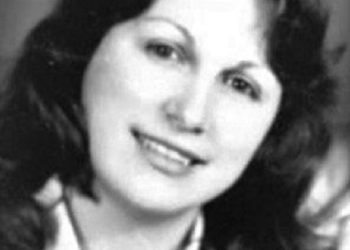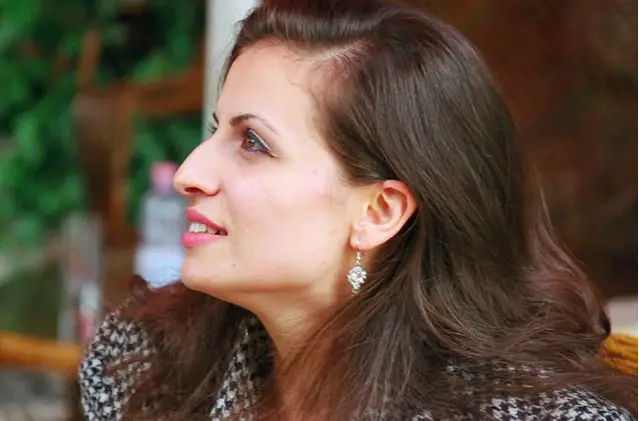
Memorie.al / Prof. Assoc. Dr. Bavjola Gami Shatro is the author of three scientific monographs on literature published in Tirana, and one scientific monograph published in Great Britain by Cambridge Scholars Publishing in 2016. She is co‑author of three study works published in Tirana and has contributed chapters to the Encyclopedia of Civilizations, published by Bloomsbury in 2022, as well as to nine volumes of selected studies, of which one was published in Tirana and eight in Europe, by publishers such as Brill, Bloomsbury, CSP, etc. She is the scientific co‑editor of two study volumes, one on English and American literature, published in Britain (2015), and a volume on the memoirs of women who survived communist prisons in the Eastern Bloc, published in Romania in 2023. Regarding these and other matters, Dr. Bavjola Gami Shatro gave an exclusive interview to journalist A.D. for the well‑known newspaper ‘Ex Librus’ (published by ‘ONUFRI’ Publishing House), which we publish in full in this article.
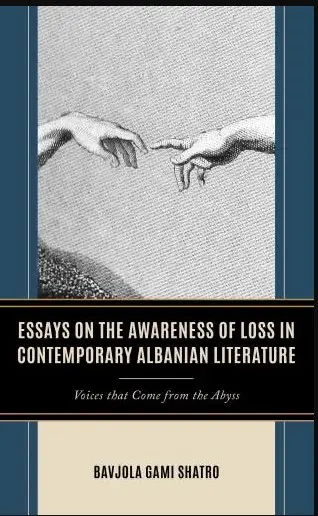
Ms. Shatro, the publishing house ‘Lexington Books’ in the USA has recently published your monograph: Studies on the Awareness of Loss in Contemporary Albanian Literature; Voices Returning from the Abyss. Along with my congratulations on the new book, I wanted to ask you if you could tell us a little more about its role in the international recognition of our literature. How necessary do you believe studies on contemporary Albanian literature in various languages are?
I think they are very necessary, indeed indispensable. No literature develops on its own and for its own sake. A country’s literature is a complex reality in linguistic, cultural, social, political, philosophical terms, etc. It influences and is influenced by the time and environment in which it is written and read, in the broadest sense of the words influence and environment. I believe there are several ways in which a literature becomes known beyond its own linguistic space, but among the most important are through the work itself and through studies on the work. That is, through the translation of literary works and through studies in foreign languages. Their absence or insufficiency has consequences for the literary process. That is how I see the study of Albanian literature in other languages. Naturally, this does not at all imply quantity – any publication, in any organ, and of any quality. In fact, it is exactly the opposite.
In my view, academic rigour does not work with the logic: what matters is the effort; it is a small literature, in a language that is not widespread, etc. I do not consider such statements to be even at the level of acceptable error, even if only to refute them. What matters is delivering a measurable and real result, as well as the path followed to reach that result. There are no small literatures; there are small perspectives and small minds. If literary studies currently do not participate in a qualitative manner in the broad academic communication of the field on an international level, then it has not truly served the study of literature as an art, nor the literature in question—in our case, Albanian literature.
What theoretical approaches did you follow in drafting this monograph?
The theoretical approaches are related to the thesis and to the specific features of the authors and the concrete texts. In the case of this monograph, the study is conducted within the framework of qualitative methodology, with a comparative approach, encompassing not only different authors but also several literary and quasi‑literary genres (which already gives rise to the need for theoretical specification – and this, of course, could not be done within this interview), such as epistolary writing, diaries, memoirs, autobiographical notes, etc. The methods were applied bearing in mind that a close reading of the text is required, as well as a convincing and detailed treatment of the social, cultural, political context, etc. I extensively apply close reading, but also hermeneutic, biographical, cultural methods, etc.
How long have you worked on the main theme of the monograph? How would you describe the work of preparing it?
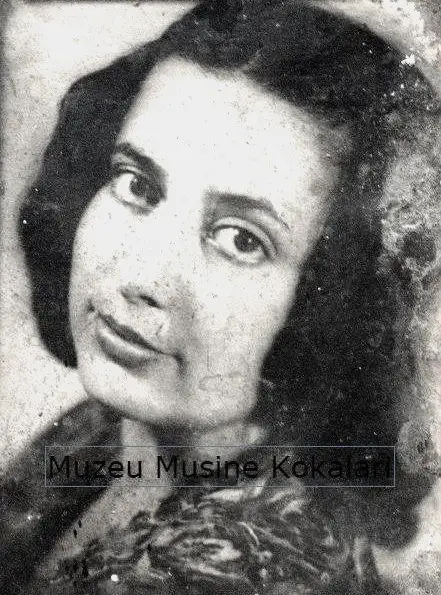
The idea for the monograph as such arose eight years ago, but my work with the authors began much earlier. In 2009–2010, I had started working on Bedi Pipa’s diary and presented papers on it at two conferences in the Albanian space, and also published articles. I was convinced that I would return to that book, but on a different scale and level. Meanwhile, in 2018, I presented a paper on Musine Kokalari’s memoir at a symposium organised at UAMD [Aleksandër Moisiu University], and that paper was later expanded for publication and appeared in the journal Filologjia of the University of Pristina – about five years ago.
At almost the same time, I presented a paper at the University of Montana in the USA, at the Biennial Conference on Southeast European Languages and Literatures, presenting a comparative study between the life‑writing of Bedi Pipa, Kokalari, and Çomo. There I addressed the mechanisms of memory and the expressive means in their books. That was the moment when the project took its first shape, and Çomo’s work was included – a book that had left such an impression on me that it forced me to patiently wait for the right time to study it. The subtitle of the monograph directly echoes the title of her book, published by Onufri: Light That Comes from the Abyss.
Being here, please allow me to express my gratitude to the publishers Onufri, Toena, Neraida, and Botimet Fjala. Because of the standards of the publisher in the USA, I needed their special permission to quote and translate into English such a large volume of original texts. I would not have been able to give this form to the monograph without the opportunity those publishers gave me. I am grateful to them. Naturally, this also applies to the Italian publisher of Musine’s memoir, Viella.
In her case, I had to translate the memoir extensively from the original Italian into English. As for poetry and the treatment of the awareness of loss in it, this genre remains the epicentre of my scholarly interest. The two poets selected are very important. My work with them is a further deepening, using other methods, of a publication realized in 2016 in England by Cambridge Scholars Publishing. To sum up, the work on this monograph was the fulfilment of a moral obligation I have felt toward this creative output and toward Albanian literature, both as a scholar and as an Albanian.
There is a perception that authors from the same period share similar characteristics, which make them close in style… Did you observe this during your work, and does it appear as a result in your conclusions?
Similarities are possible. However, it is not always the case. This also applies to the authors in this study. Pipa and Çomo have an affinity that cannot fail to impress. Certain elements of style, text, theme, sensibility, tone, etc., bring them close, even to some extent to Kokalari. Meanwhile, the authors have significant differences. Nevertheless, theories on life‑writing genres establish very significant points of communication between them, precisely in relation to the sub‑genres in question. In this book, I have sought to examine the point where life‑writing approaches and where it truly separates from poetry in the work of the same author and in the context of the literary process.
Meanwhile, between Arapi and Podrimja, the differences are sharp; nevertheless, the theme of loss and the meditation upon it are realised at superior levels in each, extending reflection into several spheres at once. Both give voice to two lost, misunderstood lives (the brother and the son) and through them universalise human fates, ethnic realities, etc. In the selected works of these five authors, issues such as the self, the body with its materiality and symbolism, death, freedom, trauma, identity, suffering, subjectivity, writing, memory, survival, time, moral values, the past, mechanisms and policies of memory, etc., are addressed.
Each of these authors experienced, or embodied and wrote about loss in a unique way, creating a prism for reading and studying the work that places contemporary Albanian literature in direct and multi‑faceted communication with world literature and with the relevant scholarly and theoretical developments. Each in a different way, these authors challenge something: time, reading, expectations, existing historiographical and literary structures, and raise questions about important scholarly issues on a disciplinary and interdisciplinary level.
Also, each in a different way, they represent either silenced voices that were lost for decades and return from the abyss to speak to us again, prompting us to remember and focus on their testimony, or voices that “are lent” to those who can no longer speak for themselves, thereby giving them something more than an opportunity to be remembered; rather, a chance to come back to life and this time to remain in life through their testimony about the nature of being, about individual, national, human survival, and about being, first and foremost, moral beings.
All five of these authors are united by something essential in the conception and treatment of loss as a concept, awareness, experience, narrative, and poetic reality. In different and unique ways for each author, they culminate in the formulation of testimony in the theoretical sense of the term, with the great scholarly and ethical weight it carries today in the context of the humanities. In this sense, I have tried to constantly interact with studies in the fields of literature, philosophy, cultural studies, etc.
What is the structure of the monograph? Is its content arranged according to a chronological or methodological criterion?
The book is conceived in two parts. The first part focuses on the work of three authors in Albanian literature whose tragic fates, both as individuals and as authors, is hard to match: Musine Kokalari, Bedi Pipa, and Drita Çomo. The fate of these authors seems to me a reflection of the fate of Albanian literature and of Albania itself under communism, personifying loss as deprivation and negation on an intellectual, creative, and existential level. Therefore, the study of their work contributes to Albanian literature and culture as a whole, as well as helping to identify bridges of communication with other literatures, shedding light on a host of scholarly issues across several disciplines at once and over a considerable temporal and spatial scope.
The first chapter is titled The (UN) Silenced Voice of a Woman Writer; Her Memoir ‘La mia vita universitaria’ and Her Epistolary and is dedicated to Musine Kokalari. It is an expanded version of the long article published two years ago in the journal *Mediterranean Studies* by Penn State University Press (USA). The chapter is divided into three sub‑chapters, one of which has five sub‑parts. Chapter II, Voicing Silence and Exploring the Self; The Intimate Diary by Bedi Pipa, studies the work of Bedi Pipa. The chapter consists of six parts. Being a heterogeneous and rich text, the diary is analysed by focusing on the theoretical, psychological, and ethical issues it touches upon. Bedi Pipa addresses himself as a moral and theoretical entity at the same time, emphasising the philosophical layers of the text.
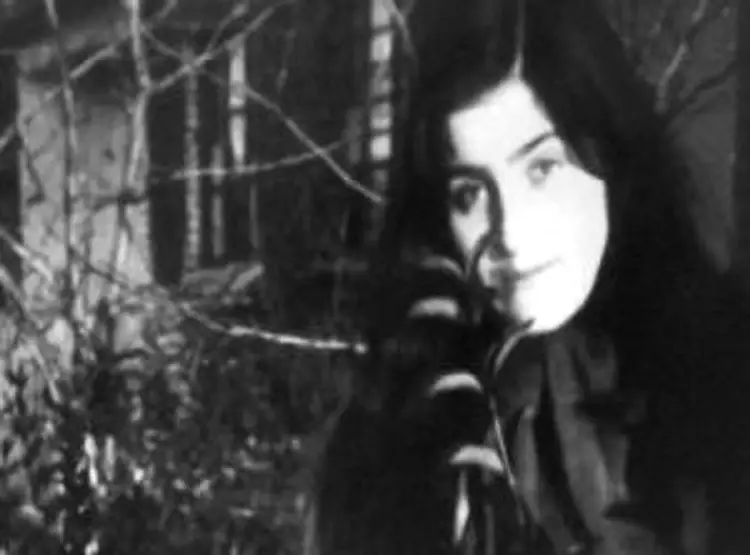
Loss in her case is not only linked to her tragic death at a very young age and the severe dramas of the Pipa family under communism, but also to the decades‑long ignorance of her perspective, conveyed through analyses and meditations aiming at knowledge and deconstruction with an empirical optic while she lived in unclear and politically uncertain times with many cultural and social restrictions. The third chapter is dedicated to the work of Drita Çomo and is titled: Voiced to Loss, Voice Regained; ‘Light That comes from the Abyss’ by Drita Çomo. It consists of six sub‑chapters and analyses her diary, taking into account contemporary theories of the study of this genre and the originality of Çomo’s text, the way she conceives the present, herself, life, daily existence, human and family pain, illness and the implied presence of death, the method of self‑censorship and the rhetorical devices of the text, etc.
This chapter also provides a detailed analysis of her poetry, highlighting themes, stylistic devices, influences, the degree of verse elaboration, her literary awareness in the conditions and to the extent in which it was formed, and the specific features of her work in the context of Albanian poetry of the time, with which she had a one‑way relationship through reading. The chapter addresses the value of this book also in relation to memory mechanisms and its specificity considering the circumstances that led to her persecution and that of her family. The second part of the monograph is exclusively dedicated to contemporary Albanian poetry and is titled: Loss in Contemporary Albanian Poetry: Death, Memory, and Grief. It analyses the work of two distinguished poets, Fatos Arapi and Ali Podrimja.
The analysis focuses on the themes of death, memory, language, silence, suffering, survival, and moral values, addressing how the personal intertwines with the collective, the biographical with the historical, when the individual experiences and lives with the awareness of great loss, both moral and physical. Each poet meditates on these issues in different ways regarding conceptions, style, and poetic techniques; therefore, the chapters offer detailed analyses of poetic images, figuration, tone, and the structure of the volumes in question. The first chapter is dedicated to Fatos Arapi’s poetry: *On the Threshold of the Dark: The Impossibility of Loss and the Poetry of Fatos Arapi*. It analyses the complex images of loss and grief, trauma, and the interweaving of voices in poetry, considering that the volume is conceived almost as an epistolary work, a set of verse letters sent to the poet’s lost brother in the afterlife.
The poet’s perspective on the moral collapse of society is analysed, intertwined with the lyrical self’s sense of disappointment, betrayal, hope, freedom, humanity, homeland, life, and dignity. Thus, the chapter elaborates on the concepts of the impossible, the unattainable, and irreversibility, which, while having a very complex theoretical basis, are central to understanding the self and the human condition in Arapi’s poetry after the 1990s. In this way, Arapi’s extremely personal poetry becomes a modern meditation on moral chaos and the crossroads of an entire society. The poems are analysed with reference to studies in the field of myths, symbols, and philosophy, especially in studies on ethics.
The fifth chapter of the monograph is titled: The Awareness of Loss and the Grieving Path of a Poet Father toward the (Im) mortal Son. The Volume ‘Lum Lumi’ by Ali Podrimja. It analyses the concept of loss and grief in the poetry collection Lum Lumi by the poet Ali Podrimja. Personal tragedy became Podrimja’s way of meditating on the catastrophic loss of the Albanian ethnicity in history and on the dramatic fate of Albanians in Kosovo under anti‑Albanian political terror. However, his rich symbolism and complex style on several levels reveal the fate of the human race as a whole, as the poet meditates on the dignity of human existence, on what remains sublime, on the meaning of human life, and on the responsibilities we have as moral beings toward ourselves, toward humanity as a whole, and toward ethnicity.
This chapter analyses how loss and the unsaid – as a linguistic, literary, and philosophical reality – are linked to the traumatic experiences of the lyrical self, and how mourning served as a means to understand and express the dimension of loss, but also to protect from oblivion and alienation what Lumi represents. Reflections on death, memory, love, time, and survival, together with language, symbols, tone, structure, and poetic images are central issues in this analysis. The chapter also offers a treatment of Albanian poetry in Kosovo at the time of the volume’s first publication and Podrimja’s place in that context, as well as in Albanian poetry as a whole.
In Albanian language, do you think the presence of this book is necessary? Do you plan, soon or later, to translate it?
If I were to start from my knowledge of Albanian literature and current literary studies worldwide, I would say there should be many more such books published abroad. As for translation into Albanian, I think one must bear in mind that reading literature in English is common for many scholars, even for master’s and doctoral students, and these are a central part of the audience for such a book.
On the other hand, it could certainly be translated, but not by me. I tried only once to translate my own work and ended up producing a new text. The monograph is conceived for a foreign scholar; the entire conceptual, terminological, theoretical, structural, referential apparatus takes that audience into account, and that is essential. Look at how even the title of the monograph comes across in Albanian; what happens with terms like essay, voice, loss, etc. The same applies, without going further, to the titles of the parts, chapters, and sub‑chapters, which are based on the material of the English language and the possibilities that language offers, sometimes even at a graphic level. I would not know how to handle them, perhaps even more so in the case of my book.
Among other things, in her note about the book, Agata Fijalkowski writes that *the subject of the book resonates with the contemporary world and the issues and questions that concern it*. This prompted me to think whether our literature responds to universal dilemmas and whether it succeeds in universalising Albanian traits in a text… What do you think?
If I had ever doubted the existence of such potential in Albanian literature, I would not have invested 15 years in research, almost exclusively abroad, on Albanian literature. I have not the slightest doubt that Albanian literature has everything it needs to stand out internationally. If literary studies do not believe this or fail to prove it, the problem lies with literary studies, not with Albanian literature.
Currently, you are a visiting professor at the University of Mississippi, USA. Given that the monograph that has engaged you for so long is now published, are you working on something else?
It is not possible to stop working. Being in Faulkner’s Oxford, in such a cultural heritage, means being in ideal conditions to work. On the other hand, the University of Mississippi is an R1 university (Doctoral Universities – Very high research activity), so expectations are very high. However, in literature, passion, profession, and mission come together for me, so I would continue working in any environment. Only here productivity is much higher and there is so little pointless, entirely avoidable stress.
In spring 2025, the first study on one of the most important Albanian poets in Kosovo will be published in a very well‑known journal in the USA for Balkan studies. I am glad that after he was translated quite well into English several years ago, I was able to achieve an early goal of mine: an extended study of his poetry in this academic environment. I have another project in hand, again on contemporary literature. As long as literature is written, lives, and conveys, study must keep pace. Do you think there could be any alternative in this?
Oxford, MS, 28 August 2024
Who is Prof. Assoc. Dr. Bavjola Shatro?
Prof. Assoc. Dr. Bavjola Shatro is a lecturer in Contemporary Albanian Literature and 20th‑century Foreign Literature at “Aleksandër Moisiu” University. She is president of the South East European Studies Association in the USA. She has 18 years of experience in academia, having been a visiting lecturer and scientific researcher in the field of literary studies at several universities in Europe and the USA, including: University of Salamanca (Spain), Penn State University (USA), Abo Akademi University (Finland), Università di Pavia (Italy), University of Turku (Finland), and most recently the University of Mississippi, Oxford (USA).
She is the author of three scientific monographs on literature published in Tirana, and one scientific monograph published in Great Britain by Cambridge Scholars Publishing in 2016. She is co‑author of three study works published in Tirana and has contributed chapters to the Encyclopedia of Civilizations, published by Bloomsbury in 2022, as well as to nine volumes of selected studies, of which one was published in Tirana and eight in Europe, by publishers such as Brill, Bloomsbury, CSP, etc.
She is the scientific co‑editor of two study volumes, one on English and American literature, published in Britain (2015), and a volume on the memoirs of women who survived communist prisons in the Eastern Bloc, published in Romania in 2023. Prof. Shatro is the author of 40 scientific articles published abroad by universities such as Penn State University, University of Illinois‑Champaign, University of Mississippi, and renowned publishers such as Brill, Bloomsbury, etc., as well as several articles published in the scientific journals of the University of Pristina, the Albanological Institute in Pristina, and bulletins at “Luigj Gurakuqi” and “Aleksandër Xhuvani” universities.
She has contributed dozens of articles to literary periodicals in Albania, Kosovo, and among the Arbëresh of Italy. Her work has been presented at 43 conferences organised by research institutes and universities in Europe and the USA. She is a permanent reviewer for university presses in the USA, such as Syracuse University Press, Penn State University Press, etc., and for scientific journals of research institutes in the USA, Britain, Poland, Slovakia, Croatia, Malta, Italy, etc. Memorie.al