From Shkëlqim Abazi
Part fifty-five
S P A Ç I
The Grave of the Living
Tirana, 2018
(My Memoirs and those of others)
Memorie.al / Now in old age, I feel obliged to confess my truth, just as I lived it. To speak of the modest men, who never boasted of their deeds, and of others whom the regime silenced and buried in the nameless pits? In no case do I take upon myself to usurp the monopoly of truth or to claim laurels for an event where I was accidentally present, although I wholeheartedly tried to help my friends even slightly, who tactfully and kindly avoided me: “Brother, open your eyes… don’t get involved… you only have two months and a little left!” A worry that clung to me like an amulet, from the morning of May 21, 22, and 23, 1974, and even followed me in the months that followed, until I was released. Nevertheless, everything I saw and heard those three days, I would not want to take to the grave.
Continued from the previous issue
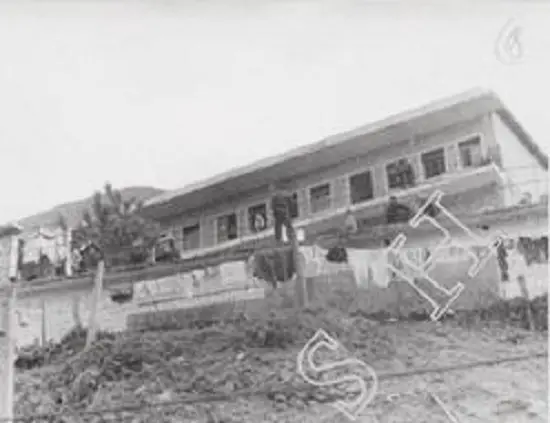
“May is quite beautiful! But those were special days, God was on our side! As rarely ever in the valley of Spaç, the sun shot warm rays, the birds lured you with their chirping and amorous pirouettes, colorful butterflies fluttered in the limpid air, while the scent of acacia flowers by the barrack above the abyss summoned swarms of bees buzzing without end. The greenery of the skeletal trees that peaked here and there on the barren slopes refreshed the sight, while across the horizon where the crests of Munella merged with those of Kalimash, the blueness resembled a celestial sea where proud eagles sailed.
The generous gifts and charms bestowed by nature could not be enjoyed by the eyes of the political prisoners, because they were eclipsed by the communist violence and slaughter that had plagued the suffering Albanian people. As the hours dragged on, events rapidly unfolded.
The resistance grew, but the anxiety about what would happen next increased! As the hours passed, the revolt was taking on the features of an uprising without central direction and highly chaotic. Everyone acted according to intuition, or undertook sporadic actions, in groups of three or four people. Among the most effective, I would single out the breaking of the cells where twelve isolated prisoners were serving their sentences.
On the upper terrace, the soldiers were shooting without warning; thus, the isolated prisoners were hostages to the command. It’s strange how they didn’t think to exploit the advantage their position gave them?! Perhaps the megalomaniacs didn’t consider that some lunatic might emerge, risking his life, and venture under a hail of bullets!
I don’t know whose idea it was first, even those who informed me weren’t sure! I am convinced that the older convicts evoked their experience and analogous cases, although it resembled none, and gave the orientation: “The detainees in the dungeons must be saved immediately!” A spark was all that was needed for “Floriri” (The Gold) of Korça, Ulsi Pashollari, who undertook the final act and saved the lives of twelve co-sufferers!
He equipped himself with a pair of pliers and a crowbar and, around nine o’clock, he cut the barbed wires, right under the guard post, where the upper barrack pressed against the dungeons, slid down to the doors, and tore off the locks with the crowbar. The detainees split in two; six rushed into the territory from the dirt steps, through the hole that Ulsi opened. When the soldier spotted them, he sounded the alarm: “Stop or I’ll shoot,” but he lost his head and fired wildly; the steep position saved the co-sufferers from annihilation.
The others thought it was a game and started shooting for sport, to instill panic in our ranks. This successful daring marked the second victory for us and the next failure for the military. After the heroic act of little Ulsi, with a lion’s heart, who deserves a monument right in the place where the isolation cells stood, spontaneous orators took turns on the shower terrace, while the assembly cheered them and chanted political slogans. Little by little, the revolt was taking the form of an uprising.
Amidst these developments, we were notified to come out to the surface. The unexpected break meant that something special had happened. But what exactly, even the most successful soothsayer could not imagine.
“What could have happened, Mexhit?” I asked my colleague, as we were dragging the empty wagon behind us.
“Allah knows!” he replied, and added: “God willing, there are no victims!” Meanwhile, Feimi, who was walking behind us, intervened:
“Undoubtedly, something terrible must have happened, since they are sending us back before the end of the shift!”
“Are things so badly tangled up?” I worried.
“You know what, brother (byrazer), shut up and don’t get involved, you only have two months left,” Feimi jumped the rails and entered a side-path to hide the [explosive] baromines.
“If they let me!” I said doubtfully.
“Listen to Feimi, doctor! Look after your own troubles, leave us alone, we who have a whole wagon-load of prison time left!” Mexhiti chimed in, rotated the wagon on the last turntable, and we exited outside.
Darkness. The gorge of Gurth-Spaç was black, as the stream was illuminated by countless lights. “Kra-kra-kra-krak” the batteries thundered and tracer bullets shot at the stars in the firmament. “Kra-kra-kra-krak” they responded along the perimeter, up to the highest lookout.
“Either death, or freedom!” “Down with Communism!” “Long live Free Albania!” “We are not slaves, we are martyrs,” the spring breeze carried the echo of the frenetic cheers.
“Our friends have pulled off something big, may Allah help them!” Mexhiti joined his hands, as if praying in a mosque.
“Amen!” Feimi and I replied in unison.
“What will happen now?” I asked.
“You know what, brother, keep your eyes open and don’t get involved, you only have two months left,” Feimi repeated his previous advice.
“Listen to Feimi, doctor, look after your troubles,” Mexhiti echoed the same phrase.
The concern of my friends: “Brother, keep your eyes open… don’t get involved… you only have two months left!” followed me like an amulet since the morning, but I couldn’t avoid the environment where I spent five years, nor the people who nourished in me the contempt for the violence exerted upon us, injected in me the sense of freedom and hope for the future of Albania, just as they nurtured the dose of hatred for Communism and the masquerades (shams) that stemmed from it.
Now that the crucial moment arrived to display these feelings, they advised me: “Brother, keep your eyes open… don’t get involved… you only have two months left,” but I belonged to the entire Spaç community, from every perspective, I was part of the anti-communists, who made no moral or political compromise with evil! Detaching me in these dramatic moments would be a curse that would follow me even in the aftermath! The whole brigade was waiting for the escorting policeman at the tools depot, but he was nowhere to be seen.
“Did they gather us outside the tunnels to eliminate us in the dark? Or did some fool bring the order to stop work before the official time, and now we had to pay for his blunder?”
These unanswered dilemmas worried all of us. We looked intently at Rroku, the prisoner foreman, but he remained silent with his head bowed.
“Rrok, who brought the order to leave the tunnel,?” Myslim Iljazi from Kolonja dared to ask.
“How should I know, they just told me so?” Rroku replied, his eyes elsewhere.
“Who told you, man?”
“I don’t know!”
“While we were racking our brains to find the bearer of the good news, from the depths of the valley came the echo of slogans unheard of in Socialist Albania: ‘Either death, or freedom!’ ‘Down with Communism!’ ‘Long live Free Albania, we are not enemies, but we are martyrs,’ etc., accompanied by cheers that pierced the Gurth-Spaç valley and rose towards the heights of Munella and down towards the lowlands of Fani. My colleagues struggled to hide their emotions, but their faces shone with a light I couldn’t explain.
The slogans ‘either death, or freedom!’ ‘Down with Communism!’ ‘Long live Free Albania!’ ‘We are not enemies, but we are martyrs!’ etc., made my heart pound, but an endless joy overcame me when the mouth of the lower tunnel thundered: ‘Down with Communism!’ ‘Long live Free Albania!’ – the brave Mirditor, Ndrec Çoku, answered the camp’s echo. ‘Either death, or freedom!’ – Doctor Astrit returned whose voice I would recognize among a thousand others.
Quite a long time passed until Jak ‘the Gentleman’ and Mark ‘the Mustachioed’ appeared, hatless and scared to death, although they were known for their correctness in their dealings with political prisoners.
Meanwhile, the calls: ‘Either death, or freedom!’ ‘Down with Communism!’ ‘Long live Free Albania!’ ‘We are not enemies, but we are martyrs!’ etc., would accompany us right up to the mud steps. At the connecting gate, another surprise awaited us: no one checked us; they just counted us and headed uphill. In the camp, we were greeted with patriotic songs and enthusiastic cheers, while orators lectured on the improvised podium on the shower terrace.
I held my breath and went straight to the room, where I found Tomor surrounded by dozens of comrades. ‘Did they release you, friend?’
‘Yes,’ he embraced me.
We exchanged greetings, and I waited for the majority to leave, took off my boots, and settled on the bed.
‘Were all of them released from the cells?’
‘Yes!’ he replied laconically and continued his conversation with the others.
‘When was this?’
‘About half an hour ago!’
I thought the command had taken this step as a sign of compromise, but the fragment that followed did not align with any guess, quite the opposite.
‘Well, thank goodness, they must have reflected somewhat!’ I wished. ‘Hey, are you mistaken?’ Tomori looked surprised.
‘Then who released them?’
‘Ulsi Pashollari!’
‘What are you saying!? Where did Ulsi get the keys?’ I wondered.
‘He tore off the locks with a crowbar!’
‘What did you say, how?’
‘Just like that!’
‘And they didn’t shoot you!?’
‘They shot at us fiercely, but it wasn’t meant for us to die, God protected us!’ He looked at me with bloodshot eyes.
Meanwhile, Tomor Balliu arrived from the private kitchen, with a small pot of stew, and set it down on my bed, on a plywood tray, and invited us:
‘Come and eat, leave the talking for later!’ When no one paid attention, he added:
‘Come on, you’ve turned into a spectacle, you poor guy! God only knows how much longer you can resist!’ he turned to Tomori. He was truly haggard, his shirt hanging on him like crumpled paper.
‘As God has written! The hail of bullets cut my appetite, I feel dead now!’
‘Forget it and return to normalcy!’ I moralized.
‘Easy to say, but I will confess the sting of this evening to my grave!’
As he spoke, he was seized by a cough. I handed him the canteen; he drank two gulps and turned to me:
‘Did you fill the containers?’
‘No, I just came from work!’
‘Hurry up, because by the time you remember, they will have cut off the water supply on schedule!’
‘Do you think so?’ I pretended to be surprised.
‘You haven’t known the communists! They are worse than the Anatolians who cut off the water for those inside the castle. But they were allowed every wickedness, while our butchers don’t care about their own offspring, let alone the enemies of Marxism. We will wake up without water, without bread, and surrounded by Special Forces soldiers.’
Tomori had been right; dawn found us under tenfold encirclement, while brown rust flowed from the holes of the water pipe!
‘Why do you speak with such certainty? Perhaps by tomorrow they will come to their senses and undertake some minimal concession, to improve relations to some extent.’ I deliberately pushed him to hear jewels of thought, although I knew that my words didn’t align with his thoughts. But it seems that evening, he wasn’t in the mood for jokes because he shut me down:
‘Leave the imagination, little brother, and go for water! But before you leave, listen to a friendly piece of advice: don’t get involved in these matters, you only have two months left!’
After the advice-reproach, I grabbed the fir-wood bucket, which Ram Tahiri from Rugova had given me, slung two or three canteens around my neck, and ran. At the top of the square, Luan Koka and Esat Kala were discussing something in low voices.
‘Good evening, friends!’ I greeted them.
‘Well, where are you headed with all those containers?’ Esat teased, seeing me with the canteens around my neck.
‘I’m going for water, they might cut it off,’ I replied.
‘Fill the containers and don’t loiter around the camp!’ Luan patted me on the shoulder and added: ‘Keep your eyes open, brother, you never know how this will end, don’t get involved, you only have two months left.’
I filled the containers and, on the way back, I passed by the private kitchen. At the foot of the Kosovrast infirmary, I almost burst (got into a huge fight) with some shadows who were dragging something. I stopped a short distance away because I stayed away from fights, since I hoped to be released in two months and a little, and I listened to hear what was going on.
‘Your time has come to pay for your spying down to the last detail, you scoundrel!’
A few muffled groans followed the threat, and the group headed down towards Bozhos’ laundry. In the light near the steep slope, I recognized some men from Tropoja and Puka, who were dragging one of their compatriots roughly.
‘Now we’re throwing him onto the wires, so he can pay for his treason with his head!’ the first voice rose.
Another shadow rushed desperately along the wall of the technical office, shouting: ‘Stop, man!’ – he passed in front of my nose and cut them off: ‘What is this disgrace, men?’ – he pulled the man from their hands and continued: ‘Kill me first!’ – It was Muharrem Isufi, a fellow regional of theirs.
‘The spy deserves punishment, friend!’ one of the lynchers snapped.
‘He has a feud with me and Bajram, he did us wrong! But now is the time to leave personal issues behind, because that is what the enemies aim for; they want to turn the revolt into an ordinary squabble.’
Muharrem’s gesture stunned the bystanders, including myself, who was watching from a distance.
‘What does this mean?’ one of the punishers asked in surprise.
‘It means that we should not waste our efforts!’ he helped the accused get up and hugged him. ‘Now dedicate yourself to the revolt and go back to your work!’
But what was this rage that drove the patriots and Muharrem Isufi to act this way, and where did it originate? The story began two weeks ago when two men from Tropoja and one from Puka – Muharrem Isufi, the spy (whose name I won’t mention out of ethics, although co-sufferers of the time know who he is) and Bajram Furriku – had devised an escape plan that failed thanks to the informer.
At that time, no one suspected him, even after they were locked up in the dungeons, they considered him a gentleman. But when they laid him down in the infirmary, under the pretext that he was sick – a unique case in the thirty-year history of political prisons, where they only took you out of the cell dead – that’s when they figured out who betrayed his friends, and after that, the hatred and contempt of his co-sufferers followed him.”
“When Ulsi Pashollari tore open the cells, among the twelve rescued were Muharrem Isufi and Bajram Furriku. The comrades exchanged greetings with them and stormed the infirmary, without the knowledge of the victims, seized the spy from the bed where he was hiding, and began the punitive ‘dance’ I described above. But at the final moment, someone notified Muharrem, who pulled the spy from their hands and saved his life, simultaneously cutting off the chain of revenge that could have extended to his relatives, as well as the reputation of the revolt.
Referring to this case, the Inter-Regional Committee issued a circular that severely condemned events of this nature. From that moment on, the spies emerged from the holes where they had been hiding and became part of the revolt; in fact, some became so active that they were punished a second time, and after that, ended up in Burrel Prison.
Arif Neza, with whom I had worked for about six months in the third zone, broke away from the lynching group, put his hand on my shoulder and advised me:
‘Stay away from trouble, my boy Çim, you have only a little time left! This matter won’t end without a sacrifice!’ I thanked him for his concern, and we parted ways, only to meet again eighteen years later.
I headed up the stairs towards Met Karakashi’s clinic (I was going to treat an infected molar, because no one knew what course the next day might take), but near Qazim Vula’s smithy, someone yelled:
‘What do you want with that crowbar at the shop door, you son of a bitch?’ I recognized the voice of Shuaip Seiti, who rose threateningly: ‘Speak, you rotten thief or I’ll smash your head!’
In front of the shop, I saw Shuaip, Demir Pojani, Jonus Norja, Marash Gjoka, and Bedri Çoku, who had pinned Ferit Lopa and an unknown person to the ground, while Qazim Vula, with Sadri Ahmeti, watched the scene from the threshold of the smithy. I approached and asked what was happening.
‘Ferit Lopa and a friend of his tried to tear open the shop, but the defense group caught them, and now they are holding trial,’ Sadriu explained to me.
‘We will protect the shop with our lives, especially now that the camp is in our hands!’ Bedriu continued his preaching. ‘Because we are not ordinary criminals, to give them a chance to accuse us of being thieves, so it is our primary duty to guard it more than our personal belongings.’
‘But this is communist property, man! They took our lives, and you feel sorry for it!’ Feriti protested.
‘Let’s end this discussion. Who agrees with my opinion that Ferit and his friend should guard the shop for as long as we are in this situation?’ Bedriu’s proposal was unanimously approved, even by Sadriu, me, and Qazimi, who became accidental participants in the mock trial.
‘The decision takes executive force from this moment; whoever violates it will be punished maximally by the Leadership of the Regional Committee. Did you understand, Mr. Ferit?’ Bedriu declared the sentence.
‘By God, if the shop is touched, I will smash his head like a baby bird!’ Shuaip threatened again. I was impressed by this unusual trial, especially the news of the establishment of the Regional Committee, which I heard for the second time in a few minutes; it meant that the Revolt was turning into an organized Uprising.
As soon as the procedure concluded, Shuaip approached me and advised me:
‘Don’t expose yourself, brother, leave these matters to us, you only have two months left!’
The concern of my friends: “Brother, keep your eyes open… don’t get involved… you only have two months left,” hung on me like an amulet from morning until the late hours, and it would not leave me even in the days to come.
The wish of my co-sufferers to see me outside the prison doors was not a matter of will and did not depend on them, but on the authorities and the consequences this slaughter would produce. Before taking five steps, I came face-to-face with Aleko Zoto and Zef Jushi.
‘Look, look, have the poets come out for a stroll?’ I teased them intentionally.
‘I’m discussing the fate of the war with Ares! Come inside, dear friend, and cover your head, you only have two months of prison left…’ Zefi almost poked his fingers into my eyes.
‘Oh God, are you starting that tune too?’ I interrupted him involuntarily.
‘Listen, man, these people (the communists) will cause hell…’ Lekua repeated the phrase I had heard several times that day.
‘I’m leaving. Good night!’ I cut him short and took the stairs, but the poet’s voice followed me from behind: ‘As far as I know the communists, they will cause hell, my friend…’!
Leko’s expression was identical to the doctor’s, but Zef’s behavior seemed unusual to me, the hallucinating poet who was delighted by Orpheus’s flute. His sentence: “Dear friend, come inside and cover your head, you only have two months of prison left…, etc.” convinced me that something special was knocking at the door of the Gurth-Spaç valley. The fact that the one who sailed on the clouds and crawled alongside us, the wretched mortals, had descended from Pegasus, showed the terrifying dimensions of the tragedy that was unfolding there! Memorie.al