Part One
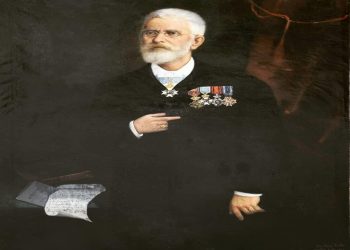
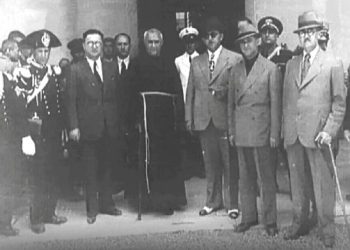
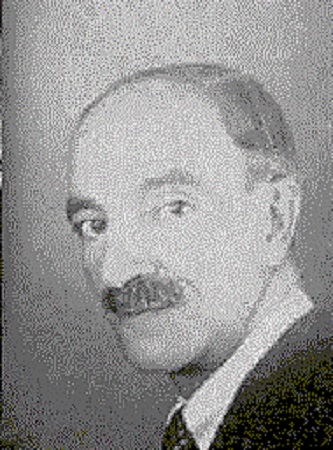
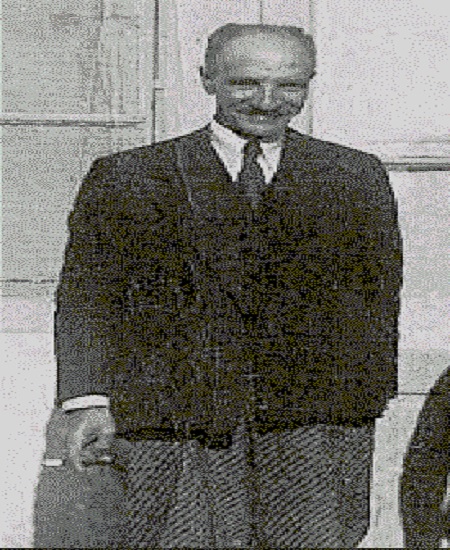
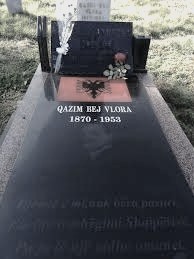
Memorie.al / The second son of Ismail Qemali – the Elder of Vlore and Albania – who served as his personal secretary and Chief of Staff, lived in Struga from 1936 until his death in late December 1953. Living witnesses speak with great respect about this figure, this “forgotten” personality in Struga! His adopted children show particular reverence as well. The house where Qazim Bey Qemal Vlora lived and passed away remains functional to this day, in the same condition as when he lived there, but without any proper inscription or sign. Even his grave remained unmarked until November 27, 1997 – as it had been unknown and forgotten by the people of Struga – when it was symbolically marked thanks to the understanding of the Association of Albanian Historians, Struga Branch.
Regarding Ismail Qemali’s documentation from his political and diplomatic activities for the creation of the Albanian state, there is no trace. What had Qazim Bey Qemali told Enver Hoxha in his cabinet during their meeting?!
Struga, February 2007
We have just passed the days of November, including November 28, Flag Day and the Independence Day of Albania, as well as the independence of all Albanians worldwide. Usually, the commemoration of these important dates in national history seems hollow and incomplete if, at the very least, the names of those who gave a special contribution are not mentioned – those who make us proud of what we have achieved today. First and foremost, the name of Ismail Qemal Bey Vlora, the first head of the independent Albanian state, must be mentioned.
However, it is evident and undeniable that Ismail Qemali had many close and distant collaborators and associates to carry out his activities for the declaration of Albania’s Independence. One of these collaborators – perhaps the closest one – was his son, Qazim Bey Qemali, one of Ismail Qemali’s six sons.
HOW WAS THIS PERSONALITY – QAZIM BEY QEMALI – “DISCOVERED”?
In the beginning was the word. It was December 3, 1992, when I first heard the name Qazim Bey Qemal Vlora, a distinguished personality of Albanian history and historiography, who was the son of Ismail Qemali and his close associate. I attempted to shed light on this major figure as much as my opportunities, abilities, and the prevailing circumstances allowed, considering I had moved to Struga from Presheva; I was a newcomer and was “a thorn in the side” of various segments of the Internal Affairs organs and other individuals. Nevertheless, I was not without support, as I had the Association of Albanian Historians (Struga branch), especially Prof. Dr. Nebi Dervishi, the Union of the Albanian Intelligentsia (Struga branch) led by Prof. Nexhat Mustafa and Dr. Shefqet Pollozhani, as well as many other individuals.
Chronology of “Discovering” the Grave and House of Qazim Bey Qemali
The words of the late Shaban Asllani-Tateshi, who at the time (December 3, 1992) was an 80-year-old man but sharp-minded and clear in his memories, encouraged me to pay special attention. He was the first to mention the name of Qazim Bey Qemali Vlora, evoking memories of him in a very concrete and vivid manner.
This happened when my mother-in-law, who was Shaban Tateshi’s sister, passed away on November 28, 1992. Traditionally in Struga, a seven-day religious ceremony was held, chanting parts of the Quran for the soul of the deceased. During one of these ceremonial nights, intellectuals and friends were gathered, and after the mandatory religious portion, common conversation began regarding the activities of Struga’s intellectuals.
At one point, Shaban Tateshi, with a measured intervention, changed the course of the conversation and became the initiator for uncovering the final years of Qazim Bey Qemali’s life and grave, reacting with these words: “Stay there, men, and don’t talk nonsense…! You had a son of Ismail Qemali here in Struga, and no one mentions him; you have even forgotten his grave, yet you talk about useless and worthless things!?” This piqued my curiosity, and after the week-long ceremony ended, I went to his house to inquire about the words he spoke that December night. Shaban Tateshi, without hesitation and with marked bitterness over the forgotten grave, began the narration of Qazim Bey Qemali, as far as he had known him…!
Among other things, Shaban Tateshi said: “He was a very honest, noble, and generous man, whom historians forgot, and along with them, the entire people; his name has been covered by the dust of oblivion. Even the researchers of the history of the National Renaissance have forgotten him.” From the conversation with Shaban Tateshi, I managed to “discover” many things regarding this personality. However, the final word had to be given by historians and researchers of the National Independence period to shed full light on this figure alongside other historical personalities.
According to Shaban Tateshi’s words, which were later fully verified and clarified, Qazim Bey Qemali, one of Ismail Qemali’s six sons, lived in Struga from 1936 until his death in the third decade of December 1953! He was one of the prominent figures in the creation of the Albanian state, but as Tateshi said, there was no sign in Struga that this personality had ever lived there!
Ismail Qemali’s son, Qazim Bey Qemal Vlora, was born in 1870, according to data confirmed by his family. After completing primary and secondary school in Istanbul, where he met many friends from various Albanian regions, he continued his studies at the Faculty of Civil Engineering and Architecture in Brussels, Belgium. He was fluent in French and mastered many other languages, including German, English, Turkish, Persian, etc.
Naturally, he knew Turkish because he lived and was educated in Turkey, while he learned Persian and Arabic in parallel, which would later assist him during his Law studies, which he pursued alongside Architecture. After graduating in Belgium, he joined his father in his political and diplomatic activities. Despite being specialized in construction and architecture from the University of Brussels, he put himself fully at the service of his father, Ismail Qemali, who was then in an advanced stage of his activity in creating the Albanian state and declaring Independence.
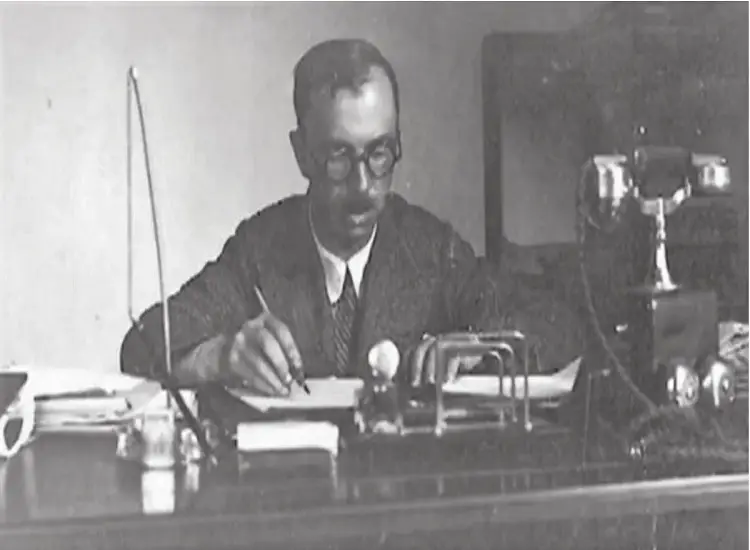
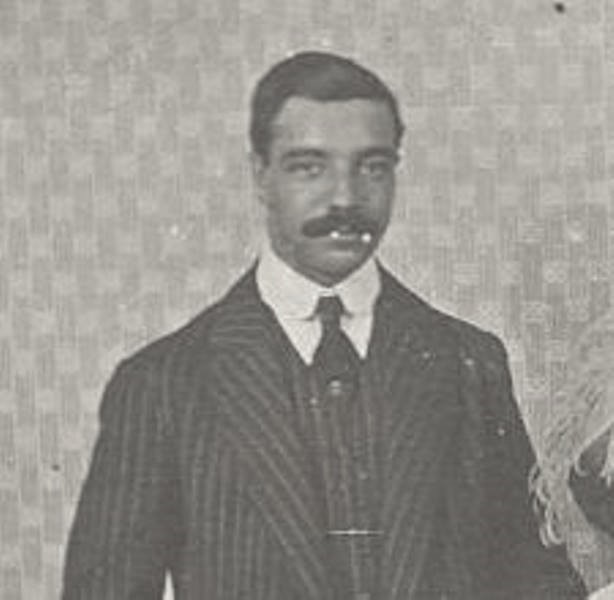
Qazim Bey Qemali was not just Ismail Qemali’s son; he was his personal secretary and, after the declaration of Independence on November 28, 1912, he was also Ismail Qemali’s Chief of Staff. There is much oral and written evidence of this. One piece of evidence is a telegram sent by Ismail Qemali from Vienna, Austria, addressed specifically to Qazim Bey Qemali in Vlora, stating: “I am coming with the very first steamer. Telegraph everywhere; have full confidence in the fate of the Fatherland, advising them for brotherly agreement, cooperation, the progress of state affairs, maintenance of public order, etc.” Ismail Qemali rarely went anywhere without Qazim Bey Vlora, but in the later stages, Qazim Bey coordinated the affairs in Vlora.
THE FATAL VISIT TO PERUGIA, ITALY
-Ismail Qemali was poisoned in Perugia. The Elder of Vlora was poisoned in a café (hotel) after drinking coffee; Ismail Qemali had cried out: “They poisoned me… they poisoned me…” and died shortly after on January 24, 1919. Qazim Bey Vlora enjoyed a pension granted by King Ahmet Zogu with the justification: “MERITORIOUS PERSON OF THE ALBANIAN NATION.” Qazim Bey Vlora never left his father’s side throughout his activity. He accompanied him to numerous meetings and frequent visits, such as the Conference of Nations in London, where they were joined by Luigj Gurakuqi and Isa Boletini.
However, their visit to Italy, specifically to the city of Perugia, was their last visit together. This was the fatal visit on the threshold of the journey to the Paris Peace Conference. The visit was tragic not only for Ismail Qemali but also for his son, Qazim Bey Qemali. In this city, they suffered poisoning; as a result, the 75-year-old Elder of Vlora was snatched by merciless death due to intoxication and hemorrhage on January 24, 1919. Qazim Bey Vlora was also struck by this intoxication and hemorrhage, which affected him for the rest of his life, as he suffered severe health damage but nevertheless survived. He suffered the consequences of this poisoning throughout his life, as living witnesses in Struga testify today.
The poisoning of Ismail Qemali in Perugia was best confirmed by the account of Fatushe Shehdula, who upon arriving in Italy, heard a servant (waiter or other hotel staff) tell some people: “The Elder of Vlora was poisoned in the café after drinking coffee, and Ismail Qemali himself had cried out ‘they poisoned me, they poisoned me’!” Shortly after, Ismail Qemali passed away, leaving his mission unfinished. After his father’s death, Qazim Bey Qemali was treated and recovered at the Durrës hospital for a long time due to the effects of the poisoning.
There he found some spiritual peace and recovered from the severe intoxication. After being discharged from the hospital in Durrës, he returned to Tirana, where he lived until his move to Struga, visiting the Durrës hospital periodically. According to oral testimonies, referring to the statements of Shaban Tateshi (though it may not be entirely accurate), Qazim Bey Vlora received a pension from King Ahmet Zogu with the justification: “MERITORIOUS PERSON OF THE ALBANIAN NATION.”
HOW DID QAZIM BEY QEMAL VLORA ARRIVE IN STRUGA?
Following the death of Ismail Qemali and the political developments in Albania and beyond during that period, Qazim Bey Qemali, at the age of 66, married Behije Sherif Masllafi (Ohri). Behije Sherif Masllafi-Ohri was a 29-year-old widow originally from Struga. Behije was the widow of Inajet Bey Ohri-Qoku and had four minor children: two sons, Edip and Dashamir, and two daughters, Edibe and Hyrmete. They made the decision to marry after the death of Inajet Bey Ohri, who at the time (1934-1935) was a high-ranking official of the Durrës prefecture. Inajet Bey Ohri died in 1935, leaving Behije a widow with four orphaned children.
The death of her husband, Inajet Bey Ohri, left Behije in an unenviable material situation. Her financial condition worsened, even though she had real estate in Struga inherited from her father. The marriage to Qazim Bey Qemali was the best and most fortunate solution for Behije, as they had known each other through previous friendships—Qazim Bey’s brother, Et’hem Bey Qemali, was married to Behije’s sister-in-law (the sister of Inajet Ohri). On the other hand, Qazim Bey provided financial security as he received a pension from King Zog and had no family of his own.
Furthermore, by marrying Behije, Qazim Bey Qemali ensured a better future for her children (whom he adopted). He also preserved and protected the honor and morality of an Albanian woman for the Inajet Ohri family name, ensuring she would not be trampled upon or gossiped about by immoral or irresponsible individuals. This speaks to the nobility and generosity of Qazim Bey Qemali regarding the respect for Albanian family morality.
Immediately after the marriage, Qazim Bey Qemali enrolled Behije’s children in schools, as he was an unyielding supporter of education. For a time, they lived in Tirana, where he had his own house. However, Behije had two houses and land in Struga inherited from her father, including an orchard with an area of nearly ten thousand square meters (exactly 9,980 square meters).
Behije was interested in not losing this property. Thus, from time to time, they came to Struga to care for these assets as much as they could. Qazim Bey Qemali’s arrival in Struga brought many pleasant surprises for both, especially for the Bey. In Struga, he found spiritual and family peace, but he also found old friends and colleagues from his schooling days in Istanbul. / Memorie.al