




By DASHNOR KALOÇI
Part One
Memorie.al / In mid-October 1982, immediately after the arrest of the former Minister of Internal Affairs, Kadri Hazbiu (at the time Minister of People’s Defence), and his deputy, Feçor Shehu (at the time Minister of Internal Affairs, arrested on March 22, 1982), upon the directive of Enver Hoxha and the order of Hekuran Isai, a Special Operative Group was created, headed by the Deputy Minister of Internal Affairs and concurrently the Director of State Security (Sigurimi i Shtetit), Zylyftar Ramizi, whose assistants were Enver Zeneli and Hasan Ulqinaku. The main task of this group was: “The detection and investigation of the activity of the hostile group,” led by Kadri Hazbiu, which also included Feçor Shehu, Llambi Ziçishti, Nesti Nase, Mihallaq Ziçishti, Llambi Peçini, Fiqret Shehu, etc., as well as the connections they had with the former Prime Minister, Mehmet Shehu.
In addition to other duties, such as reviewing, studying, and analyzing a large number of files and archival documents belonging to a long period of time (1945-1982), the “Special Operative Group” also called upon and asked several former high officials of the AWP (Albanian Party of Labour) leadership and former high-level executives of the Ministry of Internal Affairs, State Security officers, etc., to provide in writing what they knew or suspected regarding the “hostile activity” of Kadri Hazbiu, Feçor Shehu, or other individuals with whom they had worked or not, during the period they had served near that ministry, or in the Internal Branches in the districts, in the Political Intelligence sector, near our diplomatic representations accredited in various countries around the world, etc.
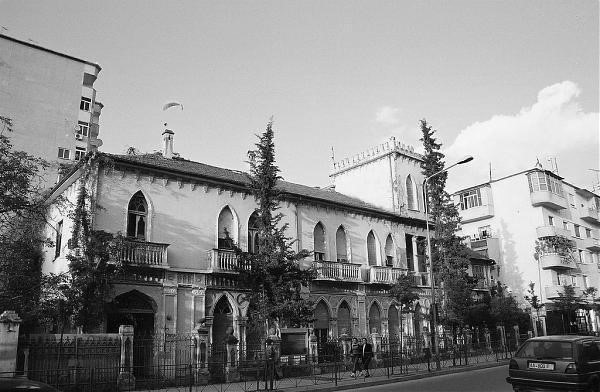
Just as he had done since 1945 with almost all the “hostile groups,” where many of his close associates, former high party and state officials, such as Koçi Xoxe, Nako Spiro, Kristo Themelko, Pandi Kristo, Nesti Kerenxhi, Tuk Jakova, Dali Ndreu, Liri Gega, Panajot Plaku, Koço Tashko, Beqir Balluku, Petrit Dume, Hito Çako, Koço Theodhosi, Abdyl Këllezi, Fiqret and Mehmet Shehu, etc., he had accused of being “UDB agents,” Enver Hoxha would not spare the so-called “hostile group of Kadri Hazbiu” that accusation either. Based on this, the Special Operative Group, led by the Director of State Security, Zylyftar Ramizi, which was established immediately after the arrest of Kadri Hazbiu in October 1982, immediately began work on studying the archival files concerning the Yugoslav embassy in Tirana, reviewing the documents belonging to that “object” dating back to 1945.
For the selection of the documents in question and the preparation of a detailed report-information that would be made available to the Special Operative Group and then to the special investigative group led by Pelivan Luçi and Thoma Tutulani, which would conduct the investigative process against the “hostile group of Kadri Hazbiu and Feçor Shehu,” the State Security investigator, Shkëlzen Bajraktari, was assigned (part of that investigative group). Due to his origin from the district of Tropojë, it was presumed that he would better know the “UDB agents” and the files against them. In this context, this archival document is included, which was extracted from the Archive of the Ministry of Internal Affairs (now part of the fund of the Authority for Information on Former State Security Documents), and is being published in full in this article along with the corresponding facsimiles, by Memorie.al.
THE SECRET DOCUMENT DRAFTED BY THE STATE SECURITY INVESTIGATOR, SHKËLZEN BAJRAKTARI, ON THE HOSTILE ACTIVITY OF THE YUGOSLAV EMBASSY IN ALBANIA IN THE PERIOD 1945-1983, THEIR “AGENCY,” AND THE SURVEILLANCE OF ITS DIPLOMATS
Secret
Single copy
Tirana, 7.2.1983
INFORMATION
Based on the investigator Shkëlzen Bajraktari, from February 4, 1983, until February 5, 1983, the file of the Yugoslav embassy object, belonging to the II-nd Branch of the State Security Directorate, was studied. From the study of this file, the following main points attract attention:
I – In the information: “Some data and information on the hostile activity of the Yugoslav embassy against our country in the period 1945-1980.” (File 1. Pg. 29), dated 14.7.1981, it is stated, among other things: “Major-General Beqir Balluku is preparing to cross into Yugoslavia with a battalion of soldiers…”!
-On page 30 of the “History of the hostile activity of the Yugoslav Legation (Intelligence) against our country, from 1924-1963,” it is stated, among other things: “S….K….and M….M….both Yugoslav legation intelligence officers, both in the function of the II-nd secretary of the legation, the first one arrived in March 1954, and the second arrived in 1955…!
They have carried out open hostile agitation against the Party and our state, not only with anti-Party elements but also with citizens in important functions in the Party and the state, who have countered their views. Thus, for example, K….has spoken to Colonel Stavri Xhara, an operative of the MIA (Ministry of Internal Affairs), Shefki Haxhiu, a Captain of the MIA, etc. (D.1)
-On page 36 of the “History of the activity of the representatives of the Yugoslav Legation in their connections in the Shkodër District,” it is stated, among other things: “…the Yugoslav Intelligence cadre operating precisely in Albania and in the Shkodër district is as follows:
Ranković directs all the activity of Yugoslav Intelligence through a Major-General, whose name is unknown, who mainly deals with Political and Strategic Intelligence.
In Pristina, Lieutenant Colonel Čedo Mihović, who directs all activity against the People’s Republic of Albania, through centers and sub-centers. The Pristina Center directs the first center based in Podgorica, which has these officers as operatives: Lt. Colonel, Ziko Šarkić, chief of the first center; Major Javo Cavor, deputy; Captain Vido Thomanović, Đoko Katković, Lieutenants Dragić and Pero Byrazerović, (Operative Worker), in the direction of Shkodër.
The Podgorica Center has these officers:
- Lieutenant Demo Popić – in charge.
- Radomir Šeradanović – deals with investigations.
- Marković – secretary.
- Milutin – storekeeper.
The Ulqin Sub-center:
- Captain Vido Jovanović – chief.
- Captain, Zmajo – Operative Worker.
- Lieutenant Siloboja – Operative Worker.
- Lieutenant Duškoja – Operative Worker, – Lezhë, Shkodër.
The Tivar Sub-center:
- Captain Dušan Praščević, – chief.
- Lieutenant Kristi – Operative Worker.
- Sub-Lieutenant Petro Jovanović – Operative Worker in Vrakë, for the Orthodox.
The Andrejevica – Guxi Sub-center:
- Milto Drabonjak – chief.
- Aco – Operative Worker operates in the direction of Dukagjin, Koplok, and Selcë.
–Arso Milotović, on 6/8.1956, met the B.p. ‘Malësori’ in Ndroq and asked him who had more popularity, Enver Hoxha, or Mehmet Shehu, where Tuk Jakova was, he is very intelligent, where Koçi’s family was, and if he had found out whether the children had grown up or not? (Dossier 1).
The Yugoslav Legation in Tirana in 1948 (9.9.1948):
- Dušan Diminić – minister.
- Drago Komšmjerl – counselor.
- Voislav Kostić – secretary.
- Janko Hambiček – deputy press attaché.
Officials: Mitar Damjanović, Pashko Miško, Mirko Kadić, Mara Mlaviq, Seka Odrijlin, Sado Bozidarović, Said Hasanović, Hilmi Thaçi, Petar Bodrić, (courier) Gadro Laković, – guard, Janko Urbančić, – driver, Ivanka Ribić – servant.
Janko Hambiček has connections with Naim Pilku, (today active with the “Dinamo” women’s volleyball team).
These last few days in Shkodër, some packages with brochures printed in Belgrade have been intercepted, speaking against our government. The following addresses were inscribed on these packages:
- Comrade Mark Çollaku – “Marlekaj” Street – Shkodër
- Comrade Ndoc Drita – “Paqja” Street – Shkodër
- Comrade Kol Prekalori – “Koçej” Street – Shkodër
- Colonel Petrit Dume, V-th Division of Gjirokastër
- II-nd Captain Elmaz Muharremi, Chief of the 18th Regiment Posit.
- Muhamet Gavoçi, Chairman of the Democratic Front – Shkodër
-Savo on 16.10.1948, went to the house of Olimbi Thimi and instructed her to “find out if the employees also work during the night hours, and first and foremost instructs her to gain affinity with Angji Faber and Petrit Arbana, who are Security officers, and indirectly to ask and be informed about the current situation of Koçi Xoxe and Pandi Kristo.” (pg. 16)
-In the report of the II-nd Branch, dated 3.5.1954, “On the movements of the personnel of the Yugoslav Legation,” (pg. 40), it is stated: “Rexhep Xhiha (first secretary), met with Todi Lubonja and Koço Tashko (report made by the Chairman of the II-nd Branch, Rexhep Kolli).”
-In the plan of agent-operative measures, dated 17.6.1954, for the processing of the personnel of the Yugoslav Legation in Tirana, (pg. 42), it is stated: “Rexhep Xhiha is from Kosovo, born in 1923. From 1930-1943, he was in Albania, where he graduated from the Technical School.
During the time he lived in our country, he was able to establish a wide social circle, such as Xhevit Hatibi, Shyqëri Alimerko, Llazi Lubonja, Lefter Kasneci, Hysni Shehu, Zija Ferra, etc.,” and further in point “ç,” it is stated:
“Rexhep Xhiha, although he has a wide social and friendly circle, for our operative interest, there was one positive side – the fact that he is known to some of our comrades with positions (who are these?) Who can influence the breakdown of his worldview, and in preparing the conditions for his recruitment!
II – In the measures foreseen for his breakdown and demoralization, we anticipate using in his direction, Hysni Shehu from Luma, Xhavit Hatibi, (see above) and if this action yields materials that show the subject’s hesitation, we can proceed with his recruitment, possibly by Lt. Colonel Ilmi Seiti, who knows the subject well since 1942.
The summoning and instruction of these comrades will be done by Major-General Kadri Hazbiu, and the subsequent actions will be carried out by Lt. Colonel Rexhep Kolli. (pg. 45)
III. In the measures for processing with the agency, in point “b,” it is stated: “B.p., ‘Topi,’ is the first cousin of….., who has met with him twice. He denounced the meeting with the subject, but we are not sure of his sincerity. This doubt is strengthened because he refused to give written information and does not respect meetings.
This plan proposed by Rexhep Kolli and approved by Kadri Hazbiu. Below there is a handwritten note by Rexhep Kolli, where he says: “This plan was not approved by the Minister (Mehmet Shehu). Another plan was drafted.”
-Page 65, in the report “On the persons implicated in the Liri Gega process,” it is stated, among other things: “As D…F.. (Q…) told me, he learned from his wife, or from A.P., about the conversations that Mehmet Shehu had with Manush Myftiu, at the Party house.
When they talked, M….’s wife was also there, and she talked about it to her brother, A.P., or to Foni Qirko’s wife. She told Foni, he told Daliu, and Daliu told me.” (N. Haznedari, 14.8.1956)
-Persa Frashëri is Yugoslav, married to Veli Frashëri, lives near us. Knowing that she came to the Yugoslav legation for permission to go to Yugoslavia, I gave her a letter the day we left for Slovë, to take to Cvetozar Koçiç, addressed from me to Dušan Mugoša. (ibid)
-In the report dated 7.12.1956, “On the hostile activity of some officials of the Yugoslav Legation in Tirana and some UDB organs across the border, against our Party and People’s Power, during 1956 (Pg. 70), it is stated, among other things: “On 21.4.1956, the Yugoslav commission for border issues hosted a dinner for the Albanian side at Hotel ‘Dajti’.”
At a table with the secretary of our commission, Shefki Haxhiu, was the official of the Yugoslav embassy, Radivoje Genčić, who, among other things, asked the lieutenant what responsibility Major-General Hito Çako had. When the lieutenant told him that he was the Commander of the Tirana Garrison, Radivoje replied that he was the Commander of the Air Defence troops.
Then he asks: “whether Major-General Gjin Marku is the Deputy Minister of Internal Affairs, where Major-General T. Kolaneci is now, etc.” On 7.11.1956, Cvetko Kočić met Stavri Xhara at Hotel “Dajti,” to whom he said: “why don’t you meet us and stay so far away, we don’t know what this attitude of yours consists of”?! (pg. 76).
-From the Zija Dibra process, (pg. 89)
In July 1956, Ziaj met with Rexhep and, through him, with Arso Milatović, who told him: “In the visit I made to Prime Minister Mehmet Shehu, I told him that you should look at the issue because now everything is clear, such as the Belgrade Declaration, Moscow’s and the XXth Congress, that they have clarified the issue and that Yugoslavia has been neither fascist nor imperialist,” etc. (Signed by Mihallaq Ziçishti). Memorie.al