
By Albert Vataj
Part One
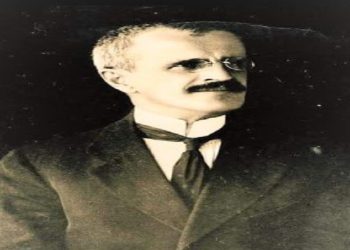
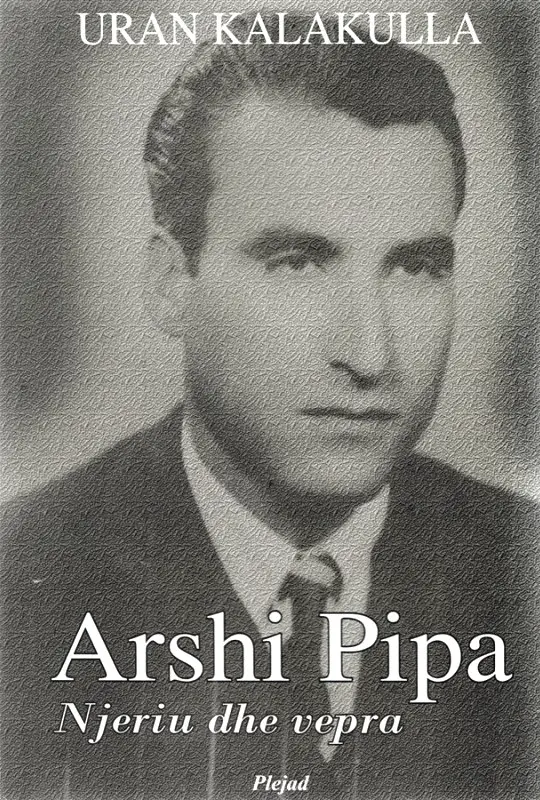
Memorie.al / It are an understatement to say that Arshi Pipa remains one of the most authentic figures of democratic consciousness and action. He was much, much more than that. He was and remained a courageous voice of values. It would likely be impossible to find a more perfect personification of a dissident in both life and work. Seeking him out and wishing to pull him from the trials, the swallowing whirlpools, and the wrath of the communist dictatorship and beyond – here he is, universally accepted without hesitation: Arshi Pipa. He worked with heart and soul, fought tooth and nail to bear witness to that perfect universe of the victor, the disciple of knowledge and learning, the crest of clarion calls and proclamation, communion, and creation. Everything in him and with him could have been conceived and vitalized like an ancient Antaeus, in every pulse, every thought, and every expressive uniqueness.
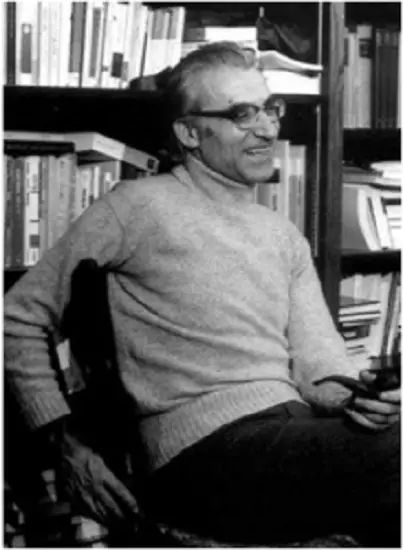
Arshi Pipa (Shkodër, July 28, 1920 – Washington, July 20, 1997) was everything, did everything, and knew how to achieve it all; he strove and succeeded in being a clarion poet and a sweet lyricist; a skilled linguist and an indomitable gladiator of the Gheg arenas; a critic, perhaps with few peers, in the depth and variety of his treatments; a translator and an equally influential pedagogue in our national heritage. His entire life was filled with effort, suffering, and challenges, yet from it all, he managed to produce his best work, his most precious values – the eternal testimony of a triumphant spirit.
From His Life
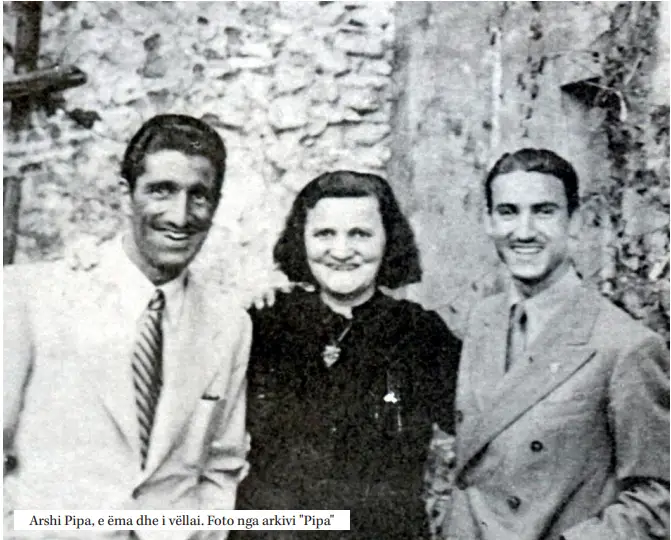
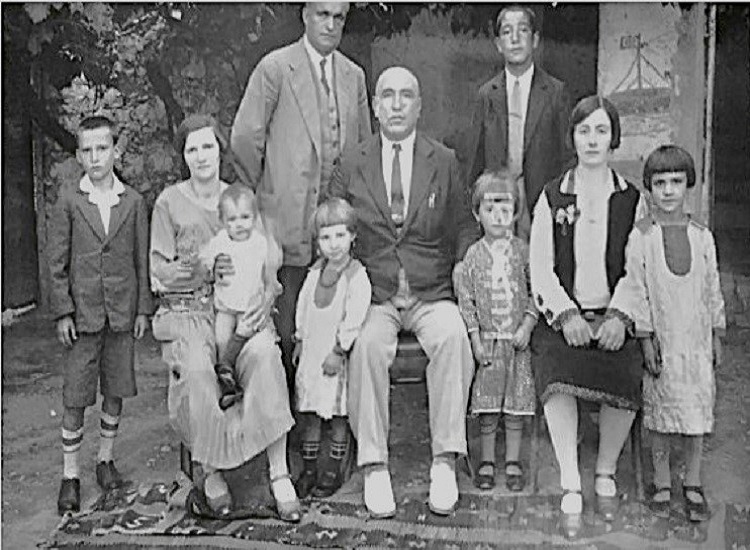
He was born in Shkodër, the son of Mustafa Nuri and Hatixhe Lloshi. Arshiu was of Libohovite descent from his father’s side and Shkodran (with Dibran origins) from his mother’s. His father was a lawyer educated in Istanbul; during World War I, he served as a jurist for the Directorate of Justice in Shkodër – the first Albanian administration created by the Austro-Hungarians to function in the Albanian language. Later, in the years 1923–1926, he would be appointed a member of the Court of Cassation. His mother, Hatixhe, was an example of virtue and labor for her children, stoic amidst the countless misfortunes that befell her. He had a brother from his father’s side, Muzafer, and four sisters from the same mother: Nedret, Fehimja, Bedrija, and Bedi.
He received his early education at the Saverian College and later at the State Gymnasium of Shkodër, graduating from the classical profile in 1938. Under his father’s care to form him in the family’s religious tradition, he also attended lessons at the madrasa in the afternoons. In 1936, with the poem “In the Field of War,” he won third prize in a poetry competition announced by the periodical “Cirka.” He later studied Literature and Philosophy at the University of Florence, where he graduated in 1942 with the dissertation “Morality and Religion in Bergson.”
He returned to Albania and from 1941 to 1946 taught in high schools in Tirana and Durrës. When the League of Writers and Artists began publishing its organ “Bota e Re” (The New World), Pipa and Kuteli were the only non-communists on the governing council. He participated in the First Congress of the League in October 1945, presided over by Skënder Luarasi. Later, he was asked to write something for the anniversary of Migjeni’s death, which was disliked by the party officials. At a literary meeting at the House of Culture in Tirana, he read Goethe’s “Song of the Flea,” thereby poking fun at Shemsi Totozani, who became the reason Pipa was transferred to work in Durrës.
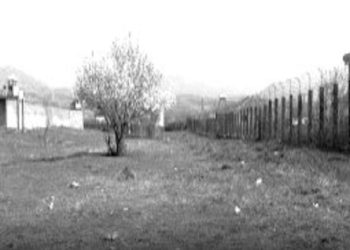
There, he read another poem titled “The Bitch” (Bushtra), and after another poetry evening in Tirana – where he sat next to Nako Spiru, whom he did not recognize – he was arrested on April 27, 1946, and sentenced to two years of imprisonment. He was re-sentenced – and while receiving the sentence, he learned of his brother’s death – on December 20, 1947, to 20 years of imprisonment as a co-founder of a social-democratic group along with P. Kaçinari, H. Ballhysa, and P. Gjeçi. He suffered in prisons and extermination camps (Durrës, July 1948; Vloçisht, November 1948; Gjirokastër, Korçë, Tirana, Burrel, etc.), where, besides forced labor, he became a guarantor of the teaching of literature, philosophy, and languages during his sentence, where he wrote the poetry book “The Prison Book” (Libri i Burgut). His family was displaced several times until November 1949, when, along with 20 other persecuted families, they were moved to some empty houses at the beach. During the journey, his father, who was paralyzed, passed away.
He was released on April 26, 1956, and on a late summer night in 1957, he escaped with his sister, Fehimja. He settled in Sarajevo until 1959. During that period, he translated selections of Latin lyrical poetry into Albanian (250 pages, including translations, chapters on metrics, and notes). He immigrated to the United States in 1958. Initially, he worked as a cashier in a New York hotel.
His first academic appointment was at Philander Smith College, Little Rock, Arkansas, where he lectured on philosophy (1960). During the following academic year, having been noticed for his profound knowledge of Italian, he headed the Italian Department at the City University of Georgia, in the “School of Languages and Linguistics,” while simultaneously teaching philosophy at the “College of Liberal Arts” (summers of ’61 and ’62). He was a lecturer of Italian at Columbia University in 1961–1962, and an associate professor of Italian at Adelphi University, Garden City, while also teaching philosophy during the summer.
In the following years, he lectured on philosophical topics at Adelphi Suffolk College. From 1963–1966, he was an associate professor (Visiting Associate Professor in 1963–64) in the Department of Italian at the University of California, Berkeley. There, he taught courses on modern Italian literature and led seminars on literary criticism (De Sanctis, 1963; Croce, 1964; Vico, 1965), as well as on Albanian language, literature, and folklore (1965), and Romance Philosophy. In 1966, he supervised dissertations for the degree of Doctor of Philosophy (Ph.D.).
With a visible sensitivity toward injustice – characteristic of honest and idealistic people – during his time at the University of Little Rock, Arkansas, he painfully experienced the reality of racial discrimination in American society and revolted. There, he supported the student movement at Berkeley University, known as the “Free Speech Movement,” and became an impartial critic of politics. From 1966, he was on the faculty of the University of Minnesota, Minneapolis, initially as an associate professor (1966–69) and later as a professor of Italian in the Department of French and Italian (Department of Romance Languages during 1968).
He became a full member of the University of Minnesota and also contributed to the planning, drafting, and distribution of degrees in Italian studies. The Master’s program was established in 1968, during which time he was the director of the graduate school in Italian. Master’s theses and PhD dissertations were written and approved under his direction.
He taught extracurricular language courses, ranging from lower to upper levels, courses on civilization and culture (also in English), and specifically extracurricular courses on great writers (Dante, Boccaccio, Manzoni, Leopardi), the genres of “Chivalric Poetry,” “Utopian Literature,” and comparative topics (Marxism and Existentialism in narrative and drama), including seminars (Ungaretti and Montale, Vico and Croce).
He also co-taught graduate courses in French and Italian (French Symbolism and Italian Hermeticism, Romanticism in France and Italian Literature), following the establishment of the Master’s programs in French and Italian (1970), conceived and drafted at his initiative. Upon retirement, he settled permanently in Washington, D.C., near his sister, Fatima.
During this time, his ties with “Vatra” and the newspaper “Dielli” intensified. He was always a diligent collaborator of “Dielli.” His concerns regarding the state of “Vatra” at that time, and his thoughts on its prosperity, were expressed first in “Dielli” in the long article “On the Reorganization of Vatra” (August 16, 1983 issue) and in the Keynote Speech of November 28, 1986, “On the Salvation of Vatra,” published in “Dielli” on February 28, 1987. It seems to me that Arshiu gave the most accurate and beautiful definition of Vatra: “Vatra is a historical monument of national consciousness and culture.”
He wrote with heartfelt pain about the wretched state of “Vatra” and highly valued its prestige compared to other diaspora organizations, which gave it the advantage of performing a great service to the nation, “which will have greater value if Vatra maintains a supra-party and supra-governmental stance.” “Its intervention,” Pipa writes, “is especially important in cases where the rights of the Albanian nation are violated or endangered.”
In the spring of 1991, Pipa was elected chairman of “Vatra” without being a member, a position he held for only one year, as he was not re-elected in June 1992. He took the leadership of “Vatra” with the sole aim of putting it in service of issues of extraordinary historical importance facing our nation: democratic developments in Albania and the resolution of the Kosovo problem. During this very short time, he devoted all his energies to the recovery of “Vatra” and performed much valuable work. In “Albanica,” issues 3-4 of 1992, in the piece On VATRA and Dielli, he wrote about them in detail. His work is also reflected in the issues of “Dielli” that he edited during this time.
Works
His activity includes the fields of literary art, philosophy, aesthetics, literary criticism, folklore, folkloristics, linguistics, politics, and journalism. He published his first poetic volume, titled “The Sailors” (Lundërtarët), a collection of lyrics witnessing a burgeoning innovative talent, in 1944. The second, “The Prison Book” (Libri i burgut), written on cigarette papers in prisons and forced labor camps, was published in Rome in 1959.
It is a lyric-epic collection, a vivid artistic mirror of the motifs dictated by life in the cells and death camps where he spent ten years. A true diary that will remain one of the most accurate artistic testimonies of what happened to those who did not submit to the bloody dictatorial regime. “I know of no verses in all of Albanian literature more shocking than those published in the book simply called ‘The Prison Book’.”
“Reading Arshi Pipa’s poems, one feels the screams, the shouts, the wounds, and the human humiliation in the name of some absurd and hypocritical ideals. It is a hell more terrible than Dante’s Inferno, because this is the hell of innocent people, not sinners. It is the matter of Paradise transplanted into Hell,” wrote the writer Rudolf Marku.
Also a work of the prison years is “Rusha” (published in Munich, 1968), an epic poem with a strong dramatic subject from the second half of the 14th century, dealing with a story of love and revenge between Albanians and Serbs against the backdrop of our traditional customs. In 1969, Pipa published the poetic anthology “Meridiana” in Munich, a selection of previous publications and some unpublished poems, which sounds like a genuine poetic testament.
Arshiu’s poetic creations are distinguished by a powerful talent, a variety and selection of motifs, their treatment at enviable artistic levels, and a great dedication to creative work, without neglecting an exceptionally rich and pure poetic language, chosen with a care rarely seen.
I will single out, as an illustration, from “Meridiana,” the “Preludes” (Preludet), written in Florence and Tirana in 1941. Poetic ferments, inciting meditative insights with great purifying force, woven in modern textual attire; lyrical fluidities poured into a symphony of magical rhythms and sounds. These are the “Preludes.” “Internal urgencies,” as he called the powerful spiritual impulses to give life to poetry. Surprising for Albanian letters of that time, and just as surprising even to this day.
Pipa left us a rich heritage also in the field of poetic translations from Latin, Italian, French, German, and English. During the single year he lived as a refugee in Yugoslavia, he translated a poetic volume titled “Latin Lyrics” (Lyrika Latine, about 250 pages supplemented with various metric notes), which remained in manuscript. Also remaining in manuscript is a poetic volume written in three European languages titled “Autobiography.”
He left an exceptionally broad activity in the scientific space of literary criticism. During his years in the United States of America, he published the work “Trilogia Albanica” (1978) in three volumes: “Albanian Folk Verse,” “Hieronymos De Rada,” and “Albanian Literature: Social Perspectives”—a work of about 900 pages, distinguished especially for depth and originality in the treatment of the literary personalities and phenomena it examines, under the modern aesthetic prisms of structuralism and comparativism. I say with full confidence that in no publication of this nature have I found such a density of clarifications in footnotes, bibliographic notes, and all kinds of indices – a scientific scrupulosity to be admired. / Memorie.al