By Artan Fuga
Part Three
Memorie.al / From the history of Albania. Regarding this issue, it is essential to distinguish clearly between two levels of analysis: the role and functions assigned to the media by propaganda, and the functions they actually performed. It cannot be said that these two levels aligned, nor can it be claimed they lacked common points. What was said in the press about the media and social life was one thing; what the press, media, and social life actually represented was quite another.
Continued from the previous issue
In this way, although radio and television initially entered the political communication scene as instruments of propaganda, they gradually rediscovered the dignity of the individual, their autonomy, and their freedom to choose. With their arrival in the field of mass communication, the possibility arose for the “abstract individual” to be reborn as a “concrete, distinct individual” – one who follows their own tastes, information interests, and freely forms as a political citizen. All this within a totalitarian society. The world of audiovisual communication and the totalitarian political universe entered into a sharp conflict.
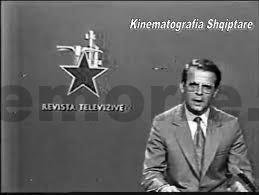
The truth is that the battle between these two cultures in Albania lasted for decades, appearing in various forms and intensities. It began particularly after the 1960s, when the first television sets entered Albania, and then massively in the 1980s, when Albania began producing its own sets. Radio and television sets, now spread throughout the country, captured music or news programs broadcast by dozens of foreign stations. The public, hungry for entertainment, was more drawn to music – especially light music – than to the political information being transmitted.
Meanwhile, television sets, especially in major cities and Western, Southern, and Northern regions, clearly captured Italian, Greek, and Yugoslav broadcasts. The principle of the “absence of informative counter-power” that characterizes a totalitarian society began to break. This was unacceptable to the authorities, who tried to retaliate. But people, too, sought new ways to break their informative isolation.
The Vicious Cycle of Counter-Propaganda
Albanian Radio television and the press were forced to consume a portion of their strength on what was called “counter-propaganda.” An exhausting, unintended vicious cycle was created. Radio and television sets were distributed precisely to be powerful tools of propaganda for the ruling policy. However, due to their nature, they spread “counter-facts,” to which the official media had to respond. Totalitarian propaganda was much easier when only the written press existed.
Foreign information sources had very little room to operate then. But once people equipped their homes with receivers, “the plague” had already entered “the city.” A sociological law emerged: the more the television reception network expanded, the greater the propagandistic counter-consequences became. The official media had to spend more time and energy neutralizing the “smog” of Western influence penetrating Albanian families.
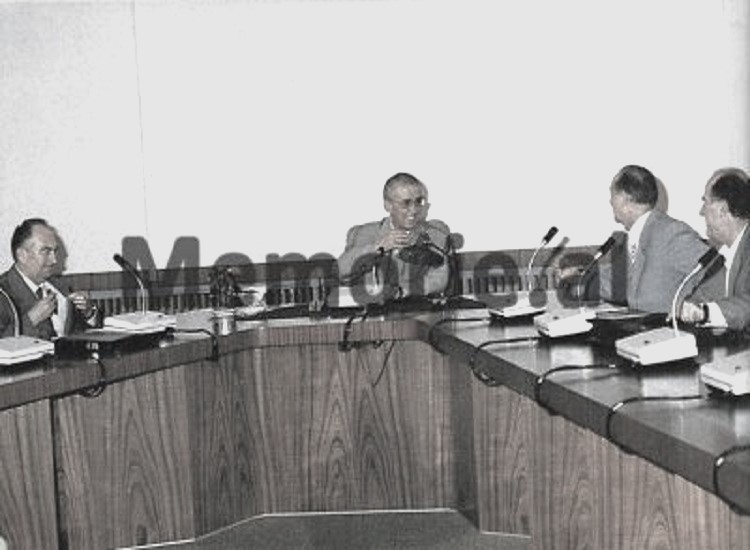
To manage this, a specific instance was created to direct counter-propaganda. High-level media and propaganda leaders met once a month: the Chief of the Press Sector in the Central Committee, the Director of the Foreign Directorate, the Assistant to the Secretary of the Central Committee for Propaganda, and the Director of the Press at the Ministry of Foreign Affairs. Together, they coordinated the media’s efforts against “anti-totalitarian propaganda” from abroad.
From Privilege to “Saboteur”: The 1970s Shift
Initially, in the 1960s, the state itself installed signal boosters on mountain peaks like Mount Dajti. High officials saw this as a way to benefit culturally and politically from Western information. At that time, it wasn’t seen as a threat but as a positive – more information meant more knowledge for international relations.
However, by the mid-70s, what was once seen as a benefit was now viewed as a grave danger to the regime’s foundation. In the 60s, a television set was a privilege of the ruling elite, not a mass medium. The authorities also lacked experience regarding the influential capacity of foreign television. They naively thought that “communist education” would override Western influence. Furthermore, in the 60s, the regime felt strong, supported by the socialist camp and Maoist China.
By the early 70s, all these factors had changed. The leadership noticed that foreign influence was becoming “disturbing”: the youth were imitating Western fashion, and artists were orienting themselves toward Western aesthetics. Thus began the “Ideological War against Foreign Manifestations.” The family television was now viewed as a dangerous object – a “saboteur” that had invaded the hearth and the minds of citizens. Not the Television (the institution), but the Television Set (the device).
Jamming and the “Game” of Censorship
From 1973, following the IV Plenum, a political trial was launched against the freedom of receiving signals. Signal boosters began operating intermittently. They were turned on and off according to the programming of foreign (mostly Italian RAI) stations. Furthermore, “jammers” were installed – devices that created noise and strips on the screen to block undesirable programs.
But a problem arose: the signal was cut for everyone, including the leaders themselves, who did not want to give up their own entertainment – foreign movies, music shows, and football matches. A complex “game” began. The signal would be “released” or “blocked” depending on whether the content aligned with state propaganda. For example, a film about the Mafia might be allowed as it portrayed Western criminality, but if an “exaggerated” erotic scene appeared, the screen would immediately go white. Similarly, during news broadcasts, a chronicle of the Pope appearing at the Vatican would be cut and resume only after the “harmful” segment ended.
The Beqir Balluku Incident
This censorship strategy led to frustration but also to satirical anecdotes. One official recalled an incident from the mid-70s, shortly after the execution of the former Minister of Defense, Beqir Balluku (condemned as a “putschist”). During a RAI news broadcast, his face appeared for a fraction of a second before the signal was cut. The leadership issued a severe reprimand, arguing the signal was cut too late – his face should never have appeared. The technician, confused and terrified, uttered these unforgettable words: “But I don’t understand what I should do next time? How and why would I cut the signal BEFORE the face of the enemy minister appeared on the screen?”
Publicity: The “Achilles’ Heel”
Strangely, it wasn’t just political news that was censored, but cultural and musical programs, and especially commercials. Consumer goods commercials were considered the most “delicate” and “unacceptable.” These goods were what the Albanian public lacked most. This was the “Achilles’ Heel” of a society built on Spartan-like austerity and poverty.
The danger was understood perfectly: Western television created an image of the West entirely different from propaganda. It wasn’t the news that did this, but the commercials, the music, and the entertainment. Young people became passionate about the Beatles and sang Italian light music in public. These programs created new needs – cars, villas, swimming pools – that the closed Albanian economy could never meet.
The Final “Divorce” and the “Spidermen” of the Rooftops
As the public began to see Albania “through the eyes of the other” (the Western media), a collective critical consciousness emerged. The public trusted foreign media more because they were censored. “Why would they block it if it weren’t true?” the common man thought.
In the late 80s, as the “Velvet Revolutions” swept through Central Europe, Albanians watched the fall of regimes (like in Romania) on foreign television like a staged drama or a football match. Everything was preparing for change.
The state tried one last technical trick: the Durrës television factory produced sets without the integrated circuits required to receive long-distance signals. But people counter-acted. Truck drivers working in international transport made “fists of money” by smuggling in microprocessors (known as “çimka” or bugs) hidden in truck seats or tires.
Then began the “war of the antennas.” Groups of militants and retirees were activated by Party committees to exert pressure on families whose antennas were pointed toward the West. But people resisted: antennas were raised at night and lowered before dawn. Men moved like ghosts or “Spidermen” across rooftops in the twilight, balancing on tiles to adjust hidden antennas in trees or chimneys. Artisans who knew how to assemble antennas became the most sought-after and precious friends in society.
Conclusions
Society sought an informative equilibrium it could not live without. After every action by the totalitarian power to narrow the sphere of information, came a counter-response from society to expand it at any cost. This battle of wits and technology continued until the very end./Memorie.al
Original title: ‘Media functions in totalitarian society’ – From the history of Albania