
By Dashnor Kaloçi
Part Seventeen
Memorie.al / The history of parliamentary elections in our country, or more accurately, the attempts at elections, have its origins in the era of Ottoman rule when Albania was part of the Turkish Empire. One of the first Albanian deputies elected to the first Turkish Parliament, which opened its proceedings in December 1877, was Abdyl Frashëri. However, that parliament did not last long, as it was dissolved by the Sultan himself due to the outbreak of the Russo-Turkish War. Following the dissolution of Turkey’s first parliament, there were several other attempts at elections, but they all failed for various reasons. The first regular elections in Albania were held only in 1908, when the Young Turks came to power in Turkey. Those elections were not direct but were held through representation, otherwise known as the two-tier voting system (secondary electors).
The first Turkish Parliament opened on December 10, 1908, and out of 266 deputies, 27 were Albanians elected from the four vilayets of Albania. At that time, members of the “Committee of Union and Progress” in Turkey, which included many Albanians, split and grouped into three political factions. The first group was “Union and Progress” (the Turkish-Macedonian party) with 164 deputies, consisting of 130 Turks, 5 Arabs, 1 Greek, and 15 Albanians, led by Hasan Prishtina, a deputy from Kosovo.
The second group, called “Liberal Union” (the Greek-Albanian party), consisted of 45 deputies and included 12 Albanians led by Ismail Qemali. Among the other Albanian deputies in the Turkish Parliament at the time were Esad Pashë Toptani, Nexhip Draga, Rexhep Pashë Mati, etc. After 1908, there were several other elections where Albanians continued to vote for their representatives in the Turkish Parliament, a process that lasted until November 1912, when Independence was proclaimed and Ismail Qemali was elected head of the Government.
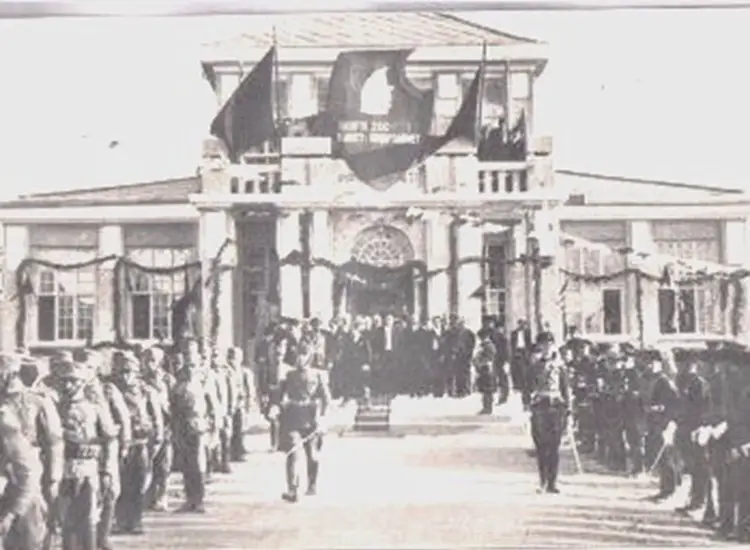
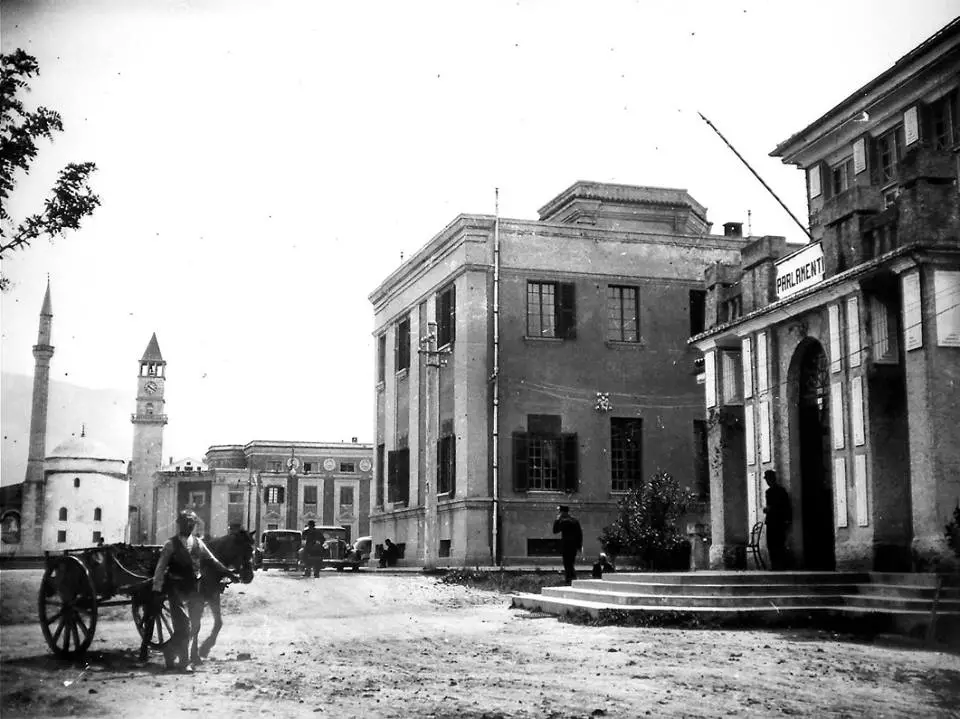
Meanwhile, the first parliamentary elections in Albania took place in the spring of 1921, as they had not been held until then due to World War I, in which Albania was also involved. The first Albanian Parliament opened on April 21 of that year; the first building of the Albanian Parliament was located where the Academy of Sciences stands today. In that parliament, 76 deputies participated, elected following a relatively regular process from the nine prefectures of the country: Berat, Durrës, Elbasan, Gjirokastra, Korça, Kosovo, Shkodra, Vlora, and the Albanian colony in the USA.
As in the past, those elections were conducted through a system of representation, or secondary electors, where based on territorial division, representatives of each province had the right to elect their deputy. The aforementioned, along with a brief history of parliamentary elections in Albania from that period until 1991, has been published by Memorie.al in previous issues. Here, we are publishing the complete Basic Statute of the Albanian Republic (the Constitution) of 1925, where a special place is held by the parliamentary election legislation of that time, as well as the Parliament’s regulations regarding the rights and duties of deputies, published by the “NIKAJ” Printing House in 1925.
Continued from the previous issue…
PENAL CODE 1928
SECOND BOOK
Felonies (Delicts)
TITLE VII
Felonies Against Public Integrity
CHAPTER I
Arson, Flood (Inundation), Sinking (Submersion), and other felonies that pose a public danger.
ARTICLE 330. – Anyone who sets fire to a building or a structure of any kind, or to unharvested land crops or stacks, or to deposits of combustible materials, shall be punished by heavy imprisonment from three to seven years.
The heavy imprisonment shall be from five to ten years if the fire is set to buildings intended for habitation, or to public buildings, or those intended for public use or constructed for public benefit, or for the practice of a religion, or in industrial factories, in warehouses containing commercial goods, or in prisons, or in deposits of flammable or explosive materials, in shipyards, in railway wagons, in quarries, in mines, or in forests.
ARTICLE 331. – Anyone who, with the intent to partially or totally destroy the buildings or items indicated in the preceding article, releases or detonates mines, torpedoes, or other explosive works or machines, or releases or ignites materials that catch fire and are capable of causing such an effect, shall be punished, according to the circumstances, with the penalties established in the preceding article.
ARTICLE 332. – Anyone who causes a flood shall be punished with heavy imprisonment from three to ten years.
ARTICLE 333. – Anyone who, by breaking openings or sluices, walls, or other works intended for common protection against waters, or as a common defense against calamities, causes a risk of flood or another disaster to arise shall be punished with heavy imprisonment from one to five years.
If a flood or another disaster is caused by this act, the provisions of the preceding article shall apply.
ARTICLE 334. – Anyone who sets fire to ships or floating structures of any kind, or causes their sinking or shipwreck, shall be punished with heavy imprisonment from three to ten years.
ARTICLE 335. – When any of the offenses provided for in the preceding articles is committed against military buildings or deposits, arsenals, factories, or State ships or aircraft, the heavy imprisonment shall be from seven to fifteen years.
ARTICLE 336. – Anyone who, by destroying or displacing, or by any means causing the disappearance or malfunction of lighthouses or other signals, or by using false signals or other artifices, causes the danger of a shipwreck to arise, shall be punished with heavy imprisonment from one to five years.
When the sinking or shipwreck of a vessel occurs as a result of these acts, the provisions of the two preceding articles shall apply, according to the circumstances.
ARTICLE 337. – Anyone who, in order to prevent the extinguishing of a fire or the works intended to protect against a flood, a sinking, or a shipwreck, steals, hides, or renders unusable the materials, apparatus, or other means intended for extinguishing or protection, shall be punished with heavy imprisonment from one to five years.
ARTICLE 338. – The provisions of articles 330 to 335 also apply to those who, by committing any of the acts indicated in those articles upon buildings or items in their own ownership, damage or endanger persons or foreign property of the same kind indicated in those same articles.
If the act was committed with the intent provided for in Article 459, the punishment is increased by one-sixth to one-third.
ARTICLE 339. – When any of the acts provided for in the preceding articles has caused danger to human life, the penalty established therein shall be increased by half.
ARTICLE 340. – In the cases provided for in the preceding articles, if the object is of no great importance and no other thing has been exposed to damage, or no person has been endangered, instead of the provisions of these articles, those of Article 472 shall apply.
ARTICLE 341. – Anyone who, by reason of imprudence, negligence, or lack of proficiency in their profession or trade, or by non-observance of regulations, orders, or discipline, causes a fire or an explosion, a flood, a sinking or a shipwreck, a collapse or other destruction that brings common danger, shall be punished with imprisonment of up to thirty months, and a heavy fine of up to one thousand gold francs (fr. ari).
If that act causes danger to human life, the imprisonment shall be from three months to five years, and the heavy fine from three hundred to three thousand gold francs; and if the death of any person is caused, the imprisonment shall be from six months to eight years, and the heavy fine more than one thousand gold francs.
CHAPTER II
Felonies Against the Safety of Means of Transport or Communication
ARTICLE 342. – Anyone who, by placing objects on railways, or by closing or opening the communications of the rails of that road, or by making false signals, or by any other means, causes the danger of a disaster to arise, shall be punished with heavy imprisonment from one to five years. If the disaster occurs, the punishment shall be heavy imprisonment from five to fifteen years.
ARTICLE 343. – Anyone who damages a railway or the engines, wagons, tools, or other things or apparatus serving the operation of that railway, shall be punished with heavy imprisonment from one month to five years.
The same punishments shall apply to anyone who throws blunt objects (contondant) or projectiles against trains while they are traveling.
ARTICLE 344. – Anyone who, through imprudence, negligence, or lack of proficiency in their profession or trade, or by non-observance of regulations, orders, or discipline, causes the danger of a disaster on the railways to arise, shall be punished with imprisonment from three to thirty months and a heavy fine from fifty to three thousand gold francs; and if the disaster occurs, the punishment shall be heavy imprisonment from two to ten years, and a heavy fine of more than one thousand gold francs.
ARTICLE 345. – Anyone who damages telegraphic or telephone machines, apparatus, or wires, or causes the dissipation of their currents or by any other means, obstructs the postal service or cuts the telegraphic service, shall be punished with heavy imprisonment from one month to five years.
ARTICLE 346. – Anyone who, during a rebellion, destroys telegraphic or telephone wires; or by any other means obstructs the relevant service of these, or by other means occupying the stations or seizing telegraphic or telephone machines, prevents any type of service or correspondence, or the postal service, or violently hinders the repairs of any means necessary for the aforementioned services – if the offender did not intend to collaborate in that rebellion, and that act does not constitute a more serious offense – shall be punished with heavy imprisonment from one to fifteen years, and a heavy fine of no less than five hundred gold francs.
ARTICLE 347. – For the effects of the Penal Law, all other roads that have a metal rail upon which one travels with machines powered by steam or any other mechanical motor are equated with ordinary railways.
By the term “telephone service” mentioned in the preceding articles, only the public telephone service is understood.
ARTICLE 348. – Outside of the cases indicated in the preceding articles, anyone who, by any means, destroys, totally or partially, or by other means renders unusable roads or works intended for public land, sea, or air communication, or displaces with that intent the objects intended for their safety, shall be punished with heavy imprisonment from three months to five years, and if the act brings danger to human life, shall be punished with heavy imprisonment from three to twelve years.
CHAPTER III
Felonies Against Public Health and Foodstuffs
ARTICLE 349. – Anyone who, by damaging or poisoning drinking water for common use, or substances intended for public food, endangers human health shall be punished with heavy imprisonment from three to ten years.
If this act is committed against water or things intended for the feeding of animals, the punishment shall be from one month to three years.
ARTICLE 350. – Anyone who counterfeits or mixes, in a manner dangerous to health, food substances or medicines or other things intended to be placed on the market, or offers them for sale or, in any other manner, markets such counterfeited or mixed substances or things, shall be punished with heavy imprisonment from one month to five years, and a heavy fine from one hundred to five thousand gold francs (fr. ari); and the items in question shall be confiscated and destroyed.
ARTICLE 351. – Anyone who offers for sale food substances or other things that are neither counterfeited nor mixed but are dangerous to health, without the buyer knowing of this danger, shall be punished with imprisonment and a heavy fine from one hundred to three thousand gold francs.
ARTICLE 352. – Anyone who, being authorized to sell medicinal substances, gives them in types, quality, or quantities that do not correspond with the medical prescriptions, or different from those declared or agreed upon, shall be punished with heavy imprisonment of up to one year, and a heavy fine from fifty to five hundred gold francs.
ARTICLE 353. – Anyone who offers for sale or otherwise markets as unmixed food substances that are not simple (pure), but not dangerous to health, shall be punished with heavy imprisonment of up to two months and a heavy fine from fifty to five hundred gold francs.
ARTICLE 354. – When any of the offenses indicated in the preceding articles is committed due to imprudence or negligence, or from lack of proficiency in one’s profession or trade, or from non-observance of regulations, orders, or discipline, the offender shall be punished:
- With imprisonment from one month to one year and a heavy fine of up to one thousand gold francs in the cases provided for in Article 349.
- With imprisonment of up to three months and a heavy fine of up to five hundred gold francs in the cases provided for in Article 350.
- With imprisonment of up to one month or a heavy fine of up to one hundred gold francs in the cases provided for in Articles 351 and 352.
ARTICLE 355. – When any of the acts indicated in the preceding articles causes danger to human life, the punishments noted for those offenses shall be increased by half.
ARTICLE 356. – When the perpetrator of any of the felonies provided for in Articles 350, 351, and 352 commits the offense by abusing a profession or trade placed under oversight in the interest of public health, the punishment shall be:
- Heavy imprisonment from six months to six years and a heavy fine of no less than one hundred gold francs in the case provided for in Article 350 [Note: text lists 351 twice, likely a typo for 350].
- Heavy imprisonment from three months to one year and a heavy fine from two hundred to five thousand gold francs in the case provided for in Article 351.
- Heavy imprisonment from one to six months and a heavy fine from one hundred to one thousand gold francs in the case provided for in Article 353.
A conviction for any of the felonies provided for in the preceding articles always results in the suspension of the exercise of the profession or trade which served as the means for committing the felony. This suspension is set for a period equal to that of the heavy imprisonment or imprisonment imposed on the offender.
ARTICLE 357. – Anyone who, by means of false news or other deceitful means, causes the scarcity or price inflation of substances, shall be punished with heavy imprisonment from three months to five years, and a heavy fine from two hundred to five thousand gold francs; to these punishments shall be added temporary disqualification from public office together with the suspension of the exercise of the profession, if the offender is a public intermediary.
ARTICLE 358. – Anyone who smuggles into the Republic opium or its extracts, morphine or its salts, distilled morphine or its salts, or bichloride of opium and its salts and preparations, hashish or its preparations, as well as anyone who transports these from one place in the Republic to another, or offers them for sale or receives them without Government permit, keeps them in their possession, or mediates in any way for their sale or purchase, or facilitates their use, shall be punished with imprisonment from one month to one year and a heavy fine from one hundred to three thousand gold francs.
The aforementioned drugs shall be confiscated, and half of their value shall be given to the informants.
Anyone who, without having the relevant permit, sells other poisonous medicines besides those mentioned in § I of this article, shall be punished with heavy imprisonment from fifteen days to six months and a heavy fine from fifty to one thousand gold francs, with the medicines also being confiscated.
ARTICLE 359. – Anyone who gives or receives the aforementioned drugs using a false prescription shall be punished with imprisonment of up to one month or a heavy fine from fifty to two hundred gold francs./Memorie.al