Part Two
Memorie.al / My life have already reached its crescendo and, like an airplane, are coming in for a landing on the final runway of its concluding phase. Being 70 years old is a heavy weight when it comes to formulating thoughts filled with expressive power and clarity regarding the topics I target. I look at my Durrës – the city of my birth, the city of my parents’ graves, the city of my relatives, friends, and companions – without wavering or daring to remove a single comma from its early orientations, or as popularly said, its traditions. Many things have changed. High-rise buildings have been constructed. Streets and squares have been transformed. Durrës has grown and expanded. Newcomers have even created the figure of speech “New Durrës.” An Albanian speaker, not raised in Albania, once asked me: “Where is the Sea Durrës?” He was referring to the beach.
Continued from the previous issue
Scrolling through the dictionary of the Albanian language, the word “kumi” means a kiln for baking bricks or tiles. Local residents, as if by a common agreement, have placed the name of this street in their daily vocabulary: “Kumini” Street. “Hani i Bidulëve” (The Biduli Inn) or the “Biduli Bakery” is an immovable memory. Near the well-known barbershop, as you head down an original Durrës alleyway that leads from the lower road to “Blue Star,” lay the “Hani i Bidulëve,” incredibly famous and established by Dalip Biduli. A large clan, our great friends. “Until the mid-1950s,” the well-known painter Besnik Biduli, son of Islam Biduli, tells me, “it was an inn. Villagers came to trade in the city. They would tie up their animals at the inn and sleep there when night fell.”
Later, the inn closed and a bakery opened, whose fame can never be exhausted. I remember here the baker, the gentleman Shaqir Biduli, and his wife, Lady Zyra. We had friendly ties with Shaqir’s children, like Zijai, Diku, Faja (an artist of wood and steel), and especially with the well-known pianist, my close childhood friend, Hiqmete Biduli. I hold vivid memories of this bakery, particularly when, for the New Year, the entire neighborhood would bake their turkeys, baklavas, milk pies, and everything else there.
When you exit from an alley behind the Biduli house and jump onto the main road, right in front of the Fashion Tailor and near the famous Dakoli alley, stood the kitchenware shop and the old maternity hospital. And the people of Durrës found it easy to say immediately if someone asked for directions: “It’s near the old maternity hospital and the kitchenware shop.” Vivid memories. Unquenched longing. Indelible impressions. Eternal love for every inch of Durrës, for every stone, every brick, every tile, for everything, endlessly.
“Adriatiku,” “Iliria” Cinema, the old Dental Clinic, the Flower Shop, the Polyclinic
This is a block of definitions where a visible part of the civic memory of Durrës residents has stood and continues to stand. I pass by and watch. I stop, and the hammer of memory strikes hard in my mind, shaking off the dust of oblivion. I am in front of Taverna “Adriatiku.” How famous it was! I remember Rexhep Gruda, an elite goalkeeper of the late ’40s and early ’50s. Agim Kashami reminds me that Tofik Mullaliu, a very well-known sporting surname in Durrës, also worked here. Billiards was played; there were various games.
Coffee was prepared, and alcohol was consumed. There were many discussions about the city’s sports. It was a major center where the youth and middle-aged people of the time gathered. Opposite is the “Esperia” Cinema of 1927, or later the “Iliria” Cinema. Endless impressions and emotions. For the cinema, certainly in the absence of televisions, there was extraordinary interest. We watched movies for 2 lek, specifically for children. For adults, the ticket was 15 to 20 lek. I remember Alo Hoxha, the first filmmaker. Also Kamber Ndreu, the operators Vasil Duka, Miri Muharremi, Xhemal Avdyli, Fadili, Pëllumbi, etc.
I also remember the first director Thoma Lika, as well as Eqerem Merhori and Edmond Dobi. Argjiro, a brisk woman who sold tickets. We also frequented historical films, where we much preferred French and Italian cinematography, starring Jean Marais, Jean Gabin, Gérard Philipe, Antonella Lualdi, Raf Vallone, etc. We followed famous Hollywood actors like Steve Reeves and Sylvester Stallone. But Albanian films with social themes also attracted us. Besides this, “Iliria” Cinema was an opportunity to set meetings with friends and companions, as it was a sharp cultural center, very well-known even for visitors coming to Durrës.
An alley separates “Iliria” Cinema from the old dental clinic, which today has been turned into a private kindergarten. The Old Dental Clinic is located in a key alley that moves you from “Kumin” Street to the main boulevard, where Andi Bllaca’s ice cream shop (son of Sulë Bllaca) is now located. In this clinic, I have fixed the portrait of a noble man, a first-class professional educated in the West. His name was Hasan Jero, whose life the regime of Enver Hoxha tore to pieces. Giants of the city’s dentistry worked here, such as Enver Kotori, Fiqiri Deliallisi, Pirro Qerimi, Vangjel Aleksi, Elsa Mima, Haki Bllaca, etc., whom my memory does not offer at this moment. Long-time Durrës residents have a soft spot for the “Old Dental Clinic.” Nostalgia comes like a typhoon and crashes against the forehead of the memories of a boy who this year stores his 70th year in the inventory of his life.
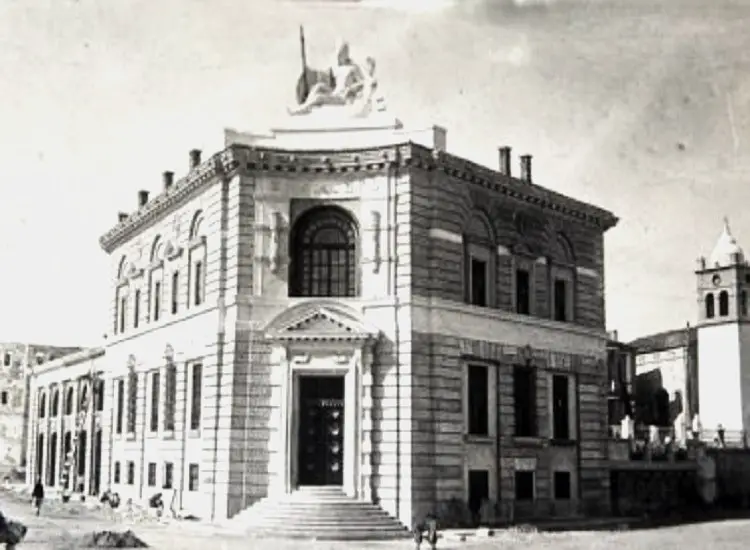
The Flower Shop, the queen of meeting places. It is in a hub position where several points collide: the road leading to the city Polyclinic, continuing behind the “Aleksandër Moisiu” Theater, and exiting through the portico toward the court. And the road that creates the perpendicular passes toward the City Hall as well as in the direction of Hotel “Durrës,” the former gastronomy, and the “1 Maji” Garden. Even when it had flowers and now that it remains “dry,” the flower shop has not lost its importance as a meeting point for people. And the Durrës Polyclinic, or the former Poly-ambulance, remains unchanged as a major reference point.
The Bakery Block, “Danubi,” the Old Train Station, the Greenhouses, the Salt Warehouse
From the lower road in Neighborhood No. 4, you would exit by the Kadis, Toskas, Fans, Koretes, and with a jump, you would pass the road where “Tobacco Fermentation” (now “Blue Star” and the Greening Directorate) stretched. If you quickened your pace for a few steps and came to the house of Salih Verdha, an old and very popular official in Durrës, the famous Bakery Block lay across from it. Bread for the city was prepared or baked there. The father of my primary school friend, Haki Haxhia, worked there. We went there several times after school, and Haki’s father would serve us a warm bun (kulaçë), as our school “Dalip Tabaku” was near the bakery block.
Across from the “Dalip Tabaku” school was the famous buffet with the unique name “Danubi” (The Danube). It is the name of the second-largest river in Europe after the Volga, with a length of 2,850 kilometers. It originates in Germany and flows into the Black Sea, traversing 10 countries. I am making this summary to know the enigma of this name, the purpose of which I never learned – why was it called “Danubi”?! But this name continues to be strongly mentioned today. When you say “Danubi” buffet, you immediately understand where you need to go and where you should be.
You walk past “Danubi” and reach the old train station. In the absence of the train, the General Directorate of Railways is now located there. But how we miss this early station. Our student life was right here. An entire Durrës would set off early in the morning with the 05:50 train to go to faculties, or others who worked in Tirana. Beautiful times of our youth. The train carried great weight. When you remember that the first Durrës-Tirana railway was built in 1947, and after 74 years, while the world has built modern metros alongside powerful electric trains exceeding 300 km/h, in our country we do not have even a single meter of rail. That is why the train of our youth has become so dear to us.
But this is not the purpose of the topic; I simply noted it as a deficiency of the time, which will undoubtedly be corrected, and our generation will wish to travel with an electric train “made in Albania.” But the old train station is a fixed reference for most Durrës residents. What about the “Serat” (The Greenhouses)? Beside the Palace of Culture and on the other side of the main road, there used to stretch a large venue, surrounded entirely by glass. The people of Durrës immediately named it “Serat.” I remember our unforgettable friend Ibrahim Halili served in the kitchen there. It was a café and an eatery. Sometime in the ’50s-’60s, the famous meatball shop (qofteria) of Fadil Hoxha was here. I have a photo that will be part of this writing. At “Serat,” traces of the past remain, represented today by the shop of the well-known Ton Ceka.
Moving on. Behind City Hall, we jump into the original and characteristic alleyways of Durrës. After passing the alley where the sons of Fehmi Tepelena live, my friends Ceni and Veri, where the Myderriz are, lies the well-known place called “Magazina e Krypës” (The Salt Warehouse), or simply “tek Krypa”. The word salt (kripa) in the Durrës version is pronounced krypa, just like tlyni, milli, qilli, dilli, voji, koma, dhami, etc. – dialectalisms that distinguish the locals from the newcomers. And “tek Krypa” remains steadfast even now. Even when it was a kerosene shop, they would give directions by saying: “The kerosene at the Salt Warehouse.”
“Avdyli’s Shop,” “Ermen’s Stairs,” “The Fountain,” “Detari” Buffet, Hotel “Vollga”
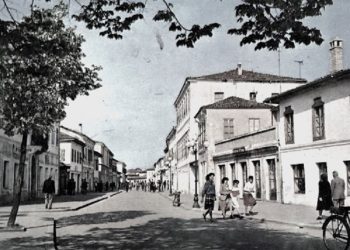
These too are part of the local designations by my fellow citizens. The writing grows to a particular length due to the thematic load itself. It is part of a kind of original toponymy, created quite early and continuing almost unshaken even today. Avdyli’s Shop. That is how it stayed, although other sellers worked there. But this Abdyl became fixed in the popular jargon. The shop next to the start of the alley that leads toward the Amphitheater, the castle walls, and further toward the Tobacco and Cigarette Factory – a nostalgic and very dear asset for Durrës residents.
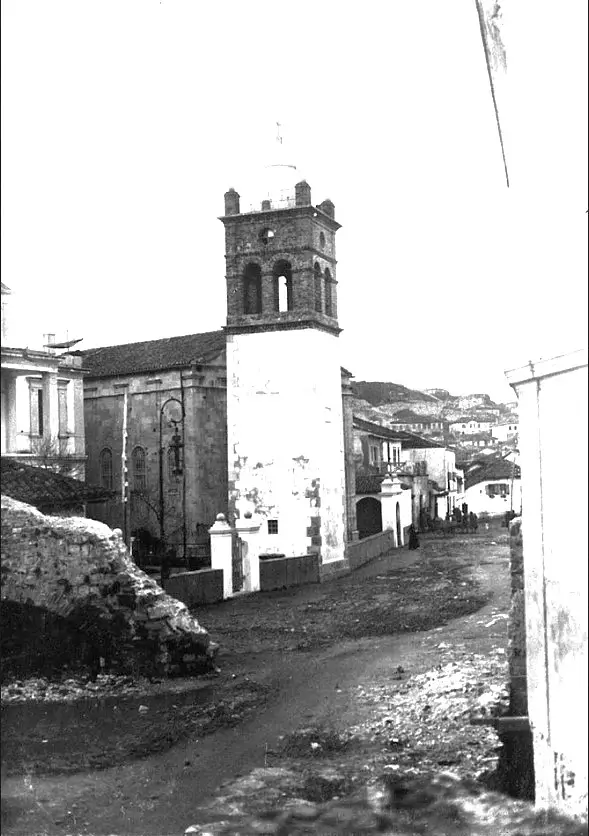
But before “Avdyli’s Shop,” another memory shines. It is “Shkallët e Ermenit” (Ermen’s Stairs). We happen to have this name for two such sets of stairs. One is on the slope of the old Durrës neighborhood, beside the great mosque and where the giant amphitheater rises. I will present the relevant photos. They are the start of the stairs at the former Book Directorate, where our unforgettable friend Hatixhe Gaxho worked. And the second version of “Ermen’s Stairs” remains next to the shop of Uncle Zahar Kume. You climb the alley so preferred by locals, passing through this old neighborhood where my close childhood friend also had his house – we were together from first grade until the final year of high school – Hajg Zaharian (Haig Zacharian), the well-known composer and professor at the Academy of Arts.
The Zazas, Bylykbashis, Myshketas, etc., also live here. Hajg is of Armenian origin. A community of Armenians had been settled in Durrës since the 1920s. One of them is Grigor Bodikian, the father of Agop and Xhilda, who linked her life with the tennis champion Llambi Prifti. Armenians have been an active part of the economic, commercial, cultural, and sporting life in Durrës. We have photos where Armenian players with the surnames Ballxhian and Bodikian were active.
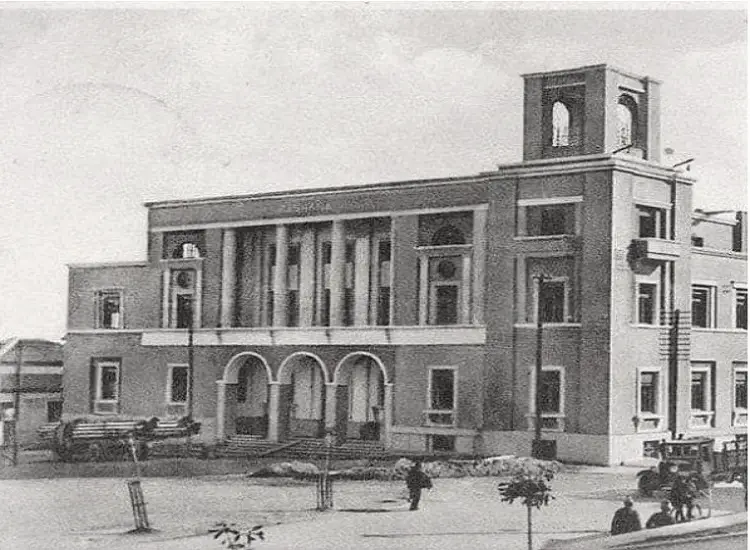
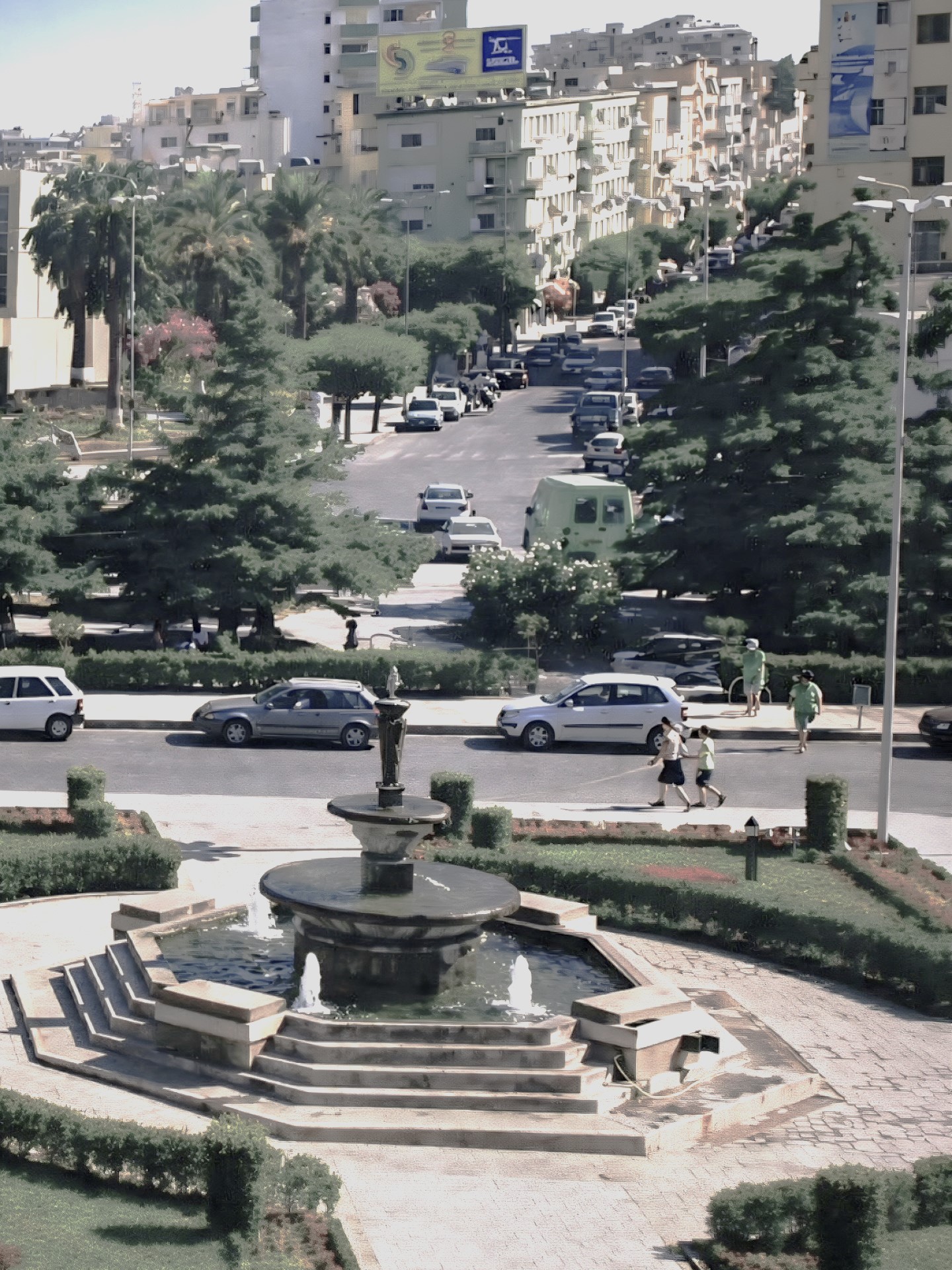
“Let’s meet at Ermen’s Stairs” is still current today. “Let’s hang out at the Fountain” (Shatërvani), the heart and soul of Durrës residents, the central and reference point of the city. We all have a photo from the fountain. But even visitors treated the fountain as an original spot and a precious memory from Durrës. The fountain created a golden crown with the city center, as it stood in the middle of the mosque, the Palace of Culture, the City Hall, and other buildings, where high-rises now pierce the sky. Very sharp remains the “Detari” Buffet. This early club was “occupied” by the port’s loading and unloading workers, who, especially on paydays, would spend their entire 15-day earnings in a cloud of smoke. A sweet venue for Durrës residents.
The Venetian Torra (Tower), the beautiful palms in a well-manicured green environment, continuing with the Inter-club, the Seaport, and especially Hotel “Vollga”, the monument of the anti-fascist resistance hero Mujo Ulqinaku, the nostalgic garden of “Vollga” where music was played and a sought-after mug of beer was consumed. How could one forget the nostalgic orchestra of “Vollga,” where people came even from Tirana to hear Enver Mara’s trumpet, Rexhep Zemblaku’s piano, and Rifat Dedja’s accordion. Not forgetting “Rinia” Park, on one of the dominant hills of the “Villa,” closing with the Archaeological Museum and the city pool. And so we could continue for a long time, endlessly.
“Ura e Dajlanit” (Dajlan Bridge): Endless impressions and memories
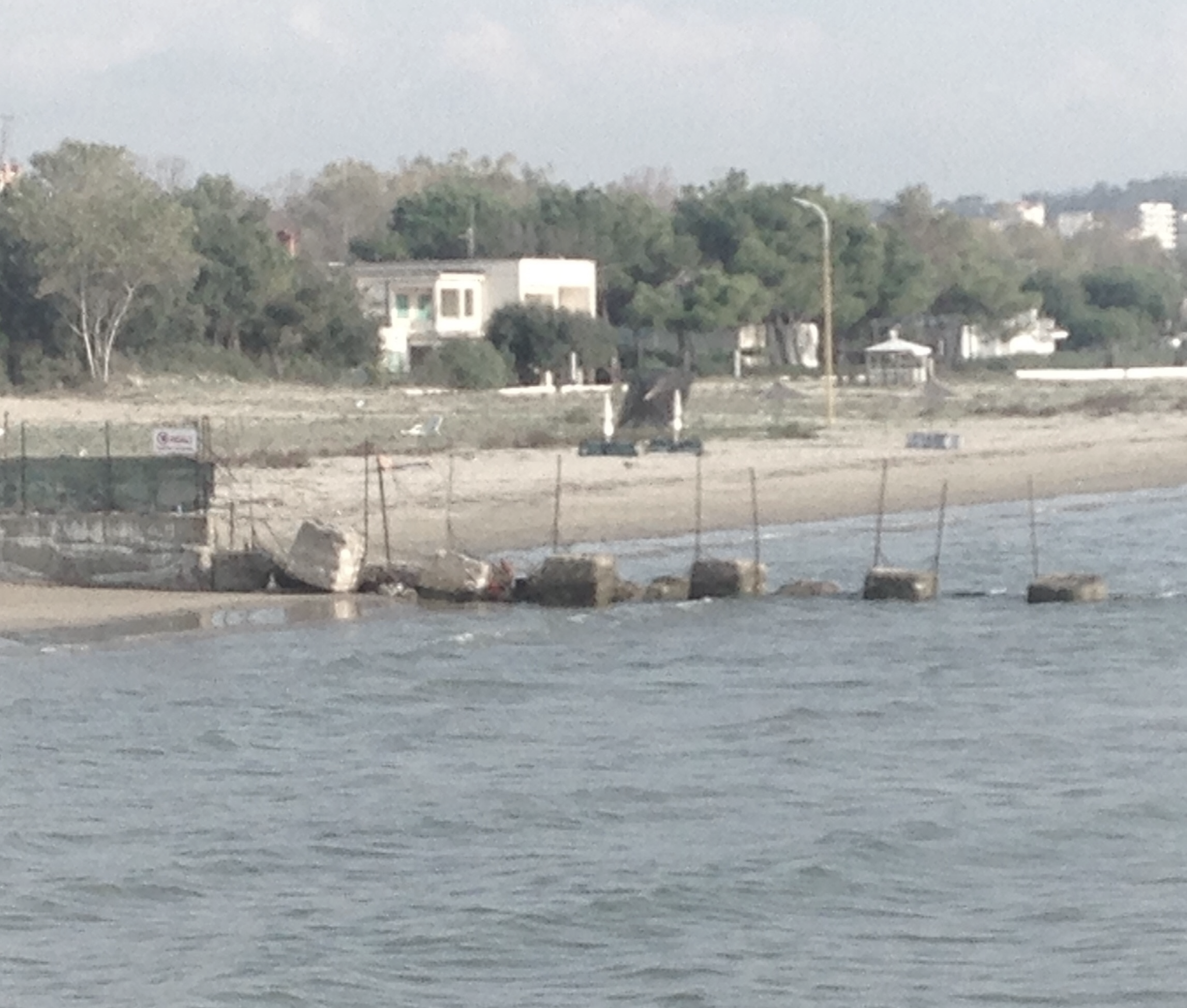
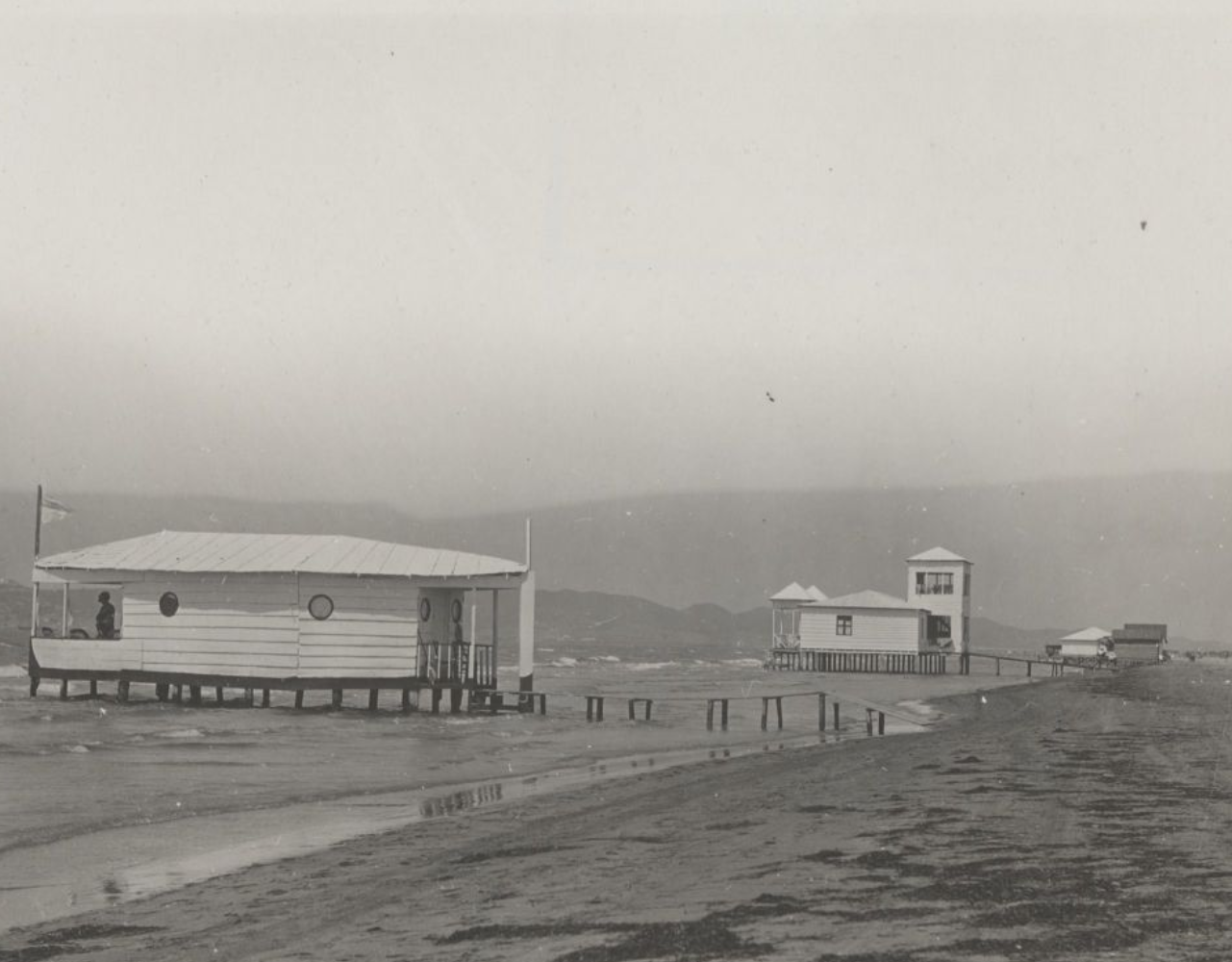
Among our most preferred and nostalgic places. When the Durrës marsh was active, in this suburban area of the city, there was a kind of strait that resembled a dajlan (a fish trap). This lagoon was used by locals for fishing. My generation caught the moment of the marsh’s drainage. On that ground, we played football en masse. A surface of reeds, salt, and water is placed in our nostalgia, in what is called the golden time of our childhood. On that bridge paved with bitumen, we loved to crush the countless bubbles that this natural greenhouse created in the summer. We crushed them with the bare soles of our feet. Then, in groups, we headed toward “Agip,” the beginning of Durrës Beach.
The Epilogue of this thrilling summary
Eh, my dear city! My beautiful Durrës! Durrës of childhood, youth, work, and now the experience of a 70-year-old. My Durrës of birth and, certainly, my eternal dwelling. Durrës of our heirs. Durrës, in whose warm earth lie the graves of our relatives – grandmother, father, mother, cousins, friends, companions. Durrës of my longing and my soul. I will not tire of writing about you, until my thoughts run dry, my body becomes weary, my breath stops, and my physical self becomes unable. But until then, let me remain with hope and faith that I will continue the work and the inspiration.
We “paraded” together through the Durrës of our memories. We stopped. We struck the memory. We met with the preferred and traditional places for Durrës residents, and for a moment it seemed as if we also met those who are no longer living. We quenched our longing. And the conversation is the same: how is the city and how do its people feel? And the legacies are the same: let us love and respect one another! Let us help and support one another! Life is short; let us not shorten it further. A weary piece of writing, loaded with thought but also with numerous photos. We have encircled Durrës and placed it in the golden ring of memories and unquenched longing. There is nothing more beautiful and better than dedicating yourself to Durrës, the city of your heart and soul, the most beautiful city in the world. / Memorie.al