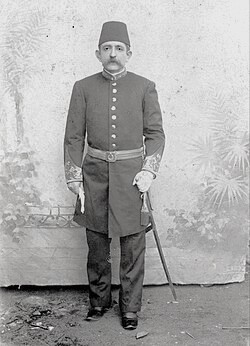
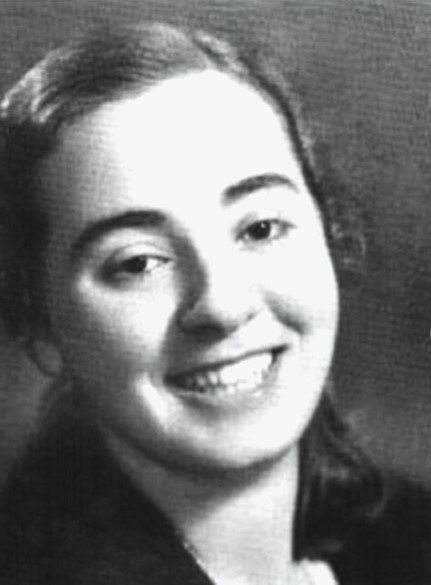
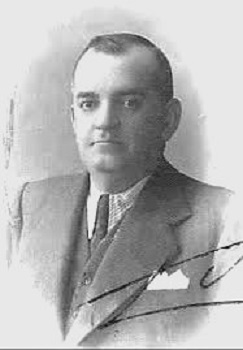
Memorie.al / The rare account of the daughter of one of the 40 signatories of the Independence Act, revealing the life and past of Zihni Abas Kanina (Hamzaraj). She discusses the kinship with the family of Ismail Bey Vlora and the multitude of other cousins who also signed the document that declared Albania’s independence on November 28, 1912. The story covers when and how the blow to this patriotic family from Kanina came during the communist regime, the imprisonment of her father, and how Safo Morina escaped internment through the support of Vito Kapo. She rejoiced in being alive to witness the 100th anniversary of the Albanian state, where she could raise a toast with all Albanians. She had every reason to feel joyful, as her father, Zihni Abaz Kanina, left his signature on the crucial document of Independence, which “sealed” the history of the Albanian state.
However, beyond the festive symbolism, 83-year-old Safo Morina was more than just nostalgic. Her father’s role as a prominent patriotic figure and his contribution to the independence of the Albanian state remain undeniable. She chooses to speak also about the difficult moments the family endured during the shift in political systems. They received their greatest blow during the communist period, when Zihni Abaz Kanina, after months of interrogation, ended up in Prison 313 in Tirana.
From the severity of the sentence to the hardship and poverty in a modest house in the “Brrakë” neighborhood of Tirana! How the well-known family from Kanina ended up in such conditions, and Safo’s good fortune that saved her from internment. The support of Vito Kapo and her order to the Minister of Justice to save the family from internment, resulting instead in their expulsion from the capital toward Elbasan.
The Interview
Ms. Safo, you are the daughter of one of the protagonists and signatories of the Act of Independence, Zihni Abaz Kanina. What can you tell us about your father, his education, and his patriotic activity?
My father was a man of broad culture. His family was one of the most noble in Vlora. His origins from Kanina further reinforced this fact – the Kanina of great events! Even Ismail Qemali himself was from Kanina. My grandfather was named Abas, and he was one of the men who made an outstanding contribution to the cause of Albania’s independence. My father studied Diplomacy at Galatasaray in Turkey and was a master of six foreign languages.
He had extensive diplomatic activity, serving as a consul in several countries, such as Russia, Malta, Beirut, etc. He also participated in the general uprising of 1911. He had a rich professional background but was also interested in art, literature, and particularly archaeology.
As a delegate of Vlora, he participated in the solemn act of signing the Independence on November 28, 1912. What did your father tell you about this event? How did 40 men come together to seal such a great change for Albania?
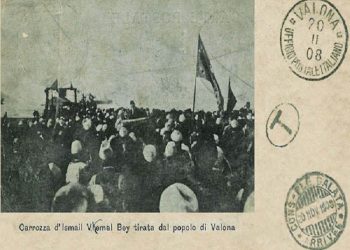
Many years later, my father spoke to us with superlatives and gratitude regarding this great historical event for our country. Therefore, we were raised in a spirit of respect toward the prominent figures of the nation who played an indispensable role in the liberation and independence of Albania. My father was a delegate of Vlora. He was closely acquainted with Lef Nosi and Mit’hat Frashëri, while with Ismail Qemali, besides the acquaintance, we also had a kinship by marriage.
Ylvia, the wife of Qemal Bey Vlora (Ismail Qemali’s son), was a cousin of my father. Not only had the friendly relations with all the other signatories of the Independence Act but also the patriotic and financial contribution our family provided for years to the Vlora government strengthened the bond between them. My father was among the youngest signatories, only 27 years old. All those men came together in the name of the national ideal.
In documents, he is known by the surname Kanina… including on the Independence Act. But your surname is Hamzaraj. Can you explain the matter of the two surnames?
Our surname is Hamzaraj. However, my father preferred to use the surname Kanina in various documents, including the Act of Independence. As he explained to us, it was a personal choice of his. Since he was from Kanina in Vlora and was an important individual and representative of that area, he wanted great events to be identified through this generalized surname.
You also had blood ties with other signatories of the Independence document. Who were they?
True! There were several people from our clan who signed the Act of Independence. Among them were Ferid Vokopola (a cousin), Iljaz Vrioni (a cousin), Qemal Bey Karaosmani, and Qemal Bey Mullai – these were also our cousins. Thus, alongside my father, the contribution to the important historical cause of Albania’s independence was made even more powerful by the role these cousins played.
Let’s move to the period of changing political systems. The establishment of the Monarchy and the role your father played during this time. It is said that he held the post of Director General at the Ministry of Foreign Affairs during the Zogist regime… is that so?
There is no truth at all in that claim, which I have often encountered in readings or heard from people. It is said that all patriots and signatories of the Independence Act were anti-Zogists, and there was no way he would hold a ministerial post knowing his stance toward Ahmet Zogu. During the years of the Monarchy, my father was the Director General of the Commercial School in Vlora; at the same time, he had a busy activity as an educator and primarily as a French language teacher.
When he taught at the Commercial School, he formed a close friendship with Petro Marko, and the latter, in his books, dedicated praises to my father’s figure. He considered it a stroke of luck that he received French lessons from a polyglot like my father. It happened that during his career as an educator, he wrote a letter to Fan Noli, asking that, in addition to boys, the school should also have female students – something that was unthinkable in those years. It was a revolutionary idea for the time.
With the establishment of the communist regime, your family would be struck. What were the charges for which your father was imprisoned?
The blow came immediately after the country’s liberation. They called my father a “reactionary,” and in 1951, the communists arrested him on the charge that he had joined his old friend Mit’hat Frashëri in the National Front Party (Balli Kombëtar). This led to my father appearing before the investigators in Tirana.
He spent almost an entire year amidst the torture and suffering common in investigations at that time, until the sentence was issued. He served 18 months in Prison 313 in Tirana. Because of a lung disease he had suffered from for a long time, his health condition worsened significantly. He died shortly thereafter.
Your family suffered quite a bit during this time. How did you survive?
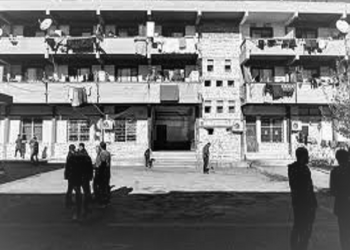
The situation was very grave after my father’s imprisonment. Our family ended up in the “Brrakë” neighborhood of Tirana, amidst suffering, a lack of vital conditions, and food shortages. To think that we often had nothing to eat, and like everyone else, we tried to find any product through ration coupons (triska).
They wouldn’t give my mother a job. Furthermore, we were quickly expelled from Tirana and sent to Elbasan. It was no small thing that a patriotic figure and a man like my father ended up in those conditions and the poverty that engulfed us as a family.
You escaped internment, which in those years was inevitable, especially when you had a parent in prison or targeted by the communist system. What saved you?
It was the close acquaintance and friendship my father had had for years with Hysni Kapo. Besides the acquaintance, my father had helped them financially, and in a way, they returned the debt. By order of Vito Kapo, the Minister of Justice at that time, Manol Konomi – a respected man – communicated to me the decision that the family would be removed from Tirana to be settled in Elbasan, and there I would work as the secretary of the District Court. Everything entered a flow of normality after that, even though what we went through remains an unforgettable hardship.
Not to end on a pessimistic note: How are you experiencing this festive atmosphere of the 100th anniversary?
During these beautiful November days, seeing the celebrations all over Tirana fills my heart with joy. It seems to me that just as I have a strong motive – since my father was one of the protagonists of this important historical event – all of Albania is celebrating.
I am happy that the appreciation for important historical figures has returned. This is also reflected in the fact that my son, Arben Morina, has been in the cultural media spotlight for several days with his special initiative of portraying the 40 signatories of the Independence Act, including his own grandfather. I feel fulfilled and spiritually complete knowing I can share my personal joy with all Albanians wherever they are./Memorie.al