Memorie.al / A Perspective from Which the “Missing” Work Should Be Viewed. It has often happened that great cultural figures, whose lives were intertwined with politics, were not appreciated in their time. The political seasons that followed did not allow the right climate for illuminating their work. Time was needed for them to emerge from the darkness of oblivion. As compensation for prolonged violation, it has happened that some were raised to the “zenith” by their disciples; after disparagement, overvaluation came as if by surprise. This extreme oscillation has been the worst disservice to some cultural luminaries.
In the case of Prend Doçi, only the process of disparagement occurred. Apparently, the opposite is not going to happen. Indeed, placing him in the position he deserves will be a difficult task. Despite some evocation and unveiling of his figure in recent years, for the majority of Albanians he remains almost as he was in his own time – much mentioned but little known, as Shahin Kolonja defined him. Perhaps it is from the meaning of this sentence that research and analysis should begin.
Much mentioned, but little known?
Why is that? Because of his “missing” work? How did that happen? Was it not written? Was it lost later? Or is the issue completely different? About Doçi and his work, both while he was alive and afterwards, the greatest figures of his time and later have spoken: writers such as Gjergj Fishta, Faik Konica, Asdreni, Filip Shiroka, Ali Asllani, Ndoc Nikaj, Milto Sotir Gurra; distinguished Arbëresh like Dhimitër Kamarda, Zef Skiroi, and Gaetano Petrota, not forgetting his correspondence with De Rada; linguists like Justin Rrota, Aleksandër Xhuvani, Mahir Domi; politicians like Ismail Qemali and Luigj Gurakuqi; publicists like Shahin Kolonja, Sotir Peci, and Milo Duçi; renowned contemporary and later scholars such as Fr. Pashk Bardhi, Fr. Pal Dodaj, Dom Nikoll Sahatçia, Pal Dukagjini; literary scholars like Dhimitër Fullani, Rexhep Qosja, Jorgo Bulo, Muhamet Pirraku, Ëngjëll Sedaj, Isak Ahmeti; leaders and chieftains of Mirdita like Prengë Bibë Doda, Prengë Marka Prenga; European personalities such as Edith Durham, Franz Nopcsa, and even Peter Bartl in our day; highlighting especially the contribution of his biographer Pal Doçi in the monograph Prend Doçi – Abbot of Mirdita (Life and Work) written years ago and published in 1997.
Nevertheless, Prend Doçi is in the process of being “discovered,” like most Catholic writers of the North, so far considered a “lost generation.” We are dealing with a high personality who was spoken of as rarely as anyone in his time and later, by locals and foreigners, by Arbëresh and Kosovars, by Muslims and Catholics, from his homeland and the diaspora, from intellectual circles within Albania and those of Europe.
“Monsignor Doçi did not write little, but always without a name”!
Prend Doçi wrote under the pseudonyms “Primo Doçi” and “A Youth from Albania,” and it is believed that dozens of articles are his. He had collaborated early on with De Rada’s magazine Flamuri i Arbërit, whose contributors included Albanians and Arbëresh such as Zef Jubani, Thimi Mitko, Spiro Dine, Nuçi Naço, P. Doçi, Gavril Dara (the Younger), Anton Santori, etc. Even when he was in the East Indies on an apostolic mission, he still collaborated with De Rada’s magazine; in October 1883 he published the article “Topography of Lezhë in Albania.”
His journalistic writings and the ecclesiastical reports he sent to the Vatican demonstrate a modern style, although a thorough investigation of all his written material has been lacking to date, which would enable a more complete assessment. It is not for nothing that it has been pointed out several times that “Monsignor Doçi did not write little, but always without a name.” Doçi is mentioned as an outstanding orator. Prend Doçi, a great intellectual of the time, had convinced Fishta to continue the Lahuta and sing like a Homeric rhapsodist of the mountains of Albania.
It was he who supported Ndre Mjeda in his first steps, discovering in him the poet, the capable intellectual with talent and dedication to science, language, and culture. Even more, the “great loser” hurried to greet the new century with a brilliant literary and linguistic institution in the most important cultural center of the country since antiquity, in Shkodër, among the cream of Renaissance scholars and patriots. Precisely at this time, the “conversion” of the writer into a man of science took place.
From now on, his work must be sought precisely in the prestigious society “Bashkimi” (The Union), just as part of Konica’s creative work is to be found in the magazine *Albania* itself, of which he was the foremost editor. It is known that Doçi was a rare advocate of the Albanian language. As such, his duty toward it was not limited to the purity of the language of his verses. Personal observations on the speech of particular regions, modest linguistic treatments in his journalistic writings, etc.
The life and work of Abbot Doçi is divided into several periods. The first period belongs to the time when Preng Doçi was a young and vigorous priest. Inspired by zealous and patriotic priests, from his youth he placed himself at the forefront of priestly and patriotic work; the second period when, as a mature man, he passed through prisons and exile; the third period when he took on the office of Abbot, and as a high prelate and seasoned diplomat he led the Abbey, which was on the level of a diocese, and advised the Albanian mind of the Renaissance figures; the fourth period, when the Abbot with his wisdom stood by the Albanian Government, which during the Balkan Wars and the First World War faced severe trials of governance.
Who was the honored Abbot?
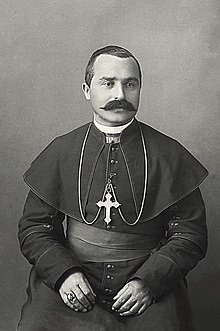
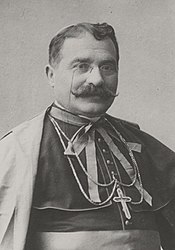
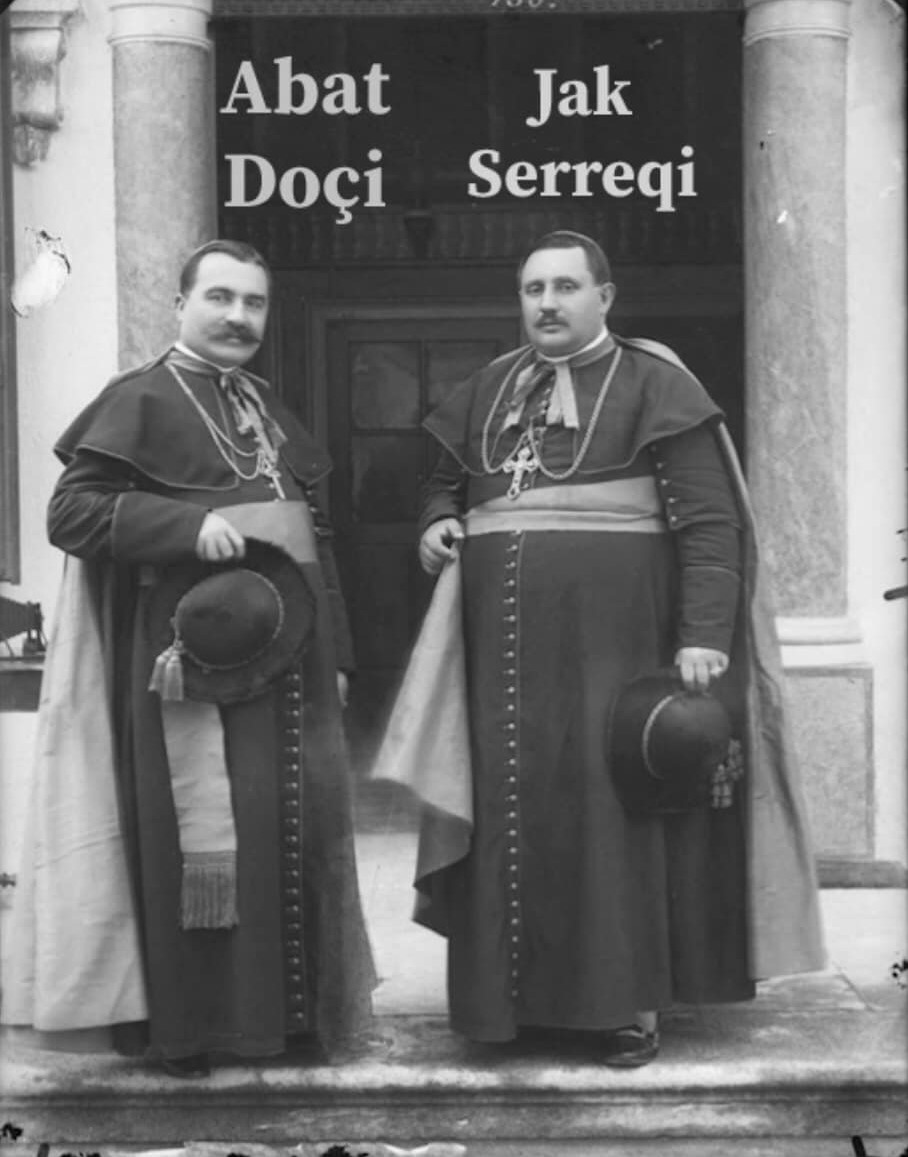
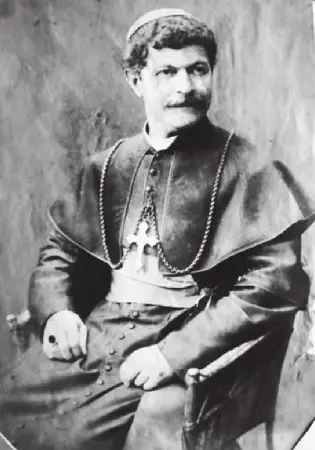
Preng (d/e) Doçi (Dochi), was born on February 7, 1846, to father Pren (or Pjetër) and mother Mria (Maria) in the “Paraspor” neighborhood, in the most beautiful valley in the world, the valley of Bulgër, as the renowned novelist Fabian Barkata called this valley in his novel Lule. The valley of Bulgër lies in the lower course of the famous Fan River. At any time, in any season, in this valley the eye sees only greenery, and all around it notices a beautiful forest circle. In this valley, accompanied by the murmur of the Fan i Mirditës river, which created beautiful resonant sounds, little Prendi began to fall in love with his homeland.
Prendi took his first steps of knowledge about the Church and the letters of the alphabet together with his mother, going to Kallmet, where the episcopal residence of Lezhë was located. There he stayed for several years until he finished primary school. At the age of fourteen, in 1856, he entered the Papal Seminary of Shkodër, where he remained until 1861. At the Seminary he stood out for his diligence and good grades, so in 1861 he was sent to the Collegium Urbanum in Rome for advanced theological studies. During his studies in Rome, he had the opportunity to become acquainted with Arbëresh literature, Albanian history, and the great poet Jeronim De Rada.
Priestly Activity
After completing his studies in 1871, Dom Preni, equipped with knowledge, returned to Albania and, without lingering with his relatives and homeland, was appointed parish priest in Korthpulë. Alongside his care for the spiritual condition of the people, he was very concerned about the difficult situation of the Mirdita people under the Ottoman yoke. Inspired from the very beginning of his youth by the simple patriotic idea, as soon as he set foot on the land of his ancestors, in Mirdita, due to the constant pressures of the occupiers, alongside his spiritual care for the faithful, he devoted himself to the national cause. He strengthened the national cause even when he was chaplain and secretary to the Abbot of Orosh, Dom Gasper Krasniqi, during 1872‑1875.
The uprising of the Mirdita people against the Ottomans in 1876‑1877 was the result of the organization by Dom Prekë Doçi and the standard‑bearer of Mirdita, Preng Bibë Doda. His work on this organization led the bishop of the diocese of Lezhë, Francesco Malčinski (an Austrian citizen of Ukrainian ethnicity), to suspend (excommunicate) Dom Prengu from priestly services. Dom Prengu, now aware of the bishop’s opinion of him and without seeking mercy from him, took to the mountains together with many fellow villagers. Thus in May 1877, Dom Prengu, together with some companions, set out along mountain paths to go to Cetinje and beyond.
But his path was very short, because in Vuthaj of Guci he was caught by Turkish soldiers and from there they sent him to Pejë and finally to Istanbul, Turkey. From that day, for 31‑year‑old Dom Prengë Doçi, a life full of trials began, which would last a full eleven years, spanning three continents.
Prend Doçi’s 11 Years in Exile
After being sent to the prison of Istanbul, thanks to a fellow countryman, Nikollë Përlaskaj, who happened to be a guard in the then‑prison of Constantinople, Doçi managed to contact the Catholic patriarch of that capital, the Armenian Stefan Azaryan, who, as soon as he learned of this matter, took action to free Dom Prendi. In the end he succeeded, and Doçi was released from prison on condition that he leaves the Ottoman Empire.
And overjoyed, Dom Prendi eagerly set out for the dreamed‑of Rome. On July 7, 1877, from Rome, he sent a letter to the archbishop of Shkodër, informing him that he had miraculously escaped the clutches of the Turkish soldiers and that he was now in Rome, at the Collegium Urbanum where he had completed his studies.
Since he was forbidden to return to Albania, Doçi, having received approval from the Holy See, set out for a mission in the New World (America) in 1877. He was the first Albanian to set foot on the new continent. Dom Prendi, while staying on the other side of the globe, longing for his homeland, would often address the sun in the morning: “What news do you bring from the land of Europe? Have you seen my people?” While in the evening he would say: “Go and greet my people up there, where you know.”
Doçi’s stay in the Canadian province of Brunswick was attested by the contemporary newspaper The Morning Freeman of Brunswick on October 22, 1881. In the memoirs of some Canadian priests, Doçi is presented as a very interesting example of patriotism. In 1883, Dom Prendi was called to Europe with hopes of returning to Albania. Thus on April 2, 1883, he found himself in Rome. To be as close as possible to Albania, the Holy See sent him on May 5 of the same year as a missionary to Tivar, where he stayed for a full six months.
But despite the efforts of the Holy See and the Archbishop of Shkodër, P. Guerrini, to enable his return to his homeland, Doçi, with great bitterness, was forced to take the ship along the Albanian coast and head for Athens. Because of the slanders that the Bishop of Lezhë, Malčinski, was directing toward Istanbul and Rome, Dom Prendi in 1884 was again forced to leave Europe, this time heading to the continent of India, precisely to Bombay, appointed secretary to Cardinal Antonio Agliardi. There, as a good connoisseur of Italian, Latin, and French, he earned a deserved place among the intellectuals of Bombay.
Return to Homeland
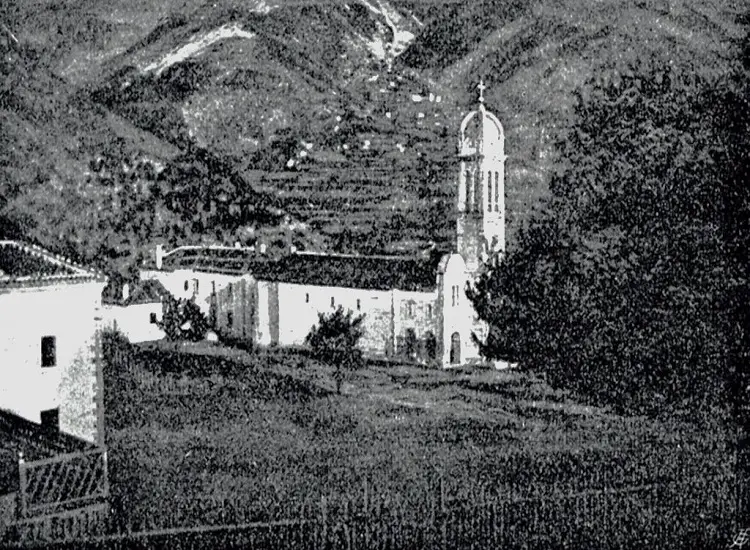
No matter how well he was in free countries, Doçi found no rest or peace. His only desire was to return to Albania. Thus, after incessant requests from him from Bombay and Rome to return to his homeland, on November 6, 1888, accompanied by sons of Mirdita, welcomed village after village, now as Abbot of the Abbey Nullius (special Abbey) of Mirdita, he arrived in Orosh.
Pope Leo XIII, with the decree supra montem Miriditarum dated October 25, 1888, had renewed the Abbey of Shën Lleshdri (St. Alexander), separating it from the jurisdiction of the Diocese of Lezhë and making it directly dependent on the Holy See. According to that decree, to the Abbey, which consisted of the parishes of Orosh and Spaç, five more parishes separated from the Diocese of Lezhë were added: Ndërfanda, Kalivarja, Qafa e Malit, Blinishti, and Fandi. The Sacred Congregation of Propaganda, with the decree Ssmus D: N: Leo dated October 27, 1888, informed Dom Prengë Doçi that the Holy Pope had chosen him as Abbot of Mirdita.
It should be noted that several other parishes were added to this Abbey by decree of the Holy See on September 30, 1890: Vig, Mnela, and Gomsiqia, separating them from the Diocese of Sapë. By decree of March 31, 1894, the Holy See added five more parishes separated from the Diocese of Lezhë: Kashnjet, Korthpulë, Shën Gjergj (St. George), Ungrej, and Kaçinar; and by decree of July 2, 1906, Gryka e Gjadrit, which belonged to Sapë, was added to the Abbey. The Abbot remained in the office of the good shepherd for 28 years.
Literary Activity
Abbot Prend Doçi, besides being a distinguished diplomat, was also honored as a poet and writer. He wrote poetry and prose in a fluent and well‑used language, publishing them in the 1916 calendar Vepra Pijore and the 1925 calendar Kalendar për të Gjithë. Although in most cases he wrote anonymously, he published about 32 works. Among others, he also published the dictionary of Dom Dodë Koleci, issued over nine years by the “Bashkimi” society.
With the founding of the “Bashkimi” society in 1899 and the Albanian orthography with Latin letters, Prend Doçi takes a deserving place in Albanian literature. In addition to the books published by this society, we also have the Alphabet that the Congress of Monastir, held in November 1908, approved with few changes. The Abbot is also regarded as a protector and initiator of the opening of Albanian schools in Mirdita and its surroundings.
Death of the Abbot
On February 17, 1917, while coming out of a warm room to walk in the middle of the murky weather in the courtyard of the Abbey, the Abbot felt a weakness! He collapsed! He felt unwell! He was visited by two Austrian doctors who were in Orosh with the army. Diagnosis: bronchopneumonia and cardiac weakness! “His days are numbered!” the doctors said! The clergy and relatives were notified. Abbot Doçi remembered and said: dies annorum nostrorum septuaginta anni (“the years of our life are seventy,” Ps. 90:10), which he had already passed. He called Dom Zef Skani; he confessed him, gave him communion and the sacrament of anointing. Thus prepared, death overtook him on February 22, 1917, at 2:30 p.m. The good shepherd, writer, patriot died, having built himself a monument with immortal works. / Memorie.al