Memorie.al / The 11th Song Festival on Radio Television, in the history of communist Albania, was a “milestone” that proved once again that any attempt by artists to break through toward Europe would inevitably be halted at that “checkpoint” where a “curfew” was declared! This is the reason why music historians will frequently return to that festival, which sowed talents but reaped victims. In the calendars of the time, this festival would mark the culmination of efforts to break the rigid rules of Socialist Realism, which, although acting more harshly in literature, could not fail to also influence music, painting, sculpture, etc.
The Start
Previous attempts in the genre of musical organizations had appeared in those years as early as the television shows “Winner of Winners,” etc., which in a way sought to resemble Italian musical programs that had begun to be followed by everyone at that time.
Away from Schematism
Thus, one day, the order for the preparation of the 11th Song Festival on Radio Television gathered in an artistic camp some of the most prominent names from various fields, which were also known for their liberal tendencies. Fadil Paçrami and Todi Lubonja themselves, having genuine artistic inclinations, built a small “fortress” of talented and liberal artists around them, hoping that in this way, the levels of musical art and the festival tradition in Albania would increase.
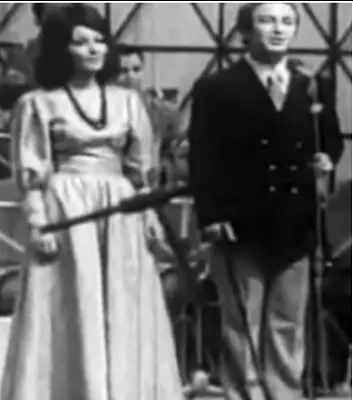
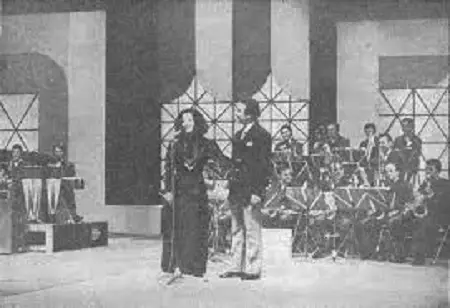
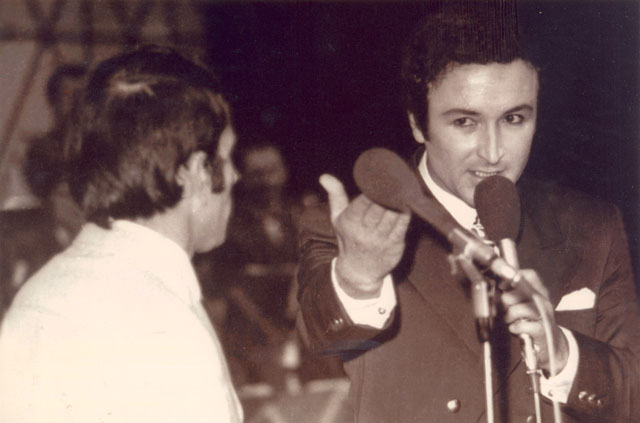
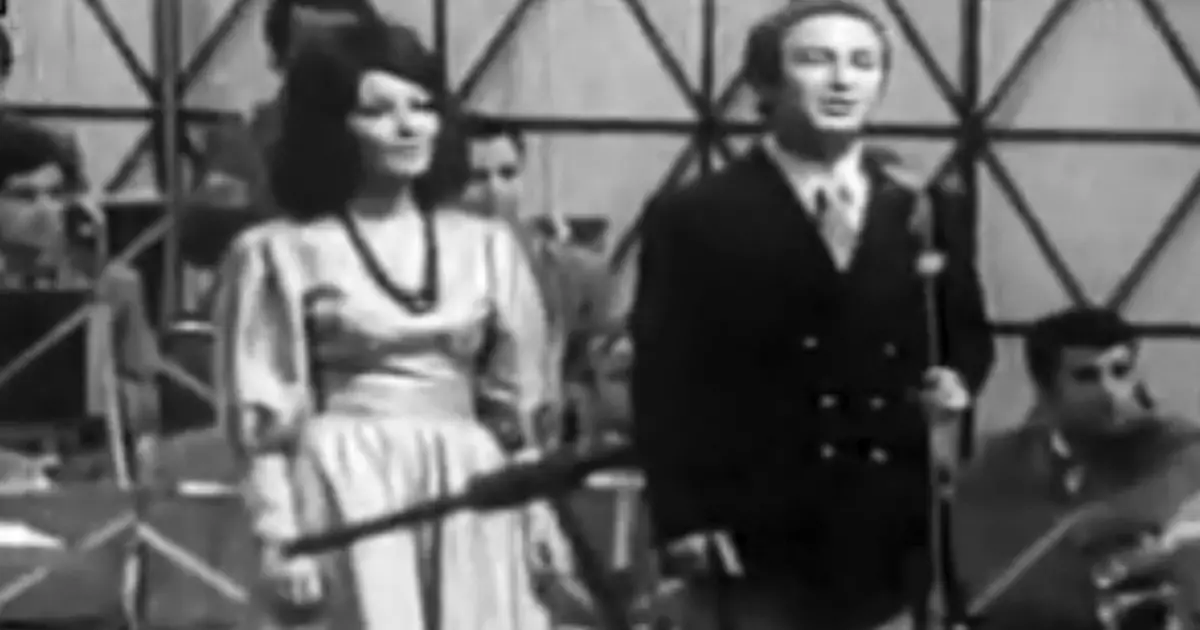
And the fruits came very quickly. Indeed, even in the selection of the songs, priority was given to rhythmic compositions. Meanwhile, in the lyrics of the songs, for the first time, there was a tendency to disconnect somewhat from the main principles of socialist realism (such as “Socialist Partisanship,” the “Positive Hero,” etc.). A great evolution was also visible in the set design, where the props used differed greatly from previous festivals. Even the way the hosts, Edi Luarasi and Bujar Kapexhiu, communicated with regional juries via live phone calls marked a new achievement. However, Kapexhiu and Luarasi at that time could not have known that this story, which began with the beat of drums, would end with trials and arrests.
The Epilogue
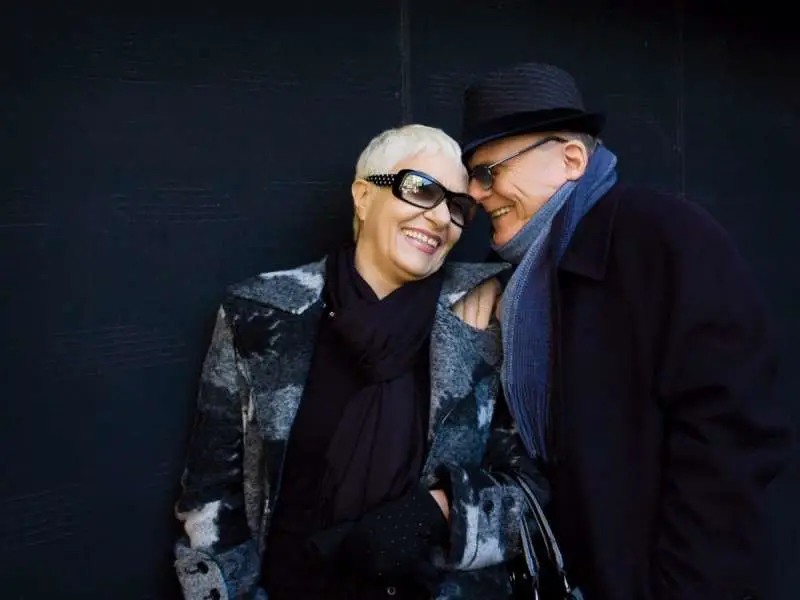
The majority of the participants in this festival, through no fault of their own, were interned or imprisoned, while many others were dismissed from their jobs. Edi Luarasi herself suffered an entire ordeal of hardships after the festival for a fault she had not committed. Or rather, her only fault had been her passion and love for great art, as well as the sensitivity to always offer the spectator artistic works that were as close to life’s truth as possible.
Undoubtedly, an even more tragic fate befell her talented husband, director Mihallaq Luarasi, who was a prominent man of art at that time, including the staging of the drama “Gray Spots” (Njolla të murrme). The regime imprisoned him based solely on political accusations raised against his art. Ultimately, the punishment came only because the two of them (and others before and after them) had attempted to step outside archaic schematism to provide an example of artistic excellence for that time.
Before and After the Show: How the attack on the “prominent ones” was motivated
The director of the 11th Festival was Mihallaq Luarasi, the screenwriter was Bujar Kapexhiu, the set designer was Edi Hila, and the direct manager of this festival was Todi Lubonja. According to the script, which had been reviewed several times by high-level structures, this festival for the first time stepped out of the “circle” and brought down the myth of the “template,” starting from the communication between the two hosts on stage?
Above all, this communication between them was an open door for the spectator, who for the first time felt like a participant in what was unfolding on stage. Regarding this period, the festival’s screenwriter, Bujar Kapexhiu, says: “I had finished the Conservatory about five years prior and was working as a director at the State Variety Theater at the time. The first proposal to be the festival’s announcer, but also its screenwriter, was given to me by director Mihallaq Luarasi.
I initially did not accept. I made this refusal because I was a director then, and if I accepted to appear as an announcer, it seemed like a step down. But later, I was called to the high structures of the state and after several conversations, I accepted. I was simultaneously the screenwriter and the presenter,” he stated. Kapexhiu is undoubtedly one of the truest and clearest witnesses of this event of national proportions. Furthermore, the juries set up across all districts clearly showed that the winning song, for the first time in the history of festivals, would be decided through the votes of specialists throughout Albania.
“The direct telephone line with the Festival hall was used for the first time,” Kapexhiu testifies. The singers who participated there were among the most distinguished figures of Albanian light music. Until then, they had all found the right artistic paths together to reach culminations. Thus, in addition to the great composers of that time, it must be said that the following competed as singers: Vaçe Zela, Sherif Merdani, Tonin Tërshana, Dorian Nini, Lindita Sota, Françesk Radi, Bashkim Alibali, etc. Meanwhile, the songs they competed with, such as “On the Television Screen,” “Spring Has Arrived,” “Kafe Flora,” “The Student’s Song,” “On the Boulevard We Pass,” “I Gathered My Friends in the Park,” etc., were hummed as melodies by ordinary people the very next day.
What dominated during the festival nights was musical rhythm, where jazz was a priority. The festival itself, which at its core is always a musical celebration for the people, received many congratulations from everyone across our country. During those days, it was even liked by the high leaders of the communist state. Very good words were also said about the singers, composers, and lyricists and even the costume designers received special congratulations.
In essence, in a single word, this entire undertaking was described as an evolution. But meanwhile, after a few weeks, a rumor began to circulate that Enver Hoxha had not yet given his opinion. Then, gradually, a wave of articles against “modernist imitations” began in the press, and finally, the Plenum of the Central Committee of the PPSH officialized the censorship. In that plenum, the new developments in literature, drama, music, painting, etc., were heavily struck, with punishments specifically meted out to Fadil Paçrami and Todi Lubonja.
How were the Festival organizers punished?
Regarding the period of punishments, Bujar Kapexhiu says: “At first, following the days of the 11th Festival on Albanian Radio-Television, there was great enthusiasm among ordinary people and especially among the youth of that time. Everyone congratulated us and told us that this festival had reached European parameters, reaching the peaks. But gradually, the enthusiasm suddenly faded and meetings began everywhere, in all artistic institutions. These meetings were held by order of the Central Committee of the PPSH.
It was said that Enver Hoxha personally had expressed his dissatisfaction with the festival. Thus, from day to day, I waited for my turn for punishment.” So says the well-known director and actor Bujar Kapexhiu, who also cites Balzac’s expression: “Better a terrible end than a terror without end.” And the terror of those long meetings had no end. One morning, such a meeting was announced for the employees of the State Variety Theater, where director Kapexhiu worked at the time.
Here is how he remembers it: “In this meeting, the delegate was Enver Halili, who fundamentally always seemed like a good man to me. There, Enver Halili pointed out what they had assigned him to say, but his voice trembled because it was felt that he himself had no desire to say those things. Ultimately, at the end of this meeting, my dismissal from work was decided. And so it happened; I was immediately sent to work as a laborer at the ‘Josif Pashko’ Construction Enterprise!
Similarly, in other artistic institutions, punishments were taken against other artists. I want to mention here my esteemed colleague, Mrs. Edi Luarasi, who was dismissed from work and for a long time was assigned to work as a seamstress. Meanwhile, Françesk Radi was sent to Fushë-Arrëz, Edi Hila to a poultry farm in Tirana, Justina Aliaj was dismissed, Aleksandër Lalo was transferred to a remote area, and so on.”
A short time later, Enver Hoxha severely punished the high leaders of culture in Albania in the infamous plenum, where only Ramiz Alia remained untouched. At that time, Ramiz was directly responsible for culture in the Politburo, yet the circle of those punished ended there. Ramiz himself, in the inner circles of the Politburo members, made self-criticisms regarding the events of the 11th Festival and he himself also criticized others for this festival.
Director Mihallaq Luarasi had directed the 10th Festival, and thus they entrusted him with the subsequent one as well. Regarding this, his wife, Edi Luarasi, stated: “In this festival, everything was different, starting from the placement of the orchestra, the stage-hall combination, the dynamism of the presenters, the attire of the orchestra and the singers, the connection with regional juries, the orchestrations, etc. The orchestrations were very dynamic. In this festival, they sang of love, of nature, of mothers, of something beautiful and completely different from other festivals where they sang of the party, the vanguard brigadier, the third shift, etc.
After the festival, everyone congratulated us – people in the street – Albanians then thought that we no longer had our eyes fixed on Italy, now we had our own singers. And we liked this, because at that time, it was the peak of Raffaella Carrà in Italy.” But when would the attack begin? As Edi Luarasi explains: “After the success, the strikes began. But I am convinced that the 11th Festival was a pretext. It was an opportunity to strike at art. The state already had the accusation for ‘Gray Spots’ – where Mihallaq was the director – ‘in its pocket.’
In this drama, I had the main role. It was a fantastic role. So, the strike against art and against us was planned. I felt the first sensation when I was with Mihallaq during a concert. Someone said to me: ‘Edi, Comrade Enver did not like the festival and I think he will attack it.’ But even with these words, we didn’t imagine anything severe. But suddenly the barrages began one by one. At first, letters were supposedly written by workers or youth from other districts, from Lushnja, Elbasan, etc., claiming they didn’t like the festival and that it had ‘foreign manifestations.’ Then the meetings began.
I remember Pirro Kondi came to Radio Television and we didn’t understand why, because we thought he had come to congratulate the festival. But the delegates immediately said: ‘Leave the congratulations aside, because we have received letters from the youth criticizing the festival.’ Then the meeting continued. Those who lived through those times understand very well what a fury began against the minimal rights of people. Mihallaq was initially sent to Ballsh for re-education. It was 1973 and he was sentenced to carry cement bags!”
The March Days
The 11th Song Festival on Radio Television was condemned in March 1973. The life of the songs lasted only three months. Perhaps that was enough for the memory of art lovers to fixate on them. For this reason, March 1973 is identified with a winter of censorship. Not for nothing do writers and historians remember that March as a rainy period when, on Tirana’s central boulevard, people with umbrellas in their hands talked about nothing else except the murder of music, where decapitations were not infrequently mentioned. Kadare himself, in one of his books, recounts meeting Todi Lubonja on the boulevard during those days.
During this meeting, not by chance, Lubonja recalled a book by Kadare that spoke of decapitations. At that time, Kadare was giving the finishing touches to the novel “The Castle” (Kështjella), about the war against the Turks. In other words, between the writer Kadare and the Director of RTSH, Lubonja, there was talk of the heads of the Turks. Lubonja said to Kadare: “You have spoken to me about a type of punishment where the heads of Turkish pashas were cut off. If you have a place in your novel, write something about this kind of decapitation, and do not forget me.”
Post-Festival
The “stars” that shone in those three nights of the festival left behind a distant glow, which served as a culmination for future artists. The message and goodness that emerged those nights from the festival halls spread like air and remained forever as spiritual food for artists and ordinary people. It was never forgotten that Vaçe Zela, Justina Aliaj, Lindita Sota, Ema Qazimi, Sherif Merdani, Tonin Tërshana, Dorian Nini, Bashkim Alibali, etc., sang with emotion songs they had long dreamed of.
These songs remained in memory, and perhaps people bonded with them more, as one bonds with the child who suffered the most. This is also due to the fact that this very festival was banned and predetermined a tragic fate for many artists’ families. Regardless of this, even in the spectacle “Songs of the Century,” several songs from this festival proved once again the well-known saying that “true art may be suppressed by dictatorships, but nonetheless, dictatorships themselves have an end, while great art does not.” / Memorie.al
11th Song Festival on Radio Television, December 22, 23, 24, 1972
- Artistic Leader: Nikolla Zoraqi
- Director: Mihal Luarasi
- Set Designers: Edi Hila, Myrteza Fyshekati, Tomi Vaso
- Conductors: Ferdinand Deda, Ermir Krantja, Gaspër Çurçia
- Presenters: Edi Luarasi, Bujar Kapexhiu
- Jury Chair: Çesk Zadeja
Prizes:
- First Prize: “Kur vjen pranvera” (When Spring Comes) by Pjetër Gaci
- Second Prize: “Kafe FLORA” by Agim Krajka
- Third Prize: “Kush me njeh mua?” (Who Knows Me?) by Agim Prodani