



The third part
Memorie.al / The secret file of the UDB, the Yugoslav Secret Service, in the years 1944-1953. This file includes detailed information on Albanian groups operating in Italy, Greece, Austria, Germany, France, England, Turkey, Syria, Lebanon, Egypt, USA, Canada, Australia, New Zealand and Brazil. The UDB file describes the Albanian emigration as having a political character, mainly during the First World War, especially with the emergence of the Frashëri brothers, Ismail Qemal Vlora, Mihal Gramenos, Çerçiz Topulli and other brave men of the Albanian nation who fought against foreign invaders. “Even during the time of Zog’s rule, from 1924, the Albanians continued the political struggle abroad against Zog”, continues the report of the Yugoslav secret service. It says that Fan Noli, then head of the Albanian government, escaped together with his friends, first to Austria and later to the United States, where he settled in Boston.
The UDB file for AHMET BEG ZOGUN
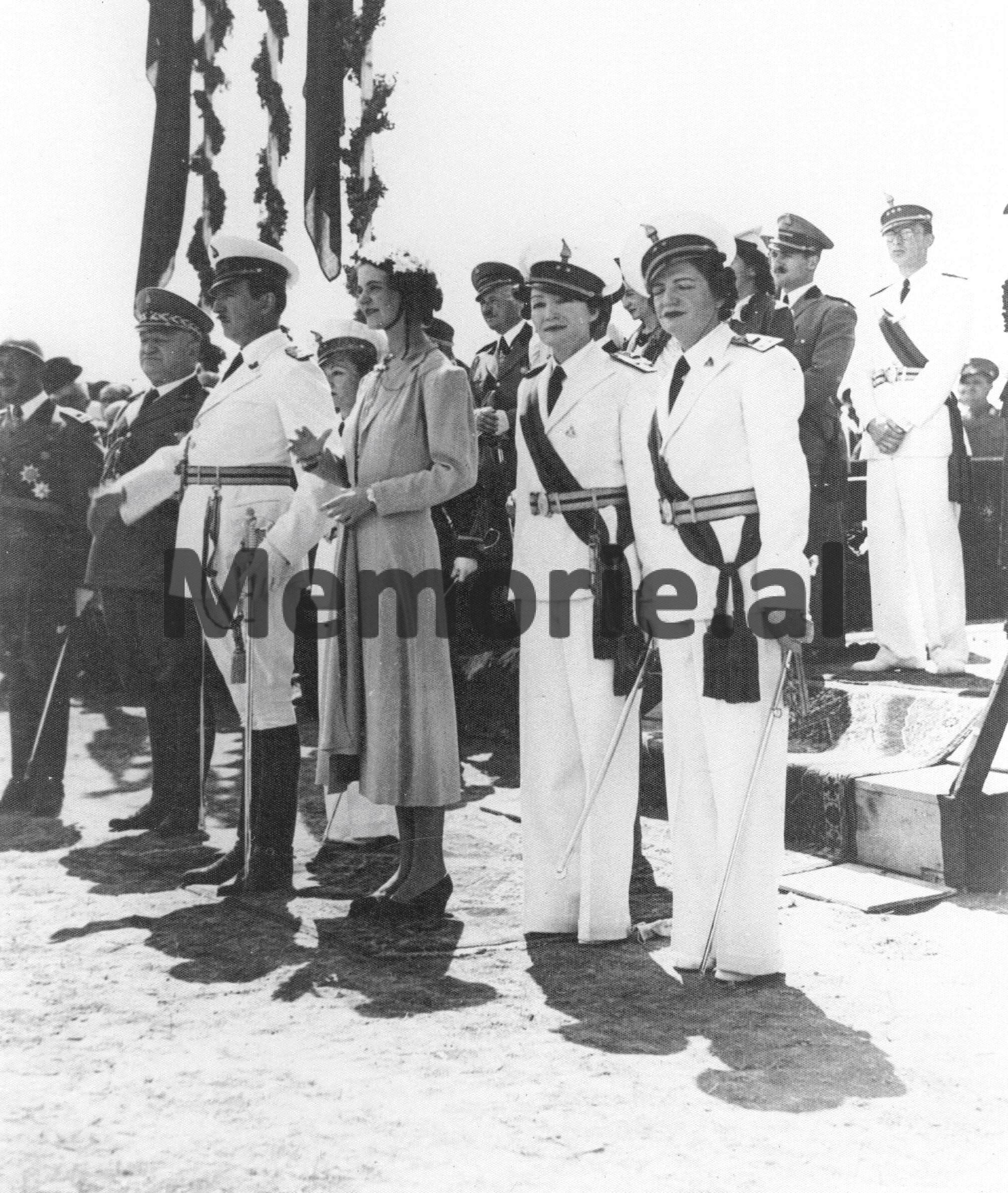
Former King of Albania. He was born in 1895, in Burgajet, Burrel district, in the Mati tribe, as a descendant of a Beyler family, with the influence of this tribe in the region since the early days of Turkish rule. After the death of his father (Xhemal Pasha), who was the first heir of the Mati tribe, since he was a boy with the little school he had finished in Istanbul, he became the first of the tribe, according to the hereditary right, since the brother of the eldest, Jelal, had died. In 1911, he led his tribe, joining Hasan Beg Pristina, Riza Beg Kryeziu from Gjakova and Bajram Currin, in an uprising against the Young Turks.
He fought on the side of Turkey in the Balkan Wars, against the Montenegrins, in Lezha. In 1914, for a time, he served the then Prince, Wilhelm Wid. During the First World War, in 1915, he was at Pashiqi in Nis, by order of Esat Pasha, to offer him friendship, at a time when the Albanian tribes with their hostile actions were endangering the Serbian army. During the retreat of the Serbian army, Zogu kept his word and the Matians did not attack the Serbian units.
Thus he managed to win the friendship of Belgrade, which would later reward him, spending about two million dinars on his political career, in the period from the time of the assassination of Esad Pasha, until the fall of Zog from power in May 1924. In 1915, when the Austrians invaded Albania, Ahmet Beg Zogu joined the Austrians, who took him with them to Vienna, where he stayed until the end of the fighting.
After the war, for the first time he stood out at the Congress of Lushnja, in January 1920. Then, with his friends, he supported the new Albanian Government, emerging from this congress, making it possible to enter Tirana, as well as forced the Government of Durrës, of Turhan Pasha, to relinquish power. At the head of the armed government forces, he fought against the followers of Esad Pasha, who in Tirana in May 1920, were led by Osman Bali.
In March 1920, Zogu became Minister of Internal Affairs, and since then, he has been continuously either Minister of Internal Affairs or commander of the Albanian army. He led military actions to protect and strengthen the government in Tirana and at the head of the government troops and his followers, he suppressed several uprisings.
As Minister of Internal Affairs, he organized the elections, leading his own people to Parliament. Very soon he managed to occupy one of the most prominent places in the Albanian political scene and became the central personality around which all political events in Albania have been brought about – until the loss of its independence.
In December 1922, the Albanian Parliament elected new regency, which entrusted the formation of the government to Ahmed Beg Zog. He was prime minister until the end of February 1924, when, after an assassination, he was forced to leave power to his father-in-law, Shefqet Bey Verlac, his political ally and friend.
Due to the political situation and the extremely aggravated circumstances, as well as the fierce opposition of the opponent, which incited the popular masses to revolt, the government was forced to resign, while Verlaci and Zogu were forced to leave the country.
The new government was formed by progressives, with Fan Noli at the head, but this government was also short-lived, because Zogu, who had been hiding in Belgrade, returned to power again at the end of 1924, through a military intervention in Albania, as the darling of Yugoslavia, which in this case, offered all the necessary help, against the concrete promise from his side that he would establish friendly relations with Yugoslavia.
After his return to power, Zogu convened the Constitutional Assembly, which proclaimed the republic and voted on the new constitution, electing him president of the republic. According to the constitutional provisions, Zogu, as the President of the Republic, was at the same time also the Prime Minister.
Taking advantage of this dual position and the broad powers given to him by the constitution, Zogu gathered his people around him, especially in the army and the legislative body, who, supporting the electoral system turned them into a blind and obedient tool. .
In November 1926, he suppressed a real uprising in the North (the Dukagjin Uprising), which gave him the opportunity to strengthen his power with brutal methods. Although he returned to power, as a friend and the darling of Yugoslavia, the great need for money made him fall into the arms of Italy again, which used him, little by little, economically and politically Albania, thus openly putting its sovereignty at risk.
In November 1926 – the Pact of Tirana was signed, through which Albania was openly connected with Italy, which, however, brought the reaction of Yugoslavia. In 1928, Zogu became King, taking the name Zogu I, King of the Albanians.
Zogu’s regime, first a Republic, then a Kingdom, lasted until the invasion of Italy in 1939, relying on local reactionary groups, as well as on the support of Italy, for which he created a series of facilities, to the detriment of economic independence and politics of the country.
On April 7, 1939, when the Italians invaded Albania, Zogu with his family and suite fled to Greece, from where he then went to Turkey and, finally, to France. From France he went to England, where he lived until the end of the War. At the end of February 1946, together with his family, his three sisters, and his suite, he went to Egypt, where he was received as a guest of King Farouk, settling in Cairo.
At the beginning of 1947, Zogu made an effort to unite the Albanian emigration in the West, to prepare the formation of an Albanian government in emigration. For this purpose, he sent his representative, Colonel Hysen Selmani, to contact the representatives of the “Independent National Bloc”, “Ballin Kombëtar”, etc., and scheduled a meeting in Cairo. The representatives of “Legality”, “Independent National Bloc”, “Balli Kombëtar”, etc., as well as the “Group of Kosovars” participated in the meeting with Zogu.
Zogu proposed that the political groups in emigration should unite by forming a central government, which would have this program:
1-The royal rights should be recognized to the Zog
2-all Albanian immigrants should gather in Greece;
3-Zogu would take over their financing;
4-major Abaz Kupi, to be appointed military leader.
The agreement was not reached, due to the attitude of the “National Front”, which did not want to compromise politically, recognizing Zog’s royal rights. The action to create a united organization, with a common leadership, continued after that, but the initiative for this was taken by “Balli Kombëtar”, without Zogu, under the patronage of the Anglo-Americans.
Finally, after several unsuccessful conferences, in August 1949, with the intervention of McLean (former head of the British military mission to the leadership of the nationalist resistance in Albania, during the occupation, as well as an expert on Albanian affairs) it was reached to create the “Free Albania” Committee, which, however, did not include all groups.
Zogu declared that he was ready to help the Committee, but on the condition that Sait Kryeziu be excluded from it, which the Anglo-Americans did not accept, stating that Kryeziu was the man in whom they trusted the most. The establishment of this committee constituted a defeat for Zogu, especially since the Committee achieved the union of the Albanian emigration, not recognizing Zogu’s royal rights.
The committee was also joined by a part of Zog’s followers, who, although they remained monarchists and were in favor of returning Zog to the head of the country, agreed that this should only be achieved through voting, if the people chose it. After that, Zogu sent his emissaries to Rome to break up the Committee. For this mission, his sister, Sanija, and apparently also Ali Këlcyra (one of the leaders of the “National Front”) were sent as emissaries.
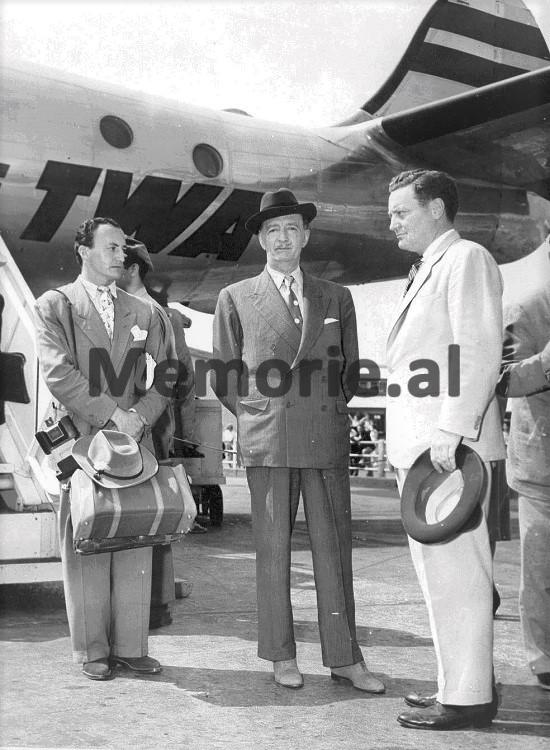
Around the middle of 1951, Zogu went to America. During Zogu’s stay in America, Hasan Dosti, representative of the Committee, stated on Radio “Free Europe” that, in general, he had gotten along completely with Zogu and that they had agreed that Zogu would take over the leadership of Albanian politics.
Regarding Zogu’s position in America, it was thought that America and England would accept that some change be made in Albania, because they wanted to keep the Mediterranean and the Adriatic safe, and Zogu said that he would play the main role in these changes. In American circles, there were good words about Zogu, so there is reason to believe that the Americans will have reached an agreement with him.
In America, he was received at the Foreign Ministry and the Pentagon. According to the statement of the Greek ambassador to the USA, Politis, Zogu has asked for economic aid and aid in weapons for his followers. The American authorities maintained a reserved attitude, not having cleared what influence he really had on immigration and what power he had.
Zogu stated that there were 14,000 insurgents in the mountains of Albania, but that they were poorly armed and had little help from the outside, adding that there was another group in Italy, trained for guerilla warfare, that was ready to act.
He has requested from Greece, and especially from Italy, an effective support for his followers, with whom most of the followers of other anti-communist parties would cooperate. Regarding Yugoslavia, he said that it, with its “expansionist” policy, represents a great obstacle for the liberation, anti-communist forces…! Memorie.al