
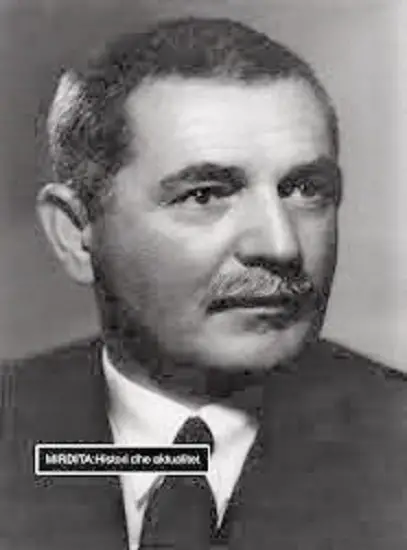

From Ndue Oroshi
Second part
Memorie.al / “The door of the Kapedans of Mirdita, in the nama and za in the entire Balkan peninsula and beyond, was a sacred ark, where the canon norms were preserved over the centuries, i.e. the heroic-patriarchal essence, with a precious human core, the essence that saved the Albanian race from degradation and perversion. That visar was once the property of the whole nation, and then the wild conditions of the Asian domination came and narrowed its circle of influence, and limited it to the mountains of Albania. The old spirit of the land laws, where more or less, beat the payada, in the blood of the Albanian, spread it all over the land of the homeland, and stuck everywhere, as the Albanian slave people moved. Foreign researchers and researchers, in the Kanun of Malevet, investigate the purest substance of the Arbnuer tribe and the patents of nobility, of the very ancient Indo-European. Kapidan Gjon Marka Gjoni, a carved man, a piece in the harsh curr, of our racial land, I represent the autochthonous tradition, the most detailed. In him the masculinity and humanity of the race was incarnated as an example”.
Continues from the previous issue
The serious illness, death and grand burial of Kapidan Gjon Marka Gjon
Based on published writings and direct data from contemporaries who are still alive, Captain Gjoni became seriously ill in 1960. The doctors’ diagnosis was immediately depressing. They did not give him life for more than two – three months. On the contrary, the body of Kapidan Gjon Marka Gjon stayed so long that even the doctors who took care of his health were surprised.
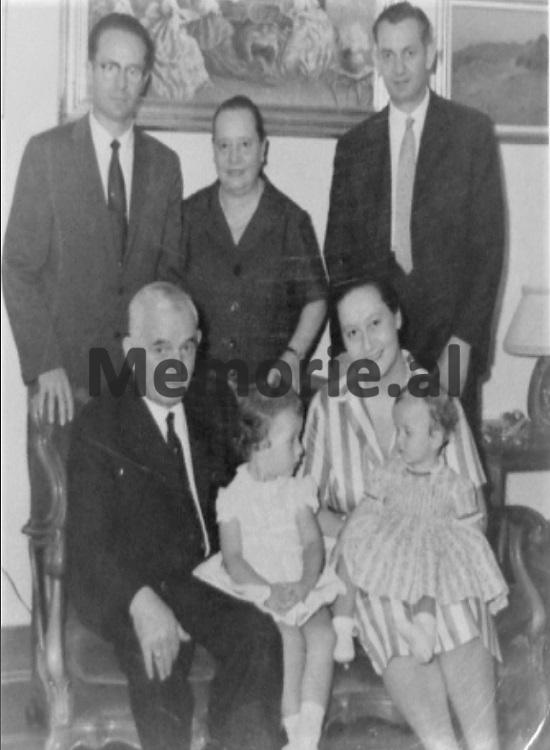
And after 45 days of hospital stay, he returned home to his little granddaughters, Ndou’s daughters, and continued his normal life for several years. In 1964, the disease appeared again. And for two years and ten months, he was still hospitalized.
No complaints ever leave their mouths. The visitors, after his voice had been cut off by illness, were spoken to with the light of his eyes, which were smiling under a shadow of sadness, in the depths of the minxas. It was a chuckle that bloomed through the sting of pain. I waited for men without my last breath. And the light of the smile on lips whitened by suffering, always came to you, but never disappeared.
Passed into the next life, at 9:15 p.m. on April 28, 1966, shaking the hand of Ndu, the son who took care of him with unparalleled filial love during the long illness that slowly stopped his body’s strength, made it’s leather.
After passing on to the next generation, Captain Gjon Marka Gjoni was buried on April 30, 1966.
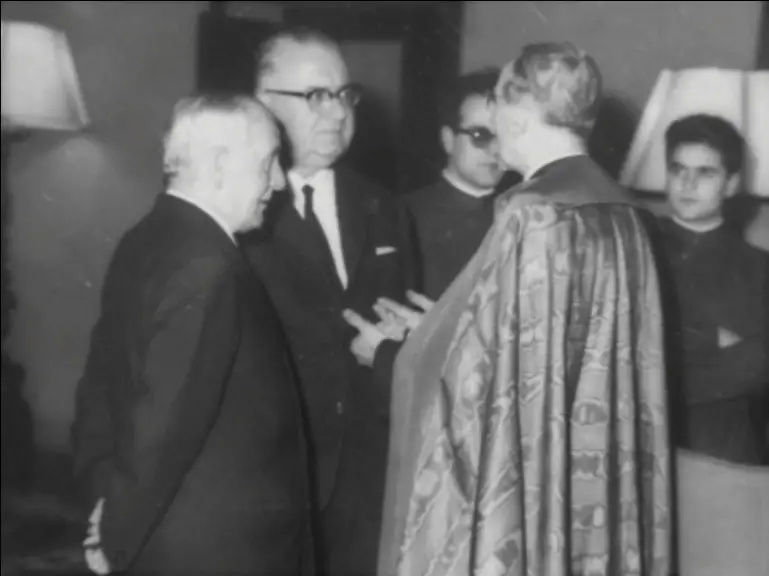
His funeral was held in a grand manner. The last word was given by Professor Ernest Koliqi, while kind friends of his two sons, Captain Ndue Gjon Markut and Captain Nikollë Gjon Markut, shook their hands. In addition to the entire Albanian diaspora, Italian friends also participated in this funeral, such as: Shkëlqesat Cassiani and General Palandri, prof. Schiro, Mrs. Maja Jacomoni, on behalf of her husband, Professor Gradilone, Dott. La Francesca, Comm. Zanutto, Pio Montanari and many others.
There were many wreaths, among which those of the family members of the nephews and nieces and many others sent by the patriotic families, such as: Verlaci, Shkreli, Zorzoli, Mirakaj, Koliqi, and by the gentlemen; Tahir e Rifat Kolgjini, Asllan Zeneli, Iljaz Kraja, Lazër Qupi, a wreath commissioned by the group of ‘Bllokistave’ from Belgium, which arrived later.
Condolence telegrams came to the two sons of Kapidan Gjon Marka Gjon from all over the nationalist Albanian emigration. We are mentioning only a few of them: on behalf of the Albanian Kingdom Leka I, then Cardinale Antoniutti and Francesco Jacomoni, on behalf of the Committee “Free Albania” Professor Rexhep Krasniqi, on behalf of the National Organization “Legality Movement”, Selim Damani, on behalf of “Lidhje se Prizren”, Ismet Ukë Sadiku.
On behalf of the “Albanian Resistance Group”, Mit’hat F. Dine, on behalf of the organization “Balli Kombëtar”, Qazim Emra, on behalf of the “Blockists”, Melyshi – Ashta – Quni, on behalf of the “Blockist Group”, of Belgium, Rrok Maloki, from Pukas with residence in New York, from the International Center for Albanian Studies, Petrotta – Valentini – Gurakuqi, from Madrid, Hysen Selmani, from Brussels, Muharrem Bajraktari.
From London, Maria Selma and Tajar Zavalani, from Firenze, Isa Ndreu, from New York, the Muftia family of Xhemal Laçi, from New York, Dom Zef Oroshi, from Rome, Dhimitër Berati, from Brussels, Hysen Prishtina, Tahir Zajmi and Rifat Kolgjini , from Brussels, Sabri Domi, from Istanbul, Tahir Kolgjini, from New York, Said Kryeziu, from Brussels, Prenk Pervizi.
Also, the brothers Ndue and Nikollë Gjomarkaj received other telegrams from the United States of America, Ndue Përpepaj, Dede Pjeternikaj, Bardhok Ndreu, Shemsedin Vendresha, Dr. Hamdi Oruçi, Haki, Jonuz, Elez Ndreu, Ndrecë Kaziu, Nikollë Shkoza, Gjokë Dragusha, Gjon Marka Qupi, Nik Kajtazi family, Mejit Dibra, Lem and Lec Koliqi, Zef Luka, Pjerin Shkreli, Gac Gurakuqi, Toni Leka.
From England, Lazer Çupi, from Belgium, Beqir Rroji, Nikë Gjeto Daka and Arif Zekollari, from Kosovo the Kazazi family, from Austria the Koka family, from Germany, Professor Martin Camaj, Hil Topalli, Gjon Gjinaj, Ahmed Demi, Bardhok Shkurti, from Rome , Neki Libohova, General Amedeo Verge, and the Ottolino Marinelli family, the Di Porto family, the Del Monaco family, the Fabiano family as well as the Erminia Battisti-Melgushi family, from Palermo, Hanni and Gilbert Gurakuqi, the Lazer Bojaxhiu family (brother of Mother Teresa Gongje Bojaxhiu ).
Engineer Xhafer Deva, Professor Rexhep Krasniqi, Nikollë Mëlyshi, Shukri Biçaku, Dr. Spiro Muka, Albert Curtani, Professor Zef Nekaj, Ymer Doda, Ndue Lala, Nos Çirjaku, Prenk Pervizi, Ndue Mëlyshi, Dul Rroji, Gjergj Koka, Gjon Marka Gjini, Gjet Gjonaj, Haki Ballanca, Zef Suti, Pashk Margjonaj, Lec Shllaku, Adem Tafani, Qani Lesk Tatzati, Ahmet Sata, Hetem Zeqiri, Kamer Alla, Bardhok Doda, Daut Elezi, Kola Froki, Gjin Mirakaj, Dede Gjini, Lazër Çupi, Viktor Koliqi, Gjokë Preng Markaj, Dodë Frroku, Ndrekë Kola Prend Ndue Qupi, etc. .
It is not by chance that I gave some of the names of these patriots who felt great pain for the loss of Kapidan Gjon Marka Gjon.
In a word, this pain was felt by all the patriots of Ethnic Albania, then how can they lose the patriotism of the national activity of Kapidan Gjona Marka Gjon, some writings written during communism and before, commissioned by pan-Slavic circles and written by some garbage, which are not even worth mentioning.
Kapidan Gjon Marka Gjoni, remained in Albanian history that despite his personal activity in the service of the Nation, his activity was continued and carried out very successfully by his five sons.
We are starting from the greatest Kapidan Dr. Mark Gjon Marku, leader of the fight for Ethnic Albania, he was distinguished in political activity, where for two terms he was the Minister of Internal Affairs, when the voice of the motherland called he grabbed the rifle, until he was killed on June 14 of the year 1946, leading the anti-communist war for Ethnic Albania. After being seriously wounded, he fell on his own and fell heroically as the Mirditas fell throughout the centuries.
Captain Ndue Gjon Marku, who led the war in Mirdita for six months and, for 45 years, the “Independent National Bloc”, Captain Llesh Gjon Marku, who took command of the war on June 14, 1946 and continued this war to the full one year and three months, until he fell heroically on August 9, 1947.
Captain Ded Gjon Marku also occupies a well-deserved place. I say captain Ded Gjon Marku, because I have never heard in the history of peoples, about a prisoner and exiled for so long and I cannot make a comparison with anyone else.
Captain Ded Gjon Marku, the fourth son of Captain Gjon Marka Gjon, spent 41 years in prison and exile in the communist regime of Albania, and the youngest, Captain Nikollë Gjon Marku, who at the age of 17 broke the communist prisons, where he later he joined Kapidan Gjoni and Kapidan Ndout in Italy, making a valuable contribution to the “Independent National Bloc”.
Since I started this article with the words of the great professor and patriot, Professor Ernest Koliki, I would like to end this article with the words of Koliki, who in the speech delivered at the funeral of Kapidan Gjon, will said: “This man was consumed by the great shadows of death, in whom, during his journey on this earth, the most typical properties of our Albanian blood appeared.
He lived in a time of transition from one era to another, which caused a frightening clash between two opposing worlds: a world that was setting, which among us had heroic-patriarchal colors, and a world of wild thoughts, which aimed at its momentum, with the stone every sign of the horse, before it breaks the life of humanity on new bases. What were virtue and merit for you and your grandmothers was suddenly called and remains a fault for the new generations.
The captain of Mirdita, walked between these quarters in battle, firmly believing in the values of ancestral experience, convinced that only this legacy of ancient wisdom rests on the shore of peace in this life, if a man wants it, if a nation wants it household, a companionship, a nation”.
To these words of Professor Koliq, we add only two more words to Professor, Father Zef Valentini, who said that: “The captain of Mirdita, Gjon Marka Gjoni, was the Pillar of the National Flag”, that flag, which for five for centuries, it was preserved in the Heroic Mirdita. Memorie.al