• Rreth Nesh
  • Kontakt
  • Albanian
  • English
Friday, September 4, 2026
Memorie.al
No Result
View All Result
  • Home
  • Dossier
  • Interview
  • Personage
  • Documentary
  • Photo Gallery
  • Art & Culture
  • Sport
  • Historical calendar
  • Others
  • Home
  • Dossier
  • Interview
  • Personage
  • Documentary
  • Photo Gallery
  • Art & Culture
  • Sport
  • Historical calendar
  • Others
No Result
View All Result
Memorie.al
No Result
View All Result

Riza Kaca, the brave matjani who refused to take the oath in front of the Italian flag in Parma, in the rostrum where King Victor Emanuel and Benito Mussolini were

Riza Kaca, matjani trim që refuzoi të bënte betimin para flamurit italian në Parma, në tribunën ku ishin Mbreti Viktor Emanueli dhe Benito Musolini

By Caf Jonuz Çulaj

Part six

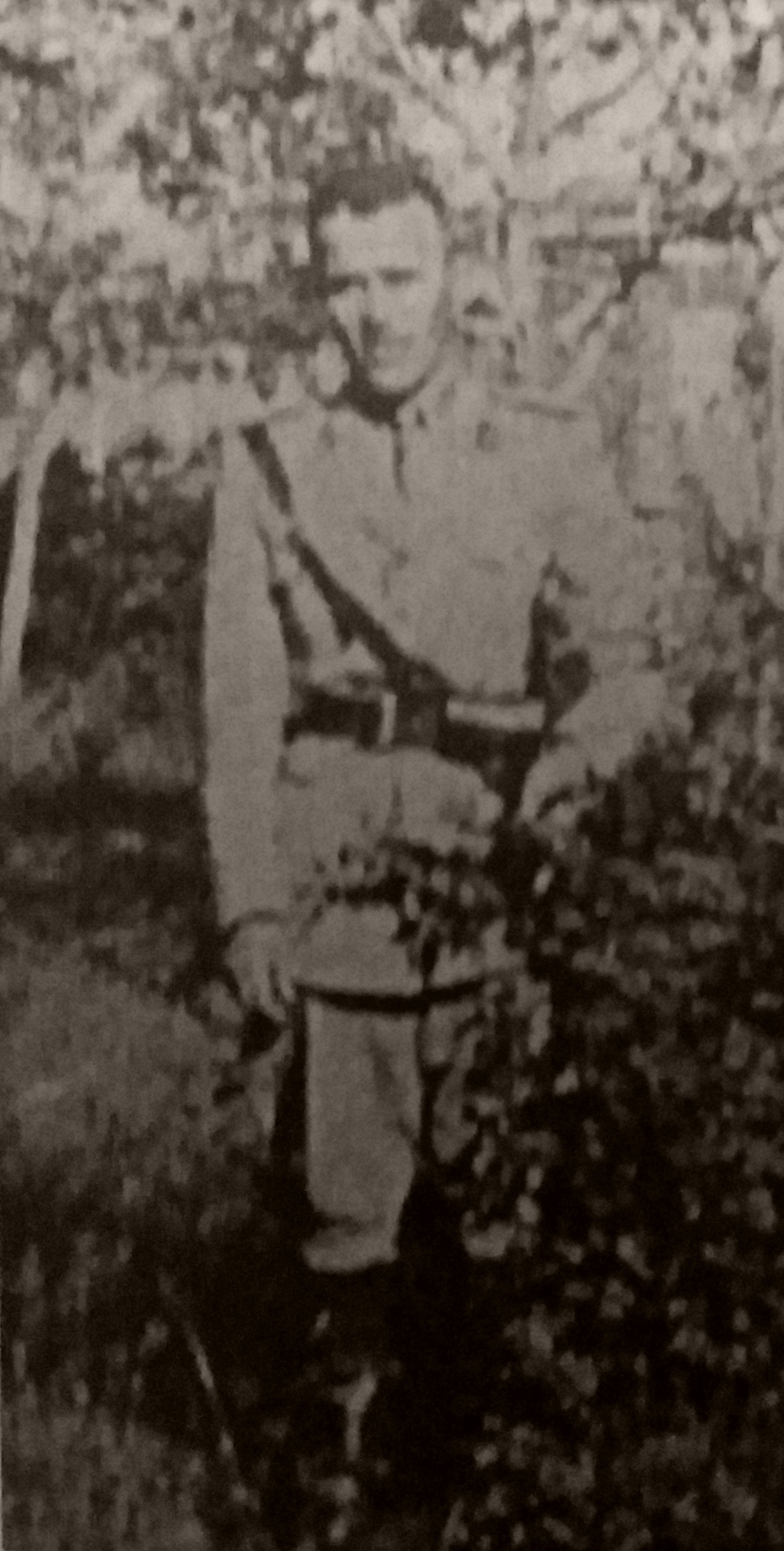
Memorie.al/Rizai is an old age, with an average body, bent, whitened and all wrinkles on the face. These signs indicate age and suffering. However, his eyes are as sharp as an eagle’s. It is a few words, but when Zani speaks he is authoritarian, a little harsh, as life dictated.

The life that passes during one day corresponds to the life that lives on other days as well. Day by day, as in winter, as in summer, he leaves the house with a rhythmic step, goes to his bar, where he drinks a coffee. It is the “Coffee of the Zogists”, in the center of the city. There he finds his legal friends, then returns home where books await him which are an important part of his daily life.

Gjithashtu mund të lexoni

“Iran’s threat to close the Strait of Hormuz created great concern, disorientation and unprecedented alarm in the US…”/ Enver Hoxha’s political diary, June 1984, revealed

“In private settings in Kosovo, Schwandner-Sievers encountered a Tito-nostalgia similar to that of other nations and ethnicities, former Yugoslavia…”/ Reflections of Fadil Hoxha’s niece

This is Riza Kaca, who was born in 1918 in the village of Vinjoll (Lis) in the district of Mat. The family as well as the tribe are mentioned only for kindness.

In 1934, he received a scholarship from the Royal Government of Zog to attend military school, in order to prepare to serve the Homeland. At first for three years, he studied at the military school of Naples, then for two years he attended the Academy of Modena (Italy). Thus, for five years he received full knowledge of martial arts.

April 7, 1939. Albania is occupied by fascist Italy. The government of the latter trumpeted that it was saving Albania, that it would bring progress, etc. After all, she said, it was the Albanians themselves who demanded this “liberation” (occupation).

Rizai and his companions had gone to study martial arts, in order to be able to defend the country. But Italy, while they were studying, invaded their country.

Could they agree with this event? Certainly not, Albanian students not only those who studied in military schools, but also those students of other faculties, are organized. April 15, 1939, in the city of Parma, where there were many Albanian students, the fascist authorities had scheduled a large rally.

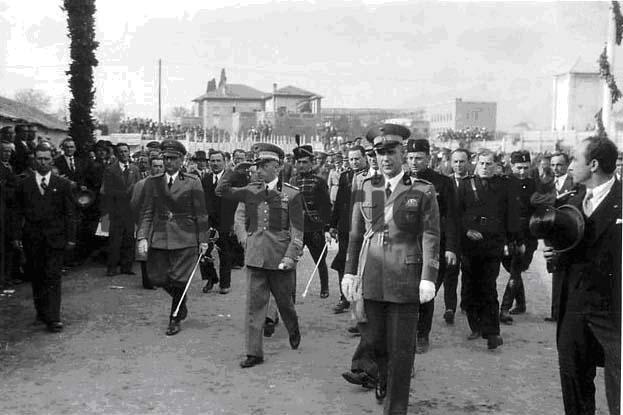
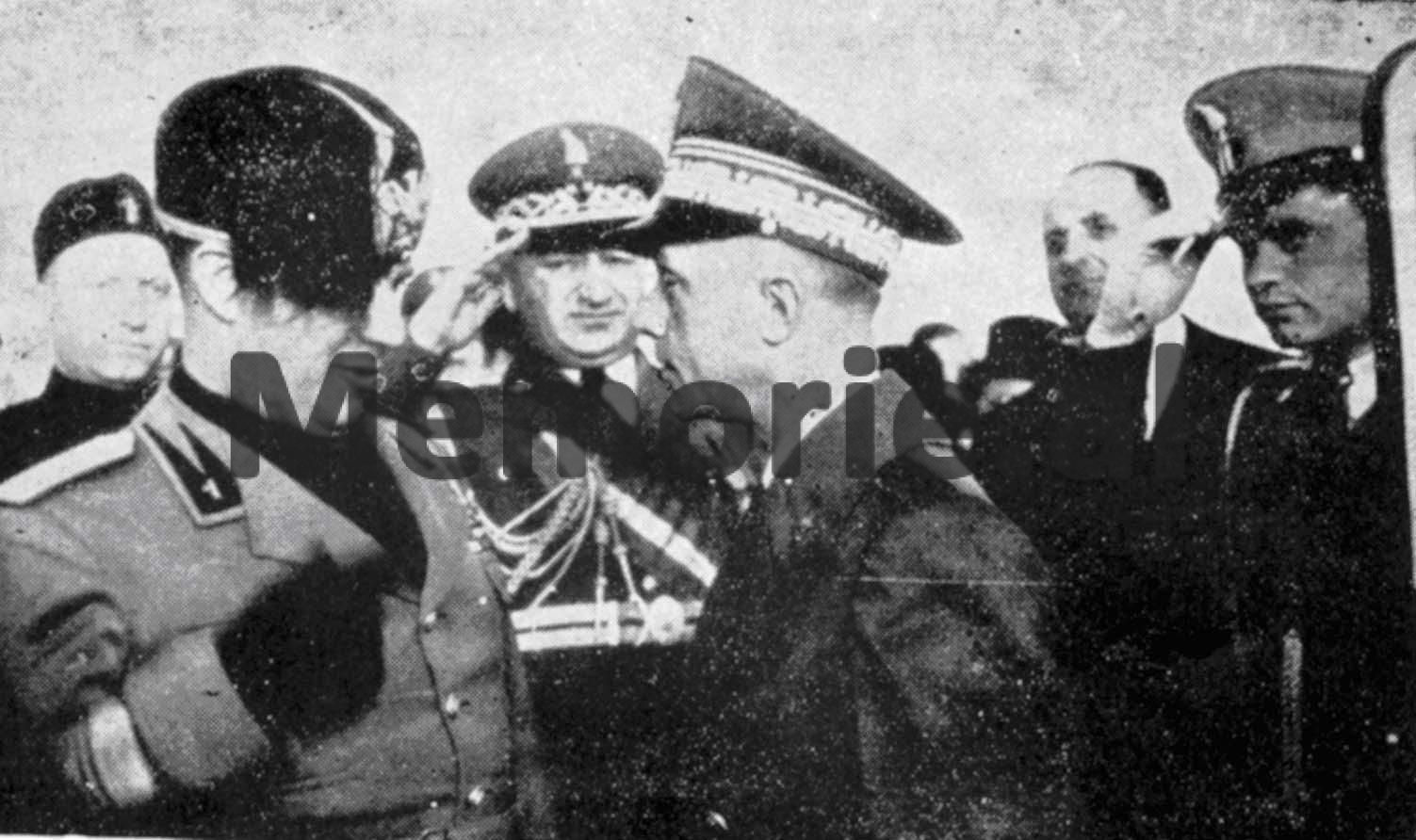
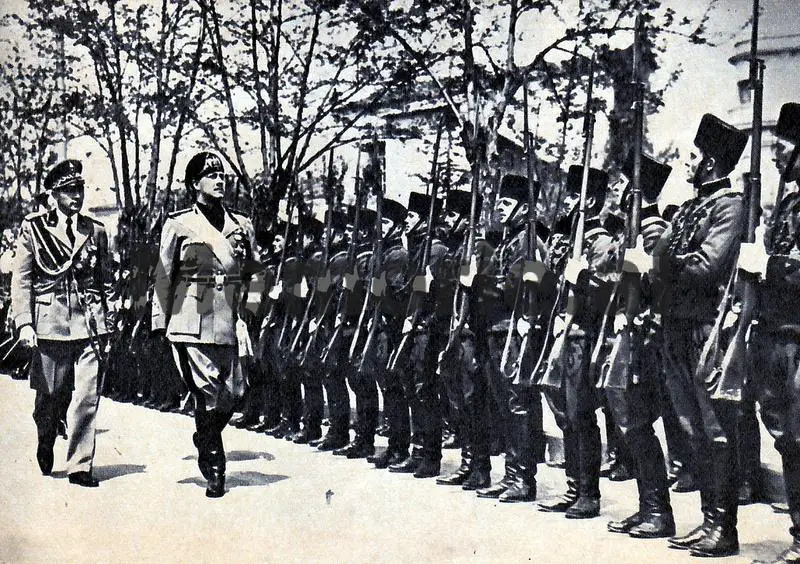
The city was gathered at the appointed place, a large tribune, portraits of the King and the Duchess, flags, banners, bands. Everything pointed to a dizzying agitation that had to “pierce” the brains of Italian citizens and Albanian students, to the “historic” event that had just taken place, i.e. the “liberation” (occupation) of Albania.

Present were Victor Emmanuel III (King of Italy, Albania and Emperor of Ethiopia) Benito Mussolini (Duce) and other high fascist authorities.

The purpose of this gathering was for the Albanian military students to take the oath before the new King and to parade triumphantly before him. Roza Kaca and his six friends had made the decision not to accept.

General Pariani, who after four years would replace the Duchess, read the formula of the oath, inviting the Albanians to repeat his words. A grave silence covered the place. King Victor, sensing the situation and with a meek voice said: “General, apparently Albanians do not understand Italian.”

Riza, who was in the front row and listened to the conversation, with tense nerves and a rifle “in honor of the weapon”, came out of the square and approached the tribune. He said in pure Italian: “We are Albanians. As such, we once took the oath in front of the flag of Skanderbeg and King Zog I “. After saying these words, he threw his rifle in front of the tribune. This was done by his four friends, Shahin Toçi, Xhemal Punavija, and four Kosovars.

The Duke shouted, “Everyone is being shot,” but King Victor, more diplomat than the Duke, objected. The oath failed and the crowd dispersed. Rizja and four of his friends were arrested and taken to Carcere de Giudziario in Bari, where they stayed for nine months. The parents of the detainees were also brought in to influence their sons.

The court sentenced him to life in exile with his whole family in the Apennines, or to return to the Academy and not take the oath (the Italian government thus issued a yoke, interested in not straining relations with the Albanians).

After graduating, Riza Kaca was promoted to lieutenant and temporarily served in Italy. In the spring of 1941 he was sent to Kosovo (because Yugoslavia had just been invaded by Italy and Germany), and remained there until 1944.

End of World War II. Communism is installed in Albania and Yugoslavia, which he hated. He returned to his hometown of Mat where he came in contact with the ‘Sami Qeribashi Group’ and started his clandestine activity.

The group is discovered arrested and convicted. Riza is sentenced to 25 years in prison, of which you spend almost 18 years in prisons and labor camps.

Until the end of his life, he lived on a small pension, and he cried for the Albanians, who are not being cared for./Memorie.al
                                                       Continued in the next issue…

ShareTweetPinSendShareSend
Previous Post

Historical Calendar May 16

Next Post

"Dom Mark Gjani died from torture hanging on his shoulders, he threw his body to the dogs, and his remains were left in…" / Rare testimony of the Bishop, Dom Zef Simoni

Artikuj të ngjashëm

“In December 1942, in a special declaration on the independence of Albania, the Soviet government emphasized that; the USSR does not recognize Italian claims on…”/ Nikolay Shmelev’s book, “Novaja Albanija” Moscow 1951
Dossier

“Iran’s threat to close the Strait of Hormuz created great concern, disorientation and unprecedented alarm in the US…”/ Enver Hoxha’s political diary, June 1984, revealed

September 3, 2026
“In private settings in Kosovo, Schwandner-Sievers encountered a Tito-nostalgia similar to that of other nations and ethnicities, former Yugoslavia…”/ Reflections of Fadil Hoxha’s niece
Personage

“In private settings in Kosovo, Schwandner-Sievers encountered a Tito-nostalgia similar to that of other nations and ethnicities, former Yugoslavia…”/ Reflections of Fadil Hoxha’s niece

September 3, 2026
“In December 1942, in a special declaration on the independence of Albania, the Soviet government emphasized that; the USSR does not recognize Italian claims on…”/ Nikolay Shmelev’s book, “Novaja Albanija” Moscow 1951
Dossier

“In December 1942, in a special declaration on the independence of Albania, the Soviet government emphasized that; the USSR does not recognize Italian claims on…”/ Nikolay Shmelev’s book, “Novaja Albanija” Moscow 1951

September 3, 2026
“One of the village men, an immigrant who had just returned from the USA, came to the German, whom the Nazi asked; are there any partisans here…”/ The rare testimony of a survivor of the Borova Massacre, July ’43
Dossier

“American philosopher George Santayana says that a past that is not judged is destined to be repeated…”/ Reflections of the philosophy professor at the University of Bologna

September 3, 2026
Calendar 01 September 2026
Historical calendar

Calendar 4 September, 2026

September 3, 2026
“His remains, no one remembered where they were left, since no one showed the crime, but maybe Luan Qafëzezi, may have taken one…”! / Reflections of the well-known publicist, about the Beratas poet
Dossier

“The Albanians were angry when they learned about the hypocrisy of the representatives of London and Washington, who collaborated against the communist liberation army…”/ Book by Nikolay Shmelev, “Novaya Albanija” Moscow 1951

September 4, 2026
Next Post
“Dom Mark Gjani died from torture hanging on his shoulders, he threw his body to the dogs, and his remains were left in…” / Rare testimony of the Bishop, Dom Zef Simoni

"Dom Mark Gjani died from torture hanging on his shoulders, he threw his body to the dogs, and his remains were left in…" / Rare testimony of the Bishop, Dom Zef Simoni

“Historia është versioni i ngjarjeve të kaluara për të cilat njerëzit kanë vendosur të bien dakord”
Napoleon Bonaparti

Publikimi ose shpërndarja e përmbajtjes së artikujve nga burime të tjera është e ndaluar reptësisht pa pëlqimin paraprak me shkrim nga Portali MEMORIE. Për të marrë dhe publikuar materialet e Portalit MEMORIE, dërgoni kërkesën tuaj tek [email protected]
NIPT: L92013011M

Na ndiqni

  • Rreth Nesh
  • Privacy

© Memorie.al 2024 • Ndalohet riprodhimi i paautorizuar i përmbajtjes së kësaj faqeje.

No Result
View All Result
  • Albanian
  • English
  • Home
  • Dossier
  • Interview
  • Personage
  • Documentary
  • Photo Gallery
  • Art & Culture
  • Sport
  • Historical calendar
  • Others