

Memorie.al / If we start from the inscriptions of some epitaphs that are carved on the various gravestones located in that cemetery, from those that can be read in Latin, Italian, and Albanian, it results that some of the graves are from the first half of the 18th century. Whereas, from the written documents, it results that the first bishop buried here is Monsignor Anton Dodmasej, bishop of Pulati in 1816, then Monsignor Francesco Borci, bishop of Shkodra in 1823, and so on. In the documents of the time, in the vicinity of the old cemeteries, another pair of cemeteries also stands out in the “Badre” neighborhood, which has been called the “Topichit” Cemeteries, founded by the bishop of Shkodra, Monsignor Gjon Topich, from Split, around the year 1858. These cemeteries as well as the old ones appear on the topographic map of the city of Shkodra, drawn up by the Jesuit fathers in 1923.
The transfer of the bones of the dead from the new cemeteries to the old ones will have occurred during the years 1930-1935, when this neighborhood, according to the topographic map of 1938, already appears as a well-populated place with residents of the city of Shkodra. Seeing the historical and architectural importance that these cemeteries have, the Archbishop, Gasper Thaçi, in 1936, undertook the action by making the expansion, repair, rearrangement of the cemeteries and the reconstruction of a new Church-chapel more functional than the old one, which was in poor physical condition.
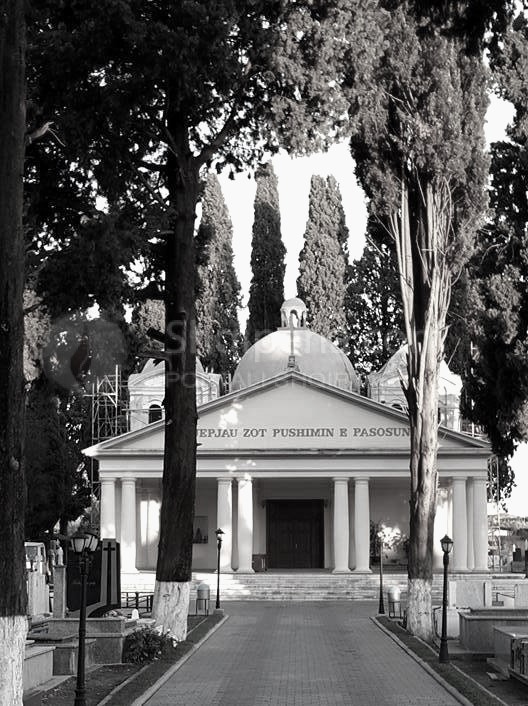
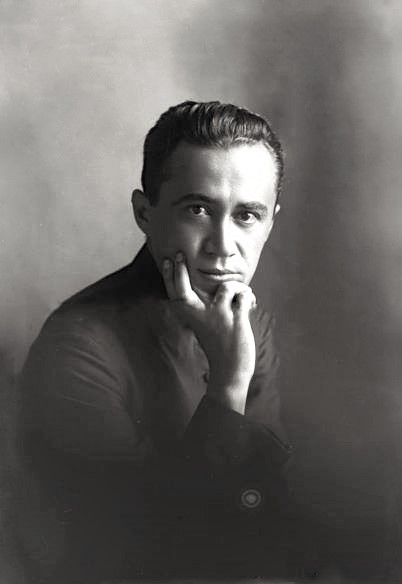
This Church-chapel, which has the form of the Acropolis of Athens, as well as the project for the arrangement of the cemeteries, was realized by the student of Father Gjergj Fishta, the engineer, Ludovik Zojzi. The finalized work was inaugurated in 1937, by the Archbishop of Shkodra himself, Monsignor Gasper Thaçi. Seeing the old graves located in that cemetery, but also the newer ones with the eye of a professional artist, the mastery of their construction is clearly seen, which does not differ much even from the cemeteries of various countries of Western Europe. This shows that the post-Ottoman civilization in the cultural tradition of the city of Shkodra has been powerful and present during our national renaissance.
Previously and today there is talk of our identity traces, from ancient times and up to our national renaissance. There is talk of the graves of our fathers and grandfathers, who with self-sacrifice revived the nation, history, language and European culture. There is talk of places sanctified by the memory of men and women who made Albania and preserved our gene from alienation. These figures, in spirit, are near God, while in body and grace they rest in the Cemetery of Rrmaj.
There rest the families of the Muzhanëve, Shirokajve, Sumajve, Marubëve, Jubanëve, Jakovëve, etc., distinguished persons who made a name in various fields in the history of Albania: the engineers, Gjovalin Gjadri, Augustin Briot, (designer of the Buna bridge, the prefecture of the city of Shkodra), Ludevik Zojzi, Kol Idromeno…, the painters: Pjetër Marubi, Simon Rrota… the musicologists: Prenkë Jakova, Pjetër Gaci, Leonard Deda… the writers: Hilë Mosi, Kolë Mirdita, Frederik Rrepshja, Kolë Ashta…, the doctors: Dr. Frederik Shiroka, Terezina Suma and many other figures.
In these cemeteries rest the bones of the clerics, creators of Albanian culture: Father Giacomo Jungut, Father Anton Xanoni, Father Pashko Bardhi, Dom Ndoc Nikaj, Dom Ndre Zadeja, etc. These same cemeteries hold the mystery of the bones of: Dom Ndre Mjeda, Father Gjergj Fishta, and high church clerics who gave invaluable contribution to the independence of Albania such as: Monsignor Karlo Pooten, Monsignor Pashk Guerrini, Monsignor Lazer Mjeda, and later Monsignor Gasper Thaçi; the bones of these last ones in 1967 were withdrawn from the cathedral of Shkodra to the cemetery of Rrmaj and as if they disappeared leaving no trace.
The Cemetery of Rrmaj is also known for something else: for the hails of bullets released upon dozens of innocent Catholic intellectual clerics executed during the communist dictatorship in the years 1945-1948. They were shot without trials and with false trials, at the outer wall of the cemetery, by the river Kir, near the Çinar of Zef Zorba, for the reason that they wanted Albania to be Western. Among them we count: Ndre Zadeja, Lazer Shantoja, Çiprijan Nika, Giovani Fausti, Daniel Dajani, etc.
This thing has made it so that, after religious freedom in 1990, and up to the present day, the number of those who pilgrimage there to honor not only those fallen in these cemeteries, but also all the other martyrs shot, dead in prisons and house arrests, and tortured endlessly, all over Albania, up to the year 1980, has increased. And the balance was terrifying: 2 archbishops, 5 bishops, 1 abbot, 65 diocesan priests, 33 Franciscans, 14 Jesuits, 10 seminarians and 8 nuns.
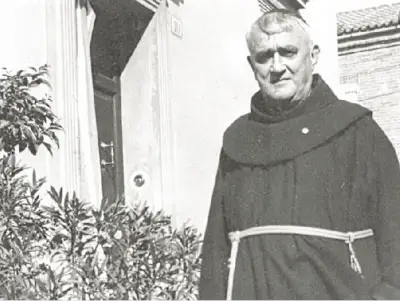
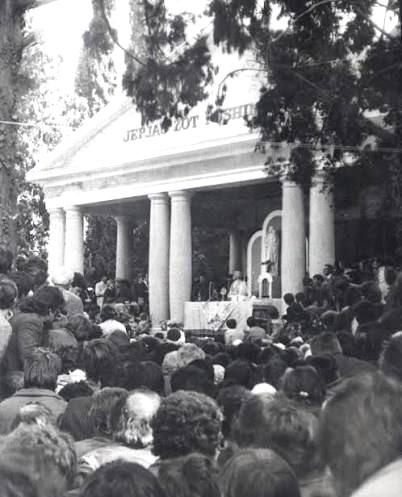
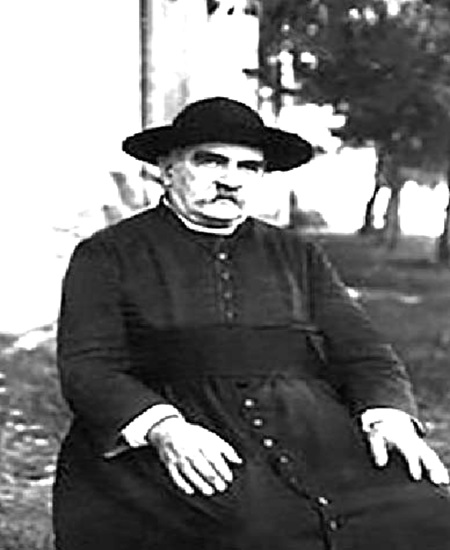
The communist dictatorship, in order to erase the traces of the crime and the historical memory of the cemeteries, in the years 1970-’72, had closed the cemetery of Rrmaj, opening them in Stom Golem, for all citizens without distinction of faith or nationality. After the overthrow of the dictatorship and the coming of democracy, it was the unforgettable moment when on November 4, 1990, precisely in these cemeteries the first mass was celebrated by Dom Simon Jubani, in the presence of a large mass of people still afraid. This was a triumph of God and of the blood of those who gave their lives for a different Albania.
The odyssey of the cemeteries after 1990 and the jubilee year
After the opening of these cemeteries, the unpleasant odyssey of this legendary centuries-old cemetery began. From the great desire that all of the Catholic faith be buried there, even those coming down from the mountains, the shrinking of the free space occurred and the overlapping of graves, even leading to the destruction of unmarked graves and those for which no one was there to care for by anyone. In this rush of uncontrolled constructions, the bones of many distinguished personalities lay and church may have disappeared.
With the aim of preserving the urbanistic values and taking control of the destructive situation, the Ministry of Culture, at the request of the Parish Office of Shkodra, in 2007, declared the cemeteries a Monument of Culture. However, even this government decision did not bring the proper result, because within the cemeteries several private firms continued to operate uncontrolled by anyone. Regarding this problem, I have raised public opinion with a writing published in Gazeta Shqiptare on April 15, 2011.
The easing of the destructive situation came after the naming by the Parish Office of a single firm for the complete supervision of the cemeteries and the work with the vigilance of the then parish priest, Dom Gjovalin Sukaj. With the name of the new parish priest of the Parish Office of Shkodra, in 2014, Dom Artur Jaku, the cemeteries were taken under complete control, saving what could be saved.
Since this is a jubilee year, the anniversary of the first mass celebrated in these cemeteries on November 4, 1990, by Dom Simon Jubani, the need was seen for the completion of some necessary works in the Chapel Church and in the surrounding frontal wall. At the request of this year of the parish priest of Shkodra, Dom Artur, addressed to Prime Minister Edi Rama, the Ministry of Culture took over the financing for the restoration of the Chapel Church of the cemeteries, works which are proceeding at the proper pace.
Meanwhile, the works on the surrounding frontal wall are being assisted by certain individuals from Shkodra and the Albanian diaspora in America. Everything is expected to culminate with the central celebration that will be held on November 4 of this year in the city of Shkodra. It should be noted that the topographic map and the planimetry of the cemeteries, realized by the topographer Bepin Pistulli, are also nearing completion. Contemplating all this Albanian history, it is understood very clearly that the cemeteries of Rrmaj are for us Albanians what those of Paris are for the French and those of Rome for the Italians, etc../ Memorie.al