
By Visar Zhiti
Part Three
Memory Plaques and Sacks…!
Continued from the previous issue
IN WAR AND THE POST-WAR PERIOD
As I was preparing the records, gathering facts and names of the convicts along with their works, it felt as if I were collecting wounds and heavy forgetfulness, screams and shards of darkness like clumps of earth, crosses and bones, plague statistics, etc., etc. My work became desperately difficult, yet I felt more and more strongly that beneath everyone’s feet lay them – their pantheon. Its discovery should have been everyone’s work, a mission, even for those who worked willingly or by force, through compulsion or deception, to cover it up.
It must not be forgotten again, for how can that which exists are made non-existent? It is. It belongs to those who gave blood and life, not just labor for culture, freedom, and truth. Even without knowing it. In fact, it is our pantheon. The search grew harder as the beckoning increased as if by magic. As if the pantheon was a labyrinth, or there was another labyrinth to reach its gates, its walls covered with the names of the condemned. And for every step you took forward, you had to go just as far back. I was approaching by moving away.
World War II (1939-1945) began with Nazi Germany’s attack on Poland on September 1, 1939, in a secret agreement with the Soviet Union. Following the lightning attacks on Poland, Norway, the Netherlands, Belgium, and France would be occupied. Meanwhile, Germany’s ally, Fascist Italy, had already attacked little Albania on April 7 of that same year.
King Zog I of the Albanians fled immediately by decision of the Parliament, so that with his entourage he could organize the war against the occupier from abroad, to prevent the spilling of the innocent blood of the people. But it did not happen that way. The Albanians responded to the occupation with arms. Along the entire Adriatic coast, officers of the Kingdom and volunteer forces fought and were killed. There were casualties from both warring sides.
The struggle against the occupier was unequal and short, but that resistance marked the first armed resistance of World War II against the Nazi-fascist threat in the world. Occupied Albania would continue its opposition until a nationwide people’s war was achieved. In the autumn of the year of the treacherous attack, nationalists united and founded the National Front (Balli Kombëtar) organization, which launched into battles against the occupier.
On November 8, 1941, the Communist Party of Albania was created under the supervision of the Yugoslavs, and from assassinations and guerrilla actions, it moved toward raising a large army. In the early years, these two fronts fought the occupier together, but later the communist leadership demanded a separation from the nationalists, thus forming two hostile camps that would strike each other with weapons – thus transitioning into a civil war, according to some historians.
Furthermore, Fascist Italy – despite the development it brought in construction, roads, etc., by spreading its language and culture – was an uninvited occupier and would exercise violence against the country. It would undertake strong coercive measures against its opponents, intellectuals, and patriots: trials, sentences, internments, prisons, reprisals, killings; there would be fierce and open fighting and numerous martyrs…!
The “National-Liberation” Front had ignited battles throughout the country, but strangely, while fighting the nationalists, it was united with the great allies, and the future would show with anxiety just how “liberating” they would be.
THE OTHER SHORE – A few records from the foreign island:
Italy. The beautiful coast in the city of Naples. I have walked there and stopped to look at the famous islands. Ischia, Capri. Procida, where the children’s prison used to be and where I wrote a sad poem. But I was looking further, even though time. There, as if dissolving between the sky and the sea, a pale bluish vision, yet shocking: Ventotene. An island that remains in the memory of Albanians, even in song.
“Ventotene”… where the wind blows hard… veee-ntoo… eeee like an echo… So many Albanians were locked up on that island. A coincidence? No. It was a calling. The fascist occupier sent its most dangerous opponents there. An internment camp that didn’t need barbed wire; it was surrounded by the sea.
Patriots, fighters, and prominent personalities have this “island” in their fate – or rather, their fatality – where their paths and heroic deeds meet in the effort to ensure the homeland did not remain occupied, nor pass into a communist empire like another catastrophe once the war ended. For the war would end one day, while others desired this transition, seeing it as their salvation and ideal.
On this island, fates crossed as if fleeing with the winds, lost in great gusts and whirlpools – not of the sea, but of history. What happened to our people locked up there? Who were they, where were they taken from, and what happened after they were uprooted? Why is it that the more you fought for the ideal, for freedom, for the homeland, the less ideal, freedom, and homeland you gained – sometimes losing them forever? Even losing life itself. The oracle of that island’s wind seemed to give several alarming warnings that preceded the history of the future.
Listen to the wind how it howls:
A suicide as a prophecy:
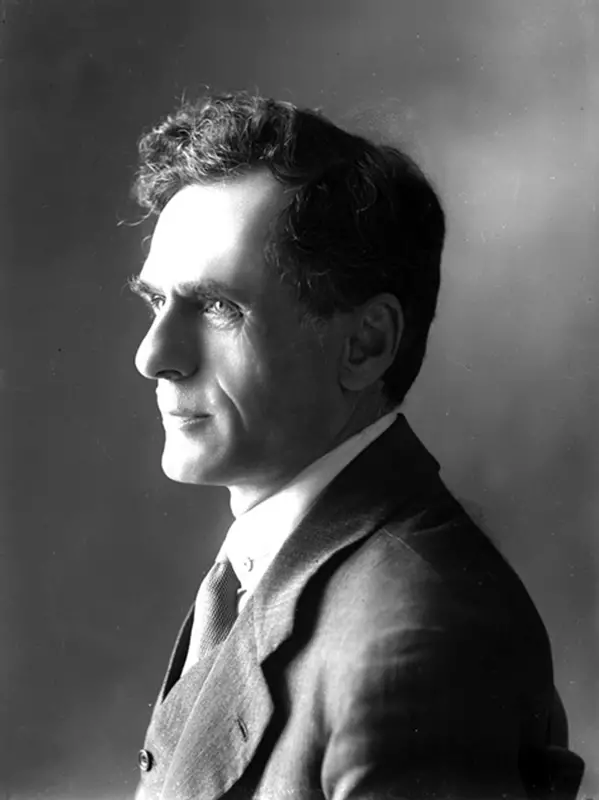
Professor Safet Butka
(1901 – 1943)
He was in Ventotene.
…Son of the patriot fighter, the mythical Sali Butka. After being educated in Austria, he served as a teacher in several gymnasiums across the country, a reformer in education, a scholar in pedagogy, and the author of problematic writings such as: “For the Albanian Tomorrow,” “On the Development of Language,” “On National Education,” “Yes to Albanianism and the West,” etc., and was nicknamed the “Pestalozzi of Albania.”
The initiator of bringing the remains of the national poet, Naim, back to the homeland, he led intellectuals and students in the first demonstrations against fascism and the occupation in 1939. They arrested him and imprisoned him in Tirana, later interning him on the island of Ventotene, where they held him for three years along with other anti-fascist compatriot intellectuals.
He returned to the homeland to continue his duty, to fight against the occupier. He joined Mit’hat Frashëri and other nationalists. He was at the head of the National Front (Balli Kombëtar). But when this war changed direction and became fratricidal – a civil war – he was shaken to the core, like the earth by earthquakes. This collective madness, which distorted his concepts, required madness – a wise one – to be restrained however slightly: a protest and an appeal to the national conscience. A sacrifice. And he chose himself. He killed himself… He was 42 years old, with a wife and children.
The writer Stefan Zweig had done the same. Had he known him in Austria? The struggle for freedom would turn into another victory. Regardless, that solitary gunshot would echo in the collective memory, which everyone would feel inside themselves as an accusation amidst the terrible thunders of World War II.
Murder as rivalry:
The Europeanist Zai Fundo
(1899 – 1944)
…He was killed by the partisans upon returning from Ventotene, where the fascists had interned him as a fighter against the occupation. They dragged him and lined him up against a wall somewhere near Kukës. They executed him, and the order, as was later revealed, had come from above – from the future dictator, Enver Hoxha. Or perhaps from even higher – from Belgrade or Moscow. From Stalin directly…!
Zai Fundo, from Korça, after finishing the French Lyceum in Thessaloniki, studied law in Paris at the Sorbonne and returned home to practice. After the murder of Avni Rustemi, he was elected chairman of the “Bashkimi” (Unity) Society and edited the newspaper of the same name.
When Fan Noli’s Government fell in 1924, he went into exile – to Italy, then Austria, Germany, back to France, and finally to the Soviet Union. He graduated in philosophy in Moscow, gave lectures in Leningrad, and became a member of the Comintern. He even served as an employee of the Russian embassy in Berlin…!
He abandoned the communist ideology, which “surpasses even Satan in its wickedness,” wrote to Monsignor Fan Noli, and openly opposed the perverse regime of Stalin (his words), for which the Comintern sentenced him to death. When Albania was occupied by Italy in 1939, he returned home to fight fascism while working as a high school teacher. He was fired and interned as a National Front activist in Ventotene.
There, alongside his interned compatriots, he collaborated with Italian personalities such as Sandro Pertini – the journalist and future President of Italy – or the politician Altiero Spinelli, the European federalist and one of the founding fathers of the European Union. Spinelli, in his autobiography “How I Tried to Become Wise,” would write about Zai Fundo. Here are some excerpts:
“…he was authoritative… with a long and complex political experience… to his faith was added intelligence and knowledge of several languages. Zai Fundo’s political dedication was beyond Albania; when Dimitrov was arrested after the Reichstag fire, Fundo was in Berlin as his collaborator. He fled so as not to be arrested… and went… to Moscow… Later he severed ties even with the International, as he was persecuted by it… he, educated in a liberal cultural atmosphere… in Ventotene… walked calmly, upright, handsome with his blond hair caught by the wind, murmuring in a low voice the words of Plato, whom he was reading in Greek…
…when he was released… he crossed into Albania, introduced himself to the communist partisans, telling them who he was and that he had come to fight with them; he was put against a wall and shot. He was barely forty years old. I want to hope that besides me, there is some Albanian in the world who remembers him.”
(Come ho tentato di diventare saggio, Ventotene 1939 – 1943, pp. 265-267).
“I want to hope that besides me, there is some Albanian in the world who remembers him.” Let me say that I am one, and I hope I am not alone? Thank you for this call for memory – so touching, so human – that comes from distant internments along with the wind. I am walking the road of memory, into the memory of the future. And I know, the vision of a united Balkans, of a United Europe, is something entirely different from the usurping projects of a communist empire. A man who dreamed like that seems to be killed every day…!
THE DEPARTURES
As World War II was ending, the Nazi-fascist beast of the Axis – Germany, Japan, and Italy – was retreating further back toward the lair from which it emerged. The victory of the Allies, the European states, the Soviet Union, and the vital support of the USA seemed certain. Thus, the Grand Alliance of the Soviet Union, the United Kingdom, and the USA was created.
Albania, fortunately, had taken the right side of history, with the Allies…! The Albanian victors cruelly believed in their cause (or in cruelty as a cause), and even before coming to power, as their day approached, they increased attacks against the foreign occupier and reprisals against the locals. They sought to crush with iron and blood everything that was against them – or what might later become a front, a party, an idea, a work, individuals, or groups.
Departures erupted. And they would continue. Panic and uncertainty for today and even more for tomorrow. Patriots, distinguished men, thinkers, and writers were leaving; a shocking part of history was leaving. To save their heads and to continue the resistance and efforts differently – from abroad – for the good of the country.
To continue the fight from abroad:
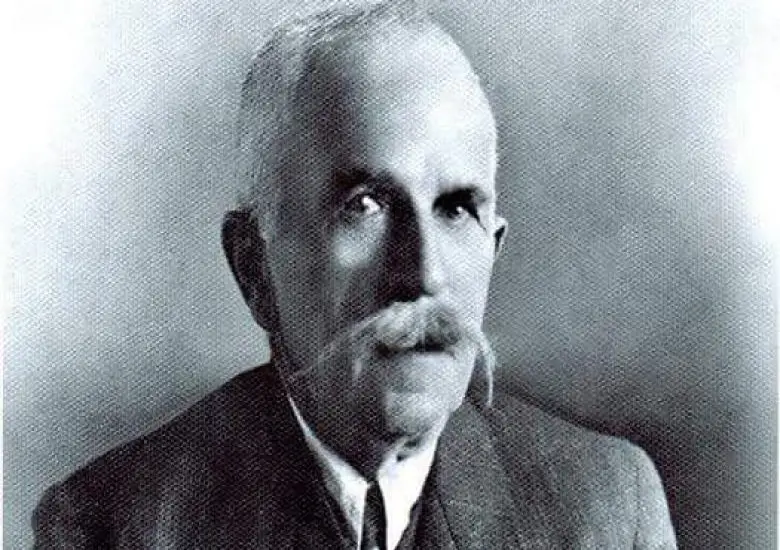
Mit’hat Frashëri
(1880 – 1949)
He would leave…!
The son of Abdyl Frashëri and the nephew of the National Poet Naim and the Renaissance ideologue Sami. A leader himself – politician, historian, and writer. He hated armed warfare; he wanted wise resistance. A fighter for independence alongside Ismail Qemali and Minister of Public Works in the first government.
During World War I, they interned him; he fled to Switzerland, returned, joined the Albanian uprisings, and published Albanian magazines – this was precisely the war he wanted…! When Albania was occupied by the fascists, he began his political activity, uniting nationalists under the Decalogue of the National Front (Balli Kombëtar). An opponent of the communists, he participated in the Mukje Agreement to fight the occupier together, but fled to Italy when the cause was betrayed and power was being seized by those who would establish the dictatorship in the homeland.
He organized Albanians abroad; “Free Albania” was their program. He went to New York for this work and died suddenly there. Or was he poisoned? The red devils achieve what they want and what they hate…! Mit’hat Frashëri’s journey ended in the USA. As if to say to the Albanians: look this way – it is far, but here is our secure ally. From here, we were saved from being dismembered…
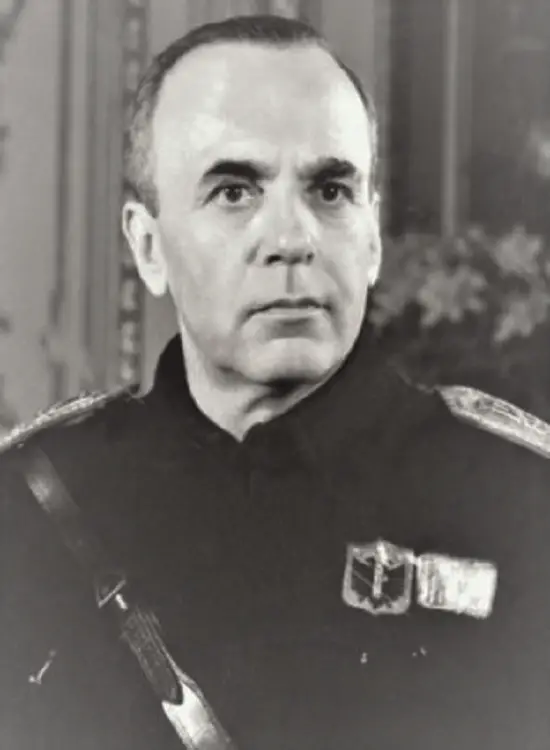
Mustafa Merlika-Kruja
(1887 – 1958)
…He would leave.
Prime Minister of Albania graduated in political sciences abroad, collaborator of Ismail Qemali and Luigj Gurakuqi in the Declaration of Independence. Besides his work as a patriot and historian, he excelled as a first-class linguist and left a 2,400-page manuscript dictionary with 30,000 Albanian words.
This monumental material fell into the clutches of the victors, and they alone know what they did with it – how they tore it, usurped it, or burned it. Other books by Mustafa Merlika-Kruja include: “Historical Anthology,” “Correspondence 1947-1958,” “Memories of Childhood and Youth,” “Alexander the Great,” and “Illyrian-Albanian Observations” – original scientific works, as well as translations by him of fundamental works related to the Illyrians and their descendants, the Albanians, a valuable and important contribution.
The famous Italian journalist Indro Montanelli, author of a captivating book on Albania, wrote this about Mustafa Kruja’s government in “Corriere della Sera”: “The Albanian ministers… all dress simply, are a bit stern, but well-prepared theoretically. Their past is identical: they have suffered for their country. Their ideas are linked to several fundamental dogmas: the territorial unity of Albania, internal autonomy, the protection of the race and cultural heritage, and cooperation with Italy based on mutual rights and obligations. They are honest and poor. They are men of action and not of bureaucracy.”
And of the Prime Minister himself: “Success and honors have not been able to transform the nature and outward behavior of this man… (Who) does not give himself importance with poses or grand words? He continues to speak with prudence and… Tells the truth… His life resembles that of Mazzini and his program is this: I want an Albania united within its natural borders.”
Prime Minister Kruja and his government would also be peerless protectors of the Jews, who were being persecuted everywhere. Not only would they not hand them over to the Nazi-fascist occupier, but they would bring others from wherever they could, and Albania would be the country that had more Jews after the war ended than when it began.
And precisely like the Jew in the desert, other national personalities and intellectuals would depart…! Memorie.al