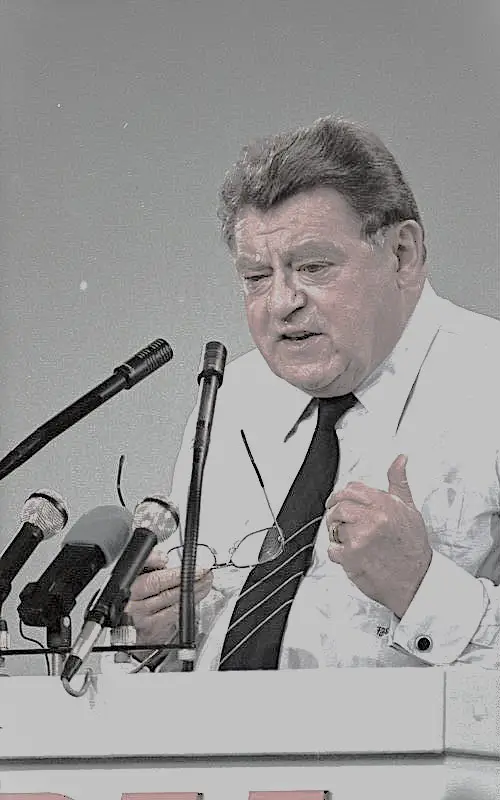
STRAUSS’S FIRST “TOURIST” VISIT TO ALBANIA
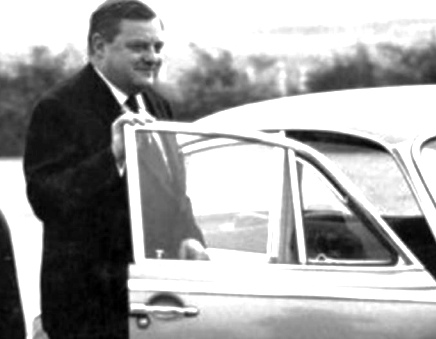
Started as a visa request for a transit passage, the visit ended up having deep political content and demonstrated that it would exert its own influence on German political prominence to unblock negotiations between the two parties for the normalisation of Albanian-German relations. As he himself admitted, during his visit to Albania he turned from a “normal tourist” into a “political tourist”.
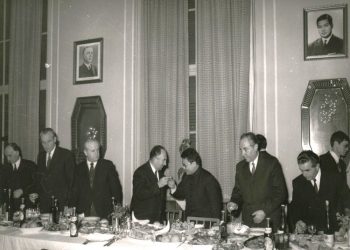
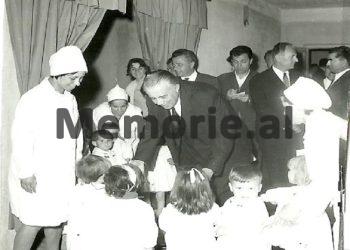
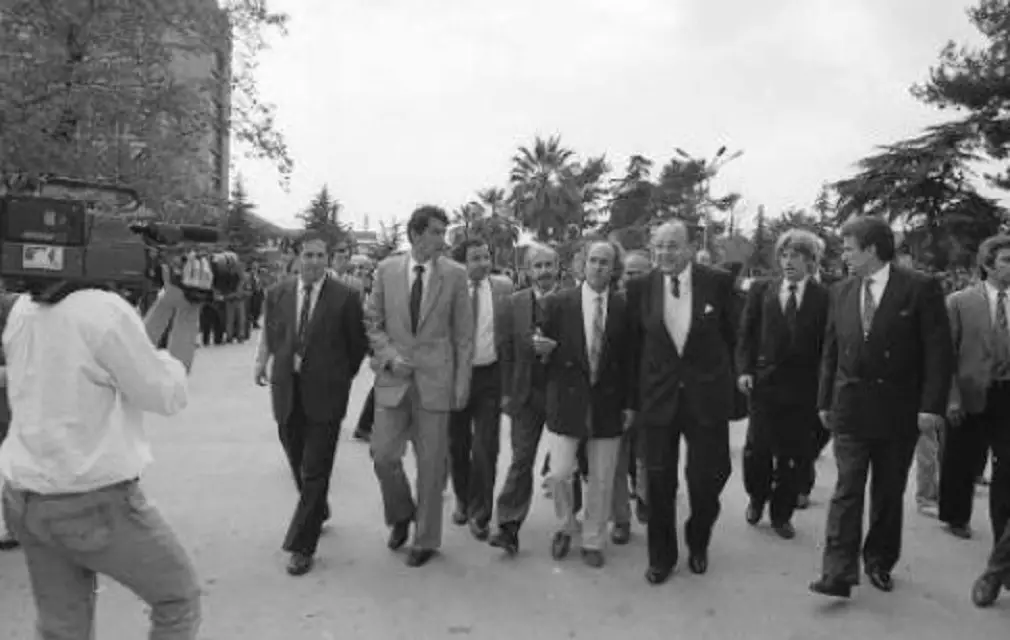
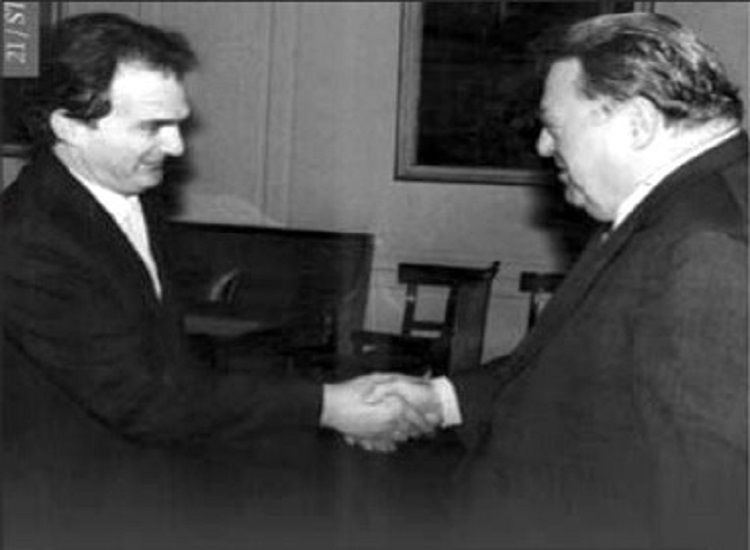
Franz Josef Strauss held talks with the then Deputy Chairman of the Council of Ministers, Manush Myftiu, and visited the National Historical Museum in Tirana and the Skanderbeg Museum in Kruja. He was received neither by Enver Hoxha nor by President Ramiz Alia; likewise, a courtesy meeting with Prime Minister Adil Çarçani was avoided without any political argument. Only a short notice was published in the Albanian press, with a simple title: “Franz Josef Strauss made a tourist visit to our country”.
In this way, the Albanian government tried to avoid drawing attention to the political aspect of the visit. Although nominally criticised in Albanian official memorandums and statements as a “political revanchist” and a representative of the “darkest” right-wing forces of post-war Germany, Strauss was received in Tirana with special honours, also being described as “one of the most prominent and most listened-to political figures in the Federal Republic of Germany”.
Official talks were held between the high-ranking German figure and Manush Myftiu. Also taking part was Sofokli Lazri, who had headed the Albanian government delegation in the Bonn negotiations. After explaining Albanian state policy, domestically and especially internationally, Deputy Prime Minister Myftiu summed up for the Bavarian Prime Minister the well-known Albanian position in the negotiations with Bonn regarding the normalisation of relations between the two countries.
VARIOUS POLITICAL APPRAISALS, ALBANIA
“The feelings of Germans, particularly southern Germans from Bavaria, towards Albania are very positive,” Strauss emphasised during his conversation with his Albanian interlocutor. “We have had almost no military actions against each other – a little in the First World War and during the Second World War, but the Albanians’ greatest war was against the Turks, against the Italians, the war of liberation. When I return home, I will share my impressions with the Federal Chancellor and my friends in the federal government, without publicity.”
STRAUSS’S SECOND VISIT TO ALBANIA
Strauss’s second visit to Albania took place on 19 May 1986, again on the initiative of the German leader. This time, the Bavarian Prime Minister did not come simply as a “tourist”, but as a high-ranking German politician, having requested in advance an important interlocutor from the Albanian side.
It was clear that he came after the bitter impressions that the 10 March 1986 meeting in Vienna had left on the Albanian side, with the predisposition and desire to contribute to overcoming the difficulties encountered on the path to normalising relations between the two countries. This time Strauss was received by the Albanian Prime Minister, Adil Çarçani.
“MORAL SATISFACTION” FOR THE ALBANIAN SIDE, BUT NO CREDIT
The head of the Albanian government, after the customary thanks for the German leader’s personal contribution to the normalisation of relations between the two countries, expressed reservations about the achievements so far in the negotiations with Bonn.
Underlining the desire to overcome the current situation of the talks between the two parties, Çarçani added that Tirana had set forth that “concurrently with the establishment of diplomatic relations, the People’s Socialist Republic of Albania should also be given moral satisfaction regarding its legitimate right, its demand for recognition of the damages it suffered during the Second World War”.
To Strauss’s question about what the Albanian side meant by “moral satisfaction”, Prime Minister Çarçani replied that the Albanian government meant war reparations, “which you, of course, do not recognise as reparations, but we have said that other paths and forms can be found for this damage suffered by Albania to be recognised and compensated”.
This prompted the Bavarian Prime Minister to ask for forgiveness, but to state openly that the Albanian government “was walking down a wrong path”. Subsequently, Strauss re-explained the German position on this issue.
“According to the London Debt Agreement,” he observed, “the issue of reparations – and I repeat it once more – cannot even be placed on the table before a Peace Treaty. Otherwise, other countries like Norway, Denmark, Luxembourg, Belgium, France, etc., would also start demanding negotiations. Please believe me, this is not ill-intentioned, but it cannot be discussed.
In the last conversation I had in August 1984 with the Deputy Prime Minister, he told me that we had paid reparations to Poland and Yugoslavia – that’s what my Albanian partner said during the talks we had at that time – but I said and I say that it is not true, that neither the Poles nor the Yugoslavs received a single penny. Poland received loans once, and Yugoslavia received loans several times on very favourable terms, whereas the destruction in Poland and Yugoslavia was, of course, very great.
Besides this, you have diplomatic relations with Austria, with the German Democratic Republic, and with Italy…! According to our information, ”he continued,“ neither Italy, nor Austria, nor the German Democratic Republic have not paid a single penny, nor have they used any other form of compensation
The German troops that came to Albania at that time came from Germany, from that part of it that now consists of three states. I tell you this in a friendly manner: it is a wrong path, and it is impossible for the Federal Republic of Germany to enter into negotiations on these matters.
I wish to say,” Strauss emphasised again, “that there is no point in believing in things we cannot act upon. All of our former enemies in the war have established diplomatic relations with us, with the exception of Albania. And that is Albania’s affair, which concerns international law. They established diplomatic relations without preconditions.
With the same clarity I wish to state openly that we, on the basis of economic cooperation with Albania as well, can implement the same forms we used with Poland and Yugoslavia, and this cooperation will be of great importance for the development of your country in the technical-scientific field.
Our position of technical-scientific development in the world is constantly rising, but I am sorry that if the conditions we mentioned are imposed, nothing will come of it, we will get nothing… Except one thing: you are the last to come forward with your demands in this regard.”
The Albanian government, through the pronouncement of its prime minister, declared on this occasion as well that regarding the overcoming of problems, it could not accept the resolution of this “moral satisfaction” through taking loans or aid, as this was prohibited by its Constitution.
He also stressed to Strauss that the Albanian government did not insist that this amount be paid under the name of reparations and that it did not condition the establishment of diplomatic relations on the payment of reparations, but that “morally we want a contribution, like others have received, in the form of loans or reparations – that is your affair, we do not know exactly how you have given it to others.”
Çarçani argued that the moral aspect of the Albanian demand lay in the German side’s recognition of “something legitimate, of the great contribution Albania made to these damages it suffered; the recognition, therefore, and the granting of compensation for all this contribution of Albania, and this not as charity, but as something legitimate that is due to it.”
Moreover, he added, from meetings with German figures, various notices, meetings, and talks, it had become almost “un fait accompli” that Albania would receive a considerable sum, “so that all that remained was for the two foreign ministers to meet and sign this issue, whereas at the last moment we noticed a retreat by the German side, the reason for which we did not understand.”
Expressing concern that even this “Albanian moral argument” would again be taken by the German side as a precondition, with pragmatic sense Strauss proposed to the Albanian prime minister that they try to link the moral aspect with the material one of this issue. Strauss also proposed the realisation of a 10-year technical-scientific cooperation agreement, which would be signed after the establishment of diplomatic relations.
A 10-YEAR AGREEMENT AND STRAUSS’S “RAILWAY TRACKS”
The Bavarian Prime Minister conceived the idea of the 10-year agreement in this way:
The figure of 4–5 million marks is just a gesture, but it is in no way the economic cooperation between the two countries. Starting from the practical side of the matter, the Federal Republic of Germany pays 7 billion marks per year to a number of countries, “most of which were not at war with us at all,” such as Bolivia, Brazil, India, Tanzania, Mozambique, etc.
In this framework, the technical-scientific cooperation agreement with Albania can also be seen, especially given the fact that the Minister for Economic Cooperation belongs to my party (CSU), “which will certainly influence you to receive much greater material aid than this ridiculous amount of 4–5 million marks.”
In the event that this agreement is accepted by the Albanian side, “how you will arrange this internally within your state, with your Constitution, we cannot help you, but, for example, in the case of Tanzania, most of this money we have given them is ‘fonds perdu’ (grant funds), which are in fact state loans from which, according to Strauss, the German economy had received no benefit.”
The agreement on technical-scientific cooperation, according to him, would be signed either after the agreement on establishing diplomatic relations between the two countries or immediately along with it. This presupposes that the Albanian side receives every year not 4–5 million marks, but, for example, up to 30 million.
From this agreement, in a flexible manner, projects can also be exchanged with one another, determining the fields of cooperation between the two countries. Perhaps, over the years, the German side might come closer to the Albanian side’s current demands. So, the Federal Ministry of Foreign Affairs is one “track” for establishing diplomatic relations, while the Federal Ministry of Economic Cooperation is the other “track”.
“If the train starts on the first track,” he hinted, “I will act so that it starts moving, perhaps at the same time, also on the second track,” he concluded. / Memorie.al