
From Ibish Neziri
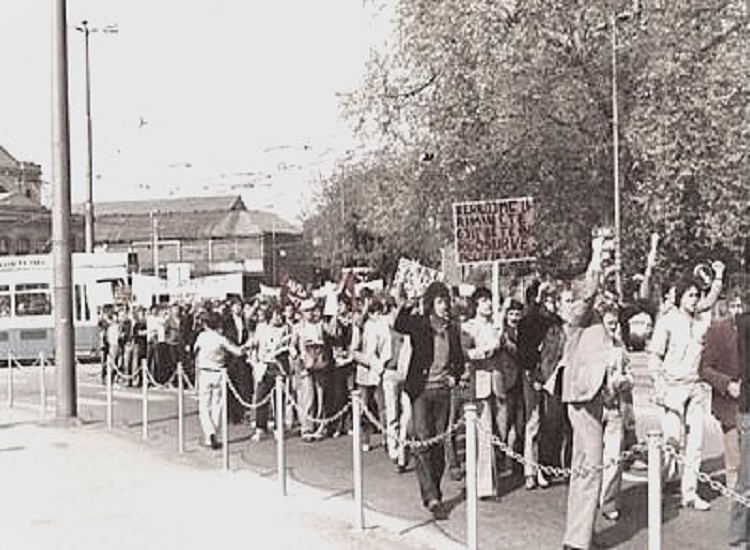
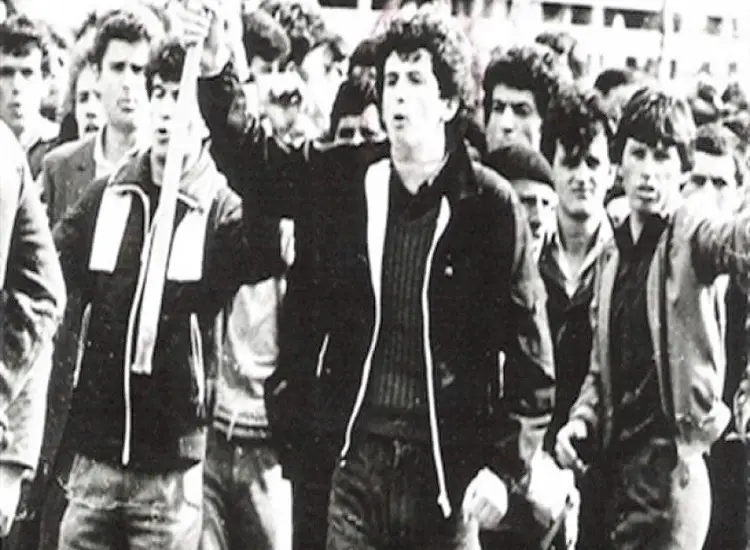
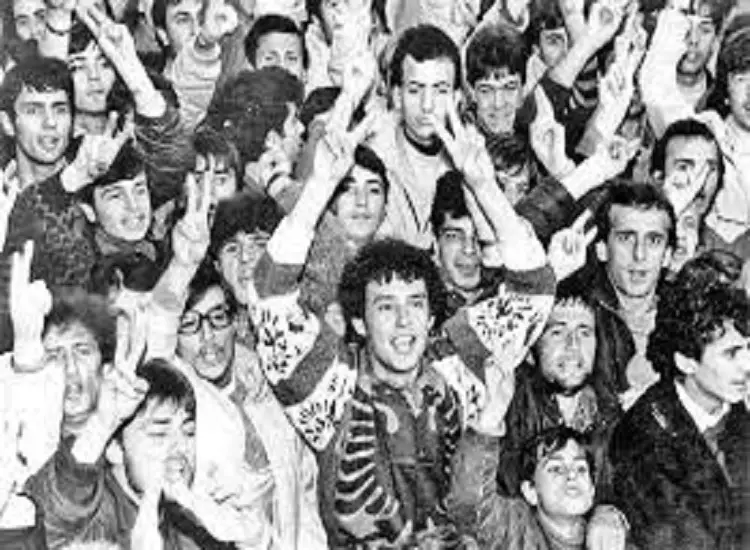
Memorie.al / How did the German media manage to convey news about Kosovo in the great information hell of 1981? The author takes a careful look at a great history, which today is dissolving into the multitude of empty daily news. The author very carefully describes the situation in Kosovo in 1981 in his writing, titled: “KOSOVA AND THE ALBANIANS IN THE GERMAN-SPEAKING PRESS OF 1981”. He does not try to take sides, but does the work of a good chronicler, which will be of great use to those who will deal with the subject later…! From the beginning of the demonstrations in Kosovo until the end of the year, this magazine published 7 articles about Kosovo and Albanians.
On May 5, the article titled “Yugoslavia – Without Rolled-Up Pants” is published, in which it is stated, among other things, that “after the violent imposition of peace in Kosovo, the party is sorting out its ranks: enemies on every side.” The article certainly contains history.
The author brings facts that clarify very well that Kosovo has been and is occupied, then talks about developments during various post-World War II periods, about Albanian emigration to Europe and America, to Belgium and the USA, about Albania’s relations with Yugoslavia and especially with Kosovo, which the party and state leaders of Yugoslavia and Kosovo see as mistaken, about tense Yugoslav-Albanian relations, about the demonstrations and their consequences, about the dead, wounded and arrested.
On May 18, “Der Spiegel” publishes the article titled “Ideal Shepherds”. The author says at the beginning: “After the breaking of the uprising in Kosovo, Belgrade wants to pacify Croatia through arrests.” The period between May and October passes without any writing about Kosovo. On October 12, an article is published titled: “Everyone is silent”; “Belgrade cannot bring the riots in Kosovo under control. For seven months now, the Albanian inhabitants have been rebelling there.”
The article talks about riots, strikes, sabotage, economic difficulties, etc. “The question arises that everywhere in the power plants it is known where the faults lie and why there are faults, while in those of Kosovo it is not known. The Albanians are rebelling. Instead of 2.4 million KW of electricity, now barely less than one million are sent to Serbia.”
The Head of State Security in Ferizaj, Milorad Stanković, links the rebellion, the lack of electricity and the strikes to Albanian nationalism and irredentism. He says: “The activity of Albanian nationalists and irredentists shows no signs of weakening. The enemy is now organizing in groups of two and three. In their slogans and pamphlets, they are calling for diversions and arson.” Further on, it talks about sabotage at the Tobacco Factory in Gjilan.
Regarding this, it is said that; “everyone condemns these actions, but everyone is silent. No one says anything. “Factories are being engulfed in flames. The house of a Security official has been infected.
Newspapers report a success: The setting on fire of an official’s car has been prevented, but the attackers have disappeared into the darkness.
Only with extraordinary bravery and coolness do talented locomotive drivers agree to travel at night in the Kosovo area. Stones are found on the tracks. Signaling apparatuses have been destroyed. Life-threatening projectiles hit the front windows of trains. Also, soldiers who have come for reinforcements from other parts of the country are attacked and injured.”
“Der Spiegel” says that for Belgrade’s “Politika Ekspres” it is clear: The counter-revolutionaries have the strength not to hand over their weapons. The enemies are changing their tactics. They are moving from open activity to covert activity. For the newspaper “Narodna Armija”, according to “Der Spiegel”, even the burning of forests is the work of the enemy. “We are in a state of war,” the author quotes the newspaper “Narodna Armija”.
The article further states that the people of Yugoslavia have still not been told what happened in Kosovo. Kosovo was not only forbidden for foreign journalists for months, but it was also forbidden for locals. Only trusted party journalists could go there. Data on the dead and wounded, published in the press, have contradicted each other.”
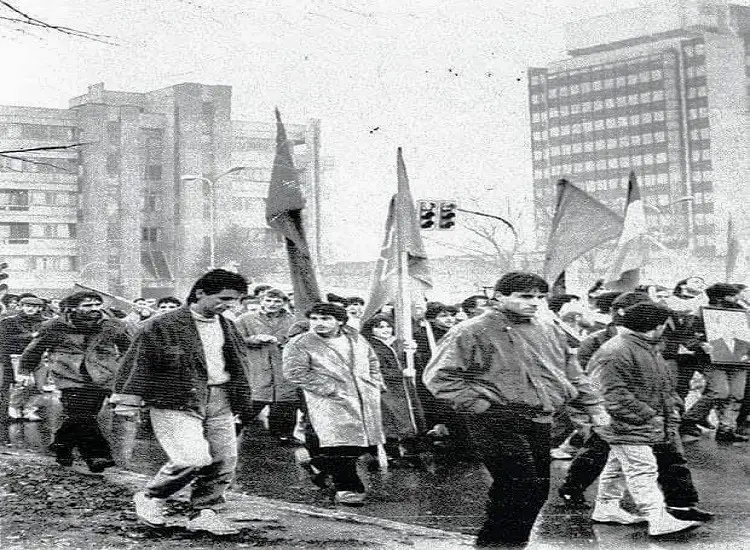
The magazine “Der Spiegel” now receives an appeal from Kosovo to the conscience of the entire civilized world, signed by three university professors: “During the months of March and April, on the two main streets of Pristina, ‘Ramiz Sadiku’ and ‘Marshall Tito’, there have been terrible scenes: corpses lying, often separated and mutilated, without heads, legs and hands.
Among the dead were also school-age children. These were the last traces of massacres carried out by the Yugoslav army and militia. Many corpses were transported by military trucks and burned outside the city with kerosene.”
There is no possibility to verify this data, because as the appellants, whose names are known to the editorial board, say, it is true that the Government has declared a state of war throughout the territory of Kosovo: Amnesty International and the International Red Cross cannot go to Kosovo.”
The three informants further report that the Albanian minority in Yugoslavia is unable to report the situation directly to the outside world. “Official reports speak only of pale images of the massacres that have occurred in our unfortunate province. Civil rights no longer apply. At night, legionnaire soldiers patrol the streets and can arrest anyone. We cannot estimate them, but this concerns more than a thousand arrested.”
According to data from Belgrade newspapers, more than 2000 Albanians have been sentenced without trial and without defence. By August 31, 245 people had been sentenced to prison terms of up to 15 years. At the beginning of September, 50 court verdicts were handed down with an average sentence of 9 years.”
“Süddeutsche Zeitung”, another highly reputable German newspaper, followed the developments in Kosovo, about Kosovo and Albanians with great interest, starting like the other newspapers with the information released by “Tanjug” about the demonstrations of March 11.
The first article about Kosovo in 1981 in this newspaper is published in the issue of March 14/15, in which the start of the protests in Pristina is announced as a very short news item. “Belgrade’s problems with Kosovo grow” is a relatively long article that this newspaper brings after the demonstrations of March 26 and 27. The article is published on March 30 by this newspaper’s correspondent in Belgrade, Hejko Flottau. He writes, among other things:
“The student demonstrations in Pristina have clearly gone further than officials have stated. According to data from a press conference, in the demonstrations of March 26, 23 demonstrators and 12 members of the security forces were injured. None of the injured is in danger of death.”
Journalist Flottau quotes Asllan Fazliu as saying: “here we are dealing with an external and internal enemy.” The author walks a bit through history, placing special emphasis on the suppression of Albanians, as the author says, with passion, from Aleksandar Ranković until 1966.
This newspaper also writes about the demonstrations of April 1 and 2 on April 3. The article is published under the title: “Belgrade worried about unrest in Kosovo”. “Again clashes between Albanian nationalists and the police,” writes the newspaper and simultaneously reports on the state of emergency and the ban on any kind of gathering, on the attacks that party forums make against the “enemy”, on the attacks that these same bodies make against the foreign press, etc.
In the issue of April 4/5, the newspaper publishes an article by the “Reuters” agency titled “State of emergency continues in Kosovo” and another article by correspondent Heiko Flottau titled “Social and national aspects”, which, quoting state and party leaders, speaks about the demonstrations and developments of those days in Kosovo, “about the attacks of external and internal enemies”, about the differentiation that had begun, etc. At the same time, it also speaks about the accusations that the Yugoslav state makes against Albania and vice versa.
Arthur Meyer, on May 2, writes about the demands for more press freedom in Yugoslavia. The title of the article is: “Gag for the press after the unrest in Kosovo”. “The severe unrest in the province of Kosovo, about which only incomplete information exists, has opened wide discussions in Yugoslavia on the role and duties of the media. Yugoslav journalists speak about this, saying that since 1945 the press has not been fought so hard and so openly,” says Meyer.
On May 8, the newspaper writes “Kosovo will be cleaned up”, while on June 1, writing about the background of the demonstrations in Kosovo, Arthur Meyer says that “Kosovo is a powder keg like never before!”. “The dead from the great demonstrations in the province of Kosovo have long been buried and neither Yugoslavia nor the world knows how many there were.” The article talks about the closure of the University, about police and military checks. Witnesses speak of an atmosphere of false calm,” says the journalist.
While even in the most remote hilly corners of Yugoslavia it thunders, a fierce etheric war has broken out between Radio Tirana and Yugoslav radio broadcasters. There are rumours that the armed forces in the mountains of Albania have been put on alert.”
On June 13, it is announced that more federal police are being sent to Kosovo, as well as about the federal government’s efforts to bring Kosovo under control. July, August and September, despite some articles or comments, are months in which, as in other newspapers, news is given about the judicial processes and the news with which the series of articles about Kosovo and Albanians ends; it is the news about the suicide of the Albanian Prime Minister, Mehmet Shehu.
Another newspaper that stood by Kosovo and the Albanians at the beginning of the great spring of 1981 and beyond is the well-known German newspaper, read and so often quoted by Radio Tirana, the “Frankfurter Allgemeine Zeitung” with its correspondent from Vienna, Viktor Meyer. This newspaper, like the vast majority of German newspapers, reports on the start of the demonstrations of March 11 in Kosovo.
On April 4, Viktor Meyer writes: “The situation in the Kosovo region, inhabited mainly by Albanians, appears to be serious. On Thursday, a ban on public gatherings was announced. The evening promenade is empty. It is patrolled by police and military forces, as well as the so-called Territorial Defence Forces wearing bulletproof vests. In the neighbouring settlement, Podujevo, there were burnt trucks. There have been many wounded and arrested. Officially, it is said that the demonstrators were carrying weapons,” writes Meyer.
He further writes that when the students in talks with state and party officials demanded that Kosovo be constituted as a republic, the officials broke off the talks and the student dormitories were occupied by the police. According to the author, the President of the Presidency of Kosovo, Xhavit Nimani, called these demonstrations “hostile manifestations from the positions of Albanian nationalism. He said that the demonstrations are instigated by internal and external enemies and as such are counter-revolutionary.”
In the same issue and on the same page, an article about Kosovo is also published under the title: “The new intelligence and the national obligation”. On April 7, this newspaper, relying on official data, reports 11 dead in the March and April demonstrations, as well as demonstrations in other cities of Kosovo.
On April 9, Meyer writes: “Tirana takes the side of the Kosovo Albanians. It says that the demands for a republic are just.” On the same day, another article by the same author is published in this newspaper under the title “Deep mistrust in Kosovo”. “Conflicts in the Yugoslav province have internal reasons,” is another article by Meyer.
Again on April 21, again Viktor Meyer from Vienna. He writes that after the unrest in Kosovo, there is nervousness in the party ranks. Meanwhile, on April 27 he says: “Due to these events in Kosovo, some Yugoslav officials have lost their heads.” Speaking about the dead and wounded, Meyer says that “the demonstrations in Kosovo were harsher and of greater magnitude than officially stated. Well-informed people speak of 30 to 40 dead and more than 1,000 wounded, many of whom, for fear of consequences, are being treated at home.”
Author Meyer writes at the end: “The accusations against Albania for instigation are more tactical. The leadership of Kosovo, by attacking official Tirana for inciting the unrest, tries to ease its own position.” During July, August and September, this newspaper also brings news about the judicial processes, which are so numerous and so absurd.
Kosovo and Albanians were also very present in other German newspapers, both daily and periodical. The organ of the German Communist Party, “Roter Morgen”, published 16 articles during 1981.
Some of the article titles are: “The massacres of Belgrade’s troops in Kosovo”, “Who is inciting discord among the peoples of Yugoslavia?”, “Yugoslav provocations”, “What happened in front of the Yugoslav embassy in Tirana?”, “The demand for recognition of the Republic status of Kosovo is just”, “Ranković’s open vocabulary”, “The unrest of 1968”, “The struggle of the people of Kosovo is just”, “Now mass trials in Kosovo”.
Other German newspapers: “Der Tages Spiegel”, “Berliner Morgenpost”, “Die Welt”, “Frankfurter Rundschau”, “Süd Kurier”, “Frankfurter Allgemeine” etc., Austrian newspapers “Der Standard”, “Die Presse”, “Die Neue Zeit”, “Kurier”, “Neues Volksblatt”, “Tagblatt für Österreich”, “Neue Kronenzeitung”, Swiss newspapers: “Focus”, “Der Bund”, “Aargauer Tagblatt”, and other newspapers, are newspapers that on their pages reported on developments in Kosovo and among Albanians.
Kosovo and Albanians in the Swiss-German-Austrian press in 1981 took up a large amount of space and were presented mostly correctly, and even if any mistake occurred, it happened due to lack of information. On the pages of this press there were short news items, reports, reportages, travelogues…!
Even when they wrote about “Albanian nationalism and irredentism”, about “internal and external enemies” or about “counter-revolution”, those were not expressions of those newspapers or their authors. They were quotations and as such were presented in articles, always in quotation marks or with “according to…”, “says…”, “has said…”, etc. / Memorie.al