
Memorie.al / In the early 1960s, China and partly North Korea replaced the Soviet Union as the main destination for Albanian students. However, the special relationship with China did not limit the regime from sending students to Europe, not only because of geographical proximity but also because of the quality of Western education. While relations with China deteriorated in the mid-1970s, the Albanian authorities took advantage of all opportunities offered by the West for undergraduate and postgraduate education. Ideologically, the West was rejected on the same level as the revisionist countries (Soviet satellites, plus China), but maintaining a minimal level of communication, especially regarding students. In the early 1970s, Albanian students in the West (Italy and France) constituted a small part of the student population abroad. If in countries like China or Korea students were subjected to double control, both from the embassies and from local party organizations, in the West control had to be invented from scratch, since they lived in ideologically hostile societies and environments.
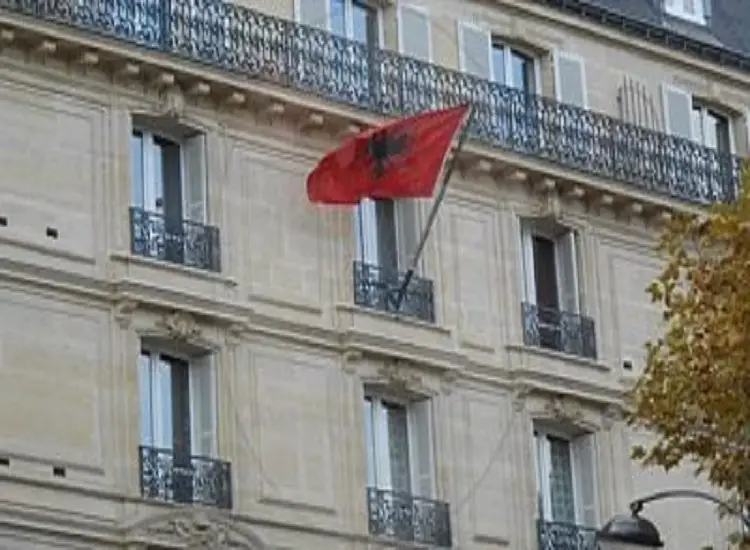
Thus, control was the most important preoccupation of Albanian embassies regarding students. It was seen not only as a typical form of responsibility towards fellow citizens, but rather as a natural behavior of what Kharkodin, in the case of the Soviet Union, describes as a fundamental condition for the survival of Soviet power. Control sought to recreate and maintain similar ideological and social conditions as in Albania. This was particularly important for the West. A report on students from the Albanian Embassy in France, addressed to the Party Central Committee, describes students as living in an environment ‘surrounded by reactionary and bourgeois ideology’. The ‘fortress’ mentality had to be exported even to foreign, ideologically hostile environments. Thus, students became subject to control and discipline, not only from their embassies, but also from their peers. In the early 1960s, the Council of Ministers had approved a regulation for Albanian citizens traveling abroad.
Such a regulation normally covered all Albanian citizens, since visits to foreign countries were above all an official act, not a private matter. The regulation mainly concerned control practices, stating that no Albanian citizen could travel and live alone in a foreign country. Embassies took care to place student’s together and even requested university administrations to place undergraduate or postgraduate students in the same dormitories. In Italy, France, or Austria, students lived near each other and sometimes even ‘forced’ to coexist, despite opposing characters or disagreements. Some students who remained alone in a certain city were transferred to the capital where the embassy was located. In other cases, students were forced to change their field of study for the aforementioned reason. Such a rule was especially followed for female students, who could not study at a university or city where there were no other Albanian students. Embassies were particularly inclined to avoid inappropriate contacts between male and female students, by not leaving female and male students ‘alone’ in a certain city.
Student exchange policies, whether between particular countries or at a more supranational level, were not limited to the formation and creation of human capital, but also to the worldview of cultural exchanges. In the case of Albanian students in the West, this logic fell apart because students lived in an environment perceived as hostile, which had to be reflected in the necessary minimal interaction with locals. In the annual self-assessment reports submitted by students, other locals were usually referred to as foreigners. Undoubtedly, the concept of the foreigner, from the Albanian perspective, was not simply a citizen, but also a representative of an exceptional logic, which could only change through the ideological subjugation of the other. Albanian students, with the best qualities according to official understanding, could not share typical consumer behaviors and the same lifestyle as their foreign peers. This was always highlighted and emphasized in the reports that, for the sake of mutual observation, were always submitted by two students.
These reports evaluated not only loyalty to the party, but emphasized the absence of improper or random interaction with foreign elements. This distinction was necessary, or as one student put it, “so that we do not take anything from their mentality and political views”. Despite this, the student or postgraduate was expected to act as a state agent, acting according to the ideological and moral rules of the country of origin. Rarely were they asked to spread propaganda among their peer students, but they had to be instructed on how to act when asked about their country’s policies. For a country that thought it was the only beacon of socialism in the world, such logic was somewhat strange, since it voluntarily refrained from propagating global socialist revolution through Albanian students. However, the regime managed to distinguish between international propaganda and the aid given to small Marxist-Leninist groups or parties abroad, and Albania as a state.
At first glance, students could be the perfect agents of official propaganda, as well as of the connections they could maintain with citizens or political groups that shared the same political positions as the PPSH, yet the regime preferred to maintain direct links with these groups, excluding students, since it did not want to involve them in the internal debates of the countries where Albanian students studied. For this reason, in Italy and Austria, embassies devised strategies with students on how to answer possible questions about Albanian politics and society. In parallel with mutual control among students, the Central Committee requested embassies to reproduce the organizational structures that students and postgraduates belonged to back home in Albania. Party organizations were present in every embassy, and to replicate the forms of socio-political organization of youth abroad, students were incorporated into sections of the BRPSH or BPSH (Albanian Youth organizations).
Youth or trade union organizations had several areas of activity, the most important of which was the continuous politicization of members through discussions on the current international situation and developments at home. Individual political indoctrination, the main form of self-control, was replaced by party-linked organizations, ultimately responsible for the curricular and extracurricular activities of students. Youth organizations, such as BRPSH or BPSH, organized under the supervision of embassies, tried to recreate an almost monastic environment that corresponded to the logic of life at home, rather than the environment where students lived. Most of the materials for discussion and analysis were produced by party cells in embassies, under the supervision of the Central Committee. They consisted mainly of party policy materials or the latest books written by Enver Hoxha. The organization tried to build an ideological lens through which students could read the external environment and protect themselves from it.
In other words, they provided a standard common language to cope with daily life. For example, students were not encouraged to engage in polemics with their colleagues or professors, but had to give standard answers when questioned or provoked by students, professors, and other people. Such organizations, especially in distant cities where there were no diplomatic representatives, provided the basic and most influential form of control over student life. They tried to act as protective shields against an environment that, although considered decadent and inferior, nevertheless potentially exerted an almost malignant attraction. Students were not even asked to take any action to ideologically challenge the host environments. They simply had the duty to protect themselves and their country in public, but also in private, from any kind of provocation the environment might offer. In some cases, students publicly challenged what they perceived as provocation. In France, two students replied to a professor who praised Bakunin over Marx, duly reporting it to embassy officials. In Italy, a student publicly denounced a colleague who had placed an article in a magazine denouncing Albania in the latter’s bag, describing the article as a provocative act against Albania.
Embassies constantly asked them to provide information on the political opinions of local professors and students. Besides the embassies, which supervised the control process and the ‘rules of interaction’ with ‘Western society’, students were also subject to control at home. All of them, when they returned to Albania for holidays, performed so-called ‘physical labor’ for a month, to complete what the regime called the ‘revolutionary triangle’. It consisted of continuous military training, the study of ideological texts (which students were supposed to have already done), and physical labor. The Ministry, at the suggestion of the Central Committee, stipulated that such an activity be carried out upon the students’ return during the summer, as a form of ideological cleansing and return to normality. The zeal for control began to fade as the number of students studying abroad continued to grow, and conformity to the rules could not be enforced in the same way as before. By the end of the 1980s, formalism replaced control, with student organizations ceasing to perform their basic political functions, and peer control failed because rules could not be enforced and embassies stopped requesting information from students about their activities.
ALBANIAN STUDENTS IN THE WEST (1970-1990)
‘Plaçkomania’ (Clothes-mania)
Students, graduates, or specialists were considered not just state agents, but more importantly as bearers of socialist principles and ideas wherever they went. Such ideas and ideals were supposed to be a characterizing feature of their daily life abroad. The ideological lenses provided by propaganda were also a constant reminder of their daily lives. Not having inappropriate contacts with their foreign peers meant a lifestyle that had to correspond to that at home, not to that in the host countries. The idea that Albanian officials had of the West was one of consumerism, decadence, and perpetual moral and social turmoil. While the Party foresaw the moral superiority of Albanian students abroad, it was also aware of the temptation that Western consumerism could have on students.
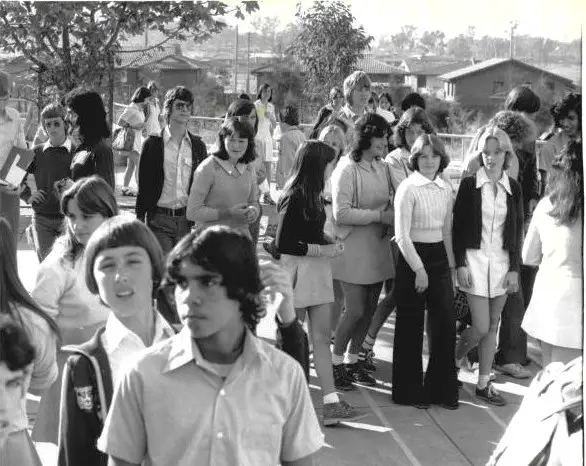
As scholar Vihavainen emphasizes; “…the (Soviet) person in a communist society would not be materially greedy.” Embassies tried to give instructions on behavior, especially regarding consumption (clothing and electronic goods and the like). If on the one hand a general guideline was that students should look as equal to their peers as possible, this should also be acceptable regarding the moral and dress codes established at home. Jeans, miniskirts, extravagant clothing were part of the bourgeois lifestyle, inevitably linked to supposed immorality, incompatible with the typical behavior and lifestyle of the socialist Albanian. In accordance with and following the models established by Soviet or even Chinese experience, in revolutionary daily life, clothing received special attention from communist authorities.
While other consumer goods could be consumed in private settings, clothing determined the essence of the person and their disposition towards a certain lifestyle, namely the bourgeois one. Official reports coined the neologism ‘plaçkomania’ (clothes-mania), the mania for clothing, which not only involved consumerist excess but was also a strong indicator of socialist morality and its potential breach.
Embassies and youth organizations constantly gave advice on students’ appearance, setting boundaries on what was acceptable and what was not. Moreover, a strict dress code, labeled as proper and dignified, was supposed to distinguish Albanian students, agents of the revolution, from others. Embassies tried to constantly impose discipline, lamenting consumerist tendencies, emphasizing students’ need to buy books. The Albanian embassy in Rome criticized some students for having saved money on food at the expense of their health to buy a television, while others had bought tape recorders. In other cases, students rejected offers for housing provided by the embassy, finding cheaper apartments to save money and buy goods that were not available or difficult to find at home. Such actions were widely condemned in meetings with students, but the practice was somewhat tolerated, also because such items were subject to high customs duties at home, which also brought profit to the state.
Since the Albanian state was neither financially capable nor accustomed to adjusting scholarships to respective inflation rates (especially in Italy and France), it constantly relied on scholarships offered by Western countries or international organizations. While scholarships offered by particular states were more or less equal to those of the Albanian state, those from international organizations, such as UNDP, were considered quite high. In 1982, the Council of Ministers, after receiving detailed information on students’ general consumption patterns, announced that those receiving scholarships from international organizations had to return part of the money to Albanian embassies. On the other hand, it forced students to spend (and justify accordingly) more on books than on other items. Doubling the amount spent on books was considered a good measure to fight consumerism, but also as a way to replenish libraries at home with scientific literature, as well as to provide cash for embassies to support the ever-increasing number of specialists flowing to the West.
Books thus became the main element with which excessive consumerist tendencies could be curbed, reorienting students towards the purpose for which they were sent abroad: to acquire knowledge and prove themselves as “better than the (foreign) students”. Appropriate examples of socialist ethics were evaluated and reported as best practices. The consumption of science versus consumerism became an integral part of the cables that embassies sent home to ministries and Party bodies. Ultimately, the battle against “plaçkomania” began to fade in the late 1980s, when warning was replaced by simple criticism. Reports in the late 1980s reflected a general liberalizing trend of the communist regime towards student activities in the West.
The body as an extension of the state
In an ascetic revolutionary society like the Albanian one, behavior patterns had to conform to official dogma. The project of the new Albanian person was certainly inspired by the Soviet model, mixed with local experience. Like the Soviet one, the Albanian body had to adapt to the revolutionary project the regime had undertaken for the construction of socialism. Moreover, since it served a common project, considered physically and intellectually superior to the Western one. As mentioned earlier, controlling consumerism was one way to preserve the incorruptibility of the socialist body in the West. Embassy reports mentioned not only appearance regarding clothing, but were so detailed as to cover even the hairstyle of students. Long hair for men was a symbol of decadence that could divert youth from the true revolutionary goal. Miniskirts and jeans, on the other hand, were symbols of liberation and contestation in the 1960s west, and as such were banned in Albania.
Wearing such items for students studying in Paris, Rome, or Milan would have been interpreted as surrender to Western ideals. Appearance versus content was a constant battle between students and their censors, embassies, and ministry officials. Likewise, informal contacts with foreigners had to be limited within the boundaries of what was acceptable for the socialist standard. They were tolerated only to the extent that they did not compromise either the Albanian state or the student himself. Embassies systematically requested information on the political position of professors, students, and landlords where students lived, determining what contact should be acceptable and what should be considered inappropriate. A constant preoccupation of diplomats was monitoring or preventing romantic relationships between Albanian students and locals, or even among Albanian students themselves. While on the one hand official dogma valued love as an expression of freedom, this love had to be a ‘political’ love, not simply an expression of consensus between two individuals.
The new socialist society did not abandon some of the basic principles of a conservative environment, which was quite fixated on family life and marriage. Besides this, the communist regime developed a deep xenophobic attitude towards foreigners, especially after the break with the Soviet Union. This affected not only the public sphere but also the private one. Albanian students who had previously married citizens of the communist camp were forced to disown their foreign wives. From this later period onwards, marriage of Albanian citizens with foreigners became completely impossible. In the West, students were constantly advised and reprimanded for inappropriate relationships with foreigners, especially romantic ones. In 1975, the husband of an Albanian student in France immediately denounced his wife’s infidelity with a French student. The affair had the contours of a spy story, since the Frenchman was an employee of the Ministry of Interior, thus a potential spy. The husband, by immediately denouncing his wife, blamed the bad influence of bourgeois life on her.
The scandal spread to other female students who had had romantic relationships with foreigners. Outraged by the event, the Ministry proposed not only to bring the guilty parties home, but also all students studying in France and Italy at that time. Eventually, the Central Committee proposed to punish only one person in the group, as it did not want to strain relations with France. While female students were subjected to stricter control, men enjoyed a little more freedom.
In Bordeaux, a student was reprimanded for a relationship with an English student by the local Albanian youth organization. The student made a self-criticism during the meeting, immediately abandoning his girlfriend. While the affair was considered finished and concluded in youth organization meetings, it reappeared a few years later when an embassy official, during an inspection visit to the University of Strasbourg, discovered that the English girl had followed the student there. The affair was immediately reported to Tirana and labeled as ‘degenerate behavior of the student… who continued the relationship with an English girl’. The student was eventually returned to Albania, reprimanded for his political immaturity, and treated as a bad example for other students studying in Western countries in a subsequent meeting with them.
Returning home was seen as a sufficient form of punishment, which would later affect their career opportunities. However, not all students submitted to the pressure of the state or their colleagues to give up their girlfriends or adapt their behavior to the political directives of their country’s authorities. An Albanian student in the early 1980s in Milan was reprimanded for poor results and threatened to be sent back to Albania. The student was called, together with his father, to a meeting with officials of the Ministry of Education and Culture to explain the reasons for his poor performance. He blamed the pressure and difficulties of various subjects at university, while his father revealed a sentimental relationship his son had with a Danish colleague. The student, faced with his father’s denunciation, tried to defend him by saying he never thought the affair could harm the state in any way. Under pressure to give her up, the student promised to do so at a later moment. The affair resurfaced the following year when the same person was publicly accused at the annual meeting with students in Tirana of continuing the relationship. Faced with criticism and possible punishment, the student used the same socialist repertoire of his inquisitors from the Ministry to justify his behavior.
While the student continued to see the girl, he had significantly improved his university academic results, showing that the girl and the relationship had not become an obstacle to his graduation. He claimed that the Danish girl came from a fairly normal family, an image meant to remind listeners and readers of the typical image of a traditional Albanian family. The student, despite pressures, continued to see the girl and intended to marry her, provided she came to Albania. The episode reflects more the ambiguity of the Albanian regime in dealing with such stories and its strategy for resolving them. The gender balance in such behaviors favored men more than women. If Albanian men could redeem themselves and break off relationships with foreign women, Albanian female students were duly punished and immediately sent home.
Conclusions
Albania’s relationship with the West, from the late 1960s onwards, in the educational and cultural field was ambivalent. On the one hand, the West was considered an ideological enemy, while on the other, it provided a space for a careful opening and exchange. Students provide the best example of such a relationship. Their presence in selected Western countries would constantly increase over time, despite Tirana’s harsh ideological stance. Albania tried to use and exploit every opportunity to keep up with scientific developments, but also to support the research and industrial management of its industries. Certainly, it did this on its own terms, trying to constantly control and monitor the presence and activity of Albanians abroad. Student life in Italy, France, Austria, Sweden, or Greece somewhat reflected what was happening in terms of control in their own country. The state demanded from student’s not only political loyalty, but also the most faithful reproduction of the lifestyle they had at home.
Regarding students who went abroad, at a time when very few were allowed to do so, the process was considered both recognition of talent and a privilege. They had to study without losing connection to the principles of Marxism-Leninism at home.
While in the early years, political education abroad was an individual political activity carried out by the student himself, by the end of the 1970s; students were politically organized in collective groups that mirrored organizations at home. Such organizations had the task of politically educating their members and controlling and monitoring their daily activities, which had to reflect the ideological concerns of the regime. As the number of students grew, they became an important instrument of the state to obtain information not only about their colleagues, but also about other foreigners (mainly professors and students). Student life was monitored by their organizations and their peers to strengthen ideological compactness and produce a homogeneous social figure of the Albanian student abroad.
Students were not just talented individuals, but also state agents who had to secure results and reproduce them at home in their professional activities. Surprisingly, the Party never explicitly asked them to act as its ideological agents abroad, but students would use ideology to respond to any provocation they might encounter. Students had to replicate such conformist behavior when they were at home and would be reprimanded for importing into Albania clothing and other consumer goods belonging to the bourgeois lifestyle.
Their physical presence also had to be a perfect and pure representation of the new socialist person, hence the prohibition of contacts or romantic relationships with foreigners was strictly forbidden. By the end of the 1980s, political and personal control over students shifted into formalism, due to a gradual opening and liberalization of the regime. Memorie.al