
– ALBANIA AT WAR AGAINST A DEADLY TRADITION –
Memorie.al / Their modest stone houses are located just a few steps from this village at the foot of the hill, where men drive donkeys on roads far too steep for cars. The Shima and Allushi families have been good neighbors for many generations, sharing bread in good times and bad, and helping to keep things running in the village of Kurcaj. Now, they are practically at war. It all started two years ago, with an argument between a man from the Allushi family and a little boy from the Shima family. When the child began to misbehave, the man beat him until he drew blood.
The boy’s father then fired a warning shot, as he put it. But the bullet went through a second-floor window of the Allushi home, killing a 12-year-old girl. All of this was the beginning of a blood feud, an age-old Albanian custom that is causing great concern for both state authorities and social associations. More than 800 Albanian families are involved in the “cycle of blood killings,” according to the National Reconciliation Committee, an organization that mediates conflicts.
“It was an accident; we have repeatedly sent representatives to their homes to apologize and to settle the blood,” says Musa Shima, 77, the father of the shooter. “But they won’t accept it. They say they want blood!” “The little girl was killed,” says Shaqir Allushi, 48, the victim’s father. “We will take revenge!”
Blood feud, the code of settling scores with vengeance, has been practiced by various communities from the samurai of feudal Japan to the inhabitants of the Appalachians in America, when the Hatfields and McCoys feuded into the 19th century. Members of mafia groups in southern Italy still carry out revenge killings, which have resulted in 60 murders in less than two months.
But perhaps nowhere in the modern world is blood feud as widespread and problematic as in northern Albania, the most backward area of this poor European country. Often triggered by minor misunderstandings, it forces targeted people to remain locked up for years on end. The Albanian government has long tried to raise awareness about this phenomenon.
But last year, for the first time, it allocated funds to encourage reconciliation efforts, as well as to pay teachers for children from families who have been forced to stay locked in their homes for fear of blood feuds. “The law must triumph over the kanun,” said former Prime Minister Sali Berisha in an interview, referring to the Code of Honor. “I cannot say we have eradicated it, but I can say there has been some progress,” he said.
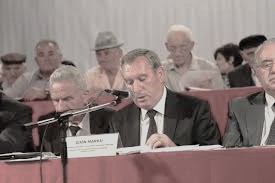
But those working to stop blood feuds say progress is very slow. “These things should not happen in a modern society; they are holding the country hostage,” says Gjin Marku, who heads the National Reconciliation Committee. On his desk is a photo of Mother Teresa, the Albanian-born nun who dedicated her life to the poor.
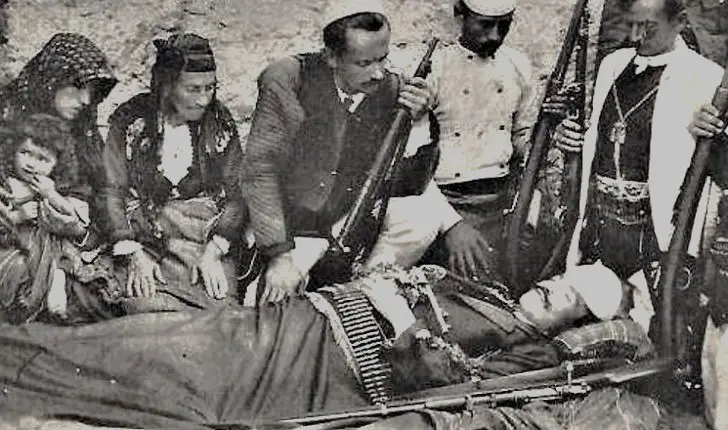
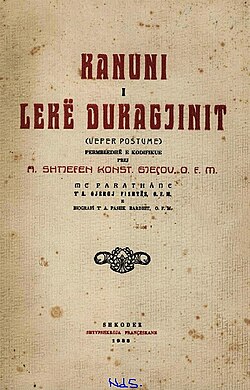
“There are so many cases of blood feuds that there are some we don’t even know about. The rules of blood feud have been passed down orally as part of the code known as the Kanun, which describes the practices of daily life.”
While the most sexually discriminatory rules have been set aside, for example, “a man must take a bullet along with his wife’s dowry to punish her in case of adultery,” or that a woman is described as “a sack that must endure everything,” those concerning blood feud “remain in force.” Chapter 126 is titled: “Blood is paid with blood” and authorizes revenge for any killing.
The country’s leaders, from the Ottomans who ruled here for five centuries to the communist dictator Enver Hoxha, who governed for 40 years until his death in 1985, tried to eradicate the kanun in favor of their own legal systems.
But the Kanun, which predated the arrival of the Ottomans and was not published until the early 20th century, survived in the shadows, returning as “law” with the fall of communism in 1992. Copies of the full text can now be bought at kiosks throughout the country.
“When the law is not enforced, the kanun has always filled the gap,” says Ismet Elezi, 100, a law professor at the University of Tirana who has studied the kanun for more than 50 years. He says the version that was reborn after Hoxha’s regime is particularly destructive, as it allows revenge against any family member, even a baby in the cradle.
“This is manipulation of the kanun, which actually aimed to end violence.” Elezi says the wounds of blood feuds now happen like this: a murder occurs, the victim’s family demands blood, then members of the killer’s family lock themselves in their home, which according to the kanun is inviolable, for at least 40 days and ask for forgiveness. If forgiveness is accepted or blood is taken, then the conflict is closed.
If not, the period of isolation can continue endlessly. In recent years, as many inhabitants of northern Albania moved to more developed areas in search of work, blood feuds have also spread to Tirana, the capital, as well as other cities. One such family, whose members asked not to be named because they have lived in complete hiding since 2002, lives on the top floor of an apartment complex in central Tirana.
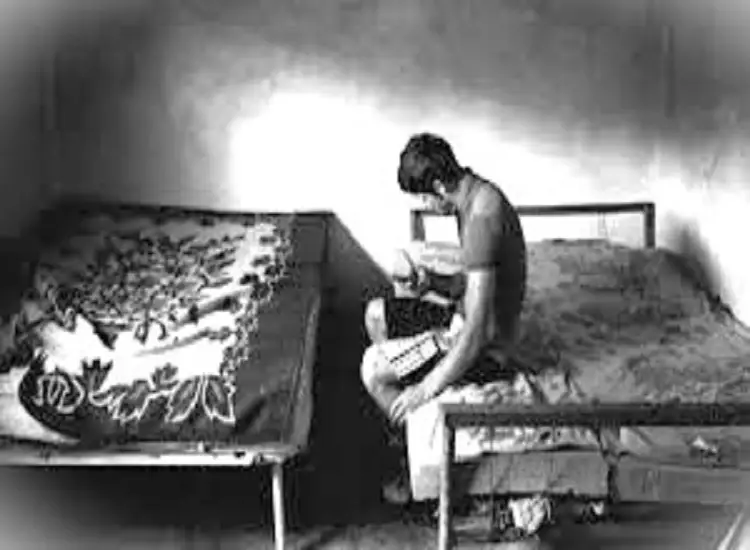
Pjetri, 47, has two sons, Justini, 19, and Altini, 16, both much paler than their peers. Since their uncle killed a neighbor during a quarrel over power lines five years ago, they have been locked in the house and have left only once, for a failed attempt to flee to Greece. They stay away from the apartment window for fear of being shot.
“It’s like a prison, or maybe worse, because we haven’t done anything,” says Altini, who cannot attend school, so he learns Italian from television and English from a book his mother bought him, the only one working in the family. The rules exempt women from blood feuds, although this family fears their rivals might not respect that.
Pjetri has tried hard to get his family out of the country. “We are in danger, threatened by the victim’s family,” he wrote in a letter sent to the American embassy in Tirana in December 2003. “Please save our lives by giving us the opportunity to go abroad!” None of the letters have received a reply, he says.
In an effort to help, Gjin Marku, head of the Reconciliation Committee, has undertaken mediation along with a group of volunteers and some government officials. This can be dangerous work. In the northern city of Shkodër, considered the center of the regions that follow the kanun, a well-known mediator was killed in 2004.
“There are no words to describe how bad the children locked in their homes because of blood feuds feel,” says Mexhat Poja, 58, an education official in Shkodër. With the help of UNICEF and a $100,000 grant from the Albanian government, he managed to secure school books and trained 32 teachers for 60 imprisoned children in this city.
Agim Loci, a bodyguard for a Tirana businessman, also works as a mediator for blood feud cases in Fushë-Krujë, east of Tirana. One of the families he works with has lost 17 members to blood feuds. “We met both parties and tried to convince them that it was better to forget and move on,” he said.
“We had them sign an agreement and filmed it, to be sure.” One day, Loci visited the Nikolla family in the village of Halil, northeast of Tirana. Last November, Fitim Nikolla, 25, was shot dead after a traffic dispute. The killer was sentenced to 23 years in prison, and then the sentence was reduced to 13 years. Nikolla, the only man working in the house, drove an old truck selling fruit.
Now the truck has been sold, and his brother, Skënder, 37, who has a heart condition, is unemployed. “I don’t care if they stop me or not. I don’t care if they arrest me,” says Skënder Nikolla, sitting on the cushion in the living room, his voice trembling and tears streaming non-stop. / Memorie.al