By Dr. Gjon Boriçi
Part Two
Memorie.al / The great debate that has unfolded over the past two centuries following the birth of Marxist theory and Christianity would undoubtedly leave its mark in fierce political clashes among countries where the communist ideal, inspired by Marx’s teachings, would persecute societies in nations with a one-party communist system. In 19th-century Europe, after the Congress of Vienna and the establishment of a new system in international relations that ended the wars of the French Revolution, a variety of radical, republican, and socialist ideas began to flourish on the old continent. The years 1830-1840 were a time of political and ambitious inspirations, taking as models Frederick the Great, Jacobin ideas, the thoughts of Kant and Fichte, and the innovation of the new era. Marx’s political thought was shaped precisely in this era. The rational heritage was particularly important for distinguishing identity from what became known in the 1830s and 1840s as ‘socialism.’
Continued from the previous issue
For every failure that might occur in daily life, especially in the Shkodër district, the blame for everything lay with the reaction, led by the Catholic Clergy. Identifying this structure as enemy No. 1 of the communist regime in Albania made the task of the Party Committee secretaries in Shkodër simple: to accuse the Catholic Church and its clergy of everything.
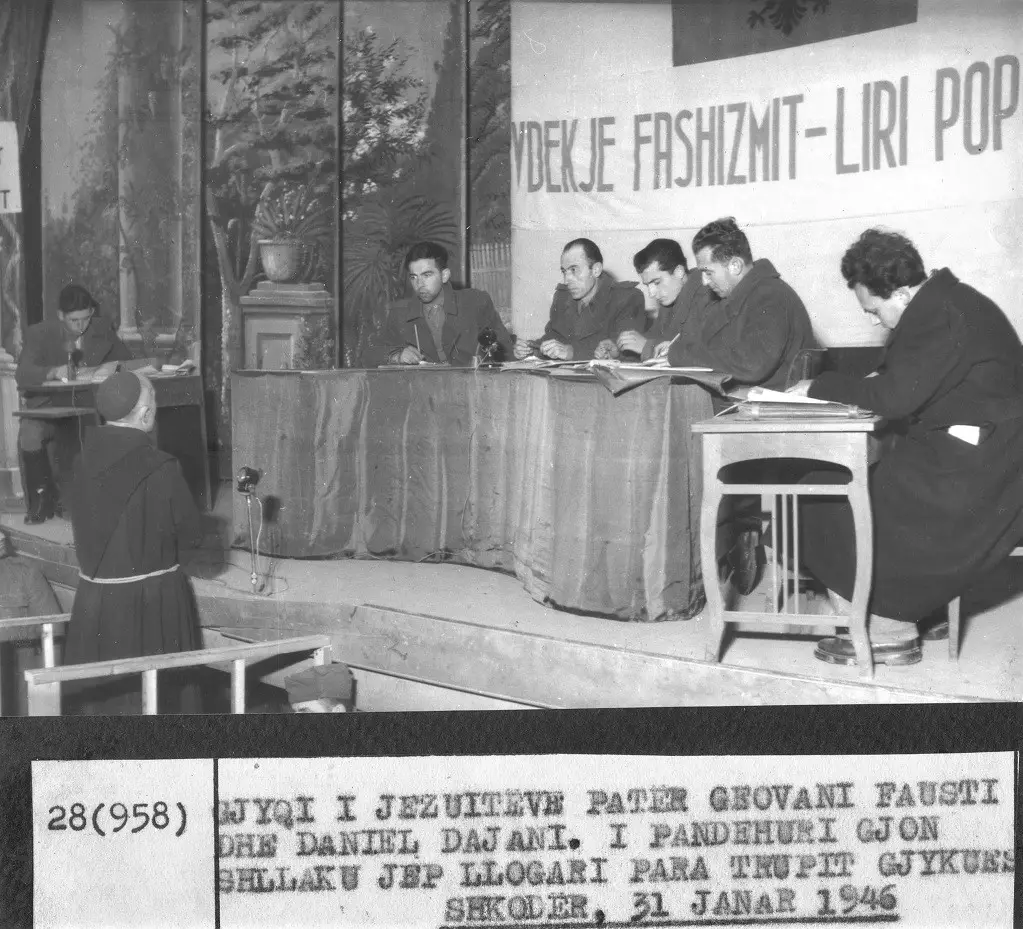
Moreover, the information took on grotesque forms, as even the wars being fought in those years in Greece, China, or Palestine were undoubtedly also the work of the Catholic Clergy. Nevertheless, the arrests of clergy continued, and at the end of 1948, the arrest of four other Catholic clerics was announced, as well as the escape of twelve citizens of the Catholic faith.
Catholic youth, a dangerous enemy of the communist regime
Even regarding education in the Shkodër district, the most supervised and consequently most targeted teachers were those of the Catholic faith. The accusation was that they had incited the high school youth of the Liceu and the ‘Normal School’ to oppose voluntary work during 1946 and 1947.
Trying to “sabotage” the work of the Democratic Front by propagating to the youth not to participate in those meetings or rallies was a serious crime that should not go unpunished. Arrests, expulsions from school, and pressure exerted on their families had for some time curbed their activity against the people’s power.
Taking cue from a remark by Enver Hoxha with the corresponding note at the end of the report, the Committee chairman, Abaz Laze, recommended that four students be unmasked and immediately expelled from school. Ironically, these four students were of the Catholic faith.
One of the slogans written on a piece of paper and captured by the State Sigurimi was: “L. Sh. (Long live Albania). November 28, Flag Day, is not celebrated. Whereas November 29, the day of Albania’s occupation by the Communist Beast, is celebrated. Do not lose hope, people, for after suffering comes Liberty…”!
The Organizing-Instructional Section of the Central Committee of the Communist Party of Albania, headed by Manush Myftiu, inquired throughout January 1948 about the situation in the Shkodër high school and what measures had been taken in response to the counter-revolutionary activity of the students there. Meanwhile, even though strict measures were taken, the throwing of slogans on scraps of paper did not stop.
Since the measures taken were not yielding results, the Party Committee for the Shkodër district asked the basic organization to continue unmasking and isolating from the masses all elements that were against the regime and to continue expelling from school those elements who had previously been proposed for this measure.
The blow by the Shkodër Party Committee and basic organization did not stop only with Catholic high school students, but also with those Catholics who were party members and members of the State Sigurimi, such as Pjerin Kçira, etc. This group of Catholic members of the CPA was struck with the accusation that they allegedly presented themselves as communists to protect the Catholic sector, which was supposedly being attacked by the regime and the party.
Throughout the city of Shkodër, according to 1948 reports, there were between 1,800 and 2,000 Catholic youth (male and female). According to the report, all of them were under the influence of the Catholic Clergy through organizations and societies such as “Don Bosco,” “Stigmatine,” “Antoniane,” the Catholic circle “Juvenides,” etc. According to the report, the clergy, through these associations, had instilled fascist culture in Catholic youth.
This was evident because almost all of them knew Italian, listened to Italian songs, and even worse, read Italian books in their homes. Another element that distinguished Catholic youth in Shkodër was their great love for Italy and hatred towards the Slavic peoples. To show that they were not and would not be inclined to adopt Marxist culture, after the closure of the high schools of the Jesuit and Franciscan fathers, 90% of Catholic girls and boys did not continue in state schools.
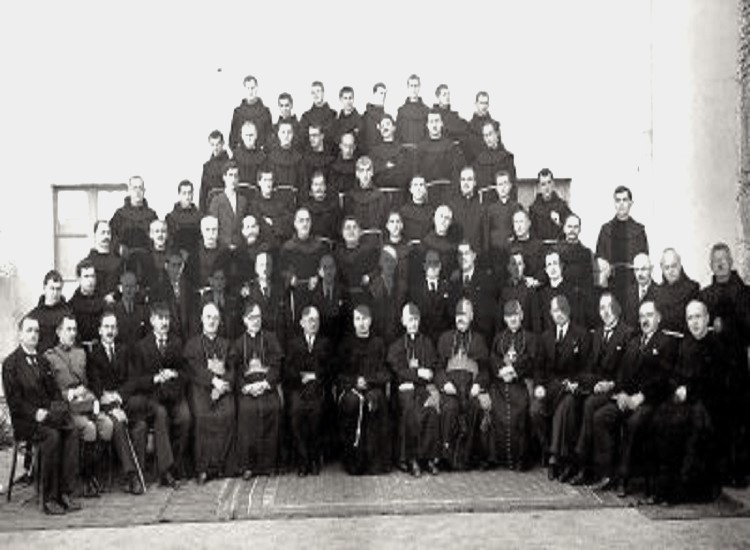
Despite the severe blow against the Catholic Clergy – which, according to the 1948 report, shows that out of more than 24 Catholic priests that Shkodër had, only 6 remained (3 priests and 3 friars), while 18 had been shot or imprisoned – when cultural evenings were held, they listened and danced to the sounds of Italian music, and Catholic youth participated massively in those evenings and boasted that they were reactionaries.
Although strict measures were taken against the Catholic opposition element, the Communist Party of Albania was still far from achieving ideological and cultural victory over this stratum. Convinced that they would not succeed by merely persecuting this stratum, the new tactic to be used, combined with organized state violence, was the construction of a new communist culture, which would challenge Catholic culture.
The communist regime’s efforts to control the Catholic Church of Albania
Ideological incompatibility was another important factor that labeled the Catholic Clergy and Albanian Catholics as enemies of the people. Whereas the Bektashi Clergy was closer to the communist movement. The problem the regime had with the clergy was only one: the Catholics. In the report dated December 28, 1949, concerning the meeting of the Catholic Clergy in Shkodër on December 28, 1949, to discuss the draft law of November 27, 1949, on religious communities, the Catholic Clergy had expressed concern and fear that ties with the Vatican might be severed.
The regime’s aim was that the Catholic Church of Albania, following the regime’s directives, would choose its own bishops and not the Vatican. The clearest evidence of this is given by the sole surviving participant of that meeting who outlived the communist system, Father Zef Pllumi. Even within the assembled Catholic Clergy itself, according to Father Pllumi, there were strong debates regarding the new statute of the Albanian Catholic Church.
Nevertheless, in this meeting, the strong Catholic wing triumphed, issuing an ultimatum to the Albanian government: without the Pope there is no Catholic Church, just as there are no communists without Moscow. According to Father Pllumi, this was the answer that Father Marin Sirdani had given to Tuk Jakova when they met in Tirana to discuss the draft statute of the Albanian Catholic Church.
Despite the terrible sufferings, killings, tortures, imprisonments, threats, the Albanian Catholic Clergy continued its resistance. Significant was the speech at the meeting by Dom Ernest Çoba, who said: “…so far we agree with the regime, but if it touches the church code, as well as the ties with the Pope, we will not accept.”
The regime was making life miserable for the Catholic Clergy. In 1946, in the wave of the great crackdown, the Council of Ministers of the People’s Republic of Albania had issued decree no. 14 of March 6, 1946, for the confiscation of all property of the Jesuits and Franciscans and the Catholic Clergy in general, in Shkodër, Tirana, Durrës, Korçë, Vlorë.
The decision of March 6 was among the harshest and struck hard at the Catholic Church of Albania, as it labeled the activity of this institution as anti-national. Enver Hoxha’s order for seizure was complete. The only thing the Albanian prime minister did not touch of the Catholic Clergy was the churches.
Seeing this purely logical resistance, communist propaganda in 1949 resumed with greater intensity the battle to convince the Albanian people that it was not fighting the Catholic faith, but only the reactionary clerics. But since the crime committed could not be covered up, the executions and imprisonments of Catholic clerics were justified on the grounds that they were enemies of the regime and that these actions were right, necessary, and appropriate.
According to the communists, the first Albanian Catholic cleric who was also the first traitor was Monsignor Prenk Doçi, the abbot of Mirdita, who was considered the chief agent of Austria-Hungary in the country in the late 19th and early 20th centuries in northern Albania. His slogan, “for faith and fatherland,” was for the Albanian communists simply a mask for the trouble he stirred.
The great problem the regime had with Catholics, as this 1949 report informs us, was that the Catholic Clergy was far more cultured and organized than the other two Albanian clergy combined. Another problem that the Albanian communists could not use against the Clergy was the sermons in church. On the order of Monsignor Ernest Çoba, clerics were to speak and pray only for peace in all their sermons.
Another path used by the communist regime to subdue the Catholic Clergy and sever it from the Vatican was the use of the official press. During my research, I have found article titles against the Catholic Clergy, such as that of 1951, titled “The Break with the Vatican, an Important Event for the Albanian Catholic Church.” The article in question was written in the offices of the Central Committee and spoke of the reactionary activity of the Vatican as an ally of the ruling classes.
Another report, handwritten by two Catholic communists, Tonin Jakova and Mark Ndoja, states that “our relations as a state with the Catholic Clergy have reached a deadlock. This has brought about a hostile attitude of the Catholic Clergy towards our people’s republic.”
This report notes that despite the attacks, the Catholic Clergy, even though all its resources had been cut off, still had not asked the Albanian state for any kind of financial assistance. The organization of the Catholic Church of Albania was no different from the organization of the Universal Catholic Church, both from a legal and administrative point of view, and was based on the canon law code.
The resistance of the Catholic Clergy brought a new wave of arrests, with direct authorization from the Minister of the Interior, Mehmet Shehu. The suffering continued for another two years, until finally the communist state made a compromise with the Catholic Church of Albania. In Tirana, on July 30, 1951, by decision no. 1332, the Presidium of the People’s Assembly of the People’s Republic of Albania approved the Statute of the Albanian Catholic Church.
Article 1 was the most significant victory of this bloody resistance of the Albanian Catholic Clergy. This article, part of this statute, stated:
“The Catholic Church of Albania has a national character, is a legal entity, and includes within its fold all Catholic believers in Albania. It is inspired by the religious principles of the world Catholic Church, which was founded by Jesus Christ, under the religious leadership of the Pope, successor to the apostle Peter. It maintains no organizational, economic, or political relations with the Pope.”
It was an excellent victory and a great loss for the communists. The Pope was recognized as the religious head of the Catholic Church of Albania. The communists had not succeeded in severing the Catholic faith in Albania from the world center of this belief. As if to further infuriate Mehmet Shehu, Monsignor Bernardin Shllaku himself sent him a telegram of thanks for this “achievement.”
Albanian communist culture vs. Catholic culture
From the exploitation of the archival materials that I am presenting for the first time, what has impressed me most was the supreme zeal of some intellectual who once spoke in superlatives about Catholic culture and who, for the sake of his career, did not hesitate to attack even his colleagues, only if they had written something praising the cultural work of Catholic priests.
It was unbelievable, as I browsed through endless pages of files and read how important party members like Sejfulla Malëshova were attacked for having unprincipled party positions. Educated people felt that to make a career in art and science, they must resolutely serve the regime, even by attacking their colleagues.
To make a career, one had to attack, with “scientific” and “academic” scrupulousness, even with slander, the most important figures of Albanian culture, most of whom were undoubtedly clerics and Catholic laypeople. Whoever dared to say even half a good word about the Catholic clerics, who had given so much to Albanian culture, would undoubtedly be labeled an enemy, and even more so if there were Catholics on scientific commissions – they had to be attacked immediately.
On June 5, 1948, an important meeting of the Political Bureau of the Communist Party of Albania was held in Tirana, where, among other things, the reactionary Catholic clergy and its influence were discussed. Catholic writers would be beyond any doubt the target of the dictatorship, to overthrow their influence on Albanian culture.
In the draft decision of the Central Committee (undated) of 1949, the aim was the creation of a literature national in form and socialist in content. This draft decision aimed to give new impetus to the new literature of socialist realism and highlighted the weak work in the ideological struggle against literary chauvinism and other bourgeois remnants. According to the Central Committee, fair, principled, and constructive literary criticism had been lacking. / Memorie.al