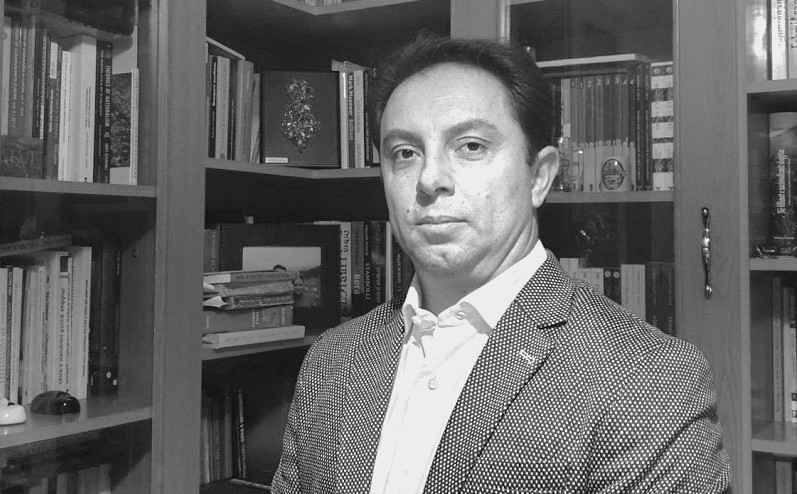

By Dr. ENIS SULSTAROVA
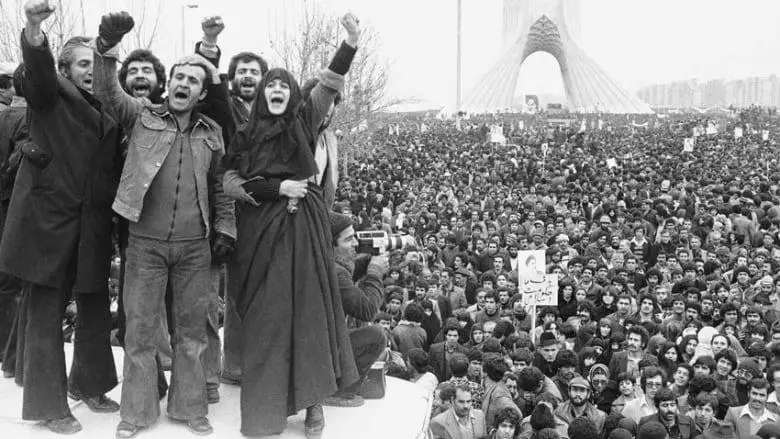
Memorie.al / The Iranian Revolution are one of the sensational events of the 20th century. This event continues to attract the attention of scholars and political analysts, as evidenced by a book published in the Albanian language by the Iranian Cultural Foundation “Saadi Shirazi,” which compiles several debates from Western academic and political circles. It is natural for the Iranian Revolution to be interpreted in various ways, based also on the worldviews and theoretical schools of the interpreters. It is understandable why Iranian scholars emphasize the cultural factors that led to its outbreak and why they highlight the role of the Islamic religion, just as, on the other hand, it is clear why the Shah himself and those close to him, in their memoirs, emphasize international conspiracy theories.
Scholars have reached diverse conclusions about which factor played a decisive role, ranging from failed economic reforms, the class structure of society, the Shah’s psychology, etc. The Iranian Revolution has challenged in several aspects the existing theories in social sciences for explaining revolutions, and it seems that the most useful approach is the multi-causal one, which attempts to combine several factors (see Moshirzadeh, 2010).
The development of the Islamic Revolution in Iran was followed with great interest by the leadership of the People’s Socialist Republic of Albania. Today, one sometimes reads superficial and unreliable explanations that link this special interest of communist Albania to the Islamic background and inclinations of the Albanian dictator, as well as the need he had to find another “Eastern” and anti-Western sponsor after the severance of relations with China (Kadare, 2012: pp. 210-211; Ngjela, 2012: pp. 456-457). Certainly, such opinions do not require much thought or effort to refute, and it would not be worth spending much time on them here.
However, taking them as a point of departure, we will attempt here to provide our explanation for the interpretation that Albania at that time gave to the Iranian revolution, because it constitutes an interesting case of the echo that the revolution evoked in a small and isolated country in Europe, which had taken upon its shoulders a heavy ideological burden (some would add, even a Don Quixote-esque one): that of being the torchbearer of the Marxist-Leninist revolution in the world. Therefore, what today may seem surprising to many in the Albanian treatment of an event occurring far from the country was part of the global mission of the Party and state leadership at the time and could not be ignored.
To have a clear understanding of the Albanian interpretation of the revolution in Iran, we must consider the political state of the country at the time. Albania was a totalitarian country at a time when other Eastern European states had entered the post-totalitarian phase. Ever since Khrushchev’s denunciation of Stalinist crimes, the Albanian communist leadership had chosen to break away from what it called “revisionism” and continue the implementation of Stalinism in the name of ideological purity. Therefore, when we speak of an Albanian stance or interpretation of the international situation, or of the positions of the Party of Labour on events abroad, we must keep in mind that we are dealing with Enverism – that is, the thought of Enver Hoxha, the First Secretary of the PLA.
Officially, the ideology guiding developments in Albania at the time was Marxism-Leninism, as in other countries of the communist bloc; however, the monopoly on interpreting and implementing Marxism-Leninism belonged solely to the leader. It is not true that Hoxha personally formulated all aspects of the official ideology – it was elaborated by a large number of individuals and institutions across many professional fields – but it is true that any political or social idea could only be made public in Albania if it was legitimized in the name of Enver Hoxha. It was Enver Hoxha himself who interpreted international developments, and the studies and analyses of others had to strictly follow his line of thought.
The Enverist ideological explanation of the Iranian revolution has its roots in Albania’s international position during those years. For a time, Albania was closely linked with China, and their international stance was the same: capitalist imperialism under the leadership of America and socialist revisionism under the leadership of the Soviet Union were equally dangerous to the revolution. Maoism and Enverism represented at that time the radicalism of Marxism-Leninism.
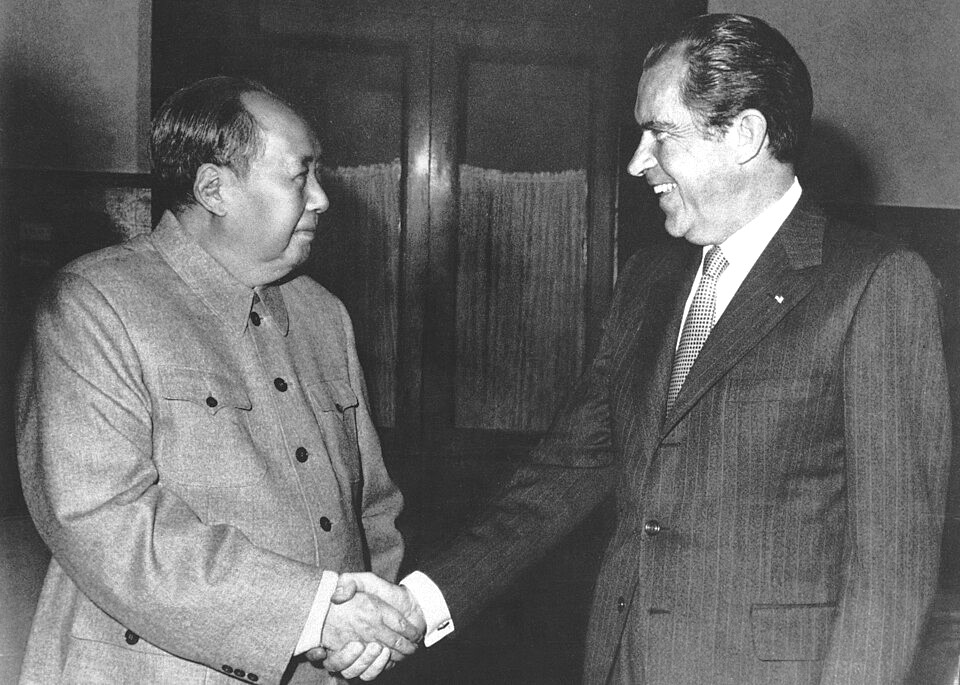
In 1972, President Nixon met with Mao Zedong, and in 1979, the US established diplomatic relations with China. These events were interpreted in Albania as a betrayal of the ideological line held until then, and after the severance of official relations with China, Albania saw itself almost alone in the international arena and, simultaneously, as the sole defender of the revolutionary spirit.
At this time, due to the priority given to ideological inflexibility regardless of the real situation inside and outside the country, Enver Hoxha took upon himself the role of the pure purveyor of Marxism-Leninism in the world, just as Mao had done before him. Communism has always had a messianic dimension, because it presented itself as the path to saving the world from class oppression. Paradoxically, this dimension grew and strengthened within Enverism, while the most powerful communist states in the world had abandoned it – first Khrushchev and then Mao, who began cooperating with America against the Soviet Union.
Enverism claimed that the revolution of the peasant and working masses was the order of the day because class antagonisms were increasing. The communist elites in the Soviet Union and China had betrayed the cause of the revolution and had become “bourgeois,” turning against the popular masses. In order for this international stance of Albania to be proven correct, it needed to be demonstrated that the international situation was heading toward violent clashes between revolutionaries and reactionaries, and that international tensions were not decreasing despite the efforts for cooperation between the American imperialists and the Soviet and Chinese revisionists. In 1978, Enver Hoxha published the book Imperialism and the Revolution, where he wrote:
“In the international arena today, various social-imperialist forces operate, which on one hand fight together against the revolution and the freedom of peoples, and on the other hand, clash and collide for markets, zones of influence, and hegemony. At the same time, the prospect of revolution and the liberation of peoples has not only not disappeared as a result of the betrayal of the Soviet, Chinese revisionists, etc., but after a temporary retreat, the revolution is now advancing on the path set for it by history.” (Enver Hoxha, 1978, p. 20)
Among the “hot” regions of the world, he highlighted the Middle East due to its vast energy resources and the Israeli-Palestinian conflict. In a note from January 1979, on the eve of the Shah’s overthrow in Iran, he wrote in his political diary that the Middle East could be the spark for a world war, but also the spark for chain revolutions – initially democratic-bourgeois and later genuine revolutions (Enver Hoxha: 1984: pp. 199-200).
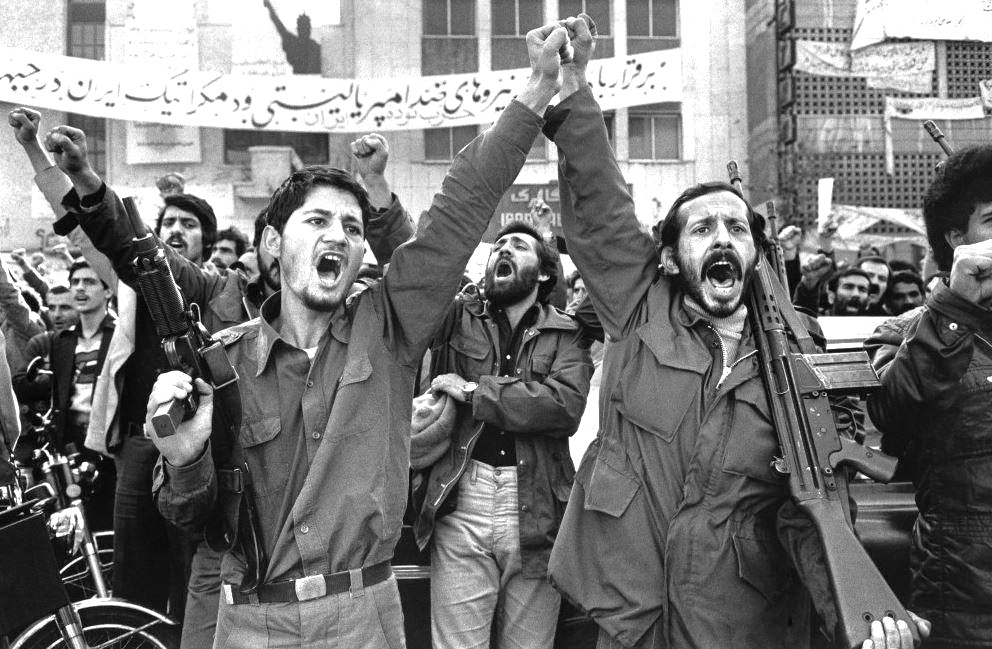
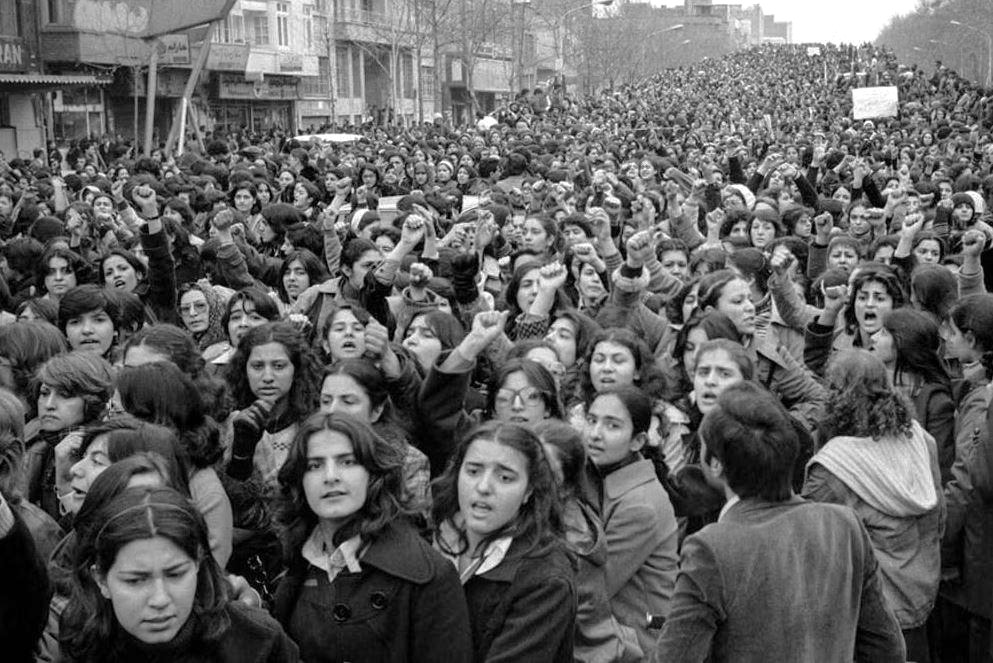
At the beginning of 1979, when the revolts against the Shah in Iran reached their climax, everything seemed to be going in accordance with the Enverist vision of the global battle of peoples against their exploiters. This was also emphasized by the fact that from its inception, the Iranian revolution adopted the slogan “Neither Easy nor West” to express its independence from the two blocs (Eghbali Zarch, 2010: p. 21), which could be interpreted as an ideological stance close to that of the PLA. On February 13, 1979, Hoxha wrote in his diary that Lenin’s thesis – that the current era is an era of revolutions – was being proven true, and that the Iranian revolution would be followed by others (Hoxha, 1984: pp. 219-220). According to him, it was an anti-imperialist and anti-feudal revolution with a social and class basis (ibid: 213-214, p. 232).
A significant problem for the Enverist analysis was the Islamic character of the revolution and the fact that Muslim clerics were at its head. Iranian scholars give primary importance to the factor of the clergy and the role of the leader, Ayatollah Khomeini, in the ideological and strategic preparation of the revolution, the mobilization of the people in revolt against the Shah, and the victory of 1979 (Mohammadi, 2010). Enver Hoxha also paid attention to this issue, but in the end, he excluded religious faith as the fundamental cause because the first criterion of analysis had to be materialism. According to the note of January 14, 1979, the revolution had objective material conditions which drove the people to rise against the regime, just as there was the subjective moment of the clergy’s leadership, particularly that of Khomeini. Religion was not the main factor.
“It is a fact and must be recognized that this person (Khomeini) and his Shiite sect currently play a role, but in no way are only he and his sect the decisive force. In the leadership of this revolution – which we can call democratic-bourgeois and anti-imperialist in outlook – there is also the progressive, even secular, bourgeoisie, as well as true Iranian communists and patriots.” (Ibid, pp. 193-194).
For Enver Hoxha, to judge the Iranian revolution as an Islamic revolution meant positioning oneself with the revisionists and imperialists who had denigrating aims toward peoples. For him, it was excluded a priori that a religious movement and regime could be progressive, because one had to remain faithful to the well-known Marxist slogan of religion as the opium of the people. Marxists must be steadfast regarding any religion; therefore, even the so-called “religious socialism” was wrong (ibid: p. 343). The Constitution adopted a few years prior had declared Albania an atheist state; thus, there was no question of making concessions on this point.
Sometime later, when it became clear that post-revolutionary Iran would be an Islamic republic, Hoxha explored the chances of establishing a democratic-bourgeois order in the Middle East. He examined precisely the religious factor for creating an Islamic democracy, even citing the Quran and the first caliphs to conclude that the Islamic religion could adapt to the modern republican system of government (ibid: p. 466). Enver Hoxha, who had engineered the Albanian atheist society specifically based on the idea that religion is unnecessary for socialism, now thought it would be an important component of “bourgeois democracy” in the Middle East.
In Marxist-Leninist teleology, “bourgeois democracy” is an intermediate stage toward the final proletarian revolution; therefore, it was not for nothing that in Albanian historiography, the coming to power of Fan Noli in 1924 was labeled a “democratic-bourgeois revolution.” By calling the revolution in Iran as such, Enver Hoxha indirectly affirmed the modernity and more advanced stage of socialist Albania, in which this phase had been concluded in the 1920s and religious institutions had been closed in 1967.
From Tirana’s perspective, the revolution in Iran was valued positively for its mass and anti-imperialist dimension, but the contribution of the religious factor within it was downplayed. It served as proof of the revolutionary potential of the Third World and the sharpening of contradictions between peoples and oppressive classes. This interpretation served the PLA to validate its ideological position at the time, which Hoxha saw as valid for revolution worldwide: “In this direction, in a modest way, our Party also gives its contribution. The peoples believe it because it speaks the truth, and the truth has its source in the Marxist-Leninist theory that has been concretely applied in Albania” (Hoxha 1978: pp. 446-447).
Through this article, we have attempted to provide an explanation for the ideological interest shown by communist Albania in the Iranian Revolution of 1979. To better shed light on this episode, further studies are needed. In particular, research should be conducted on whether there were diplomatic contacts between Albania and Iran after the revolution and how they were valued by the political elites in both countries. Furthermore, it would be of great interest to investigate how communist Albania’s alignment with the revolution was interpreted in Iran and whether there was any interest from the new Iranian leadership in Albania.
He examines precisely the religious factor for creating an Islamic democracy, even citing the Quran and the first caliphs to conclude that the Islamic religion can adapt to the modern republican system of government (ibid: p. 466). Enver Hoxha, who had engineered the Albanian atheist society specifically based on the idea that religion is unnecessary for socialism, now, thinks it will be an important component of “bourgeois democracy” in the Middle East. In Marxist-Leninist teleology, “bourgeois democracy” is an intermediate stage toward the final proletarian revolution. / Memorie.al