
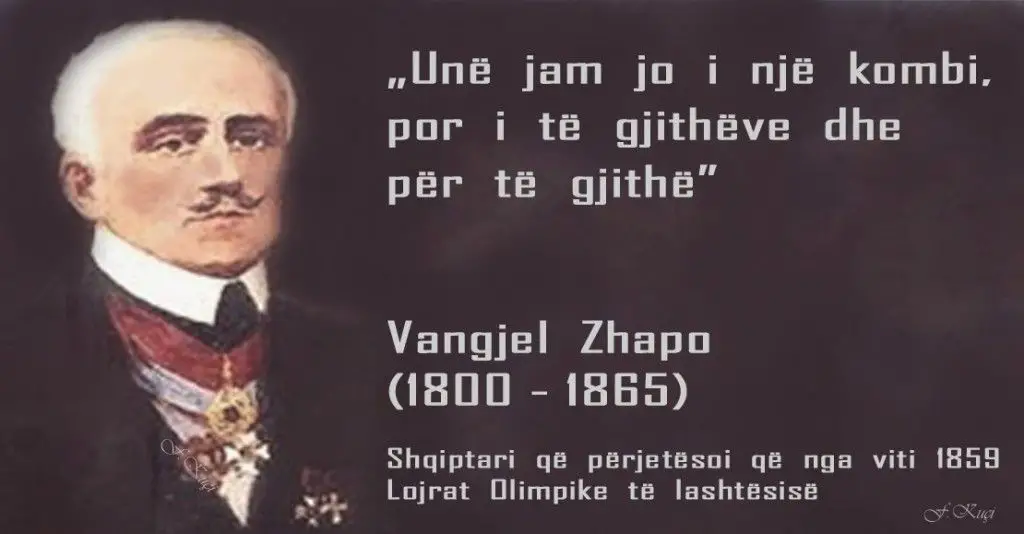
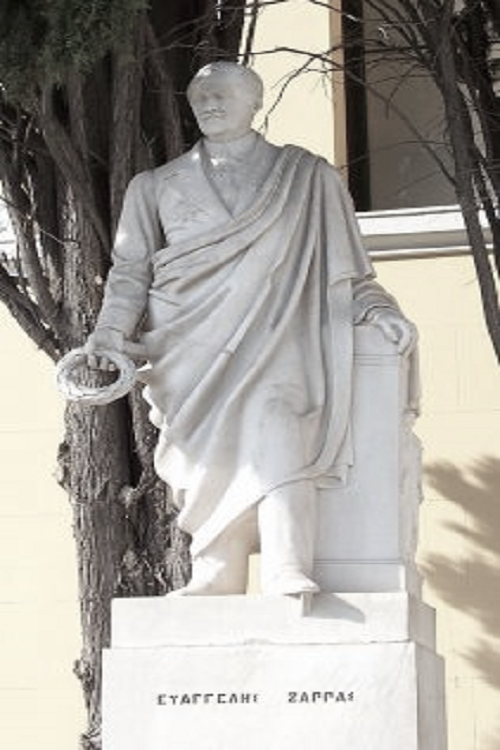
Memorie.al / A philanthropist of great fame in the Balkans and beyond, Vangjel Zhapa is one of the notable sons of Labova. His contribution to the construction of some of the most beautiful works in Athens, which have already entered the cultural fund of this country, is incalculable. The statue of the Albanian is placed in front of the Olympic Palace in Athens, which bears his name. Zhapa’s wealth is now administered by the committee of testaments in Greece and is distributed according to his provisions, left in writing shortly before he died. Vangjel Zhapa, who was forced to emigrate at the age of 13 to Janina, fought alongside Greek fighters in the war against Turkey for independence.
He joined the Greek army even after the victory of independence in 1821, but disillusioned by certain attitudes of military personalities, he was forced to leave from there forever. From that moment until the end of his life, he lived in Romania, which he considered a second homeland. Chance made him rich, as the King of Romania, Maruz, granted him land because Vangjel cured his daughter, who had been ill for years. The nineteenth-century benefactor stands alongside the greatest personalities of Greece.
The foundation bearing the name of Vangjel Zhapa, which has its origins in the 19th century and is renowned throughout the European continent and beyond, should also operate in our country, for the simple reason that Vangjel was Albanian. He was born in the village of Labova e Madhe, Gjirokastër. Prominent figures such as Sami Frashëri, Mit’hat Frashëri, and others have always been proud of his name whenever philanthropy was discussed, and they took pride in saying they were his compatriots.
Vangjel Zhapa, here is the biography of the benefactor
There is extensive documentary material regarding the figure of Vangjel Zhapa, stretching across the course of two centuries and across a space that exceeds the Balkan zone. Vangjel Zhapa was born on August 23, 1800, in the village of Labova e Madhe, Gjirokastër. Vasil and Sotira Zhapa would rejoice immensely in their child, without knowing that he would later make history. During his childhood, his parents took great care to ensure Vangjel was nourished with love for his birthplace.
From his mother, Vangjel inherited a devotion to agriculture, the engagement with which would later enrich him. At the age of 13, Vangjel left his birthplace, which he would never forget. He initially settled in Janina. The cultural environment for several years in this city influenced the formation of his personality. For a few years, Vangjel Zhapa was a soldier in the garrison of Ali Pasha Tepelena, from where he later broke away and joined the Souliote insurgents.
Zhapa continued the anti-Turkish struggle even after the death of Marko Boçari, under the command of Zervas and other leaders of the anti-Turkish uprising. He was honored with the silver medal “for contribution to the struggle for the independence of Greece,” which is also confirmed by the Foreign Minister of Greece, L. Deligeorges, in a document dated December 31, 1890. Vangjel Zhapa’s participation in the anti-Turkish uprising of Greece caught the eye of the Turks, who arrested his mother, Sotira, already at an advanced age, and plundered his ancestral property.
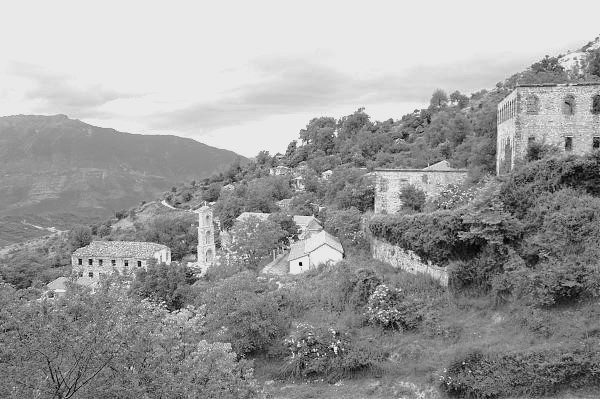
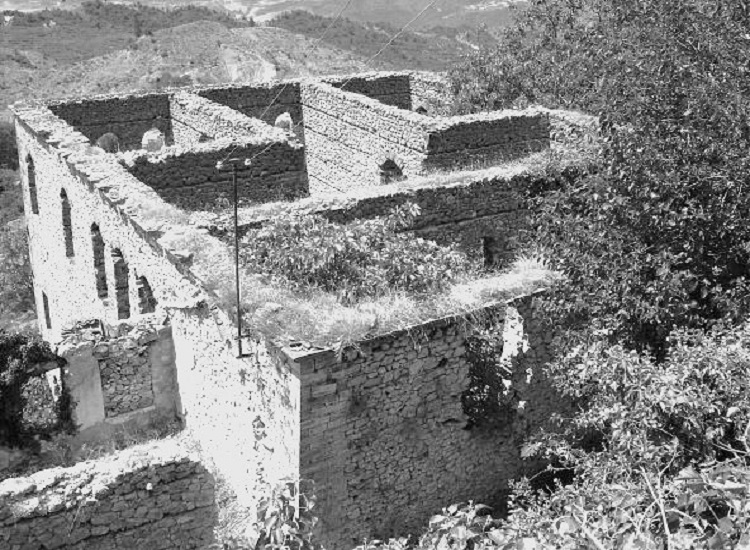
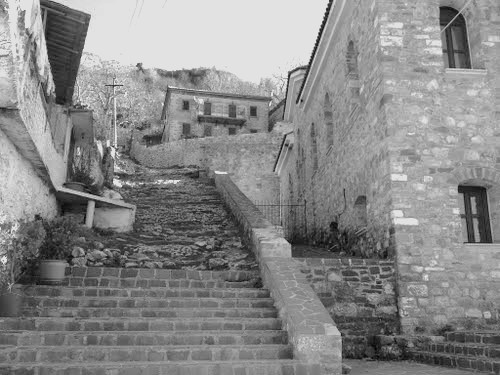
The complexity of this figure, linguistic difficulties, and the numerous locations where bibliographic information may be found have caused many researchers to abandon, fail to complete, or study only specific aspects of his personality. Romania, where Vangjel Zhapa spent most of his life, is the country that has best focused its studies on this interesting figure. This personality was commemorated with special honor in May 1971, when the Sports Museum of Romania was inaugurated. In Labova e Madhe, Vangjel Zhapa’s birthplace, the three-story houses that resemble historical castles still stand.
Although 150 years have passed since their construction and decades since World War II when they were burned, these houses have not yet collapsed – a testament to the magnificent art of their construction. These houses were the property of Vasil and Kristo Zhapa, two brothers from Labova, respectively the father and uncle of Vangjel, who emigrated first to Janina in Greece and later to Romania.
Settling in Romania
After the end of the anti-Turkish war and the recovery of Greece, Vangjel Zhapa retired to private life, giving up military honors, titles, and other claims distributed by the Greek state. In 1831, after 18 years, he visited his birthplace, Labova, and his relatives for a few days. At the end of the visit, after receiving his mother’s blessing, he left with the caravans of the time for Verias (near Thessaloniki) in Greek Macedonia, which was still under Turkish rule, with the intention of engaging in trade and agriculture there.
Time proved that coexistence with the embittered Turks, who looked upon them with suspicion and hatred, was unbearable. The real reason for his departure from Greece was the conflict he developed with some high-ranking personalities of that country. Before leaving Greece, Vangjel Zhapa considered two places to emigrate: Egypt or Romania. After a struggle of motives, he chose Romania due to the favors secured by that state and its mild agricultural system. With his medical knowledge, gained in military camps from his fellow villager Petro Panajoti, Zhapa became famous in his “adopted” homeland, as he called Romania.
How the Albanian saved the King’s daughter
In Bucharest, King Maruzi had a very sick daughter; the doctors had decided that to save her, they had to amputate her leg. This decision was opposed by Maruzi. Thus, the Romanian King sought to give his daughter courage by having her visited once more by folk healers. He chose Vangjel Zhapa as the first, who, after examining her, took responsibility for her cure. Within six months, following intensive treatment, the King’s daughter stood up, fully healed. As a reward, the Albanian was granted ownership of a water mill he had been renting, along with the land surrounding it.
Fortune made him rich
The story of a man’s enrichment often turns into legend. Vangjel Zhapa had not even imagined that on the land received as a reward for healing King Maruz’s daughter, he would become wealthy. A company searching for oil in the Romanian region found that the land owned by Vangjel contained large oil reserves and entered negotiations with him to buy it. The offer to sell the land was refused by Vangjel Zhapa, who decided to become a shareholder in that powerful enterprise.
The revenues secured from oil began to rapidly enrich the Albanian, who was sought after everywhere as one of the most desirable partners among all landowners. Vangjel bought large areas of land in Fundem and Budest. Later, he also bought the properties of four major owners such as Lluika, Kasiora, and the Broshten estate. In 1834, Vangjel requested that his cousin, Kostandin, also go to Romania. With the latter’s help, Vangjel bought entire areas of agricultural land.
By 1860, Zhapa had about 66 estates with an annual income of 1,500 gold napoleons each. Later, an alcohol factory and a 12-stone mill – the only one of its capacity in Romania – were added to his wealth. The Albanian’s residence was the Broshten estate. The building was multi-storied and surrounded by a wall about 2 meters high, equipped with watchtowers.
Inside the walls, there was also a beautiful meadow with fruit trees and selected flowers that made the surroundings more pleasant. The residence was guarded by an Albanian guard of about 100 men, dressed in national costumes, fustanellas, and wide-sleeved white shirts, which his compatriots from Rrëza in Tepelena wore on holidays. The residence took the form of a “Dacian fortress,” situated in an open field and visible from afar. Vangjel Zhapa’s residence was located 60 kilometers north of Bucharest, the capital of Romania. In his building, the Albanian had a very rich library with books consistent with his Enlightenment education. A significant place in the library was held by the great authors of Greco-Latin literature, which he is thought to have purchased in Paris during the time he went to study.
Vangjel revived the Olympic Games
The Olympic Games are the oldest activity in world sport. Their origin dates back to the ancient Greeks and they were held until 392 AD, when they were destroyed by a Roman emperor. After the quenching of these games, 15 centuries had to pass before the sporting confrontation was reborn. In the library of the International Olympic Academy, documents and facts exist proving that one of the prominent figures who contributed to the revival of the Olympic Games was Vangjel Zhapa, the philanthropist from Labova e Madhe. Although he lived in Romania at the time, he chose Greece to undertake such an initiative, as it was once the center of the Ancient Olympic Games and had gained independence earlier.
In 1856, the leaders of the Greek government received a letter from the man who supported the Olympic Games morally and materially. The letter reached the authorities in Athens via the Greek consulate in Bucharest. Vangjel Zhapa took upon himself, before the King, the revival of the Olympic Games and their conduct, exactly as they had been held in reality. At the end of the letter, Zhapa requested that the first edition of these games be held in Athens in 1859. In 1856, a major article was published in the Greek press: “Vangjel Zhapa, the man who undertakes to pay all expenses for the rebirth of Olympism…”!
In 1858, in a petition sent to King Otto, Vangjel Zhapa informed him that he was donating to the Greek government the 400 shares he held in the Romanian Navigation Company for the establishment of the Olympic Institute in Athens, which would organize periodic sports competitions starting from 1859. Later, in addition to these, Zhapa added 3,000 gold napoleons to his offer. Vangjel Zhapa’s gift prompted a special royal decree in 1856, through which the gift was accepted and a commission was charged with organizing the Olympics and encouraging national industry.
To create the conditions for the manifestations accompanying the sports competitions to precede normally, Vangjel Zhapa envisioned the construction of a complex building in the center of Athens. Four years after Zhapa’s death (1865), the Greeks gave permission for the construction in the center of their capital of the establishment they named “ZAPPION,” in honor of Vangjel, who gave a very precious contribution to the rebirth of the Olympic Games.
Gifts for the Balkans and Albania
The Albanian emigrant, Vangjel Zhapa, aimed to educate girls with the virtues of modern society’s morality, as the middle Ages had left them suppressed. Zhapa made projects for opening female schools in Constantinople, Adrianople, and Labova e Madhe, according to the model of the best schools in the Hellenic state.
Help for poor Albania was not lacking either. Through his testament, Zhapa would care for the schools of Lekli, Kakozi, Karjani, Nivani, Përmeti, Dhrovjani, Delvina, Filati, and Qeparo.
The testament provided that the fund in aid of these schools would reach 1,200 gold francs per year. The Albanian, who left his birthplace at only 13 years old, sponsored the publication of two Albanian language primers, compiled by the precursor of our National Renaissance, Naum Veqilharxhi, in Bucharest. Likewise, this benefactor financed the publication of the Albanian newspaper “Pellazgu,” which was published in Lamia, Greece, from 1859 – 1861. In 1860, Zhapa built the school in Labova e Madhe, where in 1921 a normal pedagogical course was held, preparing 94 teachers for the primary schools of Southern Albania.
This benefactor put significant sums of money at the disposal of the Romanian state for the publication of the dictionary of the Romanian literary language. The Romanian army benefited from him 50,000 gold napoleons to equip it with a battery of rifled cannons, the latest production of that time. The “Zappion” Palace, built with Vangjel Zhapa’s funds, is another gift of his to the Balkans. Its project was entrusted to the French architect Boulanger, while the implementation to the Danish engineer Theophil von Hansen. The construction work lasted 14 years, and the inauguration ribbon was cut by his cousin, Kostandin Zhapa, who had come from Romania, on October 20, 1888.
Rightly, the Athenians call this building the “golden jewel” of their city. This palace has 15 exhibition halls covering an area of about 2,500 square meters. The building is surrounded by a magnificent environment filled with marble statues sculpted by the best sculptors of the time. This is a stunning work that impresses millions of visitors from all over the world. A total of 28 million gold francs were spent on the construction of this work.
Meanwhile, to cover the expenses of organizing the Olympic exhibitions every four years, for awarding prizes, and for the golden crown to be given to the winner and the immediate reward for his joy and national pride, the entire annual rent of Vangjel Zhapa’s real estate heritage was used, consisting mainly of properties in Romania, with a sum of 12,000 gold napoleons per year.
The Greek state, as a sign of honor and respect, immortalized the figures of the Zhapa cousins by building their marble monuments, placed on both sides of the central entrance of this palace. In addition to this palace, Vangjel Zhapa and other Albanian benefactors such as Apostol Arsaqi, Georges and Simon Sina from Përmet, Jani Banga from Korça, and Jani Dhima from Himara, alongside dozens of other Epirot benefactors – among them the great Metsovian Georges Averoff – poured significant sums from their treasury for the construction of public works, such as the University of Athens, the National Library, the Polytechnic Academy, the Theater, the Conservatory, the “Arsaqi” school, museums, etc.
The Frenchman Gaston Deschamps was greatly attracted by these works, and he is not the only foreigner for whom this is the case. Naturally, the question arises: Who built these works? Who paid the architects, the contractors, and the workers for their construction? The Greek researcher Alexander Farmaqi, mentioning the large number of benefactors from Epirus, wrote among other things: “No piece of Greek land produced as many benefactors as Epirus.”
On the other hand, the name of Vangjel Zhapa, according to the Greek MP Sotiropoulos, was inscribed alongside the names of the greatest benefactor men of Greece in the hall of the Greek parliament. When a flood in Romania destroyed water mills but left those of Vangjel and Konstandin Zhapa untouched, they did not think for a moment of profit, but helped with all their heart the unfortunate flood victims, most of whom were local Romanians. Vangjel Zhapa, in the estates of Wallachia, also drafted a program for the rebirth of Labova, his birthplace.
According to this program, a two-level school was built based on the contemporary model along with a dormitory to house students from afar. Vangjel Zhapa, with his giving spirit, radiated help even to the poor in his birthplace and beyond. Fifty poor families from Labova were treated with 250 gold napoleons in annual aid, and many poor girls from his birthplace were married using Zhapa’s funds. / Memorie.al