By Ali Buzra
Part Nine
LIFE UNDER PRESSURE AND SUFFERING
(EVALUATIONS, COMMENTS, NARRATIVES)
Memorie.al / At the request and wish of the author, Ali Buzra, as his editor and first reader, I will briefly share with you what I experienced during my encounter with this book. This is his second work (following the book “Gizaveshi through the years”) and it naturally continues his established writing style. The sincerity and clarity of the narration, the simple and unadorned language, the accuracy and precision of the episodes, and the lack of – or refusal to use – deliberate subsequent imaginative processing, have, in my opinion, served the author well. He reaches the reader in his original form, inviting us to at least get to know unknown human fates and sorrows, whether by chance or not, leaving us to reflect as a beginning of awareness toward a catharsis so necessary for the Albanian conscience.
1.4 Hamit and Tafil Luka choose the path of escaping abroad
Another family from Funarës, prominent not only during the war but also earlier, was the Luka family. The latter had been in a long-standing blood feud with the Balliu family. There had been killings on both sides, but they later became friends, and thus, in friendship and good relations with one another, they concluded the period of the war. Unlike the Ballius, who were economically well-off, the Lukas had no wealth. Emin Luka, the father of Tafil and Hamit, was known to be a descendant of the Alla family in Zgosht. Despite being poor, the Luka family was known for bravery and loyalty (besë).
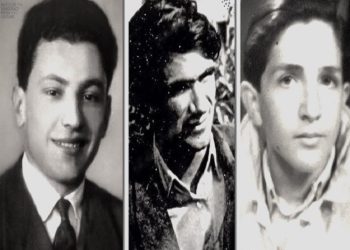
Hamit Luka was born on April 7, 1921. After his father passed away, he was left an orphan at a young age. He was raised by his mother amidst poverty and great hardship. At the age of 15–16, he went to work for an Italian enterprise at Fusha e Monës in Librazhd. He was a quick-witted and highly intelligent boy. It is said that within three months he learned Italian, communicating fluently with the Italians. Soon after, he began learning English from an Italian officer. After the formation of the Balli Kombëtar units, Isak Alla hired him as an escort and translator for the Italians.
The young Hamit Luka worked in this capacity during the war, contributing to his family with the money he earned, without involving himself in politics or the events of the time. In early 1945, when reprisals began against Isak Alla’s family, Hamit initially went into hiding for some time but later surrendered. He was arrested and sentenced to 6 years in prison, considered an “intellectual in service of the Balli Kombëtar organization.” Hamit was married and had a daughter, Sanie, who was not yet two years old when her father was arrested.
Hamit, like many other prisoners of the communist regime, served his sentence under extremely harsh conditions. While he was at the Maliq swamp, it is said that Petrit Hakani intervened, and he was released shortly before his term ended. After staying home for a few days, he was summoned to the Internal Affairs Branch in Librazhd and asked to cooperate in the capture of Isak Alla, who was a fugitive. As can be seen, he had been targeted to serve the State Security (Sigurimi) in pursuit of anti-communist groups. A brave and loyal man, Hamit Luka could not accept such an offer.
By telling them openly, he refused to cooperate, even though he knew prison awaited him again. The head of the Branch himself told him to go home and think it over. The state tried to exploit his unparalleled skills, courage, and intellect in service of the regime. However, Hamit Luka did not love the regime being installed in Albania; furthermore, betraying the Alla brothers – who were not only his cousins but people he had worked and lived with – was against his moral code. Under these circumstances, he stayed home for a while and then decided to escape. Today, his 77-year-old daughter, Sanie, remembers the moments before her father left, when she was about 9 years old.
“Father would come in the evening,” she narrates, “take me on his lap, and just look at me.” How could the little girl know that her father faced prison or physical elimination by the state of that time? One night, in a sudden moment, he told her they would go to Labinot together. In fact, he wanted to take her with him, but it was not easy. A child could not survive such a difficult and dangerous journey. In a clash with the Pursuit Forces, they might both be killed, as Hamit Luka would never surrender alive.
Thus, he gave up on taking Sanie. Toward the end of 1952, assisted by his brother Tafil, he took Ismail Balliu’s wife and her two daughters – who were seeking to flee – and escaped. He stayed in Yugoslavia for about a year and a half. From there, he later went to Belgium. Most fugitives hoped the situation in Albania would change, but it did not. Under these circumstances, he married Ismail Balliu’s eldest daughter, Mereme, with whom he had 5 children.
Hamit’s daughter in Albania, Sanie, married Gani Balazi in Funarës. Gani was the nephew of the martyr Ibrahim Balla from Orenja. Despite this fact, Sanie and her children never escaped scorn and class differentiation. “In some cases,” she recounts, “certain leaders during the cooperative era would mention her status for pressure, because she was the daughter of a fugitive.” But Sanie would react whenever an injustice was done, replying: “I am his daughter, and I am honored to be the daughter of Hamit Luka.” Her husband, Gani, worked mostly in state jobs, but unfortunately, he suffered from health problems.
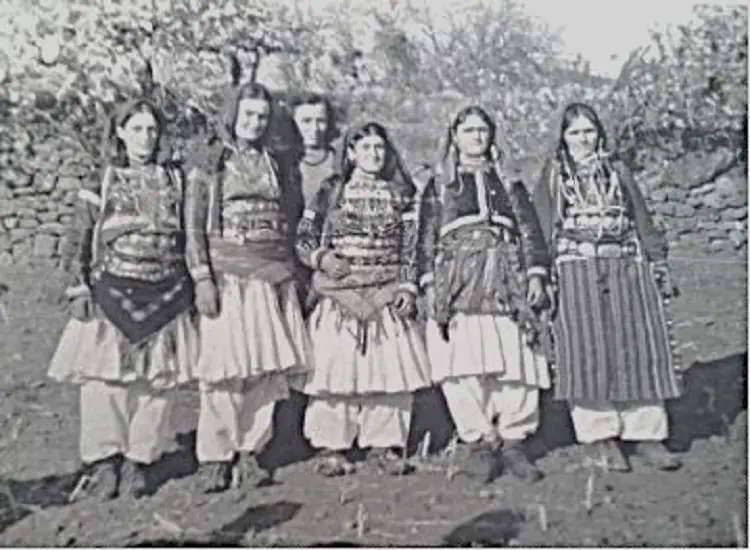
They raised four children – two sons and two daughters – amidst difficulties. Sanie was, and remains today, an excellent embroiderer of traditional folk clothing of the area, but during the communist regime, her children were not allowed to participate in the village’s artistic group, despite their desire and special talent. Their mother, saddened by such mistreatment, gave them courage, telling them she would sew them beautiful folk clothes to wear at celebrations and weddings. They completed eight-year education, but had no hopes for higher schooling.
Nevertheless, her youngest son continued high school in Zdrajsh, telling his mother: “I will finish it, even though I know I won’t have support for work or a profession.” Despite the difficulties of the time, Sanie tried to maintain contact with her father in Belgium. He sent them money and packages with clothes, but they were not given to them. The same happened with letters. “Only in one instance were we able to receive a package,” she narrates. Several times she was summoned to the Internal Affairs Branch, where she was pressured about why she wrote letters to Hamit. “He is my father; I have written to him and I will continue to write to him,” Sanie Balazi, the courageous and brave woman of Funarës, would answer the harsh investigators of the time. Thus, proud and determined, she worked and lived through all the years of the communist regime.
Tafil Luka, during the fascist occupation, was arrested by the Italians over a dispute and served a prison sentence in Italy. Immediately after the country’s liberation, they made him chairman of the Democratic Front in the village, considering him anti-Italian. However, his stay in Albania was now problematic after his brother’s escape. Thus, he decided to flee. He took his wife and his infant son, who was only a few months old, and set out to escape.
At the border, he encountered the defense forces, who detected them because the child cried. All three were caught and taken to Elbasan. The wife and child were released, while he was put on trial. He was sentenced to 12 years in prison for attempting to escape, which was considered treason against the motherland. After serving his years of punishment, he was released and worked in the agricultural cooperative, constantly followed and surveilled by the State Security.
After the collapse of the communist dictatorship in Albania, in July 1991, Hamit Luka, now 70 years old, came from Belgium to Funarës. With parental longing and love, he met his beloved daughter, Sanie, whom he had left as a small child. In 1991, she was 48 years old, a mother with grown children. God made it possible for the regime of violence to fall, and for father and daughter to meet in a soulful reunion!
It was like a dream filled with pleasure and tears of joy. Hamit stayed for two months, July and August. He stayed with his daughter and his brother Tafil, reuniting with his nephews, nieces, relatives, and his many friends and comrades. In September, he left for Belgium, hoping to return again, but on October 24 of that same year, Hamit Luka passed away unexpectedly from a heart attack.
CHAPTER II
THE HERO OF THE MOUNTAINS, AZIS BIÇAKU, CHALLENGES THE DICTATORIAL STATE
Letmi is one of the area’s villages inhabited since ancient times. It lies on the northern slopes of Zalli i Qarrishtës. Above the village stands the mountain of the same name, about 1,200 meters above sea level. Local residents call it “Fushat” (The Fields), as there are two fields of considerable area that serve as very suitable pastures for livestock. Earlier, the mountain was beriban (undivided). Later, they decided to divide it into parts (hise). This division was made by the former village headman, Ali Dushku, with a commission composed of Ottoman state officials, into 120 equal parts (hise), which are preserved to this day.
The Mountain of Letmi had been transformed into a “beautiful summer village,” where before the liberation, about 5,000 head of small livestock – mostly sheep – nearly 300 cows and calves, oxen, and horses were raised. During the summer months, only the family members involved in agriculture remained in the village, while the others ascended the mountain with all the livestock. According to oral testimonies from the elderly, there were 24 shepherd huts (stane) there. The huts were built on the surrounding hills and none in the field. The huts of Rakip Biçaku, Sinan Shuli, Azis Biçaku, and several others were two-story stone buildings.
There were strict rules for the mountain. The portions for each family were divided with precisely defined boundaries according to the area each inherited. Until the mowing, they did not let the livestock into the fields, but grazed them on the hills. After the mowing in the fields was finished and the hay was collected, the livestock were released freely without boundaries. The inhabitants of the villages of Letëm and Zgosht built a 36 km long irrigation canal over 300 years ago. The water was taken from the border with Macedonia, thus enabling a good irrigation system for the time.
In the center of the village is the mosque, near which two imams served. Around the year 1880, they opened a Mejtep (religious school), where they taught children religious lessons as well as Albanian. The Albanian imam who served for a long time was Gani Trepçja, who came from Dibra e Vogël. He had graduated in Theology in Turkey and was appointed a Hafiz. Later, Ramiz Qatja, also from Dibra, served there, and was called “The Hoxha of Letmi” until late.
2.1 The Origin of the Biçaku family in Letëm
One of the families that became well-known not only in the region but beyond is that of Azis Biçaku. Azis’s grandfather, named Tahir Aga, from the city of Great Debar (Dibra e Madhe), was educated in Istanbul and is said to have been a deputy in the Ottoman Parliament. His family owned several properties in Dibra. He had several shops in Dibra and as far as Tetovo. The trade was mainly handled by his son, Rushit, who was also educated in Turkey. Around 1877–78, during the Russo-Turkish War and the Albanian League of Prizren, Tahir Aga entered into a conflict with the Serbs. This was a period of great events in Albanian history.
The Treaty of San Stefano, and later the Congress of Berlin, decided to annex Albanian lands in favor of Serbia and Montenegro. We do not know for certain if he was a participant in the Albanian uprisings, but we are aware of the fact that he was a determined opponent of the Serbian forces occupying Albanian lands. In a clash with them, Tahir Aga and several other men of his family were killed. The Serbs seized the properties, while the remaining family members were forced to emigrate.
Rushit Aga, his son, with his wife Lime—who was the daughter of Din Trepçja, a highly influential person in Dibra e Vogël—set out for the interior of the country. He stopped in Dibra at the Kaloshi and Alia clans, where his wife had her sisters, but he did not stay there. He decided to stay in the village of Letëm, where Imam Gani Trepçja, his wife’s uncle, was located. In Letëm, he bought a house from the Hysku (Hysa) family, as well as an amount of land in the center of the village.
Rushit, who was called “The Aga of Biçaku” in the village, had 6 sons and two daughters. After settling in Letëm, he began to reactivate trade in Dibra and Ohrid. Meanwhile, he also set up a shop in Elbasan. Rushit was friends with Aqif Pashë Biçaku, and it is said they were also distant cousins. He educated two of his sons in Turkey and Manastir. He built a two-story inn (han) in the place called “Vram” in Letëm, where the Elbasan-Dibra footpath passed.
The inn was inherited by his son Azis. Travelers who stayed there were escorted by armed men to protect them from potential attacks along the way. During the time of King Zog, after the construction of the Librazhd-Dibra motor road, the inn went out of function because the road did not pass there. Thus, trade closed at this point, which had been very profitable for the Biçaku family. Nevertheless, Rushit Aga significantly rebuilt the economy, being the leading family not only in Letëm but in the entire zone.
The heirs of Rushit Aga, who constitute a history of their own, were:
- Saliu, the eldest son, left behind a descendant, Don Biçaku (Ramadan), who was educated in Manastir. Don was appointed supervisor on the motor road to Dibra. Due to some disagreements Prevalli had, he was accepted and appointed as the Qefali (headman) there for a time.
- Tahiri, Rushit’s second son, was educated in Istanbul and Manastir. He was involved in trade in the Ohrid area. On his return home, he was wounded by bands of thieves and passed away a few days later. His grave is in the village of Hotolisht. He had a son, Tefik, who died young at the age of 38. The latter’s two sons, Tahir and Shebrit Biçaku, experienced the suffering and persecution of the communist system.
- Ganiu, the third son, was killed in a clash with the Bulgarian army during the years of World War I. He was newly married and had no children.
- Hysniu, another son, was said to have exceptional intelligence and temperament. His father, Rushit, sent him for schooling, but unfortunately, he fell ill and passed away before completing his studies.
- Baftjari was a livestock farmer. He took a wife from Arrëz of Gizavesh from the Koçi clan and left behind two daughters.
- Azisi, another son of Rushit Aga, who constitutes the history and glory of the Biçaku family, learned Turkish from Hafiz Gani Trepçja in the village. He and the other men of the family also spoke some Slavic language, as they traded in the cities of Macedonia.
One of Rushit Aga’s daughters married in Mokër, while the other married Dalip Kullafi in Letëm. The latter had a son, Hajdar Kullafi, who was a partisan and was killed in the war; the Letëm 9-year school bears his name today.
The last surviving children of this family were Azis and his sister Dije, the wife of Dalip Kullafi. In his own family, Azis also had 4 granddaughters and two grandsons. One of the grandsons, Tefik, as mentioned above, died young at 38, while the other, Don Biçaku, he sent for schooling in Manastir. After the death of his father and the loss of his brothers, Azis tried to continue the development of trade in Great Debar, Tetovo, and Ohrid, but faced difficulties. After World War I, the Kingdom of Serbs, Croats, and Slovenes—the so-called Yugoslavia—had been created. The Yugoslav state, with the support of the Great Powers, particularly Russia, had now strengthened.
The long-standing idea of realizing the “Naçertania” program—the project for the creation of Greater Serbia—was fed by Serbian chauvinist circles. This program aimed at the identification, expropriation, displacement, and subjugation of the Albanian population there. The properties of the Biçaku family, rebuilt over the years, were now at risk. The Serbian state, as the hegemonic force in the artificially created Yugoslavia, intensified violence and persecution against Albanians. Azis went to Macedonia several times to the centers where he inherited family properties, but he was met with Slavic-Macedonian ferocity.
Under these circumstances, with his life at risk and unable to further develop trade, he withdrew. The members of the Biçaku Aga family were capable, hardworking, and persistent people. They were used to work. After the interruption of trade, the scion of this noble family, Azis Biçaku, decided to devote himself to livestock. He bought 10 more parts (hise) in the Field of Letëm. He created a flock of small livestock with over 300 sheep and 200 goats. He kept cows, plowing oxen, and pack animals. For the sheep, he rented land in Krutje, Lushnje, where he took them during the winter.
He employed two servants as shepherds, Halim Zani from Mokra and Ismail Karai from Kosharisht. The processing of dairy products was handled by Ahmet Hoxha (Biçaku), who had joined Azis’s family because he had no children. He kept Halim Zani in his own house and saw him married. Every weekend, he sent dairy products to Elbasan on two mules to be sold. He continued this trade of livestock products even during the war period, from which he derived income. On the eve of World War II, he was economically well-off.
Azis Biçaku was married to two wives taken from the village of Zgosht; one from the Alla family and the other from the Boci family. With one of the wives, he had 5 children, two sons and three daughters: Isuf, Hysni, Rufie, Menduhie, and Fatime. With the other wife, he had no children. From an early age, his prestige and authority in the village and the region were evident. His word was listened to with attention in men’s councils (mexhlise) and assemblies. Usually, he did not sit in the corner seat of honor reserved for him, but placed the eldest there. Nevertheless, the attention of those present was always on his words. He knew how to analyze the political situation of the time with rare intelligence.
Along with Xhel Biçaku, he was the leader of the ambush organized in Qafë-Shkallë with his fellow villagers against Serbian forces that plundered and robbed the villages of the area during World War I. There, the Serbian soldiers left several dead and wounded and were forced to retreat. Upon receiving the news of the killing of his brother, Ganiu, in a clash with Bulgarian forces who wanted to take his livestock, he confronted them at the Pass of Oçurka and shattered their company of soldiers, where several were killed while the others fled for their lives. / Memorie.al